"All of the sprints were completed on schedule and on budget. We highly recommend RaftLabs!"

Charles E.
Entrepreneur at Aggie Technologies
Your factory floor shouldn't run on spreadsheets, WhatsApp messages, and gut instinct.
We build custom manufacturing software that connects your floor, your supply chain, and your finance team, so you can see problems before they cost you and fix them before they spread.
Custom ERP, MES, and WMS built for your exact manufacturing workflow
AI quality control and OCR automation, deployed in 12 to 20 weeks
IoT integration to connect machines, sensors, and production data in one dashboard
Experience across discrete, process, and hybrid manufacturing.
The problem
No live view of production output across sites, so delivery promises depend on what the floor supervisor reported this morning?
Quality defects reaching end-of-line because in-process inspection catches them after they have already been built into 40 or 50 units?
Short answer
RaftLabs builds custom manufacturing software (ERP systems, MES platforms, supply chain tools, quality control software, IoT integrations, and production automation) for factory floors and operations teams. We've achieved 60% faster defect detection on production lines and 70% reduction in manual data entry through OCR automation. Most manufacturing software projects go live in 12 to 20 weeks at a fixed, agreed cost.
Trusted by























01 Diagnosis
Do any of you actually like your ERP system?
Shift managers call or message floor supervisors to get a live count of units completed. There's no dashboard. By the time the data reaches planning, it's already out of date. Decisions on overtime, material release, and delivery promises rely on a phone call rather than a manufacturing execution system (MES) that tracks production status in real time. Each day of blind scheduling costs hours of replanning and risks breaking delivery commitments worth thousands of dollars. The outcome is production status you can see without calling anyone.
A so-so approximation of what you really need
Good ERP software is expensive and expensive to implement, and it may still only be a so-so approximation of what you really need. Inspection happens at the final station, so defects from earlier in the process are baked into dozens of units before anyone catches them. Rework rates are high and the root cause is rarely traceable because in-process data isn't captured. On a typical 500-unit run, catching a defect at end-of-line instead of at the source can mean scrapping 40 to 60 units. That scrap and rework cost is hidden in the P&L rather than attributed to the operation that caused it. The outcome is defects caught at the station, not the shipping dock.
No one has a clue about actual operating costs
The steel comes in late, the shop's overloaded, due dates are regularly missed, and the last quote was blown because no one has a clue about actual operating costs. These are just a few of the daily problems encountered by shops that manage their businesses through Excel spreadsheets. Machines fail and production stops. The maintenance team responds, diagnoses the problem, and repairs it, but nobody predicted it was coming. Maintenance schedules are based on calendar intervals, not actual run hours or condition signals. A single unplanned stoppage on a critical line can cost 4 to 8 hours of lost output. The outcome is maintenance on condition, not on calendar.
The stock doesn't balance between the two systems
The ERP shows inventory as of the last goods receipt posting, not as of right now. Materials planners order based on what the system says, then discover a discrepancy when picking for a production order. Every finance professional knows the nightmare: the stock doesn't balance between the two systems. Safety stock is set too high to compensate for the unreliability of the data, tying up working capital in excess stock. We've seen manufacturers carrying 20 to 30% more safety stock than they'd need if their consumption data were live. The outcome is inventory the floor and the books agree on.
02 What we ship
Off-the-shelf ERP systems are built for the average manufacturer. If your operation isn't average, and most aren't, you spend more time working around the software than working with it. We build custom ERP systems designed around your actual workflows: your materials, your bill of materials, your production order logic, and your supplier relationships. Full production order management covers raw material to finished goods. Real-time inventory across multiple warehouses and production sites. Supplier portals that automate purchase orders. The outcome is an ERP that fits your process instead of approximating it.
Your ERP manages the plan. Your MES manages execution. Without an MES, you're relying on supervisors to manually track what the ERP says should happen versus what's actually happening on the floor. We build MES solutions that capture real-time production data: operator inputs, machine signals, quality checks. Work orders tracked in real time with operator assignment. Machine downtime and shift performance logged automatically. In-line quality check points recording pass/fail results at the station. IoT sensors and PLCs feeding data directly, cutting out manual entry. The outcome is execution the ERP can actually see.
Manual quality inspections miss defects. They're slow, inconsistent, and depend entirely on the inspector's attention on that particular shift. We've built AI OCR and computer vision systems for industrial use, including a gas station fuel delivery verification system that automated a paper-based, error-prone manual process. The same pattern applies across manufacturing: reading serial numbers, verifying labels, inspecting parts, capturing batch data. We've achieved 60% faster defect detection and 70% reduction in manual data entry on these deployments. The outcome is defects caught at the station.
A broken supply chain is invisible until it's expensive. Raw material shortages, late deliveries, warehouse picking errors: these problems look small until they shut down a production line. A single stockout on a critical component can delay shipments by days and cost tens of thousands in idle labour and expediting fees. We've built multi-carrier shipping platforms and warehouse management systems that give manufacturers real-time visibility across their supply chain, from supplier order tracking to inbound logistics to finished goods dispatch. The outcome is a supply chain you see before it breaks.
Your machines generate data. Most manufacturers either can't capture it or can't act on it. Without a connected monitoring layer, a machine can be running at 60% of its rated output for weeks before anyone notices. We build IoT integration layers that connect PLCs, SCADA systems, and industrial sensors to custom dashboards and alerting tools. PLC and SCADA data comes in via OPC-UA, MQTT, or Modbus. Real-time dashboards show machine uptime, cycle time, and OEE. Automated alerts fire for downtime events, threshold breaches, and maintenance triggers before they become stoppages. The outcome is a plant manager who sees the floor from a phone.
Production scheduling is one of the most complex problems in manufacturing. You're balancing machine capacity, material availability, workforce shifts, customer delivery dates, and changeover times, all at once. When planners rebuild schedules in spreadsheets, they spend 2 to 4 hours a day on work the software should do. We build production planning tools that model your actual constraints and generate feasible schedules, not optimistic ones. What-if scenario modelling handles rush orders and line changes without rebuilding from scratch. Customer promise dates calculate from real capacity, not from hope. The outcome is schedules built on capacity, not hope.
The manufacturing software decision is usually about the ERP: what it costs to buy, what it costs to get dialed in, and what it approximates instead of fitting.
Stay on the ERP
SAP, Oracle, NetSuite
When the system handles your workflows and the implementation team gets it dialed in.
Build custom
When nothing really fit your process
A so-so approximation of what you need is what big ERP sells. Custom fits your process.
When the dial-in costs more than the software
The biggest cost is not the base purchase price, but the time and resources to get it dialed in. Fixed cost, agreed upfront.
When the floor runs on spreadsheets
No one has a clue about actual operating costs. An MES layer on your existing ERP fixes visibility without a full migration.
Bottom line
Stay on the ERP while it fits. Build when the ERP owns your roadmap or your margins.
04 How we work
05 Track record
06 Case studies
07 Client voices
Three-year average engagement. Founders and operators describing the work in their own words. No marketing varnish.
"All of the sprints were completed on schedule and on budget. We highly recommend RaftLabs!"
Charles E.
Entrepreneur at Aggie Technologies
08 Why us
09 Questions
Most manufacturing software projects go live in 12-16 weeks for an initial production-ready system. That covers core workflow, key integrations, and user training. We work in milestones, you see working software every 2-3 weeks and can adjust scope before it matters. A full ERP replacement is a longer engagement, typically 6-12 months depending on complexity.
Yes. We've built integrations with SAP, Oracle, Microsoft Dynamics, and several industry-specific ERP systems. We can build a standalone module that reads from and writes to your existing ERP, or we can build a full replacement. The decision depends on your system's age, licensing cost, and how much of it you actually use.
We connect to most industrial equipment via standard protocols, OPC-UA, MQTT, Modbus TCP, and REST APIs where available. We work with your engineering team to understand your existing equipment, then design the integration layer. Where proprietary interfaces exist, we've built custom bridges. If your machines are very old and don't have any digital interface, we can discuss sensor retrofitting options.
No. Custom software isn't only for large enterprises. We've built for manufacturers with 30 employees where the ROI was clear within 6 months. The question is whether the pain is real. If you're losing hours every week to manual processes, missing defects your current system should catch, or flying blind on production status, the investment pays for itself. We can scope a focused first phase that solves one high-impact problem and proves the value before you commit to more.
We scope every project before pricing. Fixed cost, agreed before work starts. We don't do hourly billing, fixed project costs only.
That fear is common and honest. The biggest cost of any manufacturing system is not the purchase price, but the time and resources it takes to get it dialed in to what you actually do. We design the floor workflows with your operators: interfaces that show only what their station needs, data entry that happens in one tap instead of wrong fields, and offline-capable terminals that keep working when the internet drops. The system ships when your operators can run a full shift on it without workarounds.
Custom ERP for manufacturing
Custom ERP systems designed around your actual workflows
Manufacturing execution system software
Real-time production tracking, work orders, and shop-floor control
OEE software development
Machine uptime, cycle time, and overall equipment effectiveness dashboards
Enterprise asset management software
Asset tracking, maintenance scheduling, and lifecycle management
IoT integration and machine monitoring
Connect PLCs, SCADA systems, and industrial sensors to custom dashboards
AI quality control software
Computer vision inspection and defect detection on the production line
Quality management system (QMS)
Quality checkpoints, defect logs, and compliance reporting
Predictive maintenance software
Equipment failure forecasting and maintenance scheduling
Supply chain visibility software
Supplier tracking, warehouse management, and dispatch visibility
Generative AI for manufacturing
AI copilots for production planning, reporting, and documentation
Business process automation
Automate production reporting, quality sign-offs, and supply chain document workflows
AI document intelligence
OCR and AI extraction for batch records, delivery notes, and quality reports
AI agent development
Autonomous agents for production scheduling and maintenance prediction
Machine learning development
Predictive maintenance, yield optimisation, and defect detection ML models
Predictive analytics
Equipment failure forecasting and production planning
AI development
End-to-end AI builds for manufacturing: vision systems, process AI, agentic workflows
Custom software development
Custom MES, ERP modules, and operations platforms for your manufacturing process
Tell us what your floor looks like today, your production process, your current systems, and the problem that costs you the most. We'll design the system that fixes it.
Useful next steps

Service
AI for Energy and Utilities
See the service
Service
Manufacturing ERP Software
See the service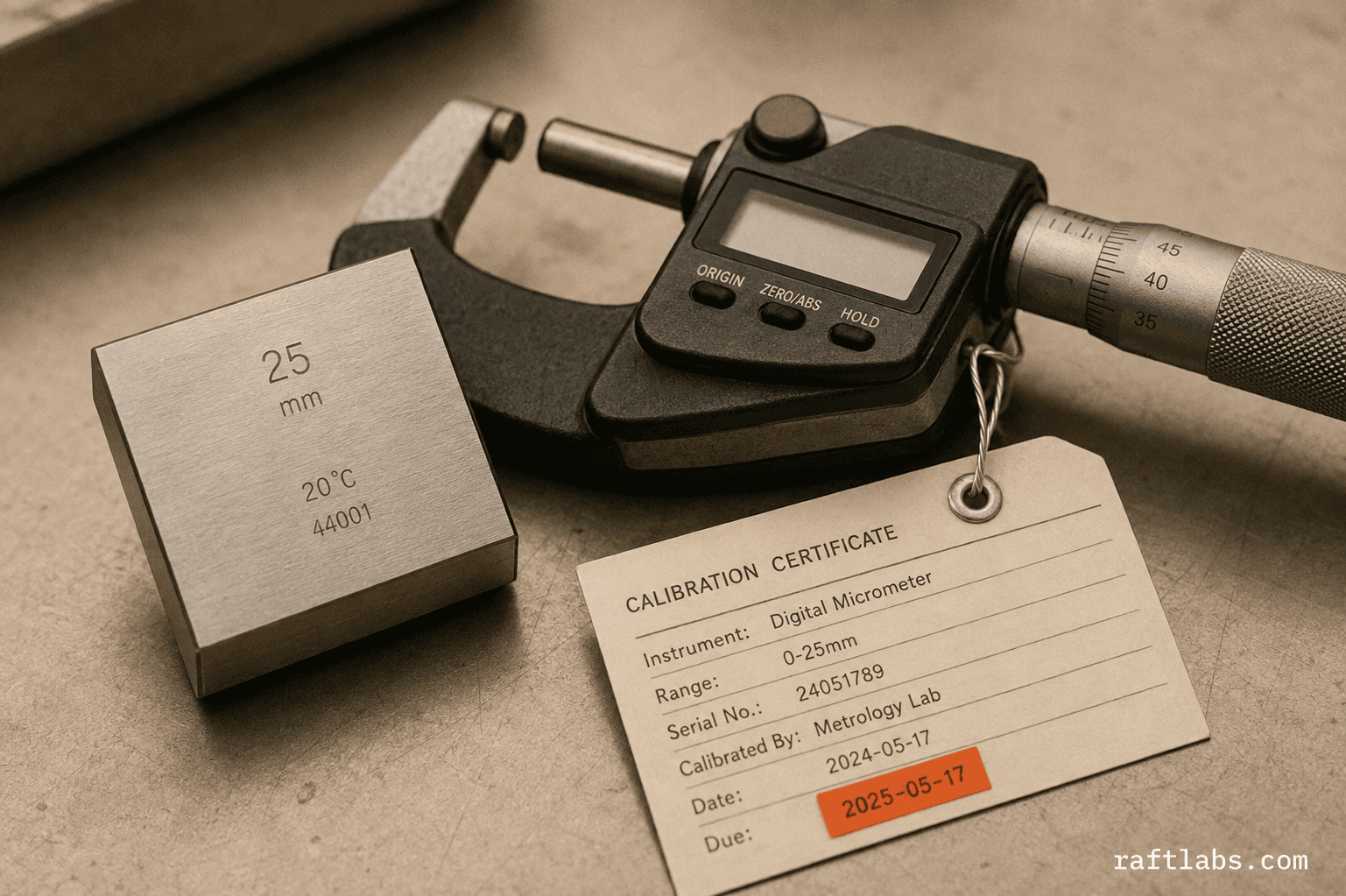
Service
Calibration Management Software Development
See the service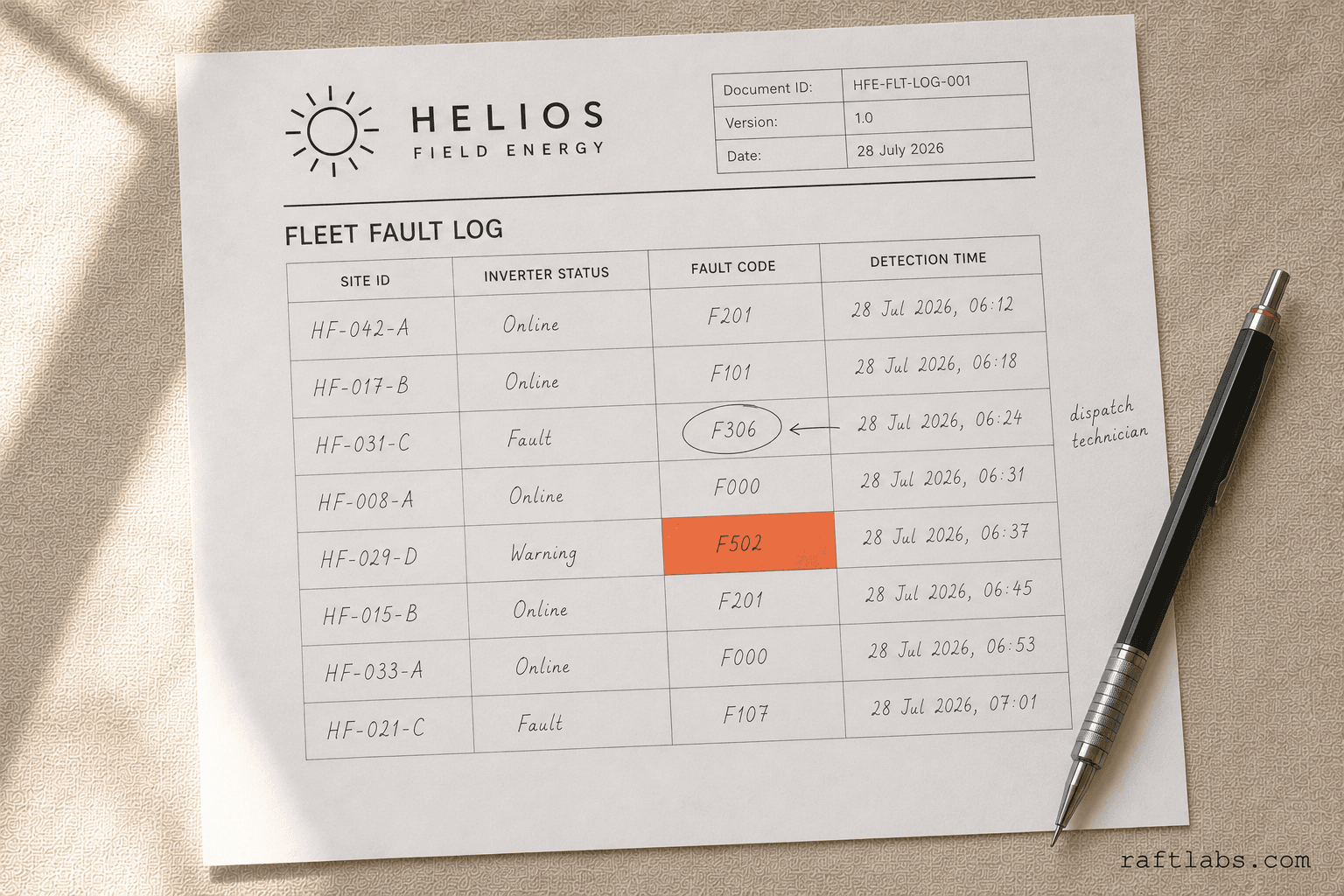
Service
Solar Monitoring Software Development
See the service
Proof
How Snelweg Deals moved from offline car resale to a structured digital auction marketplace
Read the case study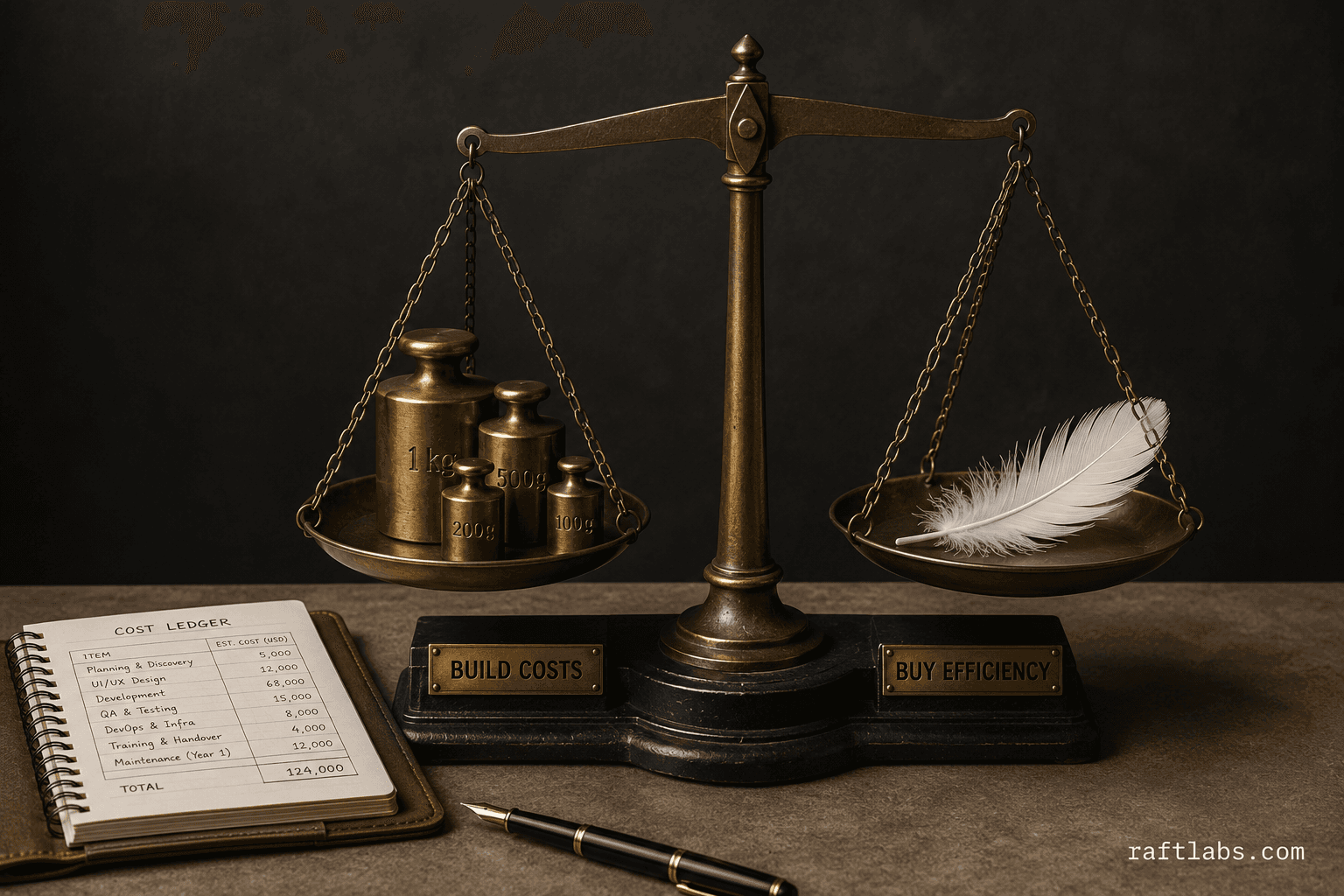
Try it yourself
Build vs Buy Calculator
The real cost of building in-house (most teams miss 40%).
Open the free tool