Modernizing Loyalty for a Leading Irish Utility Provider
- 300K+
- 1K+
69% of consumers say loyalty rewards influence where they spend. Brands winning on retention aren't using off-the-shelf tools. They run platforms built around data, reward logic, and growth.
We've built 20+ custom loyalty platforms for retail, hospitality, and SaaS companies across the US, UK, Canada, and Ireland. From points engines to tier-based membership systems to AI reward personalization. One team scopes, designs, and ships loyalty software that integrates with what you already run.
We have built 20+ custom loyalty platforms, including a platform that drove 1,062 sign-ups in 4 weeks for a retail client, across retail, hospitality, and SaaS
Points engines, tier-based membership, coalition loyalty, and AI reward personalization, built around your reward logic, not a platform template
Direct integration with your POS, e-commerce platform, or app, loyalty data is actionable at the point of transaction, not in a separate dashboard
Fixed cost, 12-week delivery, you own the platform outright, no per-member fee to a SaaS provider eating into your margin as you scale
What you can count on
Retention
3+ years
Average client relationship across active accounts
First milestone
Week 3
Working prototype in front of real users
Pricing
Fixed price
Scope and cost agreed before work starts
Team
No handoffs
The senior engineers who scope the build also ship it
The problem
Loyalty program giving out discounts to customers who would have bought anyway, and not changing the behavior of the 60% who drop off after the first two transactions?
Off-the-shelf loyalty platform that handles standard points earn-and-burn but can't model the tier logic, partner redemptions, or gamification mechanics your marketing team actually wants to run?
The short answer
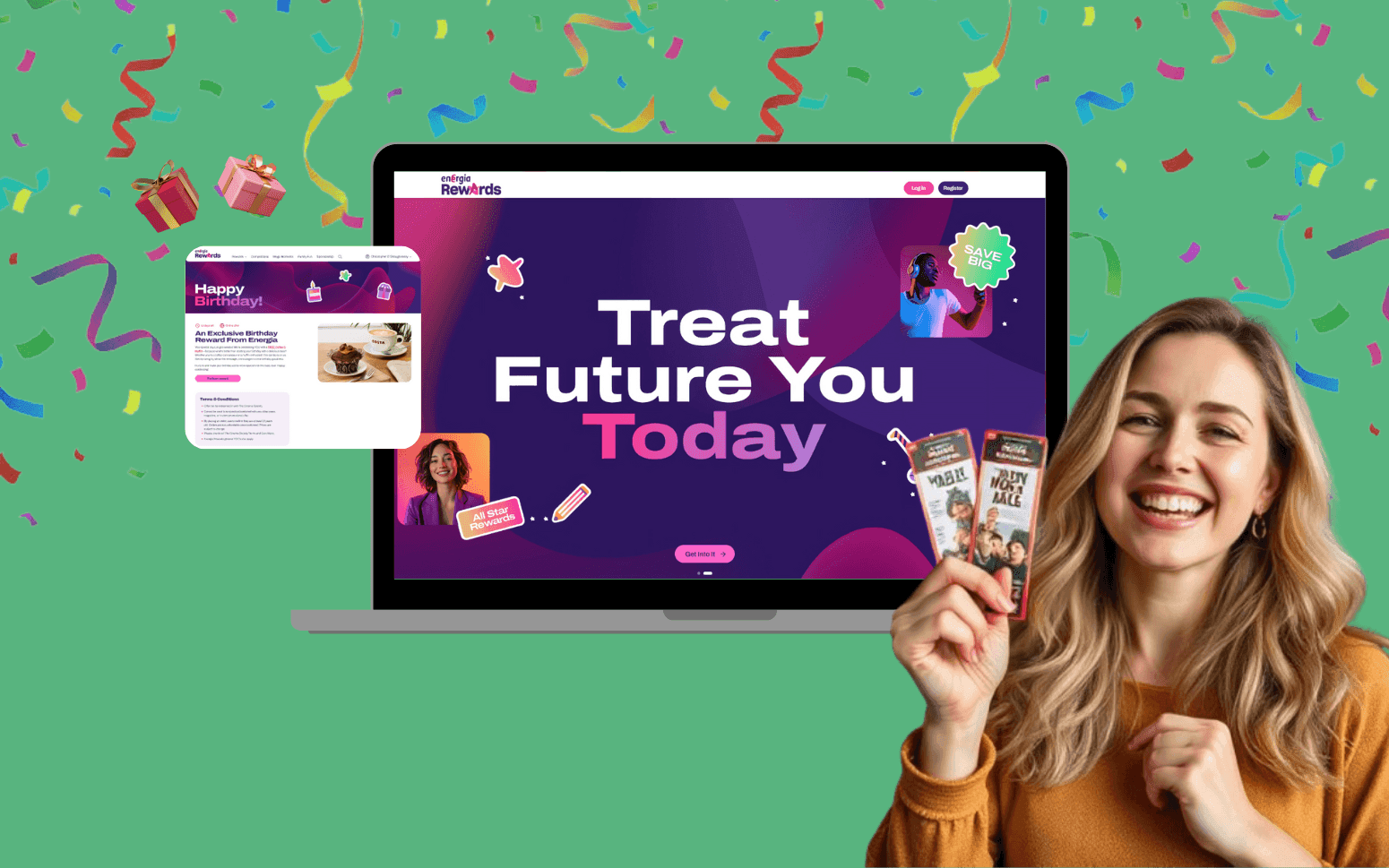
RaftLabs builds custom loyalty app platforms end to end: points engines, tier-based membership systems, receipt validation, and AI reward personalization for retail, hospitality, and SaaS companies. One team handles design, code, and launch. We've delivered 20+ loyalty platforms for brands across the US, UK, Canada, and Ireland, including SuperValu, Centra, Aldifest, and Energia Rewards. Most programs go from kickoff to launch in 12 weeks on a fixed-cost engagement.
Points engine that can't model your actual reward logic, so the program manager handles exceptions manually
Standard loyalty platforms handle points per transaction and percentage discounts. They break when your program has tiered earn rates by product category, multi-currency redemption, or reward mechanics tied to non-transactional engagement like referrals, reviews, or app usage. When the program manager has to manually calculate and apply rewards outside the platform, every redemption is a support ticket waiting to happen. Custom loyalty logic built around your actual earn and redemption rules handles the edge cases that off-the-shelf platforms treat as unsupported.
60% of members never redeem because the reward catalog doesn't match what they actually want
Low redemption rates indicate a catalog mismatch, not member disengagement. When points accumulate without redemption, the liability sits on your balance sheet and the program provides no retention value. BCG's December 2024 loyalty program survey found that active loyalty members are 4 times more likely to make a repeat purchase than non-members when brand confidence is low, yet only half of consumers report being extremely or very engaged with the programs they belong to. The fix is usually simpler than it appears: giving members more visible options, surfacing rewards relevant to their purchase history, and reducing the friction in the redemption flow. An AI personalization layer that serves different reward suggestions to different member segments based on their behavior converts a points bank into an active retention mechanism.
Multi-channel earn and redeem inconsistency that confuses members and breaks trust
A loyalty program that isn't connected to the transaction system at the moment of sale has a friction problem. When a cashier has to manually look up a member's points, or when an e-commerce checkout requires a promo code entry that most members never see, participation reflects the friction, not the program's value. POS and e-commerce integration that automatically identifies members, applies earning rules, and triggers redemption at checkout removes the friction point and increases program usage without changing the reward offer.
Partner and coalition reward integration that requires a separate manual reconciliation process
Loyalty programs generate valuable data: who buys what, how often, at what spend level, and which rewards drive repeat visits. When that data is locked in the loyalty platform's reporting module and not connected to your CRM or marketing automation tool, it can't be used for targeted campaigns, segment-specific offers, or churn prediction. A loyalty platform that exposes member data via API, or integrates directly with your CRM and email tool, turns the program from a points system into a customer intelligence asset.
Customers earn points per transaction, redeemable against purchases or rewards. Works best for high-frequency, transactional businesses: e-commerce, food & beverage, fuel retail.
> Best for: E-commerce, QSR, grocery, fuel retail
> Typical complexity: Medium
> Integration priority: POS, e-commerce platform, CRM
Customers reach higher status levels (Silver, Gold, Platinum) based on spend or engagement. Drives aspirational behavior and increases average order value at each tier.
> Best for: Fashion, travel, hospitality, premium retail
> Typical complexity: Medium-High
> Integration priority: CRM, booking systems, CDP
Straightforward percentage back on qualifying spend. Lower perceived complexity, but reward calculation rules, expiry logic, and fraud detection add engineering depth quickly.
> Best for: Financial services, utilities, marketplace platforms
> Typical complexity: Medium
> Integration priority: Payment processors, accounting systems
Multiple brands share a single reward currency; customers earn across partners and redeem anywhere in the network. Requires centralized ledger architecture and cross-brand API management.
> Best for: Airlines, banks, large retail groups
> Typical complexity: High
> Integration priority: Partner APIs, real-time ledger, identity resolution
Customers pay for membership (Amazon Prime model) and get exclusive pricing, perks, or access. Higher upfront development investment, but the strongest retention and LTV metrics of any model.
> Best for: E-commerce, media, SaaS, D2C
> Typical complexity: High
> Integration priority: Billing, entitlements engine, content systems
Customers earn for bringing in new users. Simpler core mechanics, but fraud prevention, attribution tracking, and multi-channel reward delivery make these harder than they look.
> Best for: SaaS, fintech, D2C, marketplaces
> Typical complexity: Medium
> Integration priority: CRM, email/SMS, analytics
We build custom software, not white-label platforms. The distinction matters: a white-label solution gives you someone else's logic with your branding on top. We build the logic, the data model, and the architecture to your spec, and you own the codebase outright.
For brands that need differentiated loyalty program mechanics or full data ownership, custom almost always wins over the long run. If your requirements genuinely fit an off-the-shelf platform, we'll tell you that instead of building something unnecessary.
Points programs reward every transaction: customers earn and spend currency you control. Tiered programs layer status on top of points, creating progression (Bronze to Silver to Gold) that rewards your best customers with qualitatively better benefits.
Most enterprise loyalty programs use both: points for day-to-day earn and burn, tiers for long-term retention of high-value members. The right structure depends on your purchase frequency, average transaction value, and how much differentiation you need across customer segments.
Three questions decide it.
i) Do you have more than 10,000 active members, or expect to?
Off-the-shelf loyalty software per-member fees compound fast at scale.
ii) Do you need integrations your current platform doesn't support?
Custom software connects to anything.
iii) Do you need to own your customer data and control the reward logic?
If any answer is yes, custom development almost always delivers better long-term economics. If you're under 1,000 members and testing the concept, a white-label platform may be the right starting point.
Most programs we build go live in 8 to 12 weeks from kickoff. An MVP with core points logic, member dashboard, and admin panel can ship in 6 to 8 weeks. Full-featured platforms with multiple integrations and both web and mobile apps typically run 12 to 14 weeks.
Timeline is driven by integration complexity more than feature count. A program connecting to a custom legacy POS takes longer than one integrating with Shopify.
Yes. We've built integrations for Shopify, Magento, WooCommerce, Salesforce, HubSpot, Oracle MICROS, Lightspeed, Stripe, Klaviyo, Braze, Clover, Square, and custom in-store POS systems. The integration approach depends on what APIs your POS exposes. For standard platforms, integration is straightforward and typically adds 1-2 weeks to the build.
For legacy or proprietary systems, we scope this separately after a technical review. This is where most loyalty builds either get done right or become expensive to maintain.
What clients say
Three-year average engagement. Founders and operators describing the work in their own words. No marketing varnish.

 Ireland
RaftLabs was outstanding at addressing our complex platform needs, delivering a stable, high-performance loyalty application that has been genuinely loved by the customers.
01 / 02
Referral Program Software Development
Custom referral engines with dual-sided reward logic, fraud detection, and loyalty ledger integration - built to run alongside or inside your loyalty program.
Custom Software Development
Full loyalty platform builds: points engine, tier management, redemption catalog, and member portal.
Business Process Automation
Automate points accrual, reward fulfillment, tier upgrade notifications, and member communication workflows.
AI Agent Development
AI personalization for reward recommendations, churn prevention, and next-best-action for members.
AI Chatbot Development
Member self-service bots for balance queries, redemption assistance, and tier status questions.
Tell us your earn and redemption mechanics, your integration points (POS, e-commerce, CRM), and your member base size. We'll scope the right platform and give you a fixed cost.
Stay on topic
Try it yourself
Loyalty ROI Calculator
See how much extra revenue a loyalty app generates.
Open the free toolLoyalty Programs for MedSpa Clinics
Loyalty programs for MedSpa clinics combine monthly subscription tiers with a points layer to create predictable recurring revenue and deeper client relationships simultaneously. A MedSpa loyalty platform reduces acquisition spend by activating word-
Loyalty Program Development Cost: 2026 Complete Guide
Custom loyalty platforms cost $10,000-$200,000+ depending on features, integrations, and platforms. First-year total ownership runs $30,000-$80,000 for a mid-range program. Here's the full cost breakdown from 20+ loyalty builds.
Loyalty Programs for Luxury Goods
Loyalty programs for luxury goods must reward with access and recognition rather than discounts, since luxury customers do not want to feel they are shopping for value. A tiered luxury loyalty platform gives high-value customers invitations to privat