

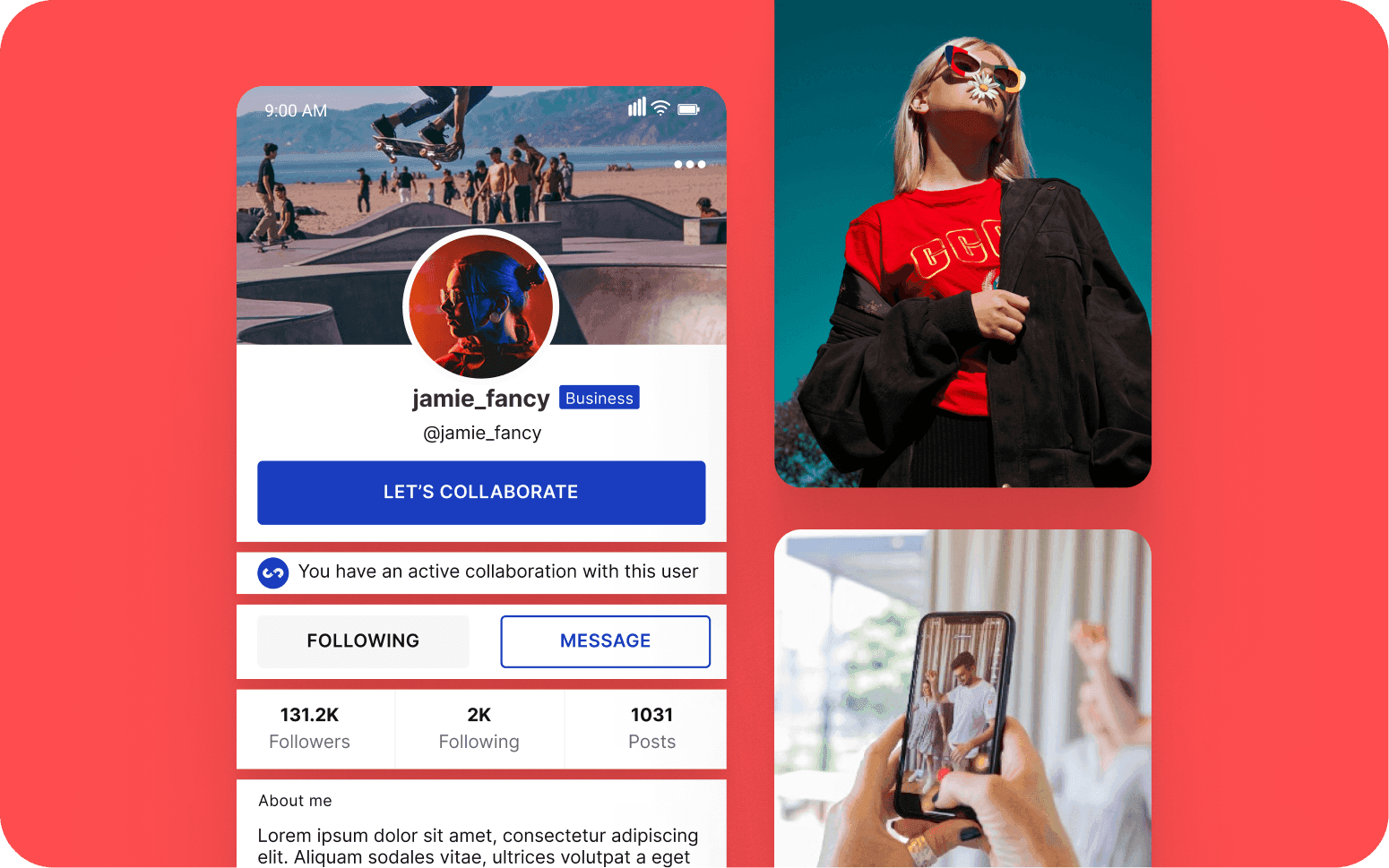
Sponzee Connects Brands and Creators in a Social Commerce Revolution
- 25%
- 2x
- 16 weeks
Media platforms fail in one of two ways: the infrastructure handles average load and falls over during the first major live event, or content moderation works at 100 uploads a day and drowns the team at 10,000.
We've built platforms like TuneClub, high-concurrency live streaming with social networking, on-demand content, and community features in one product. Most media platform MVPs launch in 10 to 14 weeks at a fixed cost.
HLS broadcast architecture for 100K+ concurrent viewers or WebRTC for sub-200ms interactive sessions, chosen for your use case in sprint one
Content moderation pipeline built in from the start: pre-publish review that catches policy violations before they reach users, not after
Subscription, pay-per-view, and virtual gift monetization designed alongside the content layer, billing edge cases handled from day one
Platforms delivered in 10 to 14 weeks including TuneClub, a live audio social platform built for high-concurrency streaming
What you can count on
Retention
3+ years
Average client relationship across active accounts
First milestone
Week 3
Working prototype in front of real users
Pricing
Fixed price
Scope and cost agreed before work starts
Team
No handoffs
The senior engineers who scope the build also ship it
The problem
Viewers experiencing buffering or disconnections during live events because the platform was built for average load, not the concurrent spike that a live sports event or product launch brings?
Content moderation running on manual review because no pre-publish layer exists, and the team is permanently behind the upload queue?
The short answer
RaftLabs builds custom media and communication software end to end: live streaming platforms, on-demand content apps, social audio networks, and real-time video infrastructure for media companies and content startups. One team takes your build from idea to launch. We've built platforms like TuneClub that handle high-concurrency streaming without downtime. Most media and communication platform MVPs launch in 10 to 14 weeks at a fixed cost.
Your content platform has high upload volume but no automated moderation, so harmful content reaches users before your team can review it
At thousands of daily uploads, human review at upload time isn't possible. When moderation is reactive, reviewing content after it's published and flagged by users, harmful material reaches the audience and the content team operates in permanent backlog. Pre-publish moderation that automatically detects policy violations, explicit content, and unsafe material in real time cuts reviewer workload to exception handling rather than full-volume review. The moderation confidence threshold and escalation rules are configured for your content policies.
Your live streaming infrastructure can't handle concurrent peak events and viewers experience buffering or disconnections during your highest-traffic moments
Live events have concurrent viewer spikes that recorded content doesn't. When a streaming platform is architected for average load rather than peak load, the first major event exposes the ceiling. HLS-based delivery with CDN distribution, adaptive bitrate encoding, and auto-scaling infrastructure handles viewer spikes without degrading the playback experience. The architecture decision between WebRTC (sub-200ms latency, interactive) and HLS (broadcast scale, passive) determines what the platform can do. It needs to be made before the first stream goes live.
Your media platform has subscription and pay-per-view revenue models but the billing infrastructure was added after launch and breaks on edge cases: upgrades, renewals, and failed payment recovery
Subscription billing for media platforms has specific requirements: proration on plan upgrades, grace periods before access revocation on failed payments, dunning sequences for payment recovery, and access entitlement management tied to subscription status. When billing is added after the content and streaming layers are built, it sits awkwardly outside the access control model. A media platform with billing architecture designed alongside the entitlement system from the start handles the edge cases that break retrofitted billing.
Your social media or community platform has no creator monetization tools, so your best content creators are building audiences on your platform but earning revenue elsewhere
Creator retention is the distribution problem in reverse: creators go where their audience is, but stay where they can earn. According to OneSignal's 2024 Mobile App Benchmarks, 45% of mobile app users uninstall within 30 days of installing, with social and messaging apps showing 30-day retention rates below 2%. Platforms without creator monetization, tipping, subscriptions, pay-per-view content, merchandise integration, lose their best contributors to platforms that do. Creator monetization built into the platform, with revenue share calculations, payout management, and creator analytics, keeps the creator economy inside your product rather than adjacent to it.
End-to-end media platform design and build: from content ingestion pipelines and transcode workflows to distribution layers, monetization infrastructure, and creator-facing tools. We scope the architecture against your content model and target concurrency before writing a line of code. That means choosing the right object storage strategy, deciding where transcoding happens (origin vs edge), and building access control into the content layer rather than bolting it on. Platforms are delivered with the operational tooling your team needs to manage content without developer involvement.
Live streaming infrastructure designed for concurrent peak loads, not average traffic. The architecture choice between WebRTC (sub-200ms latency for interactive sessions) and HLS (broadcast-scale delivery for 100K+ concurrent viewers) is made in discovery based on your use case. CDN integration with adaptive bitrate encoding keeps playback quality degrading gracefully on poor connections. Interactive layer features (real-time reactions, polls, Q&A, live gifting) are designed alongside the broadcast infrastructure so they work at load, not just in the demo environment.
VOD platforms built with HLS adaptive bitrate delivery, DRM content protection, and a monetization layer that handles subscriptions, pay-per-view, and ad-supported tiers from day one. The content ingestion pipeline covers upload, transcoding to multiple quality levels, and publish workflow with moderation hooks. User-facing features include content categorization, smart search, watchlist management, continue-watching state, and offline download for mobile. The recommendation engine is seeded from viewing history and engagement signals, not generic genre matching.
Social platforms built for content velocity and creator retention, not just user accounts and a feed. Feed architecture, story formats, short-form video, comment threads, direct messaging, and live streaming are designed as an integrated system rather than independent modules. Creator monetization, tipping, subscriptions, exclusive content, brand partnership tools, is built into the platform data model from the start. Pre-publish moderation pipeline is included to handle content policy at scale without a permanent manual review backlog.
Digital asset management systems for media operations handling thousands of files daily: video, audio, images, and documents in a single managed library. Automated metadata tagging uses content recognition so assets are findable without manual cataloging at scale. Version control, rights and expiry management, access permission tiers by team and department, and approval workflow control publish paths. Direct integration to content delivery pipelines means assets move from MAM to distribution without manual export steps or format conversion work.
Custom CMS platforms built for media organizations managing large, structured content libraries across web, mobile, OTT apps, and syndication feeds. Headless architecture with a clean content API means the editorial team works in a single place while content renders across every surface. Structured content modeling, articles, episodes, series, author profiles, tags, and categories, is built for the specific taxonomy your library uses. Editorial workflow covers draft, review, schedule, and publish states. Role-based access lets producers, editors, and contributors operate within defined permissions without IT involvement.
Pipelines that reduce the manual effort at every stage of the content lifecycle. Pre-publish moderation detects policy violations, explicit content, and copyright matches before content reaches users, reducing reviewer workload to exception handling. Automated speech-to-text transcription and chapter generation for video content. Personalized recommendation trained on engagement signals and viewing patterns rather than generic category matching. Automated video tagging and metadata enrichment so search relevance improves without editor time.
Custom audio platforms built for high-quality streaming at scale: podcast networks, music services, live audio social apps, and sports radio products. Streaming infrastructure handles concurrent listener spikes without buffering. User-facing features include playlist creation, smart queue, offline downloads, playback speed control, and sleep timer. Content library management covers episode scheduling, RSS ingestion for podcast imports, and rights management for licensed audio. Social layer options, follows, comments, live rooms, and listener activity feeds, are available for platforms building community around audio content.
A media platform MVP typically delivers in 12 to 14 weeks. That covers discovery and architecture (weeks 1 to 2), design and content infrastructure (weeks 3 to 5), core development including streaming layer, user accounts, and content management (weeks 6 to 11), and QA, load testing, and deployment (weeks 12 to 14). Features that extend the timeline include DRM implementation, multi-platform OTT apps (Roku, Apple TV, Android TV), complex creator monetization flows, and moderation pipeline integration. We agree the scope and timeline before development starts.
Most media platform builds fall into one of three ranges. A focused MVP with a single delivery mode (live or VOD), user accounts, and basic content management runs between $25k and $40k. A platform combining live streaming, on-demand content, and a social layer with creator tools typically runs $40k to $75k. A full OTT product with multi-platform apps (web, iOS, Android, smart TV), DRM, monetization tiers, and moderation is $75k to $150k and above. All engagements are fixed cost, scoped and priced before work starts.
Yes. We've built platforms like TuneClub that handle high-concurrency live streaming, on-demand content delivery, and social networking features (profiles, follows, comments, likes) in one product. The architecture is designed for the concurrency and content volume your platform will run at, not prototyped at small scale and hoped to grow.
Yes. OTT applications for Roku, Apple TV, Android TV, and Fire TV alongside web and mobile are within our scope. The content delivery layer (HLS with adaptive bitrate, DRM where required) and the application layer are scoped and delivered as a combined engagement. Smart TV app development timelines are longer than web or mobile due to the platform certification processes.
We sign an NDA before any project discussion. Beyond the NDA, practical IP protection for media platforms means keeping your content keys, DRM configuration, and access control logic in infrastructure you own, not shared managed services where credential separation is unclear. Source code is delivered in full at the end of the engagement, with no licensing fees or proprietary dependencies. If your platform handles licensed content, we scope DRM requirements (Widevine, FairPlay) and rights management architecture as a named deliverable, not an afterthought.
What clients say
Three-year average engagement. Founders and operators describing the work in their own words. No marketing varnish.

 USA
USAI was pleased with RaftLabs team quality, consistency and execution.
01 / 02
Custom Software Development
Custom media platforms, creator tools, community apps, and communication systems built for your content model and audience scale.
AI Agent Development
Content moderation, personalized recommendation engines, and automated media processing pipelines.
Business Process Automation
Automate content publishing workflows, creator payout processing, subscription billing, and audience segmentation.
Tell us your content model, your audience size, and the features that matter most, streaming, creator tools, community, or moderation. We'll scope the right architecture.
Stay on topic
How to Build an App Like TikTok: Short-Form Video Platform Architecture
TikTok turned short-form video into the dominant content format with a recommendation algorithm so effective it replaced search for a generation. Building a short-form video feature for your platform - or a niche video community - requires understanding what TikTok actually solved technically and what parts are genuinely hard to replicate.
Cost to Build a Music Streaming App Like Spotify: Timeline and What Niche Operators Need
Music streaming app development cost and timeline for record labels, religious platforms, podcast networks, and niche genre services. Real cost ranges, V1/V2/V3 phases, and why white-label tools break at scale.
How to Build a Community Forum Like Reddit: Cost, Timeline, and What to Build First
Building a community forum like Reddit costs $40K-$80K for an MVP and takes 16-22 weeks. This guide covers the phased feature plan, when Discourse or NodeBB beats a custom build, and why moderation is the budget item founders always skip until it's too late.