Referral and viral marketing platform
- 2.5x
- higher conversion rate for active campaigns
Growth Marketing Agency
Most development companies finish the build and hand it over. You spend the next six months briefing a marketing agency on what the product does, while competitors who launched later are already ranking, getting cited by AI, and acquiring users.
At RaftLabs, growth runs alongside the build. Go-to-market strategy is defined in week one. SEO, content, and AI visibility foundations are laid while the codebase is written. Campaigns are ready before the launch button is pressed. One company. Both tracks. No cold start.
Product development and marketing run in parallel - hype, content, and AI visibility start in week one, not on launch day.
No switching agencies mid-project. One company handles the build and the growth. No briefing from scratch.
AEO, AIO, and GEO built in from the start - your brand gets cited in ChatGPT, Perplexity, and Google AI Overviews.
Measurement infrastructure built alongside the product - attribution is confirmed before the first ad runs.
Bring the problem, the current workflow, or the existing code. We reply with a practical next step within one business day.
Trusted by






The brief
Good software decisions begin with the constraint, not a list of features or a preferred technology.
Product launched three months ago but organic traffic is still flat and nobody is citing your brand in AI answers?
Marketing agency you hired has spent six weeks learning what the product does?
Running ads with no clear line between spend and revenue because attribution was an afterthought?
Build finished, launch done - and the momentum that should have been building for months starts from zero?
Plain answer
RaftLabs runs growth marketing in parallel with product development - not as a separate engagement after the product ships. Services include SEO, AEO, AIO, GEO, social media marketing, content strategy, influencer marketing, PR management, performance marketing, ASO, lifecycle email, graphic design, website engineering, and conversion rate optimization. Marketing and product development run simultaneously under one roof so there is no cold-start on launch day.
What to remember
Two products ship the same month. One team briefs a marketing agency after launch, and six weeks later that agency is still learning what the product does. The other team had positioning, SEO, content, and AI-citation groundwork running since week one of the build.
By launch day, Google has already indexed one of them. The brand is already turning up in AI answers. The campaigns are built, tracked, and ready to switch on.
The difference was never the marketing budget. One team started the growth work in week one. The other started from zero on launch day.
Launch day should be the middle of your growth story, not the first page.
New content does not rank the day you publish it. Organic search compounds over months, and AI answer engines take longer still to start naming a brand they have never seen. We know the lag because we run our own growth engine. The programmatic SEO system behind this site is our own build: roughly 3,000 pages that moved 12,000 monthly visitors across a migration with zero downtime and grew organic traffic about 30% in its first year on our own domain. None of that landed in week one. It compounded.
That lag is the whole problem with the usual sequence. Product work and growth work run back to back at most companies. Build finishes. Then someone briefs a marketing agency. By the time that agency understands the product well enough to position it honestly, the launch window has closed and Google has indexed a competitor instead.
RaftLabs runs both tracks at once: the product track (Discover, Design, Build, Ship) and the growth track (Position, Foundation, Content and Brand, Launch and Scale). We have taken products from build to their first paying customers across full-lifecycle engagements since 2015, rated 4.9/5 by clients on Clutch.
While the product is being designed and built, the growth motion is already moving. Positioning comes out of the same discovery interviews that shape the product. SEO and AI-visibility foundations get laid while the codebase is written. Social profiles go up, early content earns impressions, and the brand starts turning up in AI answers before launch day.
Everything on the left should already be true for your company. Even one thing on the right, and a one-off audit or a single freelancer is the smarter first step.
You are building or have just launched a software product and want growth moving before launch day, not months after.
You would rather one company own both the build and the go-to-market than brief a separate agency from scratch.
You have budget for a monthly retainer and want every channel measured against revenue, not impressions.
You want a strategy document handed over, not a team that runs the campaigns.
You judge marketing on impressions and reach rather than trial signups, activation, and revenue.
You need a single one-off channel audit, not a continuous growth engagement.
What we build
Social media marketing
Platform-specific strategy and execution across LinkedIn, Instagram, X, Facebook, and TikTok: whichever channels your buyers actually use. Organic social that builds community and brand authority, not just follower counts. Content calendars tied to campaign launches, product milestones, and content publishing. Community management and engagement. Monthly performance reports showing reach, engagement, and traffic driven to your site.
Influencer marketing
Identifying, vetting, and managing partnerships with creators and subject-matter experts who have genuine audiences in your category. Not follower-count chasing: micro and mid-tier influencers with real engagement rates in your niche consistently outperform large accounts with disengaged audiences. We manage briefs, content approvals, payment, and performance tracking so you are not running an influencer program on top of everything else.
Performance marketing
Paid search and paid social campaigns built for measurable acquisition, not impressions. Google Ads, Meta Ads, and LinkedIn Ads with conversion tracking and attribution configured before spend starts. Every channel is evaluated against cost per acquisition at your unit economics, if a channel cannot generate positive-ROI leads at your average contract value, it gets cut, not optimized indefinitely. You see cost per trial, cost per MQL, and cost per closed deal, not cost per click.
App store optimization
App Store and Google Play keyword strategy, metadata optimization, screenshot copy, and review management for mobile products. For apps we build, ASO starts before submission, you rank on target keywords from day one, not after 60 days of guessing. For existing apps, we audit the current metadata, rebuild the keyword strategy from search volume data, and implement changes with measurable ranking uplift.
Lifecycle and email marketing
Onboarding sequences that activate trial users, retention campaigns triggered by product behavior, and win-back flows for churned accounts. Email is the highest-ROI channel for most SaaS and app-based products when it is tied to product events rather than a weekly newsletter blast. We build the sequences alongside the product so activation triggers are wired in from launch, not bolted on six months later when churn is already a problem.
Conversion rate optimization
Landing page A/B testing, pricing page optimization, onboarding flow analysis, and funnel drop-off identification tied to real behavioral data. CRO without measurement is guesswork, which is why attribution and event tracking are configured before any test runs. You see where users drop, why they drop, and what the fix is worth in incremental revenue before committing to the change. Winning tests ship. Losing tests are documented so you do not run the same experiment twice.
We know the product before we write a word of copy. Go-to-market strategy built by an agency that spent three weeks learning the product is strategy built from assumptions. We run discovery with your users before the first sprint. That research shapes the positioning, the ICP, the keyword clusters, and the AEO content strategy, not a persona workshop conducted after the build is done.
AI citation authority is built during the build, not after. The entity associations, topical authority signals, and structured content that AI models use to decide which brands to cite take months to build. Starting after launch means your competitors, who started earlier, have a compounding lead. We start the moment the product strategy is defined.
Attribution is built into the product, not retrofitted. Instrumentation decisions (which events to track, how to structure funnel data, how to tie trial signups to acquisition channels) cost a fraction when made at build time. Add them six months post-launch and the historical data is already gone.
No cold-start on launch day. By the time the product ships, the SEO foundation has been running for months, early content is ranking, AI citations are accumulating, and campaigns are ready to activate. You arrive at launch with momentum, not a blank slate.
We do not only advise on growth systems. We build the ones other teams run their campaigns on. We built the referral and viral-marketing platform a US marketing agency runs, with 12+ third-party integrations wired in. We built the receipt-and-rewards engine behind Aldi's AldiFest campaign in Ireland, which pulled 2,000+ sign-ups in its first week, and the loyalty platform Energia's rewards program runs on. So when we plan a growth motion, we work from inside these systems, not from a slide about them.
A few patterns hold on almost every software product we take to market:
Content compounds; it does not spike. The first month of a content program looks like nothing is happening. Month four is where the curve bends. Teams that judge the program at week six kill it right before it starts working.
AI citations lag rankings. A page can rank on Google weeks before ChatGPT or Perplexity starts naming the brand in its answers. The authority signals those models read take months to accrue, which is why we start them during the build, not after it.
Attribution is a build-time decision, not a reporting one. If the events, UTM taxonomy, and funnel structure are not wired in before launch, the historical data you need to prove what worked simply does not exist later.
The share of searches that end without a click keeps climbing as AI answers absorb the top of the funnel. Being the source an answer engine cites now matters more each quarter than being the tenth blue link.
| Channel | The job it does | When it starts paying off |
|---|---|---|
| SEO and AI visibility (AEO, GEO) | Compounding organic demand and AI citations for buyers searching your category | Slow to start; months to compound. The earlier it begins, the larger the lead |
| Content marketing | Feeds SEO and AI answers, earns trust, arms sales with proof | Three to six months before the curve bends, then it keeps paying |
| Performance marketing | Fast, measurable acquisition you can turn on and read the same week | Immediate, but it stops the moment you stop spending |
| Lifecycle and email | Activates trials and wins back churn once traffic exists | Fast, but only once you have users to nurture |
| App store optimization | Organic install volume for mobile products on target keywords | Weeks after metadata ships; compounds with reviews |
Vanity metrics that do not connect to revenue. Impressions, reach, and follower counts feel like progress and move nothing. We agree the revenue-linked KPIs before the first campaign runs, and we report against those, not the numbers that only ever go up.
One-channel dependency. A product that gets all its growth from a single channel is one algorithm update away from zero. We build a mix so a Google core update or an ad-account suspension is a dip, not an extinction event.
Growth before retention. Pouring acquisition spend into a product that leaks users just fills a leaking bucket faster. If activation and retention are broken, we say so and fix the funnel before we scale the top of it. That is why lifecycle email and CRO sit inside the same retainer, not in a separate phase.
Tell us where you are: just launched with no traction, spending on ads with no attribution, or building a product and want marketing to run alongside it. We will scope the right engagement.
How it works
Every growth engagement starts with a strategy sprint. Nothing runs without measurement configured first.
We audit your current marketing state: what channels have been tried, what data exists, what attribution is in place. We define your ICP from discovery research, identify the AI answer opportunities in your category, map the funnel, and configure measurement before any spend begins. You leave week one with a written channel strategy and agreed KPIs.
Channel selection, content plan, AEO and GEO strategy, campaign architecture, and keyword research. Paid campaigns are architected before spend begins. SEO and AI visibility technical foundations are implemented. Social profiles are built or audited. Analytics tracking is confirmed live across all active channels.
Paid campaigns go live. First content pieces are published. Social profiles start posting. App Store metadata is submitted. PR outreach begins. Every channel that activates launches with tracking confirmed and attribution verified: no spend runs without measurement. You see the numbers from day one.
Weekly performance reports against agreed KPIs. AI citation tracking alongside organic ranking reports. A/B tests on channels already generating results. Losing channels cut fast, winning channels expanded. Monthly strategy review to adjust the channel mix as data accumulates and your market understanding deepens.
What clients say
Three-year average engagement. Founders and operators describing the work in their own words. No marketing varnish.

 USA
USAAll of the sprints were completed on schedule and on budget. We highly recommend RaftLabs!
01 / 02
Proof
Growth marketing is priced on a monthly retainer, not a per-project fee. Where you land depends on active channels, content volume, and the paid media we manage, not negotiation:
What it costs
Every engagement starts with a priced strategy sprint to lock the channel stack and KPIs before the retainer begins.
We run the work: strategy, content, campaigns, and reporting. Not a strategy deck and a handshake.
Starting investment
Starts at $3,000
Per month, by scope. We charge for our time and strategy, not a percentage of ad spend. Most clients start with one or two channels and expand the mix once results come in. Paid media budget runs through your own accounts.
Measurement before spend
No campaign runs without attribution configured first. You see cost per trial and cost per acquisition by channel from day one, not after three months of unattributed spend.
Weekly, not quarterly
We report weekly on spend, results, and variance against plan. If a channel underperforms, you hear about it in the same week's report with a recommendation, not at the quarterly review.
Revenue and sales systems
Useful next steps
Work with us
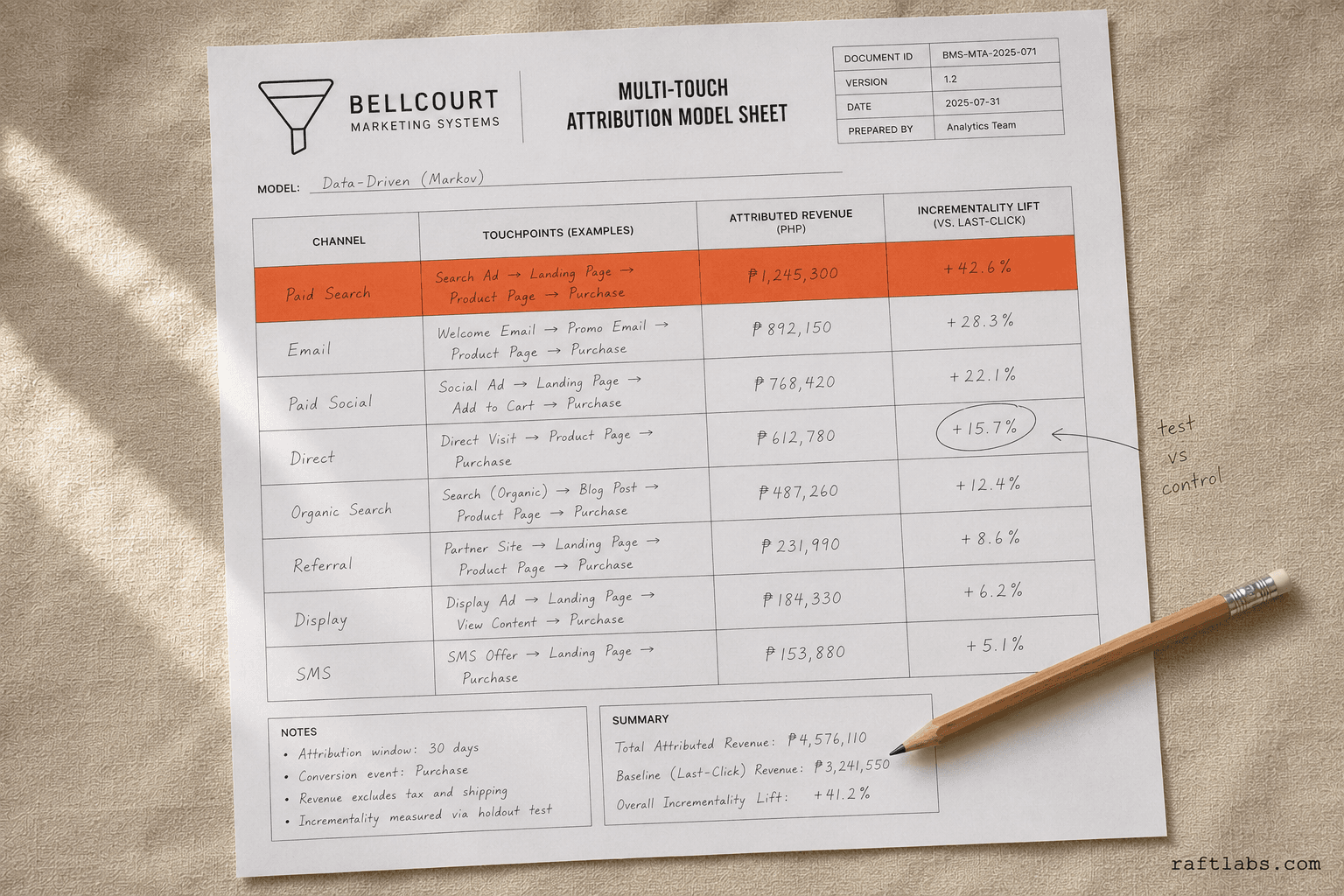
Marketing Attribution Platform Development
See the serviceTry it yourself
AI Discoverability Review
A real person checks it. Not a scanner. 2 business days.
Open the free tool
Article
Gong Pricing in 2026: Per-Seat Costs, Hidden Fees, and the Cost to Build Your Own
Gong costs $1,300-$1,920 per user per year before the mandatory platform fee, which adds $5,000-$50,000 annually. Here is a full breakdown of what you will actually pay, how Gong compares to Chorus, Salesloft, and Clari, and at what team size building your own conversational intelligence platform starts to make financial sense.
Read more
Article
AI for Knowledge Management: What Generative AI Replaces and What It Costs
Your Confluence has 10,000 pages and nobody can find anything. Generative AI fixes the search problem, surfaces knowledge gaps, and captures expert knowledge before it walks out the door. Here is what it costs and how to build it.
Read more
Article
AI in your CRM: 4 reasons it fails in the first 8 weeks
Most CRM AI projects produce a working demo, then die. Here are the four failure patterns we see every time - and what to fix before you start the build.
Read more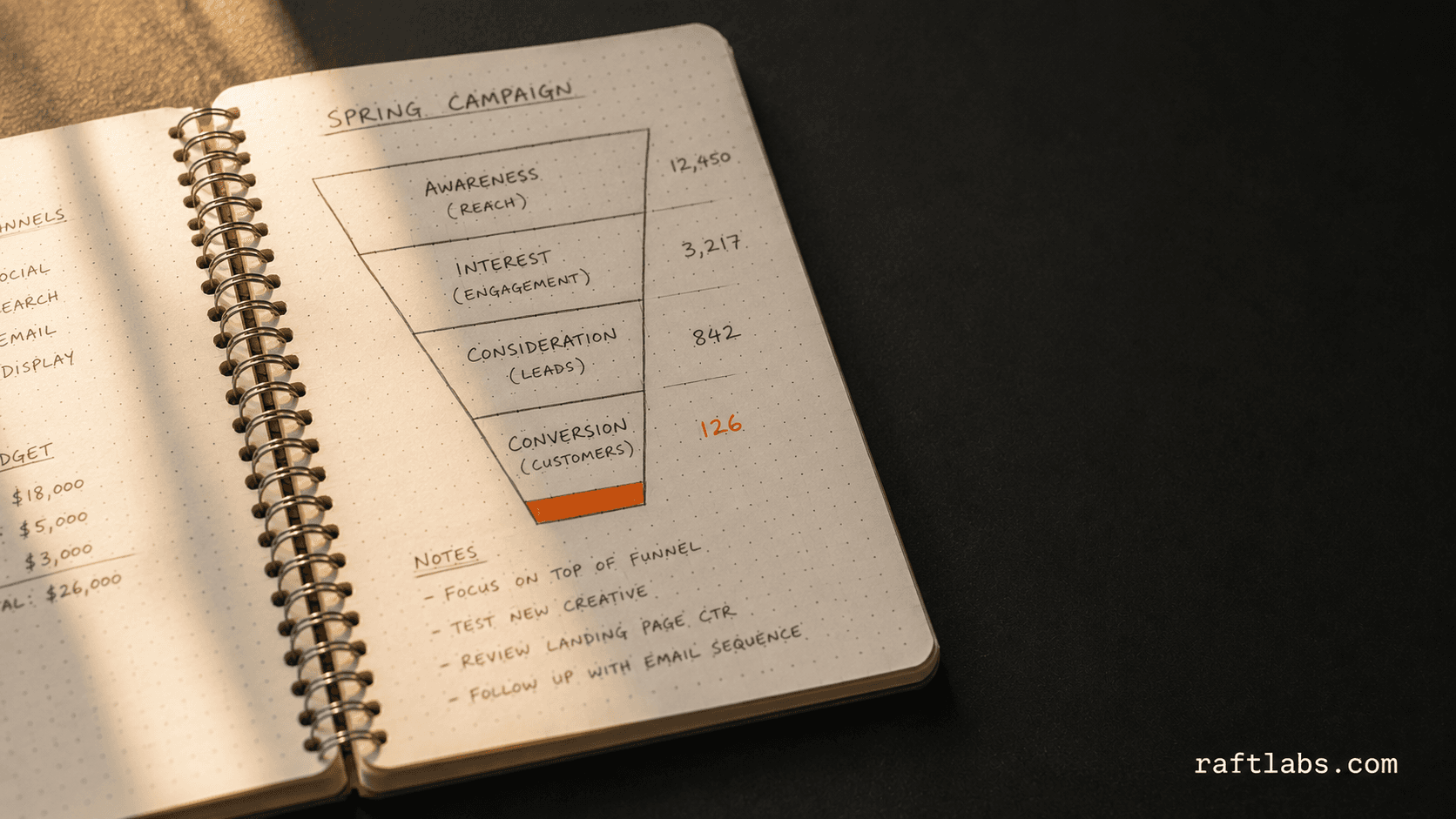
Article
Marketing automation: What works, what doesn't, and where to start
Marketing teams waste 40% of their budget on poorly targeted campaigns and manual tasks AI could automate. Here is where AI genuinely moves the needle - with real benchmarks, not vendor promises.
Read moreGrowth marketing is the practice of running structured experiments across acquisition, activation, retention, and referral to drive compounding growth - not just awareness campaigns. Traditional digital marketing focuses on top-of-funnel metrics like impressions, traffic, and reach. Growth marketing is accountable to the full funnel - trial sign-ups, activation rates, paid conversions, and revenue. If a campaign cannot move a metric that connects to revenue, it does not justify its spend. At RaftLabs, growth marketing runs in parallel with product development, not as a separate phase after the build ships. Positioning, SEO foundations, and analytics instrumentation start during the build so you arrive at launch with momentum, not a blank slate.
AEO is Answer Engine Optimization: structuring your content so it appears as the direct answer in search results and AI-generated responses. AIO is AI Overview Optimization: getting your brand featured in Google's AI Overviews, the AI-generated summaries that appear above traditional search results. GEO is Generative Engine Optimization: optimizing your content and online presence to be cited by AI tools like ChatGPT, Perplexity, Claude, and Gemini when users ask questions in your category. Together, these three disciplines represent the new frontier of search visibility. Ranking on page one of Google is no longer enough - your brand needs to be the source AI tools cite when they answer questions your customers are already asking. We build AEO, AIO, and GEO into the content strategy from day one, not as an afterthought.
We run them. Strategy, content creation, campaign management, reporting, and optimization. We are not a strategy-only consultancy that produces a document and leaves. Our default engagement is hands-on execution across whichever channels make sense for your product - SEO, content, paid, social, email, ASO, PR, or all of them. If you need a one-time strategy audit or a specific channel review, we can scope that separately, but we are built to run the work, not advise on it.
Yes. We prefer to work on products we understand deeply, which is why we run best when we are also the build team - no briefing overhead, no time spent reverse-engineering the product. But we do take on growth-only engagements. The onboarding is more intensive. We will spend more time on the product discovery phase, user interviews, analytics audit, and competitive review to build the same understanding our build clients start with on day one. We do not take on growth engagements blind - if we cannot understand the product well enough to position it honestly, we will tell you before we scope anything.
Marketing Automation is about building software that automates the execution side of marketing: lead nurturing pipelines, campaign deployment systems, lead scoring engines, and attribution reporting tools. It is a software product you own after delivery. Growth Marketing is about running the actual marketing work on your behalf: strategy, content, campaigns, SEO, AEO, GEO, social media, ASO, PR, design, and analytics - continuously. One is a product we build. The other is a service we run. Many clients benefit from both, and we can scope them as a single engagement.
Growth marketing engagements are priced on a monthly retainer, not a per-project fee. Retainers typically range from $3,000 to $15,000 per month depending on the number of active channels, content output volume, and the paid media budgets we are managing. We charge for our time and strategy - not a percentage of ad spend. Paid media budget runs through your own accounts. We start every engagement with a one-week strategy sprint at a fixed fee to define the channel stack, agree the KPIs, and confirm the monthly retainer before the ongoing engagement begins.
We agree KPIs before the engagement starts, tied to business outcomes rather than vanity metrics. Standard metrics we track include organic search traffic and keyword ranking positions, AI citation rate and brand mention frequency in AI answers, paid campaign cost per trial and cost per acquisition, email activation and conversion rates, App Store ranking by target keyword, social media reach and engagement rate, PR placements and share of voice, and multi-touch attribution showing channel contribution to pipeline and revenue. We report weekly on spend, results, and variance against plan. If a channel is underperforming, you hear about it in the same week's report with a recommendation - not at the quarterly review.
Work with us
Bring the rough workflow, half-built product, or messy brief. We will map the smallest useful first move, then send scope, timeline, and price in plain English.
Growth marketing for software companies is the practice of running simultaneous experiments across acquisition, activation, retention, and referral channels to drive compounding revenue growth. Unlike traditional digital marketing that focuses on brand awareness and impressions, growth marketing is accountable to the full funnel: trial signups, activation rates, paid conversions, and churn reduction. Services typically include SEO, AI visibility (AEO, GEO), performance marketing, content marketing, lifecycle email, app store optimization, and analytics.
A growth marketing engagement differs from a traditional marketing agency in three ways: it starts during product development rather than after launch; every campaign is measured against revenue rather than impressions; and when the same company builds the product and runs the marketing, there is no onboarding overhead. According to research from Princeton University (KDD 2024), content with statistics and cited sources earns up to 40% more visibility in AI-generated answers - an advantage that compounds when marketing and product work are aligned from the start.
A growth marketing retainer for a software company typically covers go-to-market strategy, SEO and AI visibility, content marketing, performance marketing (paid search and paid social), lifecycle email sequences, app store optimization, analytics and attribution setup, and conversion rate optimization. The specific mix depends on the product stage: a pre-launch product prioritizes GTM strategy, SEO foundations, and content; a post-launch product prioritizes paid acquisition, lifecycle email, and CRO.