Conversational AI platform for complex knowledge retrieval
- 48hr
- to usable insights from a natural-language query
- 12 weeks
- from concept to launch
Generative AI in Manufacturing
Manufacturing operations generate enormous volumes of documentation, process data, and equipment information that's currently underused. Generative AI in manufacturing applies LLMs to the documentation, diagnostic, and knowledge management problems that manufacturing teams deal with daily, technical documentation generation, equipment troubleshooting support, quality report automation, and operational knowledge capture.
We build generative AI applications for manufacturing that connect to your equipment data, quality systems, and operational knowledge, improving response time, documentation quality, and knowledge retention.
Technical documentation generation from engineering data and specifications
Equipment troubleshooting support using LLMs connected to maintenance history and manuals
Quality report automation from inspection data and SPC systems
Operational knowledge capture from experienced workers before they retire
Recent outcomes
AI automation · Multi-site operations
20k+ transactions in a day
Invoice and receipt OCR across a 40+ location US operator, with offline-first sync.
Workforce knowledge · Industrial pharma
25% less training time
Training and knowledge platform for 5,000+ field employees.
Conversational AI · Knowledge retrieval
48hr to usable insights
Natural-language interface over a complex knowledge base.
The problem
Technical documentation taking months to produce, always out of date, and never in the hands of the workers who need it?
Experienced workers retiring with operational knowledge that never got documented, and newer workers spending hours troubleshooting problems that have been solved before?
Short answer
RaftLabs builds generative AI applications for manufacturers across the US, UK, Europe, Canada, and the UAE: equipment troubleshooting assistants, SOP and documentation generation, quality report automation, and knowledge capture from retiring workers. Most teams launch a validated first version in 8 to 16 weeks at a fixed price, then expand.
Key takeaways
Trusted by






A pump trips on the line at 2 a.m. The one technician who had seen this exact fault a dozen times retired last spring. The newer tech on shift starts where everyone starts now: paging through a binder of OEM manuals, hunting the CMMS for a similar work order, calling a supervisor at home.
Now he describes the fault in plain language on the plant-floor tablet. The system pulls the right procedure, the three most similar past faults, and how each was resolved, every answer citing the document it came from.
The expertise didn't walk out the door. It's in the system now, one search away.
The documentation problem in manufacturing is structural: SOPs written once are rarely updated, maintenance knowledge lives in experienced technicians, and quality knowledge is scattered across inspection records that no one has time to synthesise. When an experienced worker retires or a new technician joins, the knowledge transfer is incomplete and expensive.
Generative AI in manufacturing makes that knowledge accessible at the point of need, the right maintenance procedure for this fault code on this equipment, the SOP for this operation, the quality history for this part number.
The value is concentrated where knowledge is hardest to reach.
For manufacturers losing knowledge to retiring workers and stale documentation, most of that value comes from one thing: faster access to the right information at the right moment.
Generative AI in manufacturing runs in two lanes. One lane is generative design and visual inspection: computer-vision and CAD territory. The other lane is language and knowledge: turning manuals, work orders, SPC records, and hard-won experience into answers a technician can pull up in seconds. RaftLabs builds the second lane. If your problem is a topology-optimized bracket or an inline defect camera, we will point you to a better-fit vendor.
RaftLabs has been shipping production software since 2015, with AI and knowledge-system work across the US, UK, Europe, Canada, and the UAE. The team that scopes your project ships it.
Everything on the left should already be true for your operation. Even one thing on the right, and the groundwork comes first.
SOPs, maintenance records, and OEM manuals scattered across systems and experienced workers' heads.
Experienced technicians approaching retirement, with expertise that never made it into documentation.
Source data already living in a CMMS, QMS, or engineering system we can integrate against.
What we build
Every build connects to the systems your teams already run. We integrate with CMMS platforms including IBM Maximo, SAP PM, Infor EAM, UpKeep, and Limble; QMS platforms including SAP QM, ETQ Reliance, MasterControl, and Intelex; and ERP systems including SAP S/4HANA and Oracle. We also ingest the unstructured sources knowledge actually lives in: OEM manuals in PDF, legacy SOPs in Word, CAD-derived BOM data, and IoT historian data.
Manufacturing process data is sensitive IP, so it never trains a public model. We use private LLM deployments (Azure OpenAI, AWS Bedrock, or Anthropic Claude on private infrastructure) with data processing agreements that prohibit training on your data, and on-premises deployment for air-gap or data-residency requirements. Documents are processed and indexed inside your infrastructure; only the retrieval context for a given query reaches the model. The security architecture is confirmed in week 1, not retrofitted before launch.
Walk us through the workflow. We'll tell you how a generative AI system would handle it, what it connects to, and what it costs to build.
How it works
Every project follows the same four phases. Scope is locked and price is fixed before development starts.
We map the manufacturing problem, the source data (CMMS, QMS, manuals, IoT historian), and the user workflow. You leave week 1 with a written scope document and a fixed-price quote. No development starts without your sign-off.
We design the ingestion pipeline, chunking strategy, vector database schema, and LLM routing before writing application code. Architecture decisions made here cost ten times less than the same decisions made in week 8.
Working system at a staging URL by the end of sprint one. Bi-weekly demos on your actual manufacturing data. QA runs in parallel with every sprint, not as a phase at the end.
Production deployment to your infrastructure (Azure, AWS, or on-premises) with monitoring activated on launch day. 8 weeks of post-launch support included in every project.
What clients say
Three-year average engagement. Founders and operators describing the work in their own words. No marketing varnish.

 Canada
I found RaftLabs to be the perfect partner for Perceptional, with their expertise in helping startup founders build MVPs, a free consultation, a prototype that matched my vision, and their unwavering support.
What a build costs depends on scope, not negotiation:
What it costs
A generative AI system grounded in your equipment data, quality systems, and operational knowledge, with the integrations and security architecture it needs to run in production.
Focused builds start at $25,000 and reach production in 8 to 20 weeks. Start with the troubleshooting assistant, then add documentation and quality reporting as it proves out.
Cost depends on source documentation volume, system integrations, and deployment architecture. Start with one troubleshooting assistant and expand into the full platform once it's live.
No hourly billing
Once we scope your first phase, that price is locked in writing. No hourly billing, no surprise invoices as the platform grows.
Data security
Private LLM deployments with data processing agreements that prohibit training on your data, and on-premises deployment for air-gap requirements. The security architecture is confirmed in week 1, not retrofitted before launch.
Stay on topic
Article
Multi-agent systems: Architecture patterns for production AI
Single-agent architectures hit a ceiling fast. Multi-agent systems break through it - but only if you pick the right coordination pattern. Here are the four that survive production.
Read more
Article
Generative AI development cost in 2026: what drives it
GenAI development costs $25K-$200K+ depending on what you're building. Here's what drives the price, four real budget scenarios, and ongoing costs.
Read more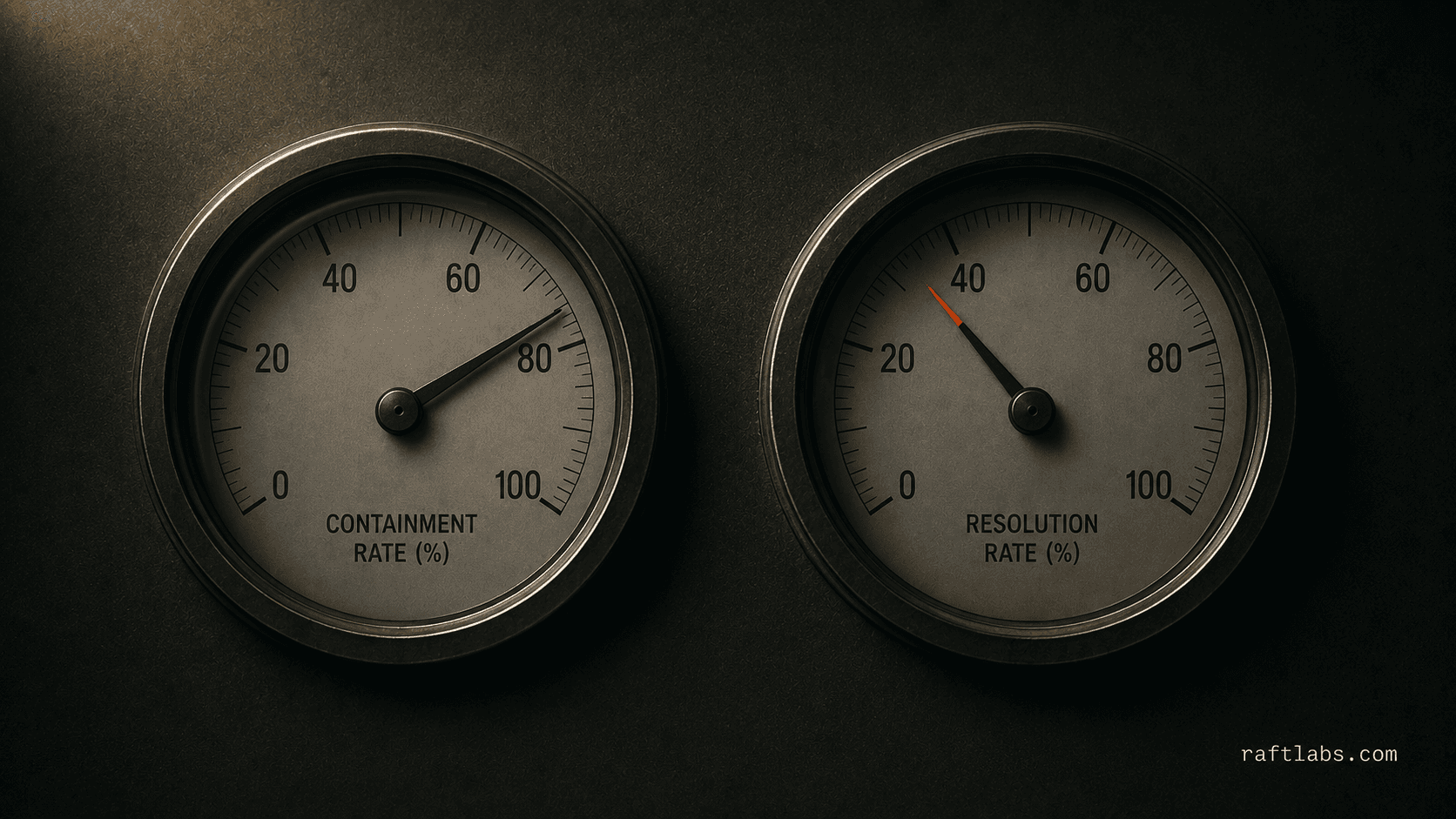
Article
Voice AI Resolution Rate vs. Containment Rate: The Number Your Vendor Is Hiding
Your voice AI vendor shows 87% containment. Your customers are still angry. Here is why containment rate is a vanity metric, what resolution rate actually measures, and what it costs when you confuse the two.
Read moreGenerative AI delivers the most value in manufacturing for: (1) Technical documentation, generating, updating, and maintaining SOPs, work instructions, maintenance procedures, and quality documentation from engineering data and subject matter expert input. Documentation that takes months to produce manually can be accelerated dramatically. (2) Equipment troubleshooting support, LLMs connected to equipment manuals, maintenance history, and fault codes provide first-line diagnostic support to maintenance technicians, reducing mean time to repair. (3) Quality reporting, automating the generation of quality reports, non-conformance reports, and corrective action documentation from inspection data, reducing reporting time for quality engineers. (4) Knowledge management, capturing and surfacing the tacit knowledge of experienced workers through conversational interfaces, reducing knowledge loss from retirements and turnover.
We build a RAG (retrieval-augmented generation) system that connects an LLM to your equipment documentation, OEM manuals, maintenance procedures, past maintenance records, and fault code databases. When a maintenance technician describes a symptom or fault code, the system retrieves relevant documentation and provides specific diagnostic steps, likely causes based on historical patterns, and recommended remediation. The system references source documents so the technician can verify the guidance. This reduces the time to first diagnostic action and helps newer technicians access the expertise that's currently only available in experienced technicians' heads.
Manufacturing process data, production parameters, quality data, equipment specifications, and proprietary procedures, is typically sensitive IP. We use private LLM deployments (Azure OpenAI, AWS Bedrock, or Anthropic Claude on private infrastructure) with data processing agreements that prohibit training on your data. On-premises LLM deployment is available for manufacturers with strict data residency or air-gap requirements. Documents are processed and indexed within your infrastructure; only the retrieval context is sent to the LLM for each query. We confirm the appropriate architecture based on your data classification and security requirements during scoping.
An equipment troubleshooting assistant with RAG over your maintenance documentation and fault code database typically runs $25,000 to $60,000. A technical documentation generation system producing SOPs and work instructions from engineering data typically runs $30,000 to $70,000. A full manufacturing AI platform covering troubleshooting, documentation, and quality reporting typically runs $60,000 to $140,000. Cost depends on source documentation volume, system integrations (CMMS, MES, QMS), and deployment architecture. We scope every project before pricing it.
A focused troubleshooting assistant or documentation generation system typically takes 8 to 12 weeks from signed scope to production. More complex platforms covering troubleshooting, documentation, and quality reporting run 14 to 20 weeks. Scope is fixed and price is locked before development starts, so timeline estimates are reliable.
We integrate with the systems manufacturing teams already use. CMMS platforms including IBM Maximo, SAP PM, Infor EAM, UpKeep, and Limble. QMS platforms including SAP QM, ETQ Reliance, MasterControl, and Intelex. ERP systems including SAP S/4HANA and Oracle. We also ingest unstructured sources: OEM manuals in PDF, legacy SOPs in Word, CAD-derived BOM data, and IoT historian data. Integration approach is confirmed during the scoping week.
Work with us
We scope Generative AI in Manufacturing in 30 minutes. You walk away with a clear cost, timeline, and approach. No commitment required.