





AI Development Company

AI development company for systems that survive real users.

A convincing AI prototype does not prove the product will handle messy data, changing models, rising usage, or a customer asking the question nobody tested. RaftLabs turns a defined AI use case or existing prototype into a production system with evaluation, guardrails, monitoring, and cost controls.

12 weeks Conversational AI20,000+ transactions Document AI20% less decision time Healthcare AI

Explore by region

The problem

Sound familiar?

  • Does the prototype work only on the examples used to make the demo?

  • Can anyone explain output quality, failure handling, and cost at your expected volume?

Short answer

An AI development company turns a defined use case into software that can be tested, monitored, and operated. RaftLabs develops RAG, agent, ML, and document AI systems. A proof of concept starts at $9,500, with success criteria agreed before development.

The demo is the easy part.

A demo gets ten clean examples and an attentive room. A product gets incomplete records, ambiguous requests, impatient users, provider outages, and a model bill that grows with every success.

AI development is the work between those two moments. RaftLabs keeps what the prototype proved, then builds the evaluation, product workflow, integration, and operating controls required for real use.

Proof

12 weeks
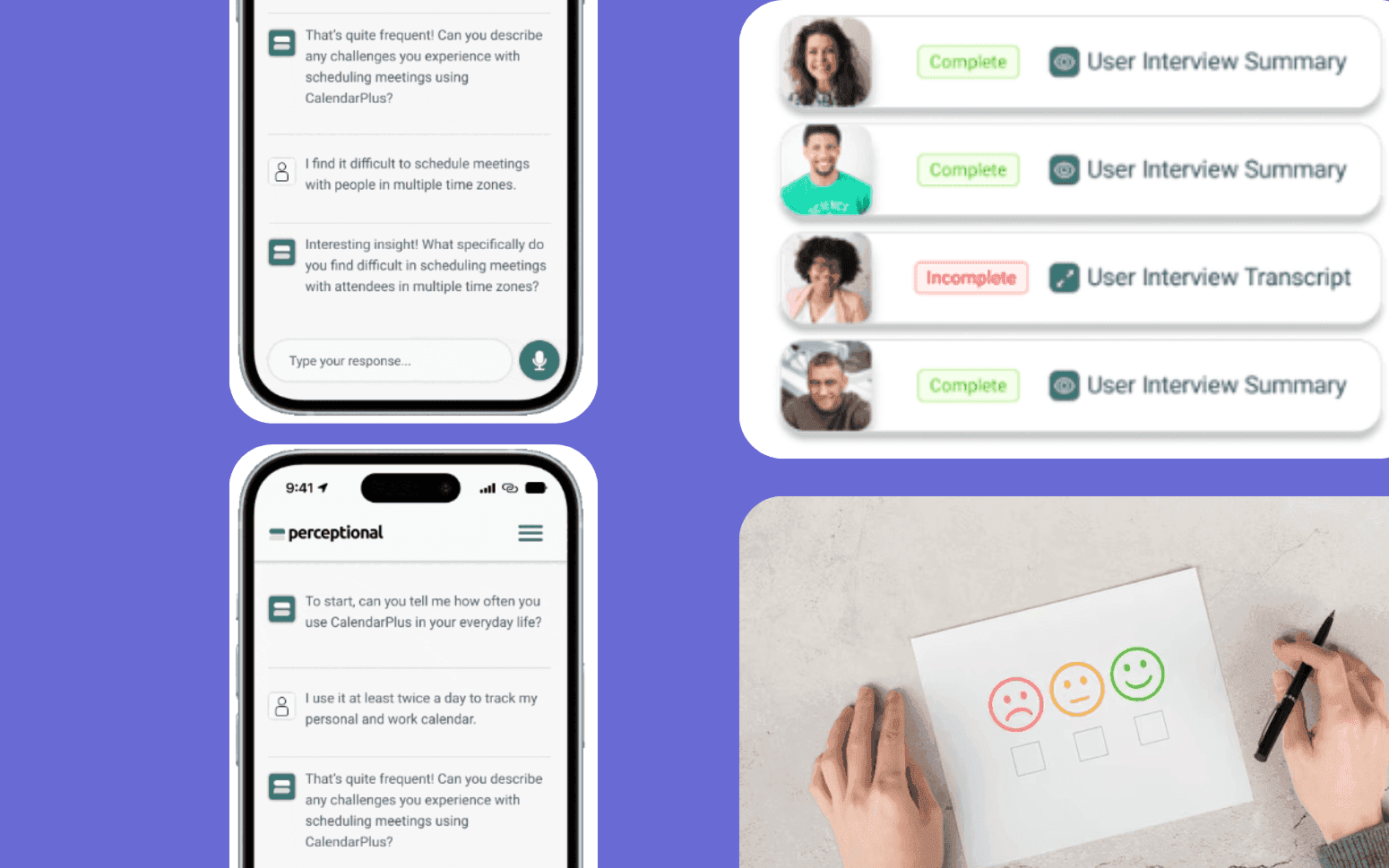
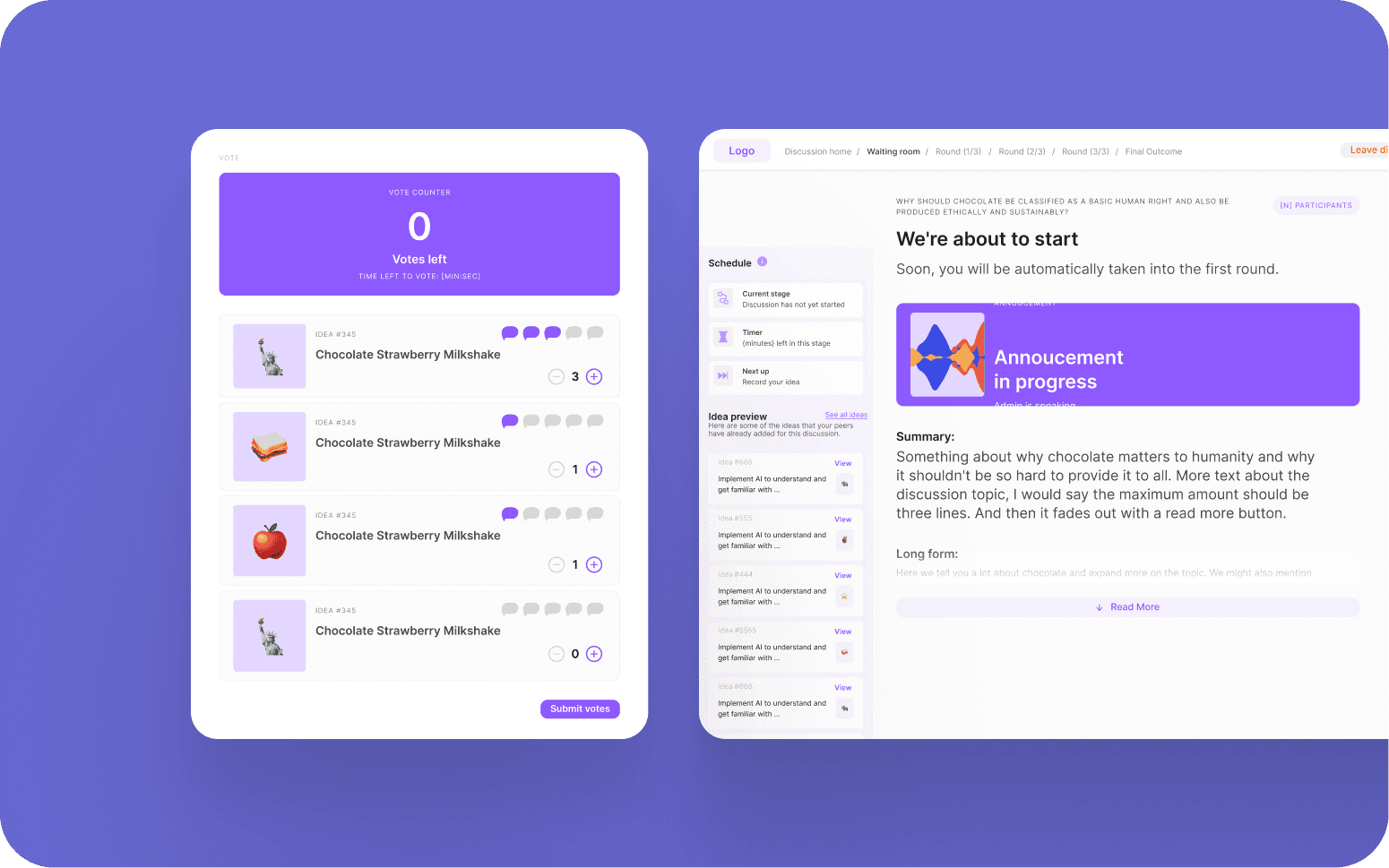
Perceptional conversational AI launch
RaftLabs project record
20,000+
gas-station transactions processed in one test day
AI OCR project record
20%
less time spent on routine clinical decisions
Remote patient monitoring project record

Start when you can name the job and the evidence.

AI is a fit when the uncertainty can be tested. It is not a substitute for an undefined product or an ownerless decision.

A fit
01

A user has a repeated task, decision, or information gap that current software handles poorly.

02

You can provide representative inputs and an existing baseline for quality, time, or cost.

03

A named owner can approve failure rules, human review, and the first release boundary.

Not a fit
  • The goal is simply to add AI without changing a measurable user or operating outcome.
  • No usable data or examples exist and nobody owns the work needed to create them.
  • The use case requires perfect output and has no safe review or fallback path.

Scope

Choose the AI system by the job

  • 01
    Generative AI products
    Use an LLM or image model when the product must create, rewrite, summarize, or answer from supplied context. The system still needs a product workflow and measured output quality. See generative AI development when generation is the core job.
  • 02
    AI agents
    Use an agent when the software must choose and execute several tool-backed steps. Permissions, operating limits, logs, and handoff matter as much as the model. See AI agent development for workflow automation with controlled execution.
  • 03
    Machine learning systems
    Use machine learning when historical data can support a prediction, ranking, classification, or forecast. The production work includes the data pipeline, decision threshold, monitoring, and retraining path. See machine learning development .
  • 04
    Document and multimodal AI
    Use document AI when PDFs, scans, images, or forms are the main input. Extraction is only one stage; validation, exception review, and delivery into a system of record complete the workflow. See intelligent document processing .

Should you buy an AI tool or develop a custom system?

Off-the-shelf AI vs custom AI development

Off-the-shelf AICustom AI system
Best whenThe task and workflow are commonThe workflow, data, or customer experience is specific
Time to valueDays or weeks when configuration is enoughWeeks or months after feasibility is proved
ControlLimited to vendor settings and interfacesDesigned around your permissions, review, and failure rules
OwnershipLicence access to a vendor productOwnership of delivered code and agreed project IP
First testTrial with real users and dataTime-boxed proof against a written success threshold

Buy when a product solves the task cleanly. Develop when an important workflow or product advantage cannot be reached through configuration. We make that call before recommending a larger phase.

How it works

From uncertain use case to production AI

Every phase answers a decision. A phase that fails its threshold should stop the spend.

  1. Phase 1
    01

    Define the decision and evidence

    Name the user, the exact task, today's baseline, representative inputs, and the cost of a wrong result. Set a measurable threshold for quality, latency, and running cost before selecting a model.

  2. Phase 2
    02

    Prove feasibility on real inputs

    Test the smallest viable approach on data that includes ordinary cases and awkward ones. Record where it fails. The output is evidence and a recommendation, not a demo dressed as a product.

  3. Phase 3
    03

    Engineer the operating system

    Add the product workflow around the chosen approach: permissions, integrations, evaluation, monitoring, cost limits, and human review. Model changes must pass the same test set before they reach users.

  4. Phase 4
    04

    Release with a measured boundary

    Start with a controlled user group or workload. Compare live results with the baseline and watch failure, escalation, latency, and cost. Expand only after the named owner accepts the evidence.

What usually breaks after the prototype

The test set is too friendly
A benchmark made from the same examples used during development hides failure. Hold back representative cases and include the inputs people avoid showing in a demo.
The model owns a decision it should only support
High-impact decisions need explicit authority, review, and appeal paths. The software records the recommendation and evidence; the business owns the decision.
Provider cost is treated as an afterthought
Measure tokens, calls, storage, and compute at the expected volume. A cheaper model that clears the quality threshold may be the better production choice.
Nobody plans for change
Models, prompts, data, and user behaviour change. Version the important parts, rerun evaluations, and keep a rollback path.

Scope and price

Test the hard part before funding the whole product.

A focused proof of concept starts with one use case, representative data, a baseline, and a written pass threshold.

Starts at $9,500

A proof of concept usually takes 3 to 6 weeks. A production phase is priced after feasibility and operating requirements are clear.

If feasibility is already proven, we can scope the first production workflow directly rather than repeat discovery you have already done.

A real stop decision

If the proof misses the agreed threshold, we document why and do not turn uncertainty into a larger build.

Fixed-price phase

Each agreed phase has written deliverables, acceptance criteria, and price. Scope changes are approved before work starts.

Stay on topic

More on AI development

Frequently asked questions

An AI development company designs the software, data flows, model interactions, evaluation, and operating controls around an AI use case. The work can include generative AI, retrieval, agents, machine learning, computer vision, voice, or document processing. The right category depends on the job, data, and acceptable failure.

Use generative AI when the system must create or transform content, an AI agent when it must take multi-step actions, machine learning when it must predict or classify from historical data, and intelligent document processing when documents are the main input. The AI development page is the umbrella for buyers who have not chosen a path.

Start with a proof of concept when model quality, data readiness, latency, or running cost is genuinely uncertain. A useful proof has representative inputs, a baseline, a pass threshold, and a stop decision. A polished demo without those four things does not reduce project risk.

A focused proof of concept starts at $9,500. A production AI feature commonly starts around $25,000 and grows with integrations, data work, evaluation depth, user roles, and operating controls. RaftLabs scopes each phase and fixes its price before development starts.

Clients own the delivered application code, prompts, evaluation assets, and agreed project IP. Third-party models remain subject to their providers' terms. Model and cloud usage should run through client-owned accounts where practical, so the buyer sees the operating cost directly.

Work with us

Bring the use case, the data, and the uncomfortable edge case.

We will identify the smallest test that can tell you whether the idea deserves a production build.

  • Scope and cost agreed before work starts. No surprises. No obligation.
  • Working prototype within 3 weeks of kickoff.
  • Pay by milestone. You see progress before each invoice.
  • 60-day post-launch warranty. Bug fixes, UI tweaks, and deployment support. No retainer.
  • All conversations are NDA-protected.