AI Development Company

Most AI projects fail because the team picked an approach before diagnosing the problem. We scope the right approach first, then build across the full stack from data pipelines to production deployment.

See our work
  • Generative AI, RAG, AI agents, ML, NLP, computer vision, and voice AI

  • Model-agnostic: GPT-4o, Claude, Gemini, Llama, and open-source models

  • Production-grade: monitoring, evaluation, cost management, and failure handling

  • From proof of concept to full production deployment

Recent outcomes

Conversational AI · Enterprise operations

Built a conversational AI chatbot that handles routine queries end-to-end, removing the human review bottleneck entirely.

70% queries resolved without human intervention

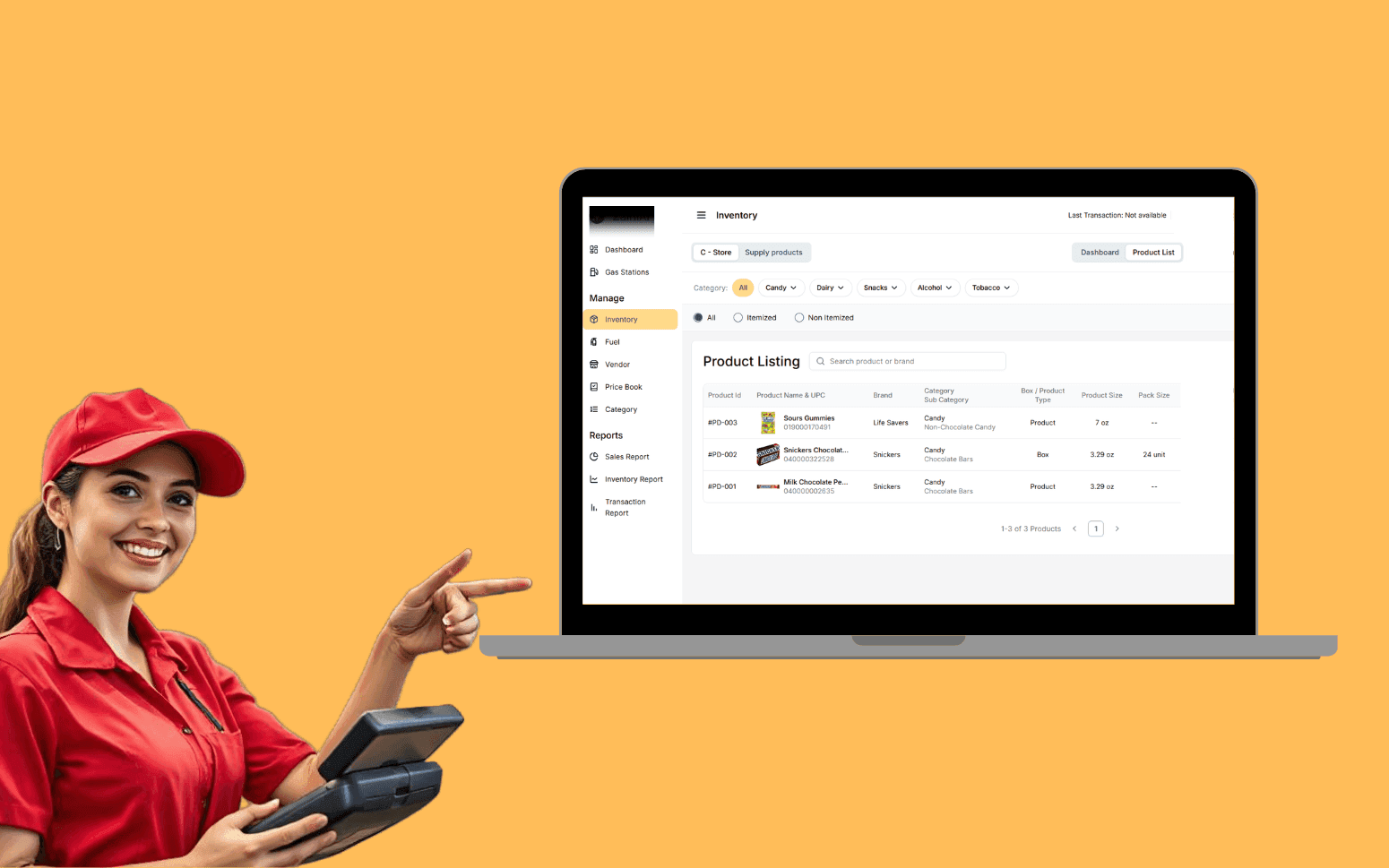
AI OCR · Gas station operations

Deployed an AI OCR pipeline that processes fuel transaction records in real time, eliminating manual data entry errors.

20,000+ daily transactions processed

Remote patient monitoring · US healthcare

Shipped a HIPAA-compliant AI RPM app in 12 weeks that cut the time clinicians spend reviewing routine patient data.

20% faster clinical decisions
4.9 / 5 on ClutchSee our work

The problem

Sound familiar?

  • Have an AI use case but unsure which approach (RAG, fine-tuning, agents, or custom ML) is the right fit?

  • Built an AI prototype that works in demo but fails in production at real-world scale?

The short answer

RaftLabs builds AI systems for businesses in the US, UK, and Australia: generative AI, RAG pipelines, AI agents, ML, NLP, computer vision, and voice AI. Model-agnostic across GPT-4o, Claude, and Gemini. POCs from $8,000. Production AI apps from $25,000. 20+ AI products shipped in 24 months.

Updated July 2026

Trusted by

Vodafone
Nike
Microsoft
Cisco
T-Mobile
Aldi
Heineken
GE

AI development, by the numbers

AI products shipped in 24 months
20+
from kick-off to production-ready AI product
12 weeks
rated by clients on Clutch
4.9/5
years shipping software and AI products
9+

The gap between AI demo and AI product

Every impressive AI demo has three things behind it: a well-scoped problem, the right approach for that problem, and engineering discipline to make it work reliably. Most failed AI projects got at least one of those wrong.

We start every engagement by getting all three right.

Capabilities

What we build

Generative AI applications

Production applications powered by large language models: AI assistants grounded in your knowledge base, document analysis and extraction, content generation at scale, and conversational interfaces for your specific use case. We handle prompt engineering, RAG pipeline development, output validation, and the full application layer. Model-agnostic: GPT-4o, Claude, Gemini, or Llama depending on what your use case requires. See Generative AI Development and Generative AI Integration.

RAG pipelines and knowledge retrieval

Retrieval-augmented generation systems that ground AI responses in your documents, data, and knowledge. Ingestion pipelines for PDF, DOCX, and HTML, hybrid vector plus keyword search, re-ranking, and retrieval evaluation against a golden dataset before anything reaches production. Vector storage in Pinecone, Weaviate, Qdrant, or pgvector, chosen to fit your existing infrastructure. See RAG Pipeline Development and Vector Database Development.

AI agents and multi-step automation

AI agents that plan and execute multi-step tasks using tools: querying databases, calling APIs, processing documents, and making decisions based on intermediate results. LangGraph orchestration for stateful workflows. Human-in-the-loop checkpoints for high-stakes decisions. Production failure handling and monitoring. See AI Agent Development, Multi-Agent Systems, and AI Orchestration.

Machine learning and predictive analytics

Custom ML models for prediction, classification, and anomaly detection: customer churn prediction, demand forecasting, fraud detection, pricing optimization, and recommendation systems. Data audit, feature engineering, model training, evaluation, and production deployment with monitoring. See Machine Learning Development and Predictive Analytics.

NLP and computer vision

Natural language processing for text classification, entity extraction, sentiment analysis, and document understanding. Computer vision for object detection, image classification, document OCR, and visual inspection. Both traditional ML-based and LLM-based approaches depending on your data and accuracy requirements. See NLP Development and Computer Vision Development.

Voice AI and conversational interfaces

Voice AI systems for inbound call handling, phone interviews, customer support, and conversational automation. Speech-to-text, intent recognition, dialogue management, and text-to-speech integration. Real-time latency optimization for natural conversation feel. See Voice AI Development and AI Chatbot Development.

How it works

From first call to live product: how every project runs.

The same four steps on every engagement. A 6-week voice AI deployment runs the same shape as a 16-week enterprise project.

  1. Week 1
    01

    Diagnose

    We spend the first week understanding the problem, not presenting a solution. Discovery session, interviews with the people closest to the work, workflow mapping, and a technical audit of what you already have. You leave knowing exactly what's broken and why previous attempts didn't fix it.

  2. Weeks 2–3
    02

    Design

    Low-fidelity wireframes before any code is written. You see the product before we build it. Scope, timeline, and fixed price locked at this stage. No surprises after work starts.

  3. Weeks 4–12
    03

    Make it real

    Bi-weekly agile sprints. Weekly progress calls. Direct access to the team and project management tools. Working software at the end of every sprint. Not a big-bang delivery at the finish line.

  4. Weeks 12–16
    04

    Launch

    Production deployment, QA sign-off, load testing, and team handover. You own the full codebase from day one. We stay on for post-launch iteration and support. Nothing gets thrown over the wall.

Why us

Why teams choose RaftLabs

  1. Senior engineers build what they scope

    The engineers who assess your problem also build the solution. No bait-and-switch, no offshore handoff after the contract is signed. The team you meet in week 1 ships in week 12.

  2. Fixed price before development starts

    We scope the work, calculate the cost, and lock it in writing before any development starts. A scope change is a change request: priced, agreed, or dropped. It never absorbs into the project and appears on the final invoice.

  3. 9 years and 100+ products shipped

    Clients include Vodafone, T-Mobile, Aldi, Nike, Cisco, and Lockheed Martin. Track record across AI, SaaS, mobile, automation, and enterprise platforms across healthcare, fintech, logistics, and hospitality.

  4. Compliance built in from the start

    GDPR, HIPAA, SOC 2 — compliance requirements are scoped in week 1, not retrofitted before launch. We have shipped HIPAA-compliant systems for US healthcare clients and GDPR-compliant products for European markets.

The stack we build AI products on

We are model-agnostic and infrastructure-agnostic. We pick the model, framework, and vector store that fit your accuracy, cost, latency, and data-residency needs, then document every choice so any competent engineering team can maintain it. The technologies we reach for most often, aligned with the models and stores named across this page:

LayerTechnologies we useWhere it fits
ModelsGPT-4o, Claude, Gemini, Llama, MistralReasoning, generation, and extraction; selected per task, cost, and data residency
Frameworks and orchestrationPyTorch, TensorFlow, LangChain, LangGraph, LlamaIndexModel training, RAG assembly, and stateful multi-step agent workflows
Vector databasesPinecone, Weaviate, Qdrant, pgvectorEmbedding storage, hybrid search, and metadata-filtered retrieval
Backend and APIsPython, FastAPI, Node.jsServing models, business logic, and integration endpoints
Cloud and MLOpsAWS, Google Cloud, Azure, Docker, KubernetesContainerized, monitored, production-grade AI deployment

The rule holds at every layer: no proprietary frameworks that lock you in, and no stack we cannot hand to your team on day one.

What AI development costs

We price by project, not by the hour. After a scoping session you get a fixed-cost proposal with a defined scope, timeline, and price, so you know the number before development starts.

Project typeTypical timelineCost range
Proof of concept, one focused technical question2–4 weeks$8,000–$20,000
AI feature integrated into an existing product4–8 weeks$25,000–$75,000
Standalone AI application with RAG, evaluation, and monitoring8–14 weeks$50,000–$150,000
Complex multi-agent system or custom ML pipeline3–6 months$100,000–$300,000+

What pushes cost up: high accuracy thresholds that need fine-tuning or custom ML, strict compliance such as HIPAA, SOC 2, and GDPR, and real-time latency requirements. What keeps it down: a narrow first scope, a well-labeled dataset, and starting with a proof of concept before committing to a full build. We scope every project before pricing it.

Have an AI use case you want to validate?

Tell us the problem, your data, and what good output looks like. We'll tell you which approach we'd recommend and what a proof of concept would involve.

AI development use cases by industry

AI development patterns repeat across industries. What changes is the data environment, the accuracy threshold that makes a use case viable, and the compliance constraints on deployment. We have shipped production AI systems across the following verticals.

Industries

Where we have built AI

  • 01

    Healthcare

    HIPAA-compliant AI systems for US and UK healthcare: remote patient monitoring (vitals from CGM, BPM, and pulse oximeter devices, automated threshold alerts to provider dashboards), clinical documentation assistance (SOAP note generation from encounter audio, charting time reduction of 30-60%), prior authorization automation, and AI-assisted patient triage. Every healthcare AI system we ship includes PHI encrypted at rest and in transit, audit logs for all AI-generated outputs used in clinical decisions, and human-review requirements for any AI recommendation that affects patient care. See AI for healthcare .

  • 02

    Financial services and fintech

    Document extraction pipelines for lending (bank statements, pay stubs, and tax returns processed without manual keying), fraud detection classifiers trained on transaction data, AML anomaly detection, credit risk scoring models, and customer support AI deflecting routine account queries. Compliance constraints assessed in every fintech engagement: GDPR and CCPA for personal financial data in LLM prompts, explainability documentation for AI-assisted credit or underwriting decisions. See AI for fintech .

  • 03

    Logistics and supply chain

    Demand forecasting models trained on 12-24 months of historical order data (inventory holding cost reduction of 15-25% when models outperform naive baselines), route optimization, dynamic ETA prediction, exception detection systems alerting on freight anomalies before delays escalate, and document extraction pipelines processing bills of lading and freight invoices into TMS and ERP systems without manual data entry. See AI for logistics .

  • 04

    Insurance

    Claims triage automation (severity classification and routing without manual assessment), FNOL document extraction, subrogation opportunity identification in claims data, underwriting risk scoring from third-party data, and churn prediction for policy renewals. Key engineering requirement in insurance AI: decision audit trails that can be shown to regulators and customers, built into every model output. See AI for insurance .

  • 05

    Retail and e-commerce

    Personalized recommendation engines (3-8% average order value lift against baseline), dynamic pricing on competitive SKUs, demand forecasting for inventory, review sentiment analysis at scale, and customer support deflection for order status and policy queries. Data minimum for recommendation AI: typically 50,000+ transactions and 1,000+ products to outperform simple heuristics. We quantify the threshold before recommending a custom build. See AI for retail .

  • 06

    Manufacturing and industrial

    Predictive maintenance models using time-series vibration, temperature, and current data to detect equipment failure 7-30 days before it occurs, computer vision quality control (defect detection on production lines), yield optimization models, energy consumption forecasting, and AI-assisted safety compliance monitoring. Typical data requirement: 6-18 months of clean sensor data with labeled failure events. See AI for manufacturing .

AI Development Company, scoped in one call.

Tell us what's broken. Within one business day you get a straight take on cost, timeline, and the right first step. No deck, no pressure.

Stay on topic

More on AI development

Frequently asked questions

The right approach depends on what your AI system needs to do, what data you have, and what constraints you're operating under. RAG (retrieval-augmented generation): if you need to answer questions from your existing documents, knowledge base, or data, without training a model. AI agents: if you need to automate multi-step workflows where the AI needs to use tools, make decisions, and adapt to intermediate results. Fine-tuning: if you have a specific, narrow task and a labeled dataset, and a general model's accuracy isn't sufficient. Custom ML: if you have a prediction or classification problem, labeled historical data, and need a model trained on your specific data. We diagnose the right approach in a scoping session before recommending a build.

No. We use OpenAI (GPT-4o, GPT-4o mini), Anthropic (Claude 3.5 Sonnet, Claude 3.7), Google (Gemini 1.5 Pro, Gemini 2.0), Meta (Llama 3), and open-source models depending on what's right for the use case. Model selection is driven by performance on your task, cost at your volume, data residency requirements, and latency constraints. We have production experience with all the major frontier models and will tell you the trade-offs honestly, including when a cheaper or open-source model is a better fit than the most capable frontier model.

An AI proof of concept (POC) is a time-boxed build that answers a specific technical question: does this approach work on our data, with acceptable quality, at feasible cost? POCs make sense when: the task is novel enough that there's genuine uncertainty about whether AI can do it well; the data quality or availability is unknown; or there are compliance, latency, or cost requirements that need to be validated before a full build. We run focused 2-4 week POCs with a defined success criterion. If the POC succeeds, we scope the production build. If it doesn't, you've spent a fraction of what a failed production build would cost.

Quality in production requires evaluation infrastructure, not just good prompts. We build: evaluation datasets representing real query distribution, automated quality scoring using LLM-as-judge for qualitative outputs, regression testing to catch quality degradation when prompts or models change, production monitoring for output quality metrics over time, and human review queues for flagged outputs. Quality evaluation is not optional for production AI systems: it's the only way to know if the system is working.

Costs range significantly by scope. An AI proof of concept runs $8,000 to $20,000 for a 2-4 week focused investigation. A production AI feature integrated into an existing product runs $25,000 to $75,000. A standalone AI application with RAG, evaluation, and monitoring runs $50,000 to $150,000. A complex multi-agent system or custom ML pipeline runs $100,000 to $300,000+. We provide fixed-cost proposals after a scoping session, not hourly estimates that shift as scope changes.

We have shipped AI products for healthcare (HIPAA-compliant remote patient monitoring), financial services (fraud detection, document extraction for lending), logistics (route optimization, demand forecasting), retail (recommendation engines, dynamic pricing), and legal (contract review, document analysis). Most AI approaches, RAG, agents, ML classifiers, translate across industries because the underlying engineering patterns are similar. The domain knowledge that matters is understanding your data, your compliance constraints, and what good output looks like in your context.

Development time varies based on complexity. Simple AI apps typically take 1 to 2 months (6 to 8 weeks), while full-featured products can require 3 to 4 months (12 to 14 weeks). We work closely with you so your AI product meets your timeline expectations. Integration into an existing product typically runs 4 to 8 weeks depending on the complexity of your codebase and the AI capability being added.

Most of the AI work we do is integration into an existing product rather than a greenfield build. Common patterns include adding document processing to an existing workflow tool, embedding a support chatbot into a customer-facing product, or adding an AI layer to existing data pipelines for analytics or anomaly detection. The starting point is the same as a new build: a discovery session where we map your existing architecture, identify the integration points, and scope the work before any development starts.

Check the portfolio first. A company that has shipped AI in your industry understands the edge cases and compliance requirements you will actually hit. A company that has only shipped demos will discover them at your expense. After the portfolio, look at the process. Do they show you a working prototype before you commit to a full build? Do they lock the price before development starts? Do they stay available after launch? Finally, ask who builds the work. The team that pitches the project should be the team that builds it. Bait-and-switch, where senior engineers close the deal and junior contractors do the work, is common, so ask directly.

Data security is scoped in week 1, not retrofitted before launch. We have shipped HIPAA-compliant AI for US healthcare clients, SOC 2-compliant systems for financial services, and GDPR-aligned products for European markets. Standard practices across every project include data processing agreements before development starts, access controls and audit trails designed into the architecture from the first sprint, and clear documentation of where data flows, including which third-party models see what data. We sign NDAs before any technical conversation begins.

Work with us

Tell us what you need. We'll tell you what it would take.

We scope AI Development Company in 30 minutes. You walk away with a clear cost, timeline, and approach. No commitment required.

  • Scope and cost agreed before work starts. No surprises. No obligation.
  • Working prototype within 3 weeks of kickoff.
  • Pay by milestone. You see progress before each invoice.
  • 60-day post-launch warranty. Bug fixes, UI tweaks, and deployment support. No retainer.
  • All conversations are NDA-protected.

AI by industry

Industry-specific AI pages covering the use cases most common in each vertical