
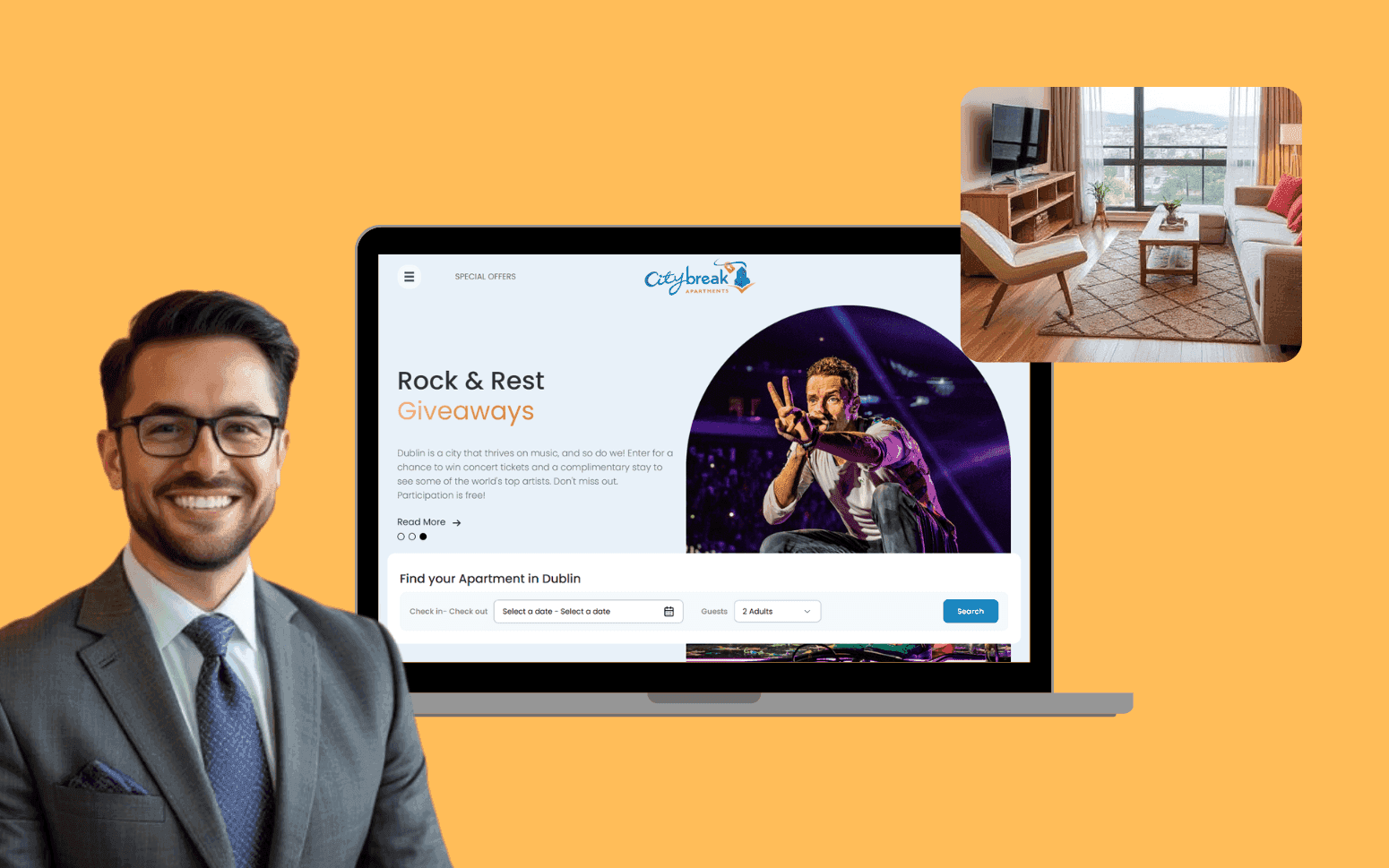
Booking Engine Software for Hotels
Custom Booking Engine Software for Hotels
Most OTA bookings are a margin tax on your own guests. We build direct booking engines, web and mobile, for hotels, resorts, serviced apartments, and vacation rentals that connect to your PMS, cut the OTA commission, and give your revenue team full control over pricing. Full IP ownership.
Complete ownership of your guest relationships and booking data.
Stop paying OTA commission on guests who book direct.
A booking engine on web and mobile, synced with your PMS (RMS Cloud, Opera, Cloudbeds) in real time.
Fixed price, full IP ownership.
Bring the problem, the current workflow, or the existing code. We reply with a practical next step within one business day.
Trusted by


































The brief
Start with what is not working.
Good software decisions begin with the constraint, not a list of features or a preferred technology.
01
Paying OTA commission on guests who found you by name and still ended up booking through Booking.com because your direct booking option is harder to use?
02
Direct booking button on your website that routes through an OTA widget, so you pay commission on guests who came directly to you?
Plain answer
Booking engine software lets hotels take direct reservations on their own site and app instead of paying OTA commission. RaftLabs builds custom booking engines, web and mobile, integrated with your PMS and channel manager, with full IP ownership.
What to remember
- Booking engines integrate in real time with PMS platforms including RMS Cloud, Opera, and Cloudbeds, and with channel managers like SiteMinder and RateGain.
- A direct booking engine removes the OTA commission on guests who book direct.
- A custom booking engine pays for itself in commission saved once a meaningful share of bookings shift direct; off-the-shelf SaaS is a better fit for small, single-property operators with simple pricing.
- Self check-ins grew 7x after launch for City Break Apartments, reaching 72+ weekly self check-ins within 2 months, and the new booking engine reached 580+ active users within 2 months of rollout.
Booking engine software lets a hotel take reservations directly on its own site and app. A custom booking engine on web and mobile is the most direct lever to recover that margin.
Why our booking engine software stands out
- shipping production software
- Since 2015
- Rated by Clutch
- 4.9/5
The cost of OTA dependence
Run the numbers on a mid-size property and OTA commission stops looking like a minor line item. Commission on OTA bookings, often on guests who searched for the hotel by name, adds up fast over a single year. Want to see the revenue-per-room impact on your own numbers? Try the RevPAR calculator.
Not sure where your own reservation flow is leaking guests to OTAs? Get a free audit of your booking page.
What you get
What a custom booking engine changes
Direct bookings without the OTA commission
Every OTA reservation costs you commission, often on guests who searched for your property by name. A branded booking engine on your own site and app takes that margin back, and puts pricing, promotions, and cancellation rules under your control instead of a marketplace's.
Self-service check-in guests actually use
For City Break Apartments in Ireland, we paired the booking engine with keyless entry and mobile self check-in. Self check-ins grew 7x after launch, reaching 72+ per week within 2 months, and the front desk stopped being a queue at 11pm.
Guest data you own, not the OTA's
When a guest books through an OTA, the OTA keeps the relationship. With your own booking engine, guest profiles, booking history, and preferences are yours to use for loyalty pricing, repeat-stay offers, and remarketing. City Break's new booking site reached 580+ active users within 2 months of rollout, every one of them a guest they can contact directly.
How a booking engine works
Under the hood
Booking flow, availability, and payments
Booking flow and checkout
Guests search availability, select room type and rate, add extras, and pay in one flow. We build instant booking, request-to-book with approval, or quote-based flows depending on how your property prices and confirms reservations.
Real-time availability sync
Rates, availability, and reservations sync in real time with your PMS (RMS Cloud, Opera, or Cloudbeds) and with channel managers like SiteMinder. The PMS stays the single source of truth, so a direct booking never conflicts with an OTA reservation.
Overbooking prevention
The booking engine holds inventory the moment a guest starts checkout and decrements it in the PMS on confirmation, so two channels can never sell the same room. Failed or abandoned checkouts release the hold automatically.
Payment capture
Payments run through Stripe or Adyen, or your existing processor. For higher-value or longer-stay bookings, we build deposit-and-balance flows: a percentage captured at booking, the remainder charged automatically before arrival.
Cancellation policy
Cancellation and refund rules run as a configurable policy engine: free cancellation windows, non-refundable rates, and partial refunds by notice period, so your operations team can change the policy without a development request.
Integrations
What connects
Integrations we build
Property management systems
We're a listed RMS Cloud integration partner, working directly against RMS Cloud's published APIs rather than screen-scraping. We've also built production integrations with Opera and Cloudbeds, syncing rates, availability, and reservations in real time.
Channel managers
For properties running OTA channels alongside a direct booking engine, we integrate with channel managers like SiteMinder so rates and availability stay in sync across every channel from a single PMS record.
Payments
Stripe and Adyen are our standard payment integrations, covering card capture, deposits, refunds, and multi-currency processing for international guests.
How we build
From scope to live booking engine
Every hotel booking project follows the same four phases. PMS integration and payment compliance are designed in from the start.
- Step 0101
Discovery and PMS audit
We map the booking flows, channel manager connections, and payment requirements. We audit your existing PMS and understand the integration complexity before any development starts. You leave discovery with a written scope and a fixed-price quote.
- Step 0202
Design and architecture
UX design for the guest booking journey: property selection, room configuration, date picker, payment, and confirmation. Technical architecture that handles rate availability, channel parity, and PMS sync in real time.
- Step 0303
Build and integrate
Development in two-week sprints. PMS integration, payment gateway (Stripe, Adyen, or your existing processor), and booking management are built against the spec. Working software at a staging URL from sprint one.
- Step 0404
Launch and support
Production deployment with load testing. Booking flow monitoring activated. Post-launch support included: rate sync issues, edge cases, and performance tuning as real bookings surface them.
Get a free audit of your booking page
See exactly where your current booking flow loses guests to OTAs. We review it against direct-booking best practices and send you a report you can act on.
Why us
Why teams choose RaftLabs
- 01
The engineers who scope also build
The engineers who assess your problem also build the solution. No bait-and-switch, no offshore handoff after the contract is signed. The team you meet at scoping ships the build.
- 02
Fixed price before development starts
We scope the work, calculate the cost, and lock it in writing before any development starts. A scope change is a change request: priced, agreed, or dropped. It never absorbs into the project and appears on the final invoice.
- 03
Shipping production software since 2015
Real engagements across SaaS, fintech, healthcare, and logistics, not every one published as a named case study. Track record across AI, SaaS, mobile, automation, and enterprise platforms across healthcare, fintech, logistics, and hospitality.
- 04
Compliance built in from the start
GDPR, PCI DSS, and data privacy requirements are scoped from the start, not retrofitted before launch. We have shipped GDPR-compliant booking platforms for European markets and PCI-compliant payment integrations for US and UK hotel clients.
Custom build vs. off-the-shelf booking engines
Custom booking engine vs. off-the-shelf booking engine software
| Off-the-shelf booking engine software | Custom (RaftLabs) | Insight | |
|---|---|---|---|
| Cost structure | Monthly per-room or per-booking fee, indefinitely | One-time build cost, then you own it | SaaS fees compound over years; a custom build's cost is fixed once shipped. |
| Branding and guest experience | Templated widget, limited customization | Fully branded booking flow matching your site | City Break Apartments runs a branded booking website, not a bolted-on widget. |
| PMS and channel manager fit | Locked to the vendor's supported integration list | Built to your exact PMS, channel manager, and payment stack | If your PMS isn't on a SaaS vendor's list, you're stuck waiting or working around it. |
| Guest data ownership | Often stays with the vendor | Fully yours: profiles, history, and preferences | Data ownership only pays off if you plan to use it for loyalty, pricing, or remarketing. |
| When it's the right call | Single small property, standard booking logic, tight budget | Multi-property, complex pricing or inventory, or OTA dependence costing real money | A single 10-room guesthouse with simple rates is often better served by SaaS. A custom build pays back at meaningful volume. |
Proof
Hospitality software solutions we've delivered

Elearning app development case study: a creator-led music learning platform built on Flutter, Hasura, AWS, and RevenueCat over two years
A creator-led music learning platform for Irish traditional music, built over two years across four releases. 48,100 tracked practice minutes, 100+ learners, and a subscription model built on RevenueCat rather than raw store APIs.
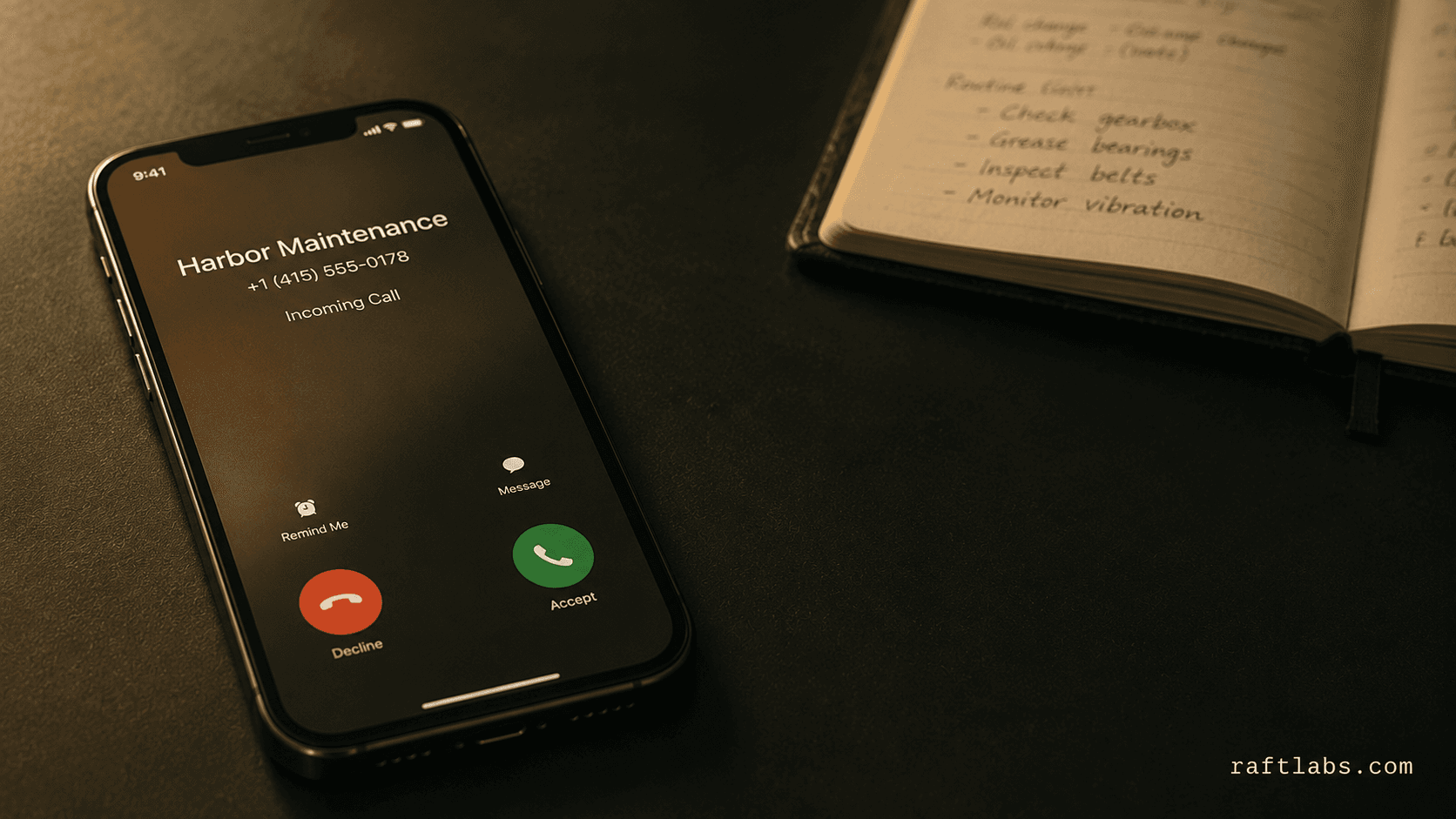
AI phone agents automate global feedback loops through voice interviews
Text surveys only reached people comfortable filling out forms. We built a voice platform that calls anyone with a phone, runs the interview, and has the findings ready when the last call ends.




Work with us
Still paying commission on guests who found you by name?
Tell us about your property and your PMS. You get a written scope and a fixed price before development starts.
- Scope and cost agreed before work starts. No surprises. No obligation.
- Working prototype within 3 weeks of kickoff.
- Pay by milestone. You see progress before each invoice.
- 60-day post-launch warranty. Bug fixes, UI tweaks, and deployment support. No retainer.
- All conversations are NDA-protected.
Common questions
A hotel booking engine, sometimes called an online booking engine for hotels, is the software that lets guests check room availability, pick dates and rates, and pay directly on your own website or app instead of through an OTA. It connects to your PMS so availability and rates stay accurate, and it replaces the commission-charging OTA widget with a booking flow you control end to end.
Yes. We have deep experience integrating with major PMS platforms including Opera, RMS Cloud, and Cloudbeds. We're a listed RMS Cloud integration partner, working directly against their published APIs rather than screen-scraping. Our team delivers real-time data synchronization between your booking engine and existing systems.
A vacation rental booking engine needs the same architecture as a hotel one: PMS sync, real-time availability, and a direct-booking flow, just with different unit and pricing configurations. We built one, paired with keyless entry, for City Break Apartments, a serviced apartment operator in Ireland, and self check-ins grew 7x after launch.
Usually, yes, and they solve different problems. A channel manager (SiteMinder, RateGain) keeps your rates and availability in sync across OTAs like Booking.com and Expedia. A booking engine is your own direct-booking front end. We build and integrate both, so your PMS stays the single source of truth whether a reservation comes from an OTA or your own site.
Yes. We recommend starting with an MVP for on-demand hotel booking engine development to validate your concept, gather user feedback, and iterate based on real-world usage before investing in the complete feature set.
Yes. We develop native and cross-platform mobile apps for iOS and Android, along with responsive web booking engines that work reliably across devices and browsers.
Not publicly. Hotels are not allowed by Booking or Expedia to post better prices in public; OTAs price-match. The workaround is member pricing: better rates shown only after registration, not on the public page. The engine must support it: gated rates, member-only offers, loyalty-linked pricing. And rate parity is enforced per channel, so the channel manager becomes the underestimated piece: parity rules, per-channel pricing, stop-sell all live there.
OTA bookings cancel at higher rates than direct bookings. Direct guests show up, spend more, and return. This is why the measurement matters: track net revenue per channel, not booking volume. Shift a slice of OTA volume and measure the savings; the cancellation gap is where the hidden cost lives.
This is the load-bearing problem: the engine plus the channel manager plus the PMS plus payments: every channel holds a stale copy of availability, and the failure mode lands on a guest at the front desk. The page owns this framing: four systems, one truth, real-time sync. Channel manager is the piece buyers underestimate. Confirm the sync story before the design story: how stale can availability get, and what happens when two channels sell the last room?
Book the last room from two channels simultaneously. If both succeed, the sync is broken. Check the payment story: does the engine integrate natively with major payment providers, are transactions encrypted, is card data PCI compliant? Ask about the channel manager: parity rules, per-channel pricing, stop-sell. Who owns it? And measure the right thing: net revenue per channel, not booking volume. If the vendor cannot show the sync working under contention, they have not tested it.
Yes. We integrate AI recommendations, chatbots, dynamic pricing support, and loyalty program integrations covering points, tiers, and personalized offers.