Serviced apartments sit between a hotel and a rental. Guests book for a night, a week, or six months, and the billing changes with every one. Most PMS tools were built for nightly hotel stays, so they buckle on corporate contracts, multi-property inventory, and anything that runs past a month.
Teams end up wasting hours every day on manual workarounds. Billing errors frustrate corporate clients. Double bookings damage your reputation. Guest communication falls through the cracks. And you're still paying monthly fees for software that creates more problems than it solves.
Custom software fixes that. The platform works the way your operation already runs. Billing for long stays runs itself. Your OTAs, payment gateways, and door locks talk to one system instead of five. Staff spend their time on guests, not on fighting the tools.
According to Emergen Research, the global hospitality property management software market was worth $4.8 billion in 2024 and is projected to reach $12.3 billion by 2034, driven by operators replacing generic tools with purpose-built platforms. For serviced apartment operators, that shift is not optional. It is how you protect margin as you add properties.
Most importantly, you own your technology. No vendor lock-in, no surprise fee increases, and no feature requests that sit in a queue forever. You get a platform that grows with your portfolio and an edge that stays under your control.
Three shifts are changing how operators buy software, and each one favours a platform you own.
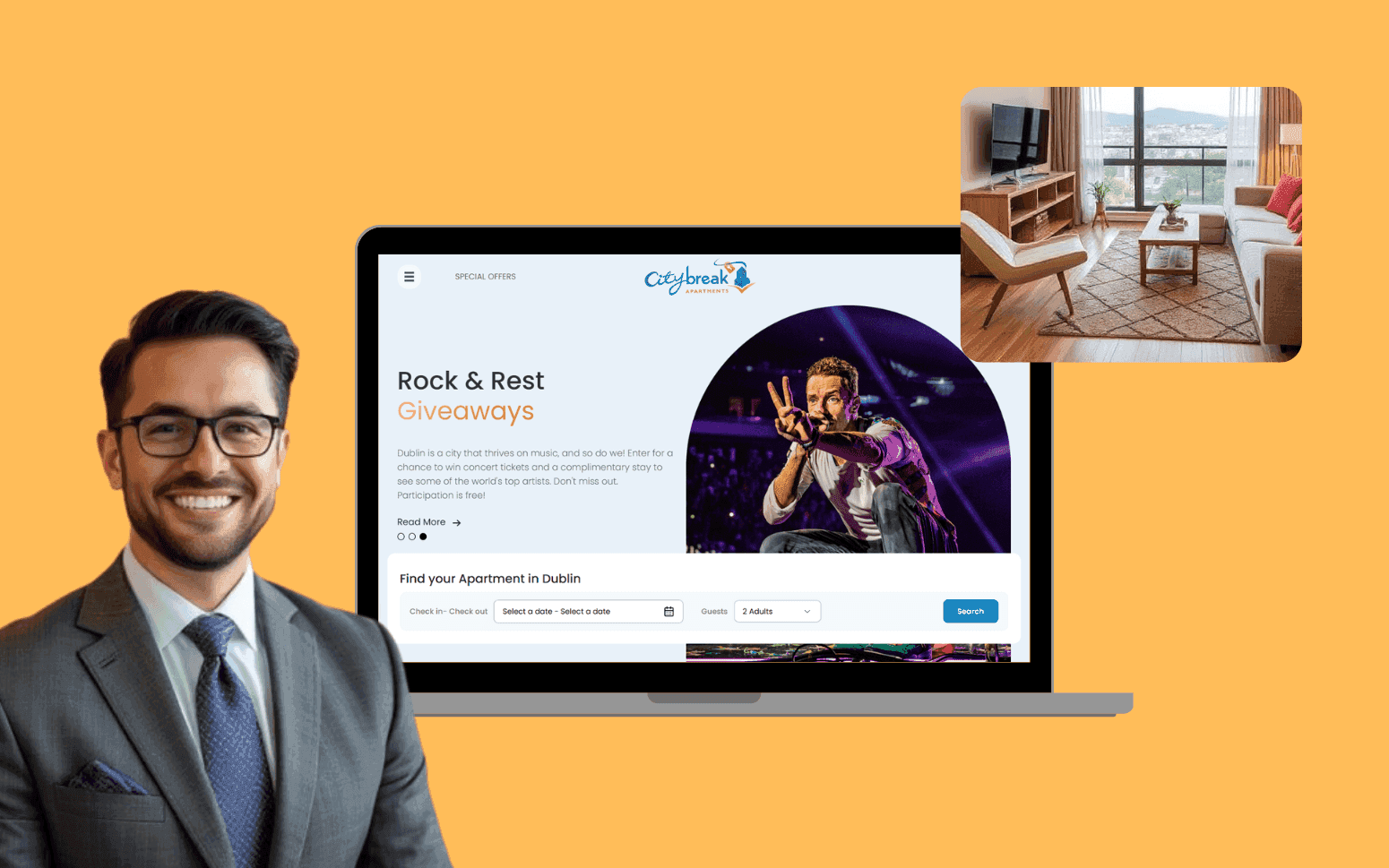
Guests now expect to arrive at 1am and let themselves in. Keyless entry and mobile self check-in have moved from perk to baseline, which is why the City Break build put 250 smart locks and a guest app at the centre, not on the roadmap for later.
Corporate and relocation demand keeps pushing stays past thirty days. That single fact breaks nightly-rate PMS tools built for hotels: prorated billing, utility metering, and monthly invoices are edge cases for them and the whole business for you.
And OTA commission keeps climbing. Operators are investing in direct-booking engines and length-of-stay pricing to hold margin, the same move that lifted City Break's direct revenue by a quarter. A platform you own lets you answer each shift on your own timeline, instead of waiting for a vendor's release notes.




























 Ireland