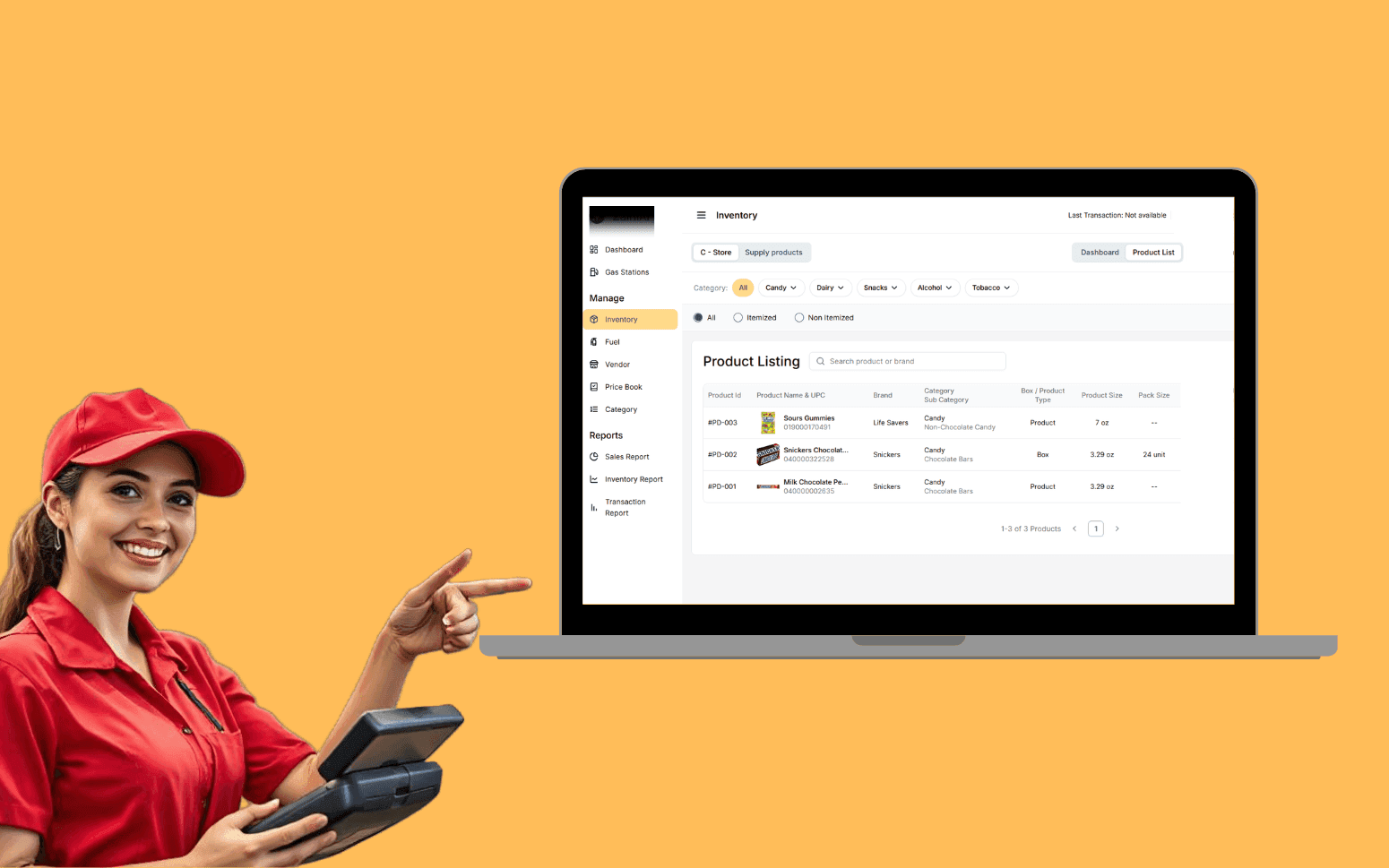
AI OCR Software Scales Gas Station Operations With 20K+ Transactions
- 20K+
- 40+
- 70%
Real-time visibility into your inbound supply chain: where shipments are, when they will arrive, which suppliers are running late, and which material shortages will impact your production schedule before they ground the line.
From supplier order acknowledgment through goods receipt, with disruption alerts before the production team discovers the problem because the parts did not show up.
Inbound shipment tracking with carrier API integration and expected arrival updates as the shipment moves
Supplier performance scorecards with on-time delivery rate, lead time accuracy, and quality rejection data
Inventory positioning across storage locations with reorder alerts before production-critical stock runs out
Disruption alerts when inbound delays or shortages will impact confirmed production orders
Recognition
Are you finding out about inbound shipment delays when the parts do not arrive at the dock, rather than days before when you could still replan production?
How much production downtime last year was caused by material shortages you did not see coming?
Are your supplier performance decisions based on recent memory rather than 12 months of on-time delivery data?
In short
RaftLabs builds supply chain visibility software for manufacturers, covering real-time inbound shipment tracking, supplier performance monitoring with scorecards, inventory positioning across warehouses and production locations, disruption detection and alerting, supply risk identification, and supply chain analytics dashboards. Visibility systems integrate with your ERP, WMS, carrier APIs, and supplier portals. Most supply chain visibility projects deliver in 8-14 weeks at a fixed cost.
Companies we've built for




Most manufacturing supply chain visibility is reactive. The parts do not arrive, the production line stops, and procurement spends the next two days chasing the supplier and the logistics provider for an explanation. The production team finds workarounds. Overtime is scheduled. Customer delivery dates are renegotiated.
A supply chain visibility system surfaces the disruption before it becomes a production problem. Late shipments flag as risks when the carrier tracking first shows a delay, not when the delivery window has passed. Supplier performance data shows which suppliers are trending toward late delivery before the specific shipment causes a problem. Inventory positioning shows which production-critical materials are below safety stock before the production scheduler finds out the hard way.
Real-time tracking of inbound shipments from supplier dispatch to goods receipt at your facility. Integration with major carrier APIs, including FedEx Insight API, UPS Supply Chain Solutions, DHL tracking API, and freight forwarding platform APIs, provides live tracking status with event-level detail: departed origin, cleared customs, in transit to destination, out for delivery.
For ocean freight and air freight shipments, customs clearance status is pulled from the ACE Automated Commercial Environment API (US imports) and equivalent customs portals in other jurisdictions. Customs holds and examination alerts flag before the shipment clears, giving procurement time to engage a customs broker rather than discovering the delay after the expected arrival date has passed.
GS1 EPCIS 2.0 event data from suppliers who support it provides lot-level and serial-number-level visibility through the inbound chain using ILMD extensions that carry product-specific data such as lot number, production date, and expiry date alongside the standard location and time event data.
Purchase order to shipment matching links every PO line to its corresponding shipment and carrier tracking reference. Expected arrival date is calculated from current carrier status, historical delivery pattern by carrier and lane, and any active delay signals. Early warning alerts fire when tracking status indicates a delay relative to the required delivery date, typically 72 hours in advance for road freight and longer for ocean freight, giving production planning time to replan before the shortage affects the line.
Supplier scorecards calculated automatically from your PO and goods receipt data across four performance dimensions: on-time in-full (OTIF) rate measuring the percentage of PO lines delivered on time and in the confirmed quantity; lead time variance showing how closely the supplier's confirmed lead time matches actual delivery time over rolling 3, 6, and 12-month windows; quality defect rate from goods receipt inspection data recording the proportion of received units failing incoming quality checks; and invoice accuracy rate comparing invoiced quantities and prices to the corresponding PO and goods receipt.
Each metric is calculated at the supplier level, the SKU category level, and the delivery mode level so you can distinguish whether a supplier's performance problem is systemic or confined to a specific commodity or shipping method. OTIF rate is particularly important as a combined metric: a delivery that is on time but short quantity still fails to meet the production requirement.
Scorecards update automatically at each goods receipt event rather than being assembled manually from spreadsheet exports at period end. Supplier ranking by performance category provides a ranked view for procurement review that's ready for use in supplier business reviews without manual preparation.
Disruption risk signals from Resilinc and Everstream Analytics are optionally integrated to flag when a supplier's facility has been mentioned in news events, including natural disasters, labour disputes, or facility closures, that may affect future supply before a specific shipment is impacted.
Real-time inventory visibility across your warehouses, production floor, and off-site storage locations with SKU-level stock positions updated from your WMS or ERP at each transaction event. Safety stock calculation by material is based on three inputs: demand variability over a trailing period (expressed as standard deviation of weekly demand), supplier lead time, and the desired service level for that material's production criticality. The output is a statistically grounded safety stock figure per SKU rather than a manually set number that goes stale.
For cold chain and temperature-sensitive materials, IoT tracking devices from Tive or Roambee provide temperature and humidity monitoring during inbound transit with HACCP compliance logging. This records time-temperature data at defined intervals and flags exceedances against the material's specification limits before receipt, so a decision to accept or reject a shipment is based on actual cold chain data rather than a visual inspection.
Reorder alerts fire before safety stock is breached, with enough lead time to raise a purchase order and receive it before the production-critical threshold is reached. Production-critical material flags escalate further: materials that are below safety stock and scheduled for production in the next 5-10 days trigger an escalated alert routed directly to the production planner, not just the procurement inbox.
S&OP integration connects inventory positions to the demand signal from your sales and operations planning process so inventory targets adjust when the production plan changes, rather than remaining fixed while the demand plan moves underneath them. Digital twin simulation of inventory position under demand and supply scenarios allows planners to model the impact of a supplier shortage or demand spike before committing to a response.
Automated disruption detection identifies inbound shortages and delays and calculates their production schedule impact before the production team discovers them manually. When an inbound shipment is flagged as late, whether through carrier tracking delay, supplier portal exception, or an overdue advance shipment notice, the system checks which production orders require that material and when, and generates a structured alert to the relevant stakeholders.
The alert contains the affected production orders, the material and quantity short, the delay duration, the production start dates that are at risk, and the mitigation options available: expedite the shipment, substitute with available alternative stock, or reschedule the affected production orders. The stakeholder receives a decision-ready alert rather than a raw data notification that requires manual impact analysis.
News feed monitoring via Resilinc or Everstream Analytics detects external disruption signals, including natural disasters, port closures, political events, and supplier financial distress announcements, and maps them against your supplier geography to identify which suppliers may be affected before a specific shipment is delayed. This adds a forward-looking layer to the reactive carrier tracking signal.
Disruption history and response records are captured so post-disruption reviews have data on how many disruptions occurred, which suppliers were the source, how quickly they were detected, and what the resolution cost was. This data supports supplier risk management decisions and supply base diversification strategy.
Self-service portal for suppliers to confirm orders, provide advance shipment notices in GS1 EPCIS 2.0 format or structured data entry, upload compliance documentation, and flag exceptions before they become production problems. The portal reduces the email-and-phone communication cycle between procurement and suppliers for routine order status queries that consume significant procurement bandwidth across a large supplier base.
Suppliers provide ASN data, including shipment reference, carrier tracking number, ship date, quantities per PO line, lot numbers, and estimated arrival, which flows directly into the inbound tracking system without manual entry by your procurement team. Document requests for certificates of conformance, material safety data sheets, and regulatory compliance declarations are managed through the portal with automated reminders for outstanding items and expiry tracking for time-limited certificates.
Exception flagging allows suppliers to report quantity shortfalls, quality issues, or delivery date changes proactively rather than leaving procurement to discover them at the goods receipt. A supplier who flags a 20% quantity shortfall 10 days before the scheduled delivery gives production planning time to replan. The same supplier who delivers 20% short with no warning creates an emergency.
Supplier onboarding to the portal is designed for low friction. Suppliers access it via a browser with no software installation required, and the initial configuration is handled by your procurement team through the admin interface without engineering support.
Analytics dashboards for procurement and operations leadership that surface the data needed for strategic supply chain decisions rather than tactical firefighting. Inbound shipment on-time performance trending shows OTIF rate by carrier, supplier, and trade lane over rolling time periods, identifying whether a supplier's performance is improving, deteriorating, or showing seasonal patterns.
Supplier risk concentration analysis shows which suppliers account for what share of your inbound volume and spend, mapped against their performance scores and geographic location. A supplier who accounts for 40% of a critical component's inbound volume and is located in a single-risk geography is a concentration risk that requires a strategic response. The analytics make that visible rather than leaving it as institutional knowledge.
Geographic supply risk mapping plots your supply base against historical disruption event data from Resilinc and Everstream Analytics, identifying which suppliers are in regions with elevated frequency of logistics disruption, natural disaster, or political risk.
Working capital analysis tracks the value tied in inbound pipeline, safety stock, and excess inventory, showing the total working capital cost of the current inventory strategy and identifying opportunities to reduce it through supplier lead time improvement or safety stock optimisation.
Cost-of-disruption reporting shows what production downtime events caused by inbound supply failures cost over the review period. This number makes the investment case for supply chain visibility concrete and helps prioritise which suppliers to invest in for closer collaboration or dual-sourcing development.
A supply chain visibility system integrates with multiple data sources: your ERP for purchase order and inventory data, your WMS for warehouse inventory and goods receipt records, carrier APIs (FedEx Insight, UPS Supply Chain Solutions, DHL, freight forwarders) for shipment tracking data, and supplier portals or EDI feeds for advance shipment notices. For cold chain operations, IoT tracking devices from Tive, Roambee, or Quake Global provide sensor data, including temperature, humidity, and location, that is ingested alongside the logistics event stream.
The integration complexity depends on how many source systems you have and their API accessibility. Most modern ERP systems, including SAP via OData, Oracle EBS via REST API, NetSuite via REST Record API, and Microsoft Dynamics 365 via Dataverse API, provide well-documented integration surfaces. Legacy systems with limited API support are integrated via scheduled data exports, direct database access, or file-based exchange where that is the most reliable available method.
ACE Automated Commercial Environment customs data is integrated for US-bound international shipments to surface customs clearance status in the same visibility interface as carrier tracking events. We map your full integration landscape during discovery, covering ERP, WMS, carrier mix, supplier EDI capability, and customs data access, and design the architecture around what is accessible before committing the integration scope to the project specification.
Not all suppliers will use a portal or provide electronic tracking data. The system handles this through a tiered approach. For suppliers with tracking capability, integration is direct. For suppliers with email-based communication, automated email parsing extracts tracking references and confirmation data from structured email formats. For suppliers with no electronic communication capability, the system generates exception alerts when an expected confirmation has not arrived by a defined point in the lead time, prompting a manual chase. The goal is maximum automation for suppliers who can support it and minimum manual effort for those who cannot, while covering your full supplier base.
A focused implementation covering inbound tracking, supplier performance monitoring, and inventory alerts for your primary supply base typically takes 8-12 weeks. Broader implementations adding supplier portal, disruption impact analysis, and analytics dashboards run 12-16 weeks. The timeline depends on the number of source systems requiring integration, data quality in those systems, and the number of supplier integrations required. We scope the project based on your specific integration landscape and deliver milestones in order of operational impact so you have working inbound tracking before the full system is complete.
Yes. Supply chain visibility systems are built on top of your existing ERP and WMS rather than replacing them. Your ERP remains the system of record for purchase orders and inventory. Your WMS remains the system of record for warehouse operations. The visibility layer reads data from both, adds carrier tracking and supplier performance data, applies the alerting and analytics logic, and presents it in a unified interface your procurement and operations teams can use. We don't replace your existing systems. We make the data in them visible and actionable in ways they can't support on their own.
What clients say
Three-year average engagement. Founders and operators describing the work in their own words. No marketing varnish.

 Indonesia
I definitely recommend RaftLabs, especially to founders building complex platforms. They were transparent throughout the whole project.
01 / 02
Tell us how many suppliers, what your current inbound visibility looks like, and what supply disruptions cost you last year. We will design the system and give you a fixed cost.