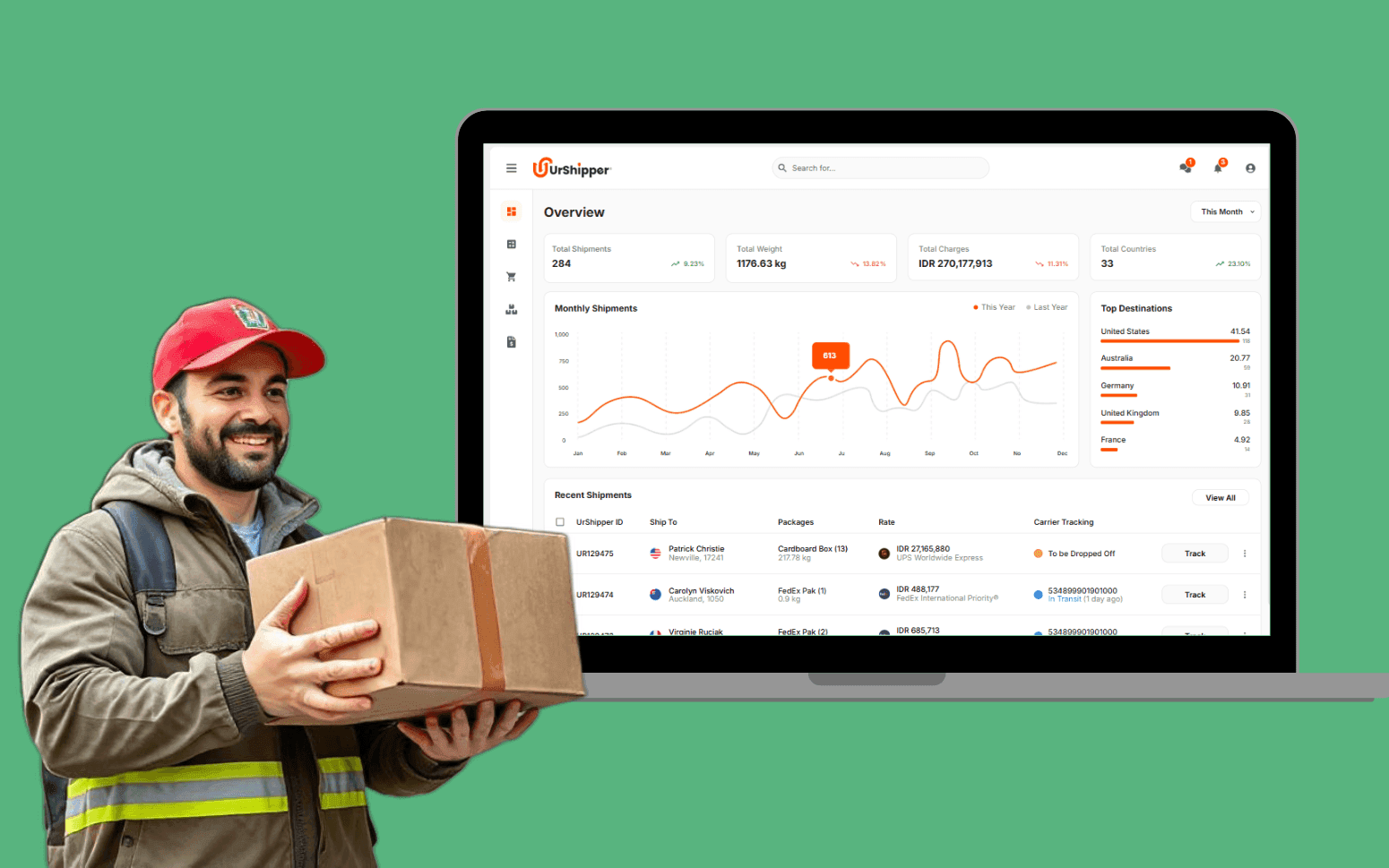

Scalable Multi-Carrier Shipping Software for Small Business Owners
- 14 weeks
- zero to relaunch, fifth vendor attempt
- 2,000+
- shipments across 70+ countries in year one
Web Application Development Company
Every web application starts with the same problem: the default tools almost fit your use case, until they don't. You customize until you're fighting the platform, or you go custom from the start and own the result.
We build custom web applications for businesses that need software that actually fits their workflow. Internal tools, customer-facing platforms, data dashboards, enterprise portals, and multi-tenant SaaS, built in React, Next.js, and Node.js with architecture designed to scale.
Working software every 2 weeks, no 6-month wait before you see anything
Fixed project cost agreed before development starts
100+ web applications shipped across 24+ industries
You own the code, the architecture, and the infrastructure
Recent outcomes
Shipping SaaS · Fifth vendor attempt, Indonesia
2,000+ shipments, 70+ countries
Rebuilt a multi-carrier shipping web platform after four previous vendors failed to deliver. 200+ customers migrated with zero disruption.
Employee engagement · GE, US
5,000+ daily active users
Replaced passive corporate training with a gamified mobile trivia web platform. Shipped on schedule and on budget.
Food ordering platform · B2B, Indonesia
3x revenue for restaurants
Built Gula, consolidating multi-app food orders onto one screen for Indonesian restaurants. Zero order errors since launch.
The problem
SaaS tool that covers 80% of what you need and fails on the other 20%?
Web app that worked at launch but is too slow and too hard to change now?
Already on your second or third vendor and still don't have something that fits?
Short answer
A web application development company builds custom, workflow-specific software that runs in the browser, instead of configuring an off-the-shelf SaaS tool. RaftLabs is that partner for funded startups, growing companies, and enterprise teams: 100+ apps shipped since 2015 for clients across the US, UK, Europe, Canada, GCC, South Africa, and Southeast Asia -- internal tools, customer portals, SaaS platforms, and enterprise systems. Fixed price, 2-week sprints, and most MVPs go live in 10-14 weeks. You own all code and infrastructure.
Key takeaways
Trusted by













Picture the version you actually want. The software matches your workflow exactly, the way your team actually works, not the average customer's version of it. Nobody's copying data between three tools by hand. Nobody's waiting on a vendor's reply before they can close the week out.
Now the version most teams get instead. An ops team adopts a SaaS platform that covers 80% of the workflow. The missing 20% turns into spreadsheets, manual copy-paste, and a chat channel where people flag what the tool can't do. A year in, the workarounds outweigh the tool, and every change to the process means one more workaround on top.
Custom removes the 20% gap. You get a web application built around the whole workflow, not the average one.
A web application development company builds custom, browser-based software designed around a specific business workflow, an internal tool, a customer portal, an enterprise platform, a multi-tenant SaaS product, instead of configuring an off-the-shelf tool built for the average customer. The difference from a generic dev shop is scope: the software is designed around how your team actually works, then engineered to hold up as your data and user count grow.
Most web applications fail for one reason: they get built to match a specification, not to solve a problem. Design around the workflow first, and the architecture, data model, and feature set follow. Gartner estimates 41% of employees already acquire, modify, or build technology their IT department doesn't know about, a figure Gartner projects will reach 75% by 2027, exactly the workaround pattern a web application built around the real workflow removes. RaftLabs has shipped 100+ web applications across 24+ industries since 2015, rated 4.9/5 on Clutch, with work for Vodafone, T-Mobile, Aldi, Nike, Cisco, and Lockheed Martin, and GDPR, HIPAA, and SOC 2 requirements designed in from week one. Upgrading a web app that worked at launch but is now too slow to change? See web application modernization.
The odds today
None of that is really about whether the technology was possible. HealthCare.gov launched on October 1, 2013, and buckled immediately: of the roughly 4 million people who visited on day one, six enrolled in a health plan. Contract costs across the project's six main contracts grew from $464 million to $824 million, and federal auditors later found the work had been split across 33 different contractors with no single company holding technical accountability for the whole system. The problem wasn't a lack of engineering talent spread across those 33 vendors. It was that nobody owned the whole outcome, so nobody caught the gap between what worked in a demo and what happens under real launch-day load.
If you're reading this, you've likely taken a run at one of these. None of them are foolish. Each one stalls in a predictable place.
Every RaftLabs web application starts the same way: a scoping session that turns your actual workflow into a written, fixed-price scope before a line of code is written. Senior engineers, the same people who scope the problem, build it, in two-week sprints so you see working software early enough to catch drift while it's still cheap to fix. You own the codebase, the architecture, and the infrastructure from day one, so there's no version of this where the web application locks you to us.
Everything on the left should already be true for your business. Even one thing on the right, and a configured off-the-shelf tool is the smarter spend right now.
A specific workflow, integration, or data model that off-the-shelf web tools can't fit.
Enough process complexity that the workarounds are already costing real hours every week.
Budget for a project in the $20,000+ range, and a decision-maker who can define what done looks like.
What we build
We also build e-commerce storefronts and marketplaces, progressive web apps that install and work offline, headless CMS-powered publishing platforms, real-time apps like chat and live dashboards, and marketplace platforms connecting buyers and sellers, see progressive web app development for the installable, offline-capable variant.
Tell us the workflow. We'll scope the web application and give you a fixed cost.
How it works
We map your workflow, identify the problem, and define the product. You get a documented scope, a timeline, and a fixed price before any code is written.
Current workflow and pain point mapping
Scope definition with user stories and acceptance criteria
Technical environment and integration requirements
Fixed-cost quote with milestone delivery dates
We design the system before we build it. Data model, API design, authentication, integrations, and deployment architecture, all designed for your constraints and your 3-year roadmap.
System architecture and data model design
Technology stack selection and rationale
Integration design for connected systems
Security and access control model
We build in 2-week sprints. Every sprint delivers working software you can use and give feedback on. You're never waiting 3 months to see if we understood the brief.
2-week sprint cycles with working software deliverables
Demo and feedback session at end of each sprint
Code review and automated testing built into every sprint
We deploy to production, document the codebase, and hand over everything you need to run and extend the software.
Production deployment and monitoring setup
Codebase documentation and runbook
Credentials and infrastructure handover
Optional ongoing support and feature development retainer
UrShipper had already been through four vendors before they came to us, each one attempting and failing to build a stable multi-carrier shipping web application for their Indonesian eCommerce customers. We rebuilt it in 14 weeks: real Aramex, FedEx, DHL, and UPS integrations built directly against each carrier's API, a Shopify connector that automated fulfillment, and three separate portals for customers, staff, and admins. Two hundred existing customers migrated with zero service disruption, and by the end of year one the platform had processed 2,000+ shipments across more than 70 countries. Read the full case study.
"I definitely recommend RaftLabs, especially to solo founders like me. Their clear communication and detailed discussions have always helped me make better decisions." - Gil Nugraha, Founder at UrShipper
What clients say
Three-year average engagement. Founders and operators describing the work in their own words. No marketing varnish.

 Indonesia
I definitely recommend RaftLabs, especially to solo founders like me. Their clear communication and detailed discussions have always helped me make better decisions.
01 / 03
We are not tied to one framework. We pick the stack that fits your performance, scale, and handover needs, then document every choice so any competent engineering team can maintain it. The technologies we reach for most often:
| Layer | Technologies we use | Where it fits |
|---|---|---|
| Frontend | React, Next.js, TypeScript, Vue.js, Angular, Tailwind CSS | SEO-friendly, interactive UIs and dashboards |
| Backend | Node.js, NestJS, Python, FastAPI, Django, Go | APIs, business logic, and real-time services |
| Databases | PostgreSQL, MySQL, MongoDB, Redis | Relational data, flexible schemas, and caching |
| Cloud and DevOps | AWS, Google Cloud, Azure, Docker, Kubernetes, Vercel, CI/CD | Containerized, production-grade deployment |
| Auth and payments | Auth0, NextAuth, Stripe, Chargebee | Secure access control and subscription billing |
| Integrations and data | Salesforce, HubSpot, SAP, NetSuite, Twilio, Snowflake, BigQuery | CRM, ERP, messaging, and analytics pipelines |
The rule holds at every layer: no proprietary frameworks that lock you in, and no stack we cannot hand to your team on day one.
We price by project, not by the hour. After a scoping session you get a fixed quote with a defined scope, timeline, and price, so you know the number before development starts. Where you land depends on scope, not negotiation:
What pushes cost up: deep integrations with legacy or on-premise systems, strict compliance requirements such as HIPAA, SOC 2, and GDPR, and real-time or high-concurrency features. What keeps it down: a narrow first scope, clean existing data, and managed cloud services rather than self-hosted infrastructure early on. We scope every project before pricing it.
What it costs
A defined scope, a timeline, and a number, agreed before development starts.
Fixed cost, by project not by the hour. Working software every 2 weeks. You own the code from day one.
No hourly billing, no scope-creep invoices, no end-of-month surprises. The number you approve is the number you pay.
Ownership
You own the code, the architecture, and the infrastructure at the end of the engagement. No proprietary frameworks, no lock-in, ready to hand to any team.
Fixed price
Scope and price are locked in writing before development starts. A scope change is a priced change request, never a surprise on the invoice.
The unglamorous decisions that decide whether a web application holds up under real usage, not just in the demo.
Data model, integrations, and scale requirements mapped out before a line of code, so the foundation doesn't need a rewrite six months in.
Exponential backoff retry, dead-letter queues, and idempotency keys on every third-party connection, so a CRM outage or a flaky webhook doesn't take your application down with it.
If you're coming to us with an existing web application, we tell you honestly what's worth keeping and what needs replacing, before we touch a line of it.
Architecture, decisions, and setup written down well enough that a team that isn't us, including your own, can run and extend it without calling us first.
The scope, the timeline, and the number, agreed in writing before development starts. A scope change is a priced conversation, not a surprise invoice.
The repository, the cloud accounts, the deployment pipeline, all in your name from the start. Nothing to hand off, because nothing was ever ours to hold.
The architecture changes with the domain. Compliance-heavy sectors need audit trails and access controls designed in from sprint one, while high-volume consumer platforms need caching and horizontal scaling. We build web applications for:
Healthcare and life sciences: HIPAA-ready portals, clinical dashboards, and patient engagement platforms.
FinTech and financial services: compliance-first lending, payments, and reporting software.
Retail and e-commerce: storefronts, inventory, and order management platforms.
Manufacturing and supply chain: production tracking, quality, and operations dashboards.
Real estate and property: listing, management, and tenant-facing platforms.
Insurance: claims, underwriting, and policy administration software.
Custom Software Development
Full-scope custom software beyond web applications.
SaaS Application Development
Multi-tenant SaaS product development.
API Development
Building the APIs that power your web application.
Mobile App Development
Companion mobile apps for your web platform.
Enterprise Software Development
Large-scale enterprise platforms with complex requirements.
Progressive Web App Development
Installable, offline-capable web apps without an app store.
UI/UX Design
Product design and interface work for web applications.
Web Application Modernization
Rebuilding slow or unmaintainable web applications.
Application Maintenance and Support
Ongoing support, bug fixes, and iterative improvements post-launch.
Tell us what's broken. Within one business day you get a straight take on cost, timeline, and the right first step. No deck, no pressure.
Stay on topic

Article
RaftLabs Achieves GoodFirms Recognition
GoodFirms named RaftLabs the Best Company to Work With in 2023. Here's what that recognition reflects about how we build software and support clients.
Read more
Article
Your team shouldn't still be running on spreadsheets. Here's when to replace them.
Every business has a spreadsheet that has become load-bearing infrastructure. Someone built it years ago. Now it breaks when two people edit it simultaneously, and nobody fully understands how it works. Here's when and how to replace it.
Read more
Article
Who uses headless CMS? 15 companies that ditched WordPress
WordPress powers 43% of the web, but the fastest-growing companies are leaving it behind. Here are 15 companies running headless CMS in production - and why they made the switch.
Read moreA web application development company builds custom software that runs in the browser and is designed around a specific business workflow, rather than a packaged SaaS tool built for the average customer. It typically covers internal tools, customer-facing portals, enterprise platforms, and multi-tenant SaaS products, built in a stack like React, Next.js, and Node.js, and handed over with the client owning the code outright.
We build internal business tools (dashboards, workflow management, reporting systems), customer-facing platforms (portals, marketplaces, booking systems), enterprise web applications (multi-user platforms with complex permissions and integrations), and SaaS products (multi-tenant web apps with subscription billing and self-service onboarding). The common thread is that every web application we build is designed around a specific business workflow, not a generic template.
A focused first product with core functionality typically takes 10-14 weeks from kickoff to production launch. A complex enterprise platform with multiple integrations and advanced features takes 4-8 months. We work in 2-week sprints, so you see working software every two weeks, not at the end of a long timeline.
We price by project, not by the hour. After scoping, you get a fixed quote: defined scope, timeline, and price. A focused web application MVP typically runs $20,000--$60,000. A full enterprise web platform runs $80,000--$200,000+. The exact cost depends on scope, integrations, and technical complexity. We scope every project before pricing it.
Ask for a written scope before any code is written: the workflow being solved, the feature set, and the technical architecture. A vendor that quotes your brief back to you without pushback hasn't actually scoped anything. Ask who writes the code, the team that scopes the project should be the team that builds it, not a senior closer handing off to a cheaper bench. And ask what happens to the code, the architecture, and the data when the engagement ends, if the honest answer involves lock-in, that's worth knowing up front.
We build primarily with React and Next.js on the frontend and Node.js or Python on the backend. For databases, we use PostgreSQL, MySQL, and MongoDB depending on the data model. We deploy on AWS, Google Cloud, or Azure using containerized infrastructure. We select the stack based on your requirements, not defaults, and we document our choices so any competent engineering team can maintain what we build.
Yes. We take over existing codebases regularly. The process starts with a code audit to understand the architecture, technical debt, and test coverage. We tell you honestly what's worth keeping and what should be rebuilt. We won't refactor code for the sake of it, only where it's blocking progress or creating real risk.
Yes. You own everything we build, the codebase, the architecture, the database schema, the deployment configuration. We don't retain any IP, we don't use proprietary frameworks that lock you in, and we don't create dependency on us. When the project ends, the code is yours.
Yes, as a separate engagement. Some clients take an ongoing retainer for feature development and maintenance. Others hand the product to their internal team after launch. We document the codebase thoroughly so any competent engineering team can take it over without depending on us.
The best platform for developing a web application depends on your specific requirements, such as the type of application, growth targets, team expertise, and budget. Here are some of the most popular platforms and their best use cases:
Our web application development services typically include the following steps:
By following these steps, we deliver full web application development services that meet your specific needs and produce a successful product.
Work with us
We scope Web Application Development Services in 30 minutes. You walk away with a clear cost, timeline, and approach. No commitment required.
FinTech
Compliance-first financial software for lending, payments, and wealth management.
Healthcare
HIPAA-compliant platforms for clinical workflows and patient engagement.
Retail and e-commerce
Custom storefronts, inventory management, and loyalty programs.
Logistics and supply chain
Dispatch automation, fleet management, and supply chain visibility.
SaaS products
Multi-tenant SaaS platforms built to scale without a rewrite.
Hospitality
Booking engines, PMS integrations, and guest-facing platforms.
Browser Extension Development
Chrome and Firefox extensions for productivity tools, SaaS integrations, and data capture.
Progressive Web App Development
Installable web apps with offline support and native-like performance.
API Development
REST, GraphQL, and third-party integrations for your web application.