Mobile POS and merchant-acquiring platform
A mobile POS product with one payment ledger across PayBy and Stripe, role-controlled GraphQL access, and payment-event processing.
- 10,000+
- transactions in first 3 months
- 14 weeks
- initial delivery
API Development Services
We design and build custom REST APIs, GraphQL layers, and webhook systems for product teams that need stable contracts between applications. The work includes authorization, failure handling, versioning, observability, and usable documentation, not just a set of endpoints that works in a demo.
Bring the problem, the current workflow, or the existing code. We reply with a practical next step within one business day.
Evidence and scope
8 to 12 weeks
Focused first release
One bounded domain, its consumers, and production controls.
$15K
Starting scope
Contract design, implementation, tests, and documentation.
Fixed price
Commercial model
Scope and price agreed before development starts.
The brief
Good software decisions begin with the constraint, not a list of features or a preferred technology.
Are integrations slowing down because every consumer interprets the same data differently?
Do API changes reach production before documentation, permissions, and failure paths are ready?
Plain answer
API development services design and build the contracts applications use to exchange data and actions. RaftLabs delivers REST APIs, GraphQL layers, and webhook systems with authorization, versioning, failure handling, tests, observability, and documentation. A focused first release starts at $15,000 and usually takes 8 to 12 weeks.
The first consumer gets a response and the integration looks finished. Then a request is retried, a field changes, a token has the wrong scope, or a downstream system times out after completing the request. Without a written contract for those cases, every consumer invents its own workaround.
A dependable API makes ownership and failure explicit. It tells consumers what they may send, what they can expect back, how changes are introduced, and what happens when part of the transaction fails.
Relevant delivery record
These figures come from one named API-heavy product build. They show transaction volume and an audited platform control, not a universal performance promise for every API project.
If the left side fits, custom development may be sensible. If the right side fits, use the vendor connector or managed backend first.
Several applications or partners need a stable interface to the same business capability.
Authorization, audit history, retries, or versioning carry real operational risk.
The underlying business rules do not fit a standard connector or managed backend cleanly.
A supported connector already covers the data and actions you need.
The source system and ownership rules are still changing every week.
You need a one-time data transfer rather than a maintained interface.
Scope
| Pattern | Use it when | |
|---|---|---|
| REST | Resource operations over HTTP | Consumers need predictable commands and broad tooling support |
| GraphQL | A typed query layer | Clients need different views of a connected domain |
| Webhooks | Event delivery to a consumer endpoint | Another system should react without polling |
| Batch or files | Scheduled bulk exchange | Volume matters more than immediate response |
The choice is not ideological. A product may expose REST for commands, GraphQL for a complex interface, and webhooks for downstream events. We keep each pattern narrow enough to explain and operate.
Delivery
Design the boundary before code makes it expensive to change.
Define who calls the API, which system owns each field, and what the first bounded domain must do. We record throughput, latency, compliance, and availability constraints without pretending every endpoint needs the same service level.
Agree resources, events, permissions, error responses, idempotency rules, and versioning. Consumer examples and a contract review expose ambiguity before implementation begins.
Implement the interface, contract tests, authentication, rate limits, retries, monitoring, and documentation. Tests cover duplicates, partial failure, timeouts, and forbidden access as well as successful requests.
Onboard the first consumers, watch latency and errors, document operational ownership, and support the production handoff. New consumers and domains follow only after the first contract holds up in use.
Proof
Scope and price
Begin with one bounded domain, its first consumers, contract tests, documentation, and production controls.
A standard connector is usually cheaper when it already supports the required objects, actions, and failure handling.
Starting investment
Starts at $15,000
A focused release usually takes 8 to 12 weeks. Complex authorization, regulated data, legacy dependencies, and high-volume events increase the scope.
Fixed-price phase
Once the first API boundary is scoped, its price is locked in writing. New consumers or domains are priced before they enter the work.
Post-launch support
Eight weeks of support are included so production errors, consumer questions, and operating gaps can be resolved before handoff.
Useful next steps
Work with us
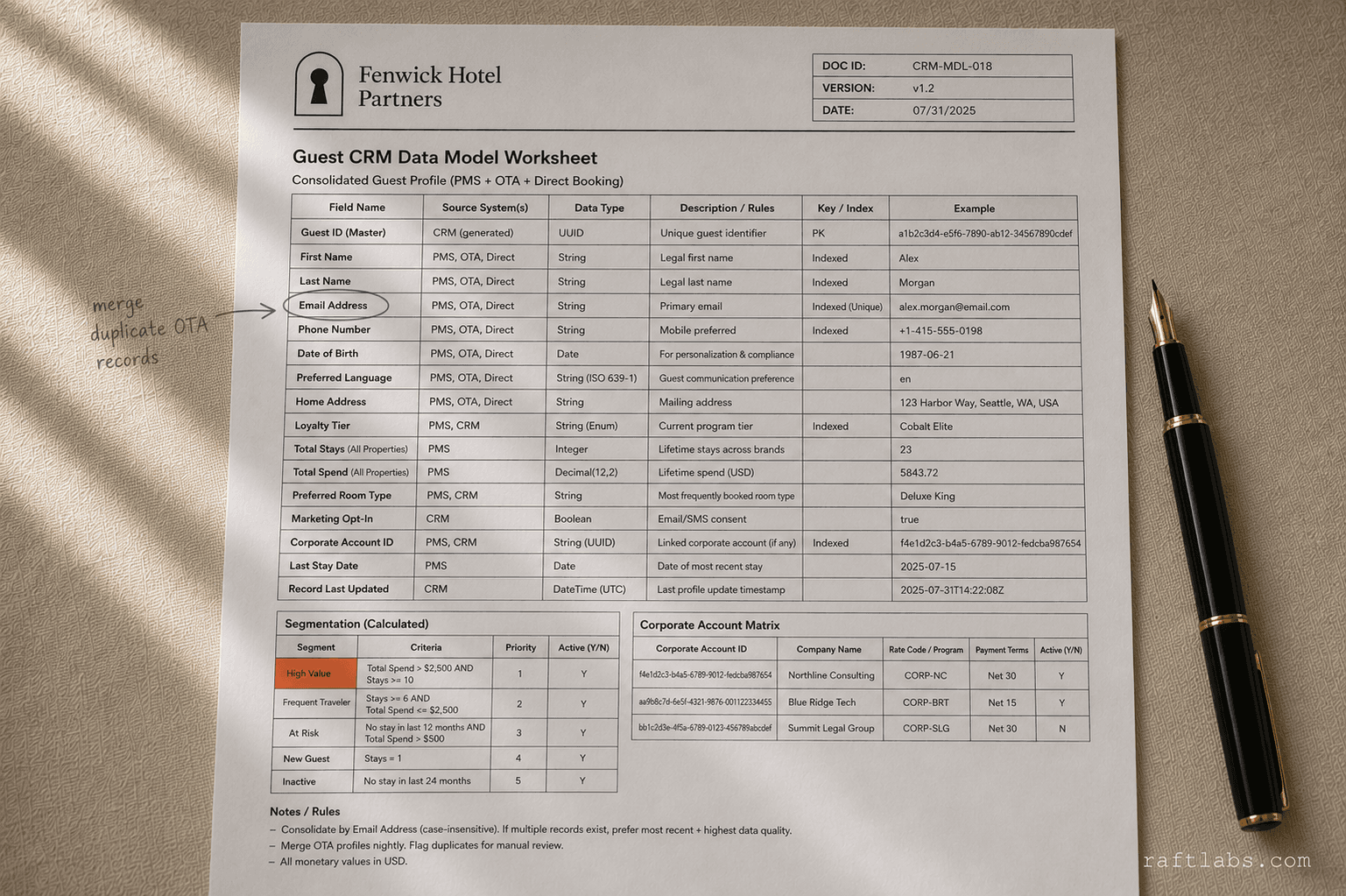
Hotel CRM Development Company
See the service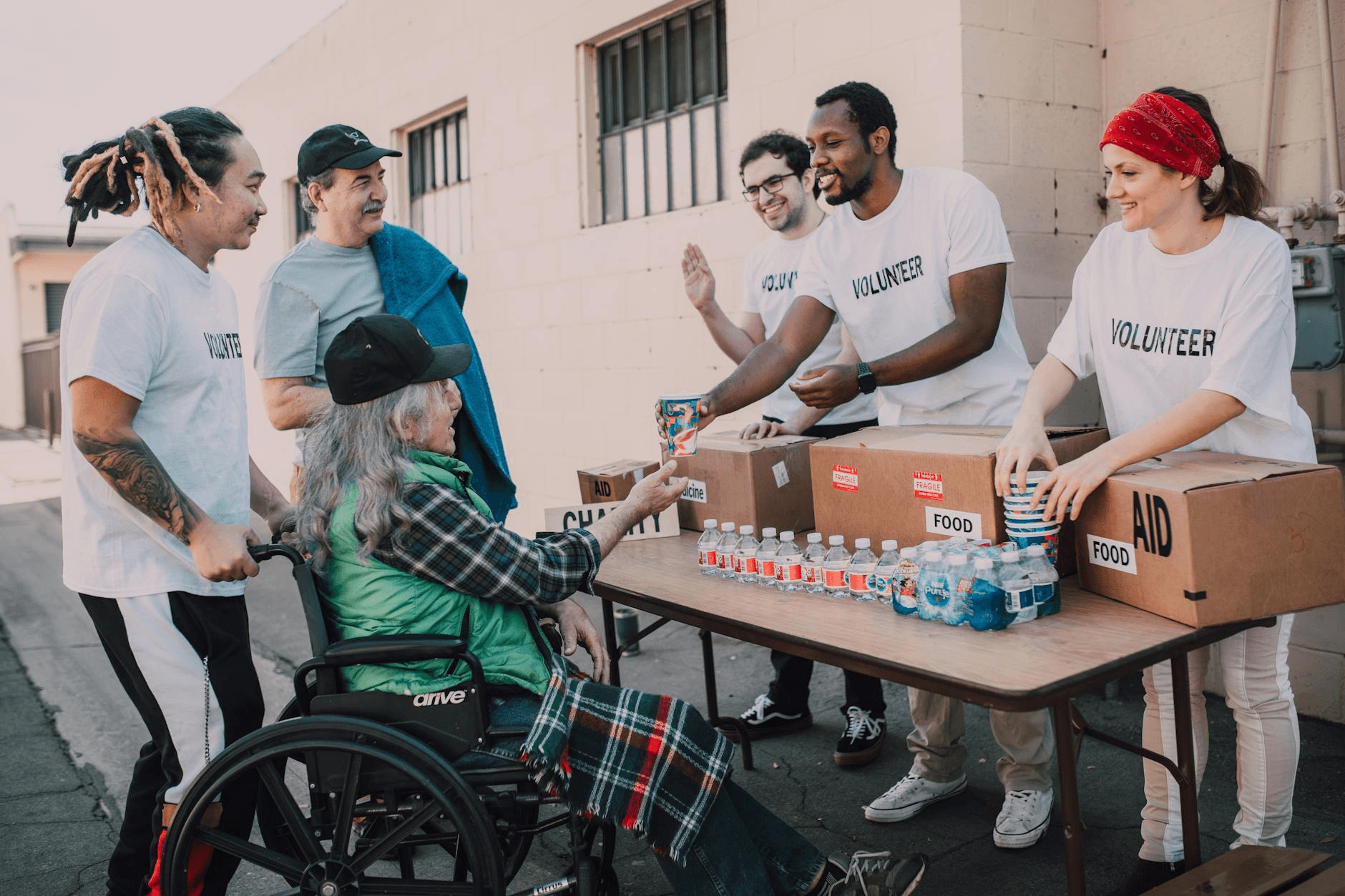
Article
Nonprofit CRM and Fundraising Platform Development: Build Your Own Donor Portal
A nonprofit raising $1M/year pays Donorbox $15,000 in platform fees. A hospital foundation at $5M/year pays $18,000 and still does not own its donor data. Here is what custom nonprofit fundraising platform development costs, what you get, and when it makes financial sense.
Read more
Article
How to Build a Loyalty App: A Practical Planning Guide
A practical guide to planning and building a customer loyalty app: reward economics, mechanics, integrations, fraud controls, privacy, build-vs-buy, and realistic cost and timeline factors, grounded in real RaftLabs builds.
Read more
Article
Real estate app development: costs, data, and what actually ships in 2026
Proptech founders and real estate brokerages evaluating custom software face one hard question: when does building beat buying Zillow API access or a Buildium seat? Here is the honest breakdown by scenario.
Read more
Article
Construction Inspection App Development: What to Build and What It Costs
Paper-based site inspections cause missed corrective actions, lost sign-offs, and audit exposure. This guide covers the seven features a construction inspection app must have, what it costs to build, and when to go custom over SafetyCulture.
Read more
Article
Expense Management Software Development: Build vs. Buy Guide for Business Operators
Custom expense management software development costs $120K-$280K and takes 12-24 weeks. Here's when Expensify, Concur, and Ramp stop working for your business, what to build instead, and what it actually costs by phase.
Read moreA production API engagement includes contract design, implementation, authentication and authorization, validation, consistent errors, versioning, automated tests, documentation, monitoring, and a release plan. Webhooks also need signature verification, retries, idempotency, and a visible path for failed events.
REST is a strong default for resource-based operations and broad interoperability. GraphQL helps when different clients need different views of the same domain. Webhooks notify another system when an event occurs. Many products use more than one pattern, but each should solve a specific consumer need.
Yes, if the legacy system exposes a dependable database, file, procedure, or interface. An API layer can create a safer boundary for new consumers, but it does not remove unreliable data or hidden business rules underneath. We identify that boundary before recommending an API-only approach.
A focused API for one bounded domain, including contract design, implementation, tests, documentation, and production controls, starts around $15,000. More consumers, complex authorization, regulated data, high-volume events, and legacy dependencies increase the scope.
A focused first release usually takes 8 to 12 weeks. Timing depends on domain complexity, consumer readiness, security requirements, and whether upstream systems already provide stable data and operations.
Work with us
We will map its consumers, ownership, and failure paths, then show you the smallest API release worth building.