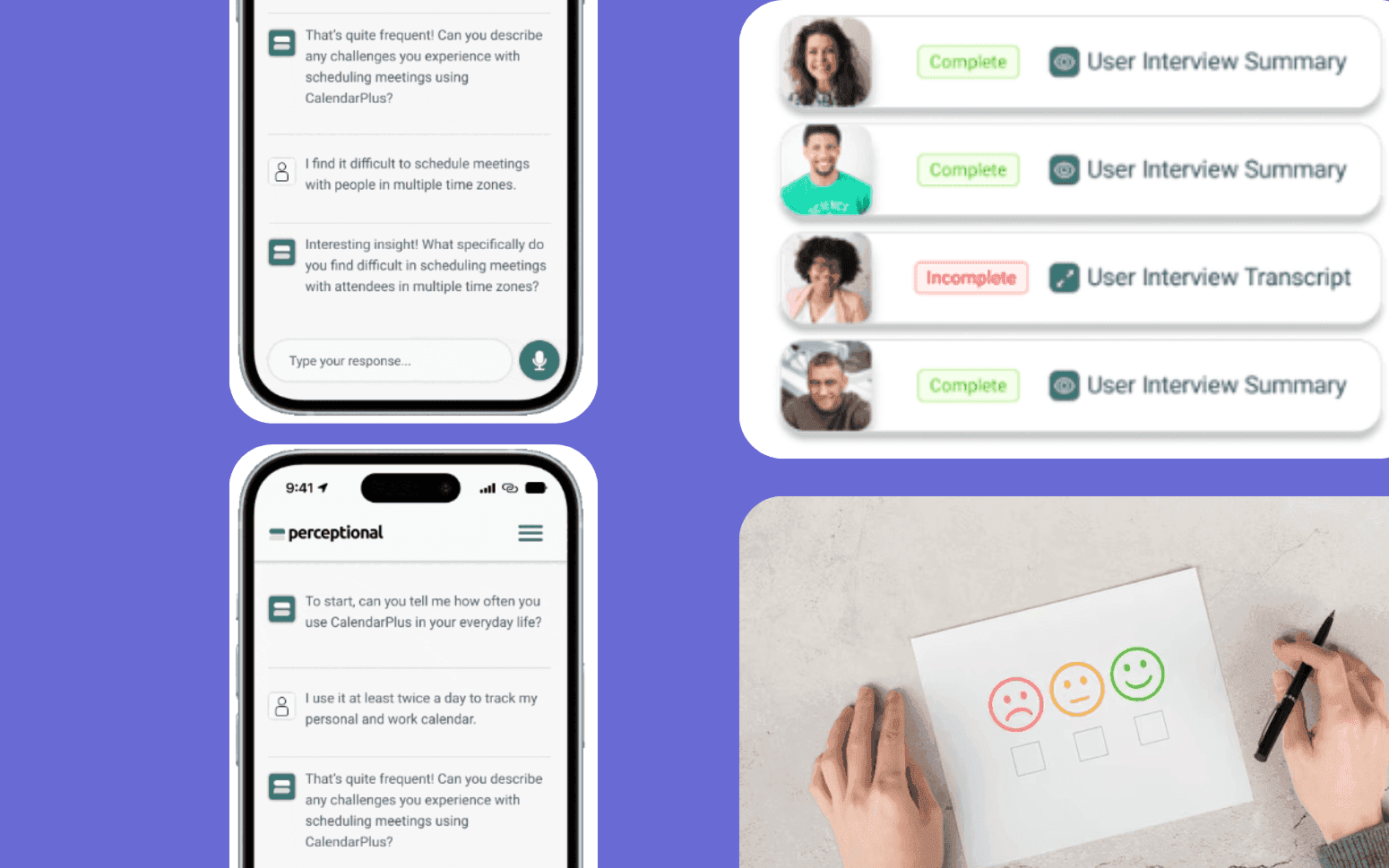

SaaS Conversational AI Chatbot Development for Startup
- 12 weeks
- from concept to launch
- 4x
- deeper insights than traditional surveys
Product Engineering Services | 100+ Shipped
Product engineering is the work between 'we have an idea' and 'we have a product customers pay for.' It's where most software projects fail, not because the technology doesn't work, but because the engineering process doesn't translate business intent into working software fast enough.
We provide product engineering services that treat business outcomes as the primary constraint. Every technical decision, architecture, stack, API design, data model, is made with your shipping timeline and your users in mind.
Business-first engineering, architecture decisions tied to product outcomes
100+ products shipped across SaaS, enterprise, AI, and consumer apps
Fixed scope per phase with working software every 2 weeks
Full IP ownership from day one, no vendor lock-in
Recent outcomes
SaaS · Conversational AI Startup
12 weeks to launch
Built a full AI chatbot platform from concept to production. 70% of routine queries handled without human intervention.
Healthcare · Remote Patient Monitoring
150+ patients in 12 weeks
HIPAA-compliant RPM app built and deployed. 20% faster clinical decisions across 150+ patients in the first quarter.
B2B SaaS · Food Order Management
3x revenue, 0% errors
Multi-platform order management system for a food B2B. Zero order errors and 3x revenue growth within the first year.
The problem
Your dev team is building the right things, just too slowly?
Technical decisions keep getting made in isolation from product strategy?
Short answer
RaftLabs builds product engineering solutions for startups and scale-ups across the US, UK, Europe, Canada, GCC, South Africa, and Southeast Asia. 100+ products shipped across SaaS, AI, and enterprise. Fixed scope, working software every 2 weeks, full IP ownership from day one.
Key takeaways
Trusted by










Good developers write good code. Good product engineers write code that ships. The difference is in the decisions they make before and during the build, which scope to cut when time is short, which architecture decision pays for itself when you need to scale, which feature will confuse users no matter how well it's coded.
We've shipped 100+ products. We've seen what delays a product launch and what accelerates it. The causes are rarely technical. They're almost always about the connection between business intent and engineering execution.
Product engineering is the work between "we have an idea" and "we have a product customers pay for." It is where most software projects fail, not because the technology doesn't work, but because the engineering process doesn't translate business intent into working software fast enough.
According to McKinsey research on software delivery, products launched six months late lose up to 33% of their potential profit over five years, while products delivered on time but 50% over budget lose only 3.5%. The asymmetry is striking: schedule slippage is far more expensive than cost overrun, which means engineering velocity is a direct financial lever, not just a delivery metric.
RaftLabs has shipped 100+ products across SaaS, mobile, enterprise, AI, and consumer apps, with work for Vodafone, T-Mobile, Aldi, Nike, Cisco, and Lockheed Martin. The team that scopes your product builds it, from the first call through to launch. We map the workflow and lock a fixed scope and price in writing before any development starts. GDPR, HIPAA, and SOC 2 requirements are scoped in week 1, not retrofitted before launch: we have shipped HIPAA-compliant systems for US healthcare clients and GDPR-compliant products for European markets.
For products with significant API surface area, see our API development service. For products built on or migrating from an existing legacy system, legacy modernisation is scoped as a separate first phase.
Everything on the left should already be true for your product. Even one thing on the right, and a smaller first step is the wiser spend right now.
A product to build or scale, and a shipping timeline that business outcomes depend on.
Technical decisions getting made in isolation from product strategy, and it is starting to cost you real time.
Budget for a fixed-scope phase, and a decision-maker who can define what done looks like.
What we build
Before writing code, we design the system: the components, how they connect, and a data model that supports your current product and the next things on your roadmap. Architecture done well means you are not rebuilding in 18 months because of a wrong call on the database schema.
We build across the full stack: frontend, backend, databases, and cloud infrastructure. Every layer is designed to work together, not stitched together after the fact.
APIs are the contract between your systems and your clients. We design them as products, versioned, documented, and built to be consumed, so every integration and mobile client is fast to build against.
Quality is not a phase at the end of the sprint. It is built into the development process at every stage, so we do not ship features without confidence that they work and have not broken anything else.
Software that works for 100 users does not automatically work for 100,000. We design for the scale your roadmap requires, with monitoring that tells you when something is about to break, not after it has.
Code that cannot be deployed reliably is code that is not finished. We build the deployment pipeline so you can ship changes with confidence, and deployment becomes a routine event, not a weekend-long manual process.
The engineering approach changes depending on where you are.
Speed is the constraint. We make the architecture decisions that get you to real users fast without creating debt you spend the next year repaying, so you ship a production-ready product rather than a prototype that needs a full rebuild.
You have users and need to add features without breaking what works. We audit the system, find where the architecture is holding you back, and make targeted improvements that restore velocity without a full rebuild.
Your product works but has become hard to change: a sparse test suite, a monolith codebase, and new developers who take months to get productive. We modernise incrementally, fixing what blocks your team first rather than rebuilding everything at once.
We are not tied to one framework. We pick the stack that fits your product roadmap, your performance and scale needs, and your handover plan, then document every choice so any competent engineering team can maintain it. The technologies we reach for most often:
| Layer | Technologies we use | Where it fits |
|---|---|---|
| Frontend | React, Next.js, TypeScript | SEO-friendly, interactive product UIs and dashboards |
| Backend | Node.js, Python, Go | APIs, business logic, and real-time services |
| Mobile | React Native, Flutter | Cross-platform apps that share one codebase across iOS and Android |
| Databases | PostgreSQL, MongoDB, Redis | Relational data, flexible schemas, and caching |
| Cloud and DevOps | AWS, GCP, Docker, Kubernetes, CI/CD | Containerised, production-grade deployment and release automation |
The rule holds at every layer: no proprietary frameworks that lock you in, and no stack we cannot hand to your team on day one. Full IP ownership is part of every engagement, so the codebase, the architecture, and the infrastructure are yours.
The engineering approach changes with the domain. Compliance-heavy sectors need audit trails and access controls designed in from sprint one, while high-volume consumer products need caching and horizontal scaling from the first release. We build products for:
Healthcare and life sciences: HIPAA-ready patient monitoring, clinical dashboards, and health data platforms.
FinTech and financial services: compliance-first payment, lending, and reporting products.
Retail and e-commerce: storefronts, inventory, and order management platforms built for scale.
Manufacturing and supply chain: production tracking, quality, and operations software.
Real estate and property: listing, management, and tenant-facing product platforms.
Insurance: claims, underwriting, and policy administration products.
Tell us what you're building, where you are, and what's slowing you down. We'll tell you how we'd approach it.
How it works
We start with the product outcome, not the feature list. What problem are you solving? Who is the user? What does success look like after 6 months in production? We map the user journey, define the scope with acceptance criteria, and identify the technical risks before we write a line of code.
User journey and problem mapping
Scope definition with user stories and acceptance criteria
Technical risk identification and mitigation planning
Fixed-cost project scope with milestone delivery dates
We design the system with your product roadmap as a constraint. What does the data model look like if you add the next 3 features? Where will the performance bottlenecks show up? Which third-party integrations are in scope, and which should wait? Architecture decisions made with the product in mind, not just the current sprint.
System architecture and data model design
Technology stack selection with rationale
API design and integration architecture
Scalability and performance design for your expected load
We build in 2-week sprints. Every sprint ends with working software you can click through and test. Feedback from real users shapes what we build in the next sprint. The product evolves toward what users actually need, not what was specified 6 months ago before anyone had seen it work.
2-week sprints with demo and feedback sessions
Continuous integration with automated test coverage
Sprint backlog visible and adjustable throughout the build
Regular velocity tracking and timeline transparency
Quality is built into the process, not a phase at the end. Unit tests, integration tests, and end-to-end tests are written alongside the code. Code review happens at every sprint. We don't ship features we're not confident in, and we don't move forward while technical debt is blocking velocity.
Test coverage built into every sprint
Code review and static analysis as standard practice
Performance and load testing before launch
UAT with real users before production deployment
We deploy to production, instrument monitoring and alerting, and ensure the codebase is documented and structured for handover. If your product is scaling, we design the infrastructure for the next 10x before it's needed. If you're handing to an internal team, we make the transition as smooth as possible.
Production deployment with monitoring and alerting
Codebase documentation and architecture runbook
Scaling plan for the next order of magnitude
Internal team onboarding and knowledge transfer
What clients say
Three-year average engagement. Founders and operators describing the work in their own words. No marketing varnish.

 Ireland
RaftLabs excelled in contemporary UI and delivered better high-fidelity wireframes. The team is culturally very strong, and they take a lot of pride in the quality of their work.
01 / 03
Tell us what you're building, what stage you're at, and what's blocking you. We'll tell you how we'd fix it.
Custom Software Development
Full-stack custom software when you need the full build, not just the engineering process.
API Development
Product-grade APIs that are designed as part of the product architecture, not bolted on.
Enterprise Software Development
Product engineering with enterprise security and governance requirements.
Legacy Modernisation
Incremental product engineering to modernise what you already have.
Generative AI Integration
Add AI capabilities to your product as a product engineering engagement.
MVP Development
A shippable first product in 10 to 14 weeks, engineered to avoid a rebuild.
Mobile App Development
Native and cross-platform mobile apps as part of the product build.
Tell us what's broken. Within one business day you get a straight take on cost, timeline, and the right first step. No deck, no pressure.
Stay on topic

Article
Funeral Home Software: Build vs. Buy for Multi-Location Operators
Running 3+ funeral home locations with different state death certificate systems, paper pre-need contracts, and no family portal? Here is what custom funeral home management software costs, when it beats SaaS, and how RaftLabs builds it.
Read more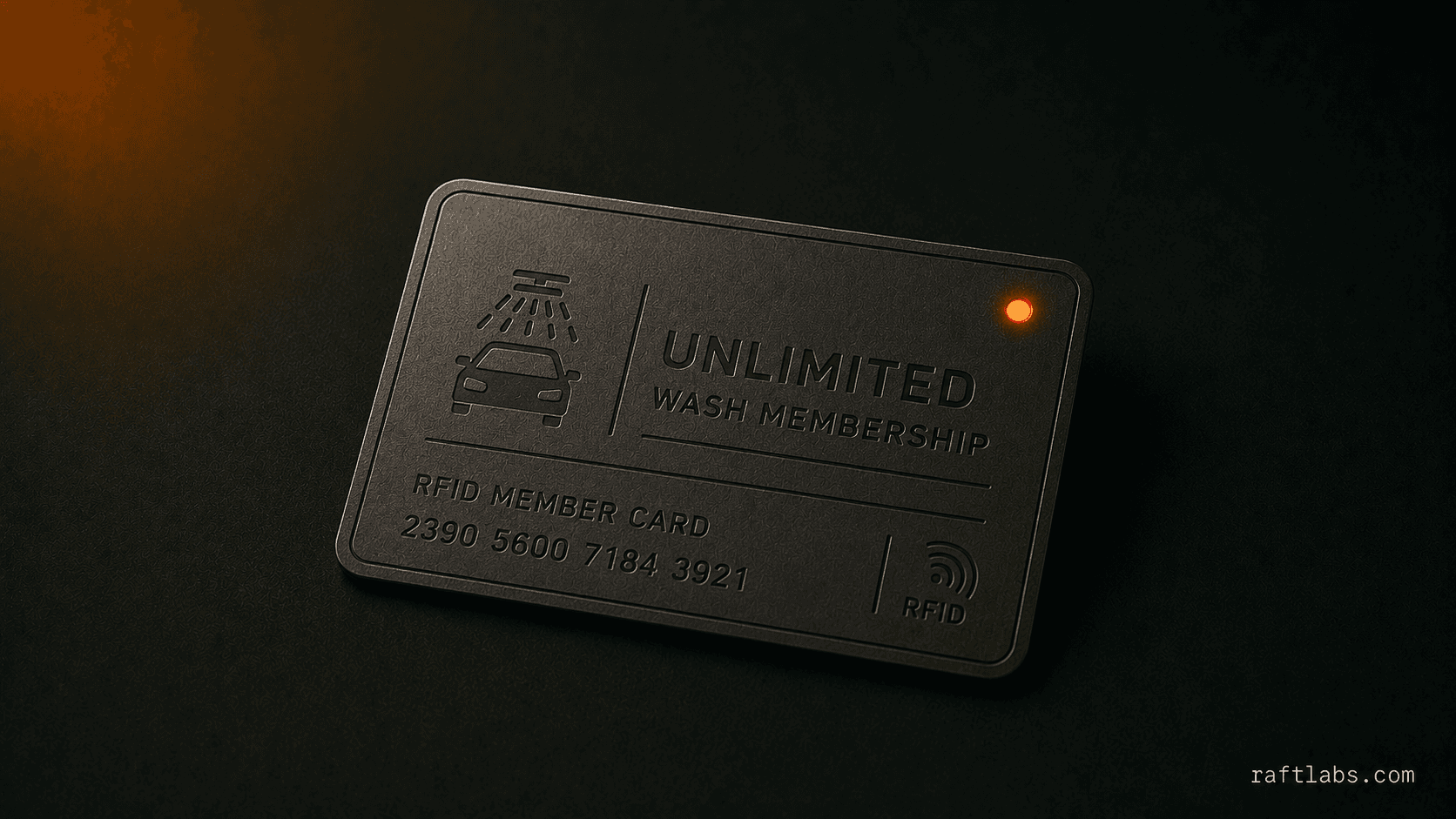
Article
Car Wash Management Software: Build vs. Buy for Chain Operators
Patheon, WashCard Systems, and DRB Systems work well for simple setups. But when you run multiple locations with fleet billing and membership revenue, off-the-shelf tools hit a ceiling fast. Here is what to build, what it costs, and when custom is worth it.
Read more
Article
Cost to Build a Property Management App Like AppFolio: What PMs Actually Pay
A property management company with 2,000 units pays $72,000/year to AppFolio before per-unit add-on fees. Here is what it costs to build your own property management platform ($70,000-$200,000), what Fair Housing Act compliance requires, and when regional PMs should own their stack.
Read moreProduct engineering is the practice of building software with the product outcome, not the technical specification, as the primary driver. It combines product thinking (what should we build and why) with engineering execution (how do we build it well). Product engineering teams make technical decisions that are tied to business goals, user behaviour, and delivery timelines, not just technical correctness. The output is a product that works for users and a codebase that the team can maintain and extend.
Software development follows a specification. Product engineering shapes the specification. A product engineering team pushes back when a feature adds complexity without adding user value. They suggest alternatives when the specified approach will take three times as long as a simpler one that achieves the same outcome. They think about the product roadmap when they make architecture decisions, so the system is built to support where you're going, not just where you are today.
Yes. We work alongside client product managers, designers, and existing engineering teams. We plug into your process, your planning meetings, your retrospectives, your design reviews, or we run the process if you don't have one. We don't require you to hand over the product entirely. We fit the engagement model to what you need.
Yes. We can take over an existing codebase, audit it, and continue development on it. We start with an assessment to understand the technical debt, the architecture, and the test coverage. We tell you honestly what's worth keeping and what needs replacing. We won't refactor code for the sake of it, only where technical debt is actively slowing delivery.
It depends on what you need. Typical engagements look like one of these: (1) Full product build, we take ownership of the engineering from scoping to launch. Fixed scope, fixed cost, milestone delivery. (2) Augmentation, we join your existing team for a specific period to accelerate delivery on a defined workstream. (3) Technical leadership, we provide product and architecture direction while your team executes, or help you hire and structure an internal team. We scope the engagement with you before starting.
100+. Across SaaS, mobile, enterprise, AI, and consumer products. We've built booking platforms, loyalty systems, patient monitoring apps, AI chatbots, manufacturing software, fintech tools, and media platforms. The breadth means we've seen most failure modes before and we know how to avoid them.
Work with us
We scope Product Engineering Services in 30 minutes. You walk away with a clear cost, timeline, and approach. No commitment required.
SaaS products
Multi-tenant SaaS platforms built for scale, with billing, auth, and clean API contracts.
Healthcare
HIPAA-compliant clinical tools, patient portals, and health data platforms.
FinTech
Payment platforms, lending software, and financial data products.
Hospitality
Booking engines, PMS integrations, and guest-facing product development.
Loyalty programs
Points, rewards, and engagement platforms built for retention.
MarTech
Marketing automation, customer data platforms, and attribution tooling.