Hire Top PostgreSQL Developers
RaftLabs PostgreSQL developers have shipped production databases for SaaS platforms, healthcare apps, and loyalty programs across the US, UK, Australia, and Ireland, handling millions of records, complex query loads, and zero-downtime migrations.
What you can count on
Retention
3+ years
Average client relationship across active accounts
First milestone
Week 3
Working prototype in front of real users
Pricing
Fixed price
Scope and cost agreed before work starts
Team
No handoffs
The senior engineers who scope the build also ship it
The short answer
PostgreSQL is an open-source relational database that handles complex queries, high-concurrency workloads, and both structured and JSON data, making it a dependable backbone for SaaS platforms, healthcare systems, and fintech applications. RaftLabs has shipped PostgreSQL-backed products for clients in the US, UK, Australia, Ireland, and Canada, covering schema design, query optimization, cloud deployment on AWS and GCP, and migrations from MySQL and Oracle. Our engineers have production experience with replication, partitioning, and row-level security, not just basic CRUD.







Our PostgreSQL development services
PostgreSQL Development
We design and implement custom software solutions powered by PostgreSQL, delivering secure, scalable databases with efficient data management for your applications. Our engineers apply proper schema design, indexing strategies, and connection pooling from the start.
Data Migration
We migrate your data from legacy systems to PostgreSQL while maintaining data integrity and minimizing downtime. Our process includes pre-migration audits, automated validation, and a tested rollback plan so the cutover carries no surprises.
PostgreSQL Integration
We connect PostgreSQL directly with your existing systems, APIs, and third-party services. We also upgrade legacy applications and migrate from MySQL, Oracle, or other relational databases to PostgreSQL with care for schema compatibility.
Cloud PostgreSQL Deployment
We deploy PostgreSQL on AWS (RDS/Aurora), Google Cloud SQL, and Azure Database, with automated backups, read replicas, and monitoring configured from day one. High availability and security are built into the deployment, not bolted on later.
What sets our PostgreSQL development services apart
Case studies
Success stories

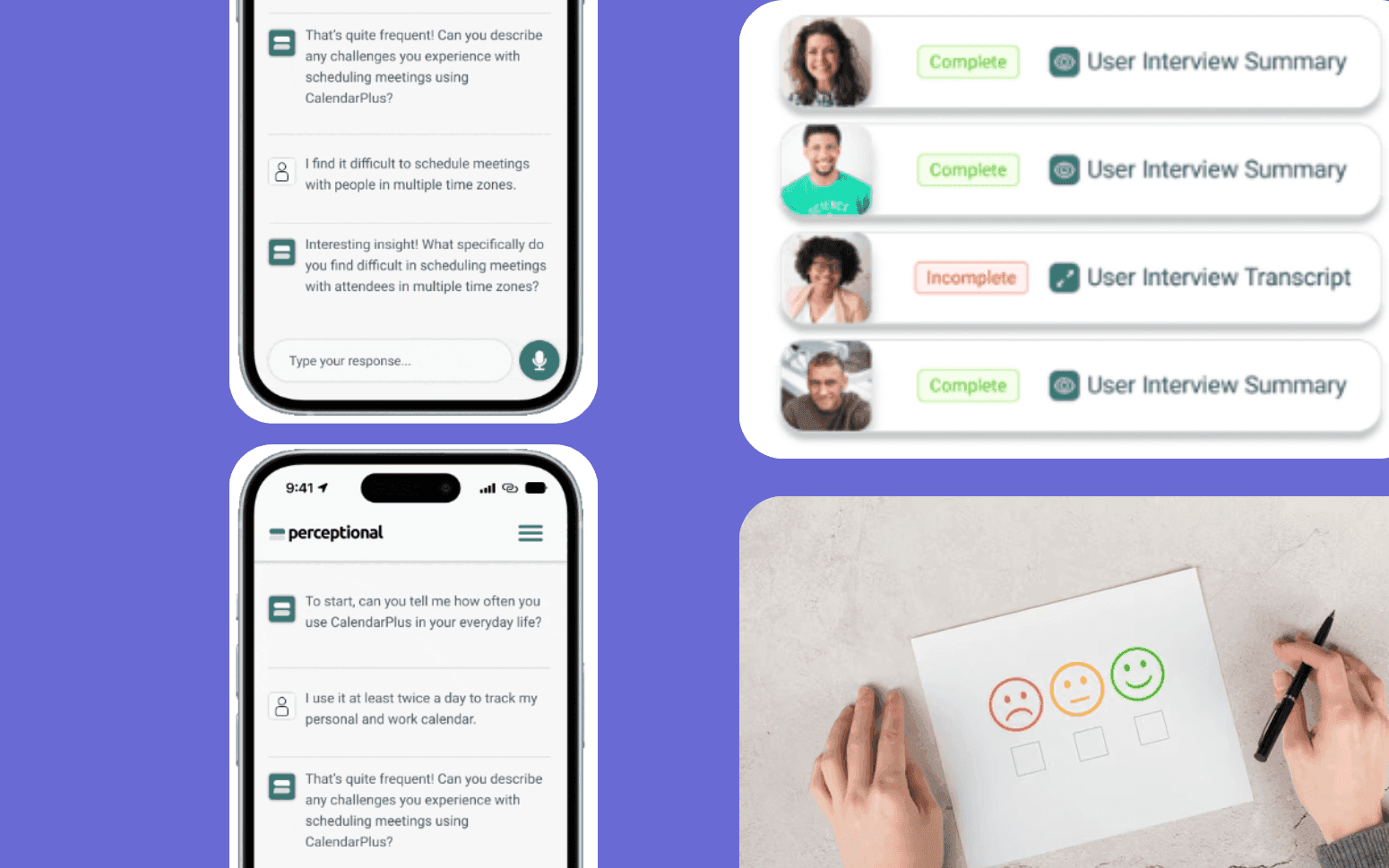
I found RaftLabs to be the perfect partner for Perceptional, with their expertise in helping startup founders build MVPs, a free consultation, a prototype that matched my vision, and their unwavering support.
01 / 11
Why choose us for PostgreSQL adoption
- High-Quality Services: We deliver PostgreSQL solutions with strong performance, reliability, and efficient data management, no shortcuts on schema design or indexing.
- Cost-Effective Solutions: Get PostgreSQL development at competitive prices without trading away quality or scalability. Our model is USD 2,400/month for dedicated developer time.
- Hassle-Free Client Interactions: You get structured updates, a clear backlog, and a named point of contact, no chasing status across channels.
- Technical Expertise: Our engineers understand PostgreSQL internals, query planning, vacuuming, replication, and partitioning, not just basic CRUD operations.
- Manual and Tool Testing: We test PostgreSQL solutions against load, edge cases, and data integrity checks before any production deployment.
- Timely Project Delivery: We set milestones at the start of every engagement and track against them, delivery surprises are not part of the process.
RaftLabs vs in-house vs freelancers
| RaftLabs | In-House | Freelance | |
|---|---|---|---|
| Time to hire top PostgreSQL developers | 1 day to 2 weeks | 4 to 6 weeks | 1 to 12 weeks |
| Project initiation time | 1 day to 2 weeks | 2 to 10 weeks | 1 to 10 weeks |
| Risk of project failure | Exceptionally low with a 98% success rate | Low | Very High |
| Developers supported by project management | Yes, dedicated PM and Agile processes | Varies | No |
| Exclusive development team | Yes, dedicated team guaranteed | Yes | No |
| Assurance of work quality | Yes, with quality assurance processes | Yes | Varies |
| Advanced development tools and workspace | Yes, enterprise-grade tools | Yes | Varies |
Dedicated senior engineers from $6,000/month (minimum pod $12,000/month).
What powers our products







Industries we serve
- 01
Healthcare App Development
HIPAA-aware EHR integrations, patient portals, and clinical workflow tools for digital health startups and multi-location practices.
- 02
Fintech Software Development Company
Payment rails, neobank backends, lending origination, and RegTech compliance systems. Fixed-cost delivery for fintech startups.
- 03
Hospitality Software Development Company
Property management systems, direct booking engines, guest apps, and channel management for hotels, resorts, and serviced apartment groups.
- 04
Ecommerce Software Development Company
Custom ecommerce software for online retailers, B2B sellers, and marketplace operators, platform development, marketplace, headless commerce, AI personalisation, subscription, and B2B portals.
- 05
EdTech Software Development Company
Learning platforms, LMS, AI tutors, and school management systems for ed-startups and institutions scaling past generic tools.
- 06
B2B SaaS Development
B2B SaaS products, marketplaces, and creator platforms. Built end to end.
- 07
Loyalty Apps
Loyalty is about more than points, it's about building deeper engagement. When customers don't feel connected, retention drops. We've built systems like Aldifest, Instantor, and Energia Rewards that keep users coming back with personalized referrals, rewards, and multilingual experiences. These platforms make user experience simple and drive real business growth.
- 08
Media & Communication
We build production-ready media and communication apps: live streaming, on-demand content, social audio networks, and real-time video infrastructure. Delivered on time, built to handle real user loads.
Still Curious
PostgreSQL is an open-source, object-relational database system known for its reliability, flexibility, and scalability. It supports both SQL (relational) and JSON (non-relational) queries, making it an ideal choice for handling complex, large-scale data.
It is highly extensible and widely used in many industries for building scalable web applications, handling large datasets, and supporting enterprise-level applications.
PostgreSQL is an SQL (Structured Query Language) relational database management system. However, it also supports non-relational data types such as JSON, which allows you to store semi-structured data. This flexibility provides the best of both worlds: SQL for structured data and NoSQL for unstructured or semi-structured data.
PostgreSQL is used for building scalable applications that require a reliable database system. Some common use cases include:
- Web and mobile applications
- Enterprise systems
- Data analytics and business intelligence
- Financial services and healthcare applications
Its ability to manage both structured and unstructured data makes it a versatile choice for various industries.
SQL (Structured Query Language) is a programming language used to interact with databases. PostgreSQL is an open-source relational database management system (RDBMS) that uses SQL to manage and query structured data. In short, SQL is the language, and PostgreSQL is a system that uses SQL.
While both MySQL and PostgreSQL are popular relational database management systems, PostgreSQL offers more advanced features and is preferred for complex, data-heavy applications. Key differences include:
- PostgreSQL is more feature-rich, supporting advanced data types, complex queries, and full ACID compliance.
- MySQL tends to be faster for read-heavy operations but lacks some of the advanced features that PostgreSQL offers.
For businesses requiring high scalability, flexibility, and the ability to manage complex data, PostgreSQL is often the better choice.
For startups, PostgreSQL is often the better option compared to Oracle due to several factors:
- Cost: PostgreSQL is open-source, so there are no licensing fees, whereas Oracle can be quite expensive.
- Flexibility: PostgreSQL supports a wider range of data types and queries, which is beneficial for rapidly growing businesses.
- Community Support: PostgreSQL has a large and active open-source community, which provides a wealth of resources and ongoing improvements.
This makes PostgreSQL an attractive choice for startups looking for scalability without the high upfront costs.
PostgreSQL and MongoDB differ primarily in their database models:
- PostgreSQL is a relational database system that uses structured data and supports SQL queries.
- MongoDB is a NoSQL database designed for handling unstructured data and JSON-like documents.
If your application requires complex queries, relationships between data, and transactional integrity, PostgreSQL is the better choice. MongoDB is more suitable for unstructured data or applications that prioritize flexibility over strict data integrity.
PostgreSQL is highly versatile, and it can be used for a variety of applications, including:
- Enterprise applications: Secure and scalable solutions for businesses.
- Web and mobile applications: Apps that require fast data processing and high uptime.
- Data-intensive applications: Applications like analytics, reporting, and business intelligence.
- Financial and healthcare apps: Apps needing high data integrity and security.
PostgreSQL's flexibility makes it suitable for virtually any app that requires a dependable database.
Yes, PostgreSQL is well-suited for high-traffic websites due to its strong performance, scalability, and reliability. Its ability to handle large datasets, high-concurrency workloads, and complex queries makes it a great choice for websites with substantial traffic and data processing needs.
Yes, PostgreSQL is capable of handling big data applications. It can manage large datasets efficiently through indexing, partitioning, and advanced querying techniques. With the right setup, PostgreSQL can scale to accommodate massive amounts of data while maintaining high performance.
PostgreSQL offers numerous advantages for app development, including:
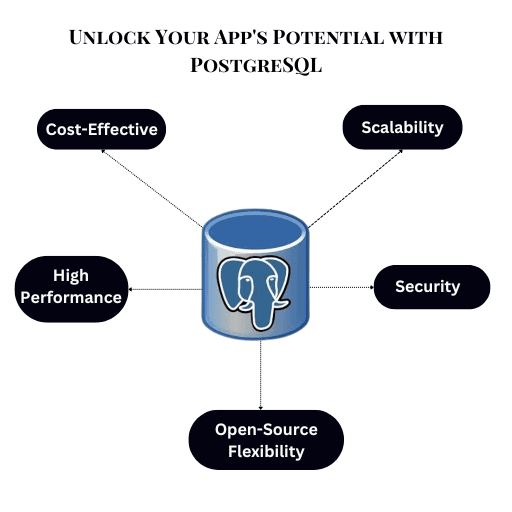
- Scalability: Handles large volumes of data with ease.
- Performance: Optimized for high performance, even with complex queries.
- Flexibility: Supports both structured and semi-structured data.
- Open-Source: No licensing fees, ensuring cost-effectiveness.
- Security: Strong access controls and encryption features to protect sensitive data.
- Community Support: A large community of developers continuously improving PostgreSQL.
These benefits make it a top choice for apps that need reliability and scalability. PostgreSQL is a powerful, open-source database known for its reliability, scalability, and advanced features like support for complex queries and geospatial data. It's a cost-effective choice compared to proprietary databases, making it ideal for startups and businesses of all sizes.
When hiring a PostgreSQL developer, consider both technical and soft skills. Some of the key skills include:
- Technical Skills:
- Proficiency in SQL and PostgreSQL-specific features.
- Experience with database optimization, indexing, and query tuning.
- Knowledge of data modeling and database design.
- Familiarity with version control systems (like Git).
- Experience in integrating PostgreSQL with other technologies.
- Soft Skills:
- Strong communication and collaboration skills.
- Problem-solving abilities for troubleshooting and optimization.
- Attention to detail to ensure data accuracy.
- Ability to adapt to evolving technologies and requirements.
A well-rounded developer will ensure smooth database operations and efficient app performance.
- Technical Skills:
When you hire PostgreSQL developers from RaftLabs, you gain access to:
- Expertise: Our developers have deep knowledge of PostgreSQL and can create solutions built to your specific data model.
- Scalability: We design databases that grow with your business and handle complex queries without degrading.
- Efficient Development: We follow best practices to ensure secure, fast, and maintainable database work.
- Clear Communication: Our transparent approach ensures that you are always aligned with your project's goals.
Visit our portfolio to see how we've helped other businesses, or contact us for more details.
RaftLabs engages on a dedicated model starting at USD 2,400/month per developer. Rates vary based on seniority, team size, and project scope. We don't publish a blanket hourly rate because the right engagement depends on your actual requirements.
For a detailed structure, contact us directly for a quote shaped to your project.