- Platform
- Web App
- Duration
- 16 weeks
- Industry
- EdTech
- Read time
- 5 min

Short answer
RaftLabs built Sekou, a French-first custom SaaS LMS for K-12 schools in French-speaking West Africa, designed and co-founded by Jennyfer Ngueno and Leonnel Noundou. The platform automates attendance tracking, payroll, and fee collection, provides role-specific dashboards for teachers, students, and parents, supports local African payment methods, and includes multilingual support starting with French. Sekou supports 4,000+ students per school, boosted school community connections by 25%, and was delivered from concept to launch in 16 weeks. Built with React, AWS Lambda, Hasura GraphQL, and TypeScript.
Schools in French-speaking West Africa run on paper, disconnected tools, and phone calls. Attendance tracked in registers. Fees collected manually. Payroll managed in spreadsheets. Parents with no visibility into their child's progress until the end-of-term report card.
Jennyfer Ngueno and her co-founder Leonnel Noundou grew up in this system. They came to us to build Sekou: a French-first SaaS LMS that would automate the administrative work stealing time from teaching and give every role (student, teacher, parent, administrator) a portal built for their specific needs.
Every off-the-shelf LMS they evaluated was built for English-speaking Western markets, required infrastructure African schools did not have, and ignored the local payment methods families actually used.
We built Sekou in 16 weeks. The platform supports 4,000+ students per school, automates attendance and fee collection, and improved school community connections by 25% in early beta use.
before & after
What changed
- Attendance tracked manually in paper registers, with no school-wide visibility for administrators
- Fee collection done in person or via bank transfer, with manual reconciliation and frequent errors
- Payroll calculated in spreadsheets with no connection to attendance or leave records
- Parents received student progress updates once per term via paper report cards, with no real-time visibility
- Communication between teachers, parents, and administrators happened via phone calls and WhatsApp
- Every off-the-shelf LMS available was English-first with no French localization or local payment method support
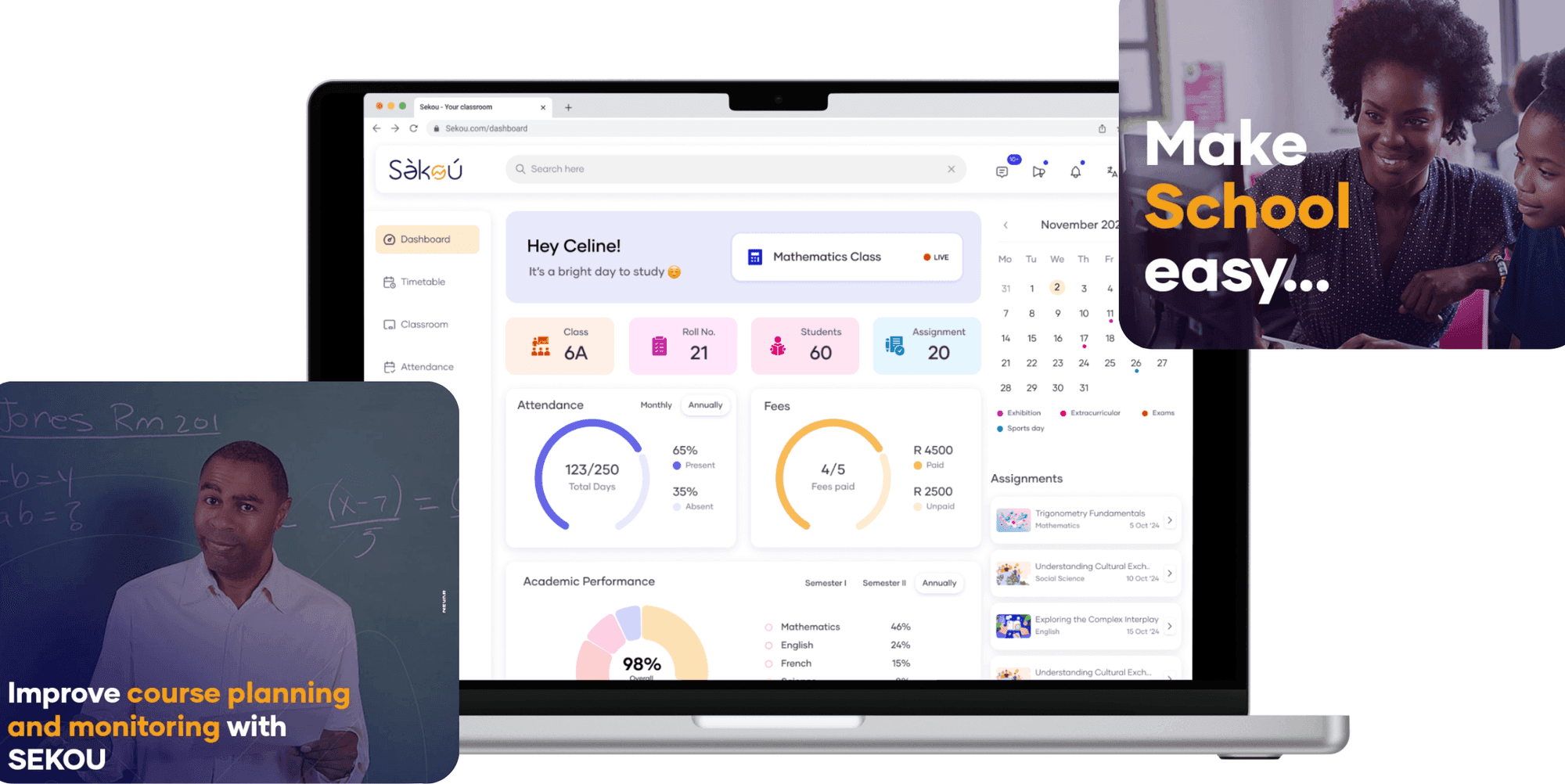
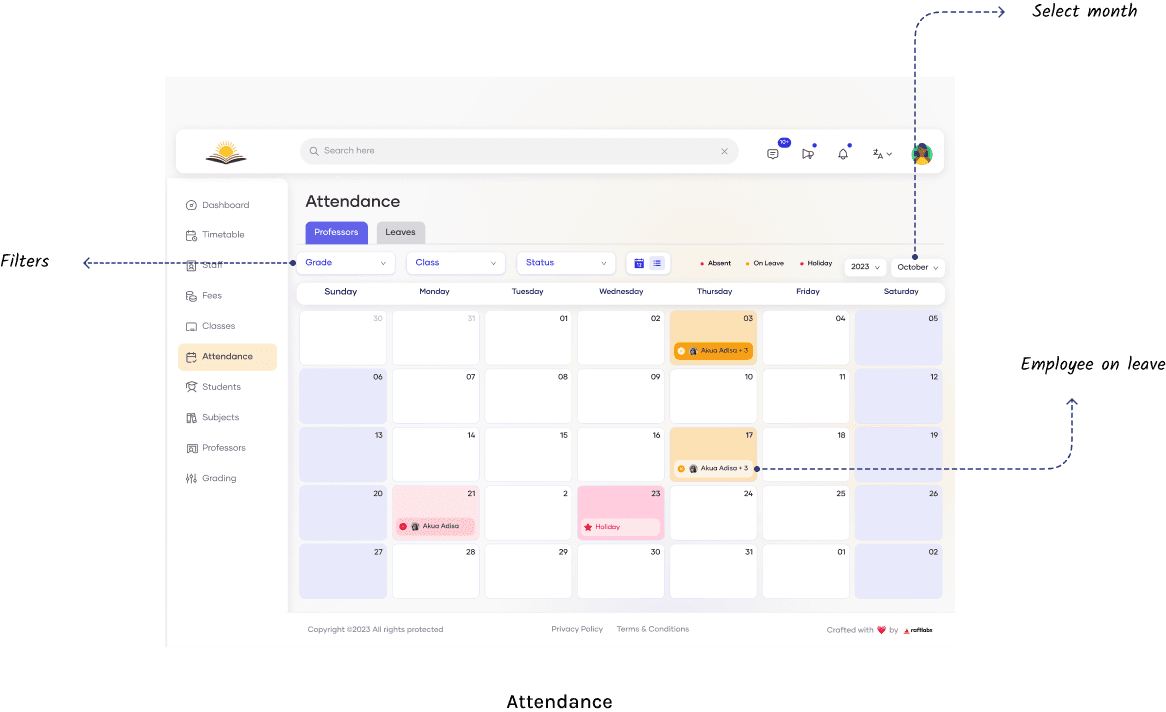
- Automated attendance tracking across all classes with real-time visibility for teachers and administrators
- Fee collection integrated with local African payment methods, so parents pay in their local currency through familiar channels
- Payroll and administrative records managed in one platform, connected to attendance data
- Parents access a real-time portal showing their child's attendance, grades, and upcoming assignments
- Dedicated dashboards for students, teachers, parents, and administrators, each showing only what is relevant to their role
- Platform built French-first and designed to scale across multiple schools without per-school engineering work
What we had to solve
- 01
Building a French-first LMS when every existing platform treats localization as an afterthought
French localization for an LMS is not simply translating the interface. School terminology, grade structures, reporting formats, and administrative workflows in French-speaking West Africa differ from the Western models that most LMS platforms are designed around. Building the platform French-first meant designing data models, copy, and workflows around how these schools actually operate, not bolting French text onto an English-language product. The risk of getting it wrong was that teachers and administrators would encounter language that did not match their professional context and reject the platform.
- 02
Integrating local payment methods that most LMS platforms do not support
Fee collection in West African schools runs through mobile money, local bank transfers, and regional payment platforms, not Stripe or PayPal. Building a fee management module that worked in practice meant integrating the payment infrastructure families in these countries actually use, handling currency conversion where required, and making the payment confirmation flow reliable enough that administrators could reconcile fee records without chasing down individual transactions. This was entirely outside the scope of any existing LMS payment module.
outcomes
What we achieved
African schools relied on manual paperwork and disconnected tools that made attendance, payroll, and fee collection slow and disorganized.
Existing LMS platforms lacked French support and could not scale to serve large student populations with the administrative workflows these schools required.
Limited parent-teacher communication and no real-time visibility into student progress left school communities fragmented and reactive rather than connected.
What clients say
Don't take our word for it.
Three-year average engagement. Founders and operators describing the work in their own words. No marketing varnish.

 West Africa
RaftLabs has been an exceptional partner. From the start, they became more than just a service provider, they embraced our vision with their expertise and dedication. We're proud of the result.
Your school operations are still manual and your community is not connected?
the build
What we built
Sekou gives each user type a portal built for their specific role. Every feature connects back to the core goal: less administrative overhead, more visibility, better communication.
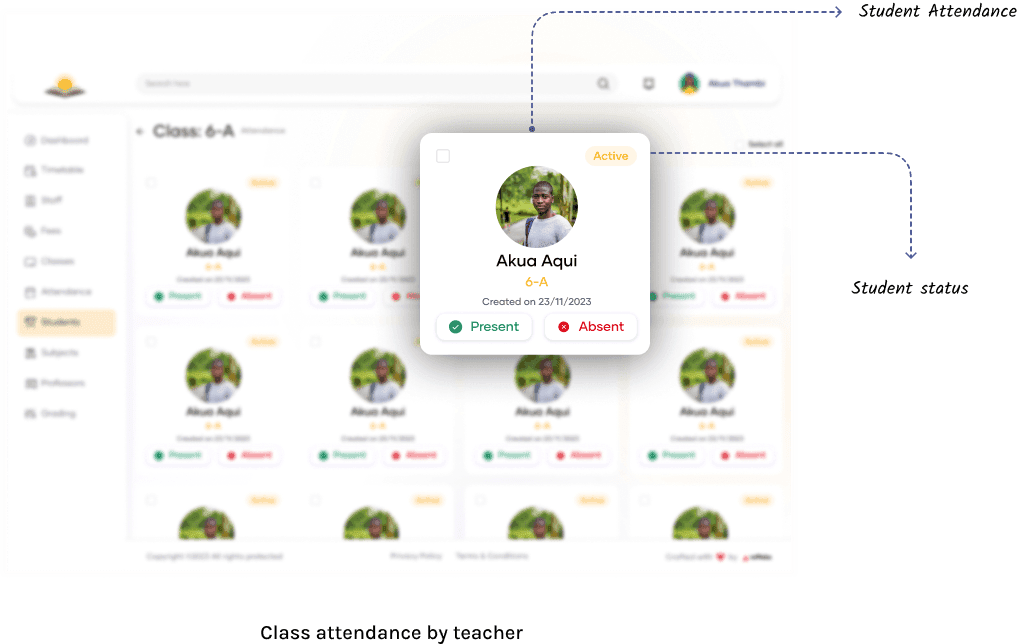
Teachers manage attendance, assignments, and grades without paper or spreadsheets
Teachers mark attendance, upload lesson materials, assign homework, and track grades without paper or spreadsheets. Students see their assignments, grades, and materials in a personal dashboard organized by subject. Both interfaces are designed for daily use without training documentation.
Parents see grades and attendance as soon as teachers publish them, not at end of term
Parents access a dedicated portal showing their child's current attendance record, recent grades, upcoming assignments, and school announcements. Updates appear as soon as teachers or administrators publish them, not at the end of term. The portal is accessible on any device and available in French.
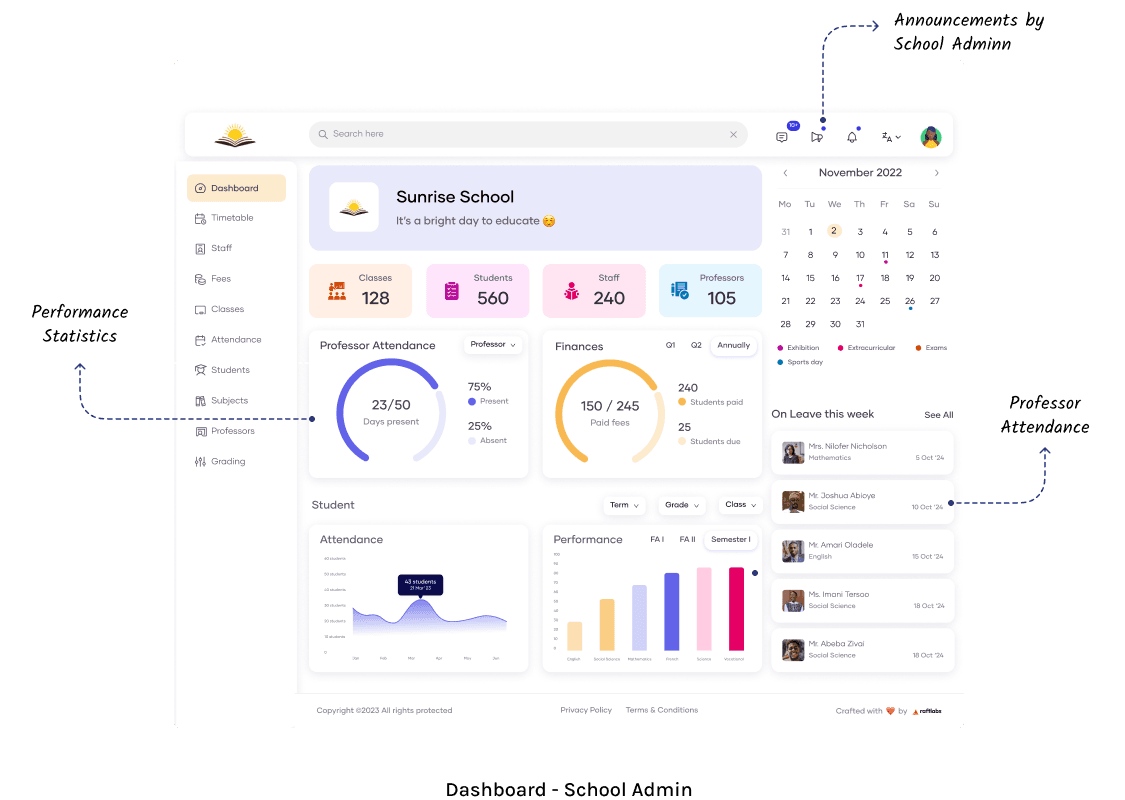
Attendance feeds directly into payroll: administrators run the school without spreadsheets
Attendance is tracked in the system and feeds directly into reports and payroll calculations. Fee collection integrates with local African payment methods so parents pay in their local currency through familiar channels. Administrators manage payroll, fee records, and student enrollment from one panel without spreadsheets or manual reconciliation.
Built French-first, not translated after: families pay through channels they already use
The platform is built French-first, not translated after the fact. School terminology, grade structures, and administrative labels match how these schools actually operate. Local payment methods give families payment options that match how money moves in their communities, removing the friction that comes from forcing Western payment flows onto an African market.

Engagement
How we worked together
- 01Weeks 1–2
Discovery and scoping
We map the problem before writing code. Two weeks of technical audit, stakeholder interviews, and prototype, so both teams align on scope and risk before sprint one. - 02Ongoing
Two-week Agile sprints
Each sprint ends with working software, not a status update. You review a real build, request changes, and approve before we move forward. No surprises at handover. - 03Ongoing
Daily async updates
Slack for daily progress, Asana for task visibility, weekly video calls for decisions. You have full visibility without needing to attend every meeting. - 04Final
Handover and warranty
Full code handover with deployment runbooks and documentation. Thirty-day warranty period for production issues at no extra cost.
stack
Why we chose this stack
- 01ReactFour distinct user types (students, teachers, parents, and administrators) each needed their own dashboard experience with different data layouts and navigation. React's component architecture let us build those views efficiently from shared infrastructure.
- 02AWS LambdaSchool platforms see predictable usage spikes (start of term, exam periods, fee deadlines) without requiring constant high capacity. Lambda scales automatically for those peaks without provisioning servers that sit idle the rest of the year.
- 03HasuraTeachers marking attendance and parents checking grades simultaneously needed updates to appear immediately without refreshing the page. Hasura's GraphQL subscriptions push live data to each role's dashboard as it changes.
- 04TypeScriptA platform handling student records, fee transactions, and attendance data across multiple schools cannot have silent data model errors. TypeScript enforces data contract consistency across the full stack, catching mismatches during development rather than in production.
FAQs for custom LMS development
Off-the-shelf LMS platforms are designed for English-speaking Western markets. They lack French-first localization that matches how schools in Francophone Africa operate, do not support local African payment methods, and require infrastructure these schools often do not have. For Sekou, every requirement (French terminology, local payment integration, the specific administrative workflows of African K-12 schools) made custom development the only path that would actually work. Generic platforms would have needed so much modification that building custom was faster and cheaper over three years.
We integrated local mobile money platforms and regional payment providers that families in West Africa actually use. Parents pay in their local currency through the channels they are familiar with. Payment confirmation flows directly into the school's fee records in the admin panel, eliminating the manual reconciliation that previously consumed hours of administrator time per week.
Yes. Sekou was designed as a multi-tenant SaaS platform from the start. Each school operates in its own isolated environment with its own data, administrators, and settings. Adding a new school to the network does not require engineering work. It is a configuration step. The infrastructure scales automatically as the number of schools and students grows.
The parent portal removes the end-of-term report card as the only visibility parents have into their child's progress. When parents can see attendance records, grades, and assignments in real time, conversations between home and school happen earlier, before a problem becomes a crisis. In Sekou's beta schools, school community connection scores improved 25%, which the schools attributed directly to parents having a way to stay informed between formal meetings.
We delivered Sekou (four role-specific dashboards, automated attendance and fee collection, local payment integration, multilingual support, real-time parent portal, and payroll management) in 16 weeks. That timeline included a prototype review with the client before development began, which removed ambiguity from the build. Platforms with more complex grading systems, exam management, or integrations with national education databases would take longer. Contact us to scope based on your school type and feature requirements.