AI & Automate · RetailNorthern Ireland
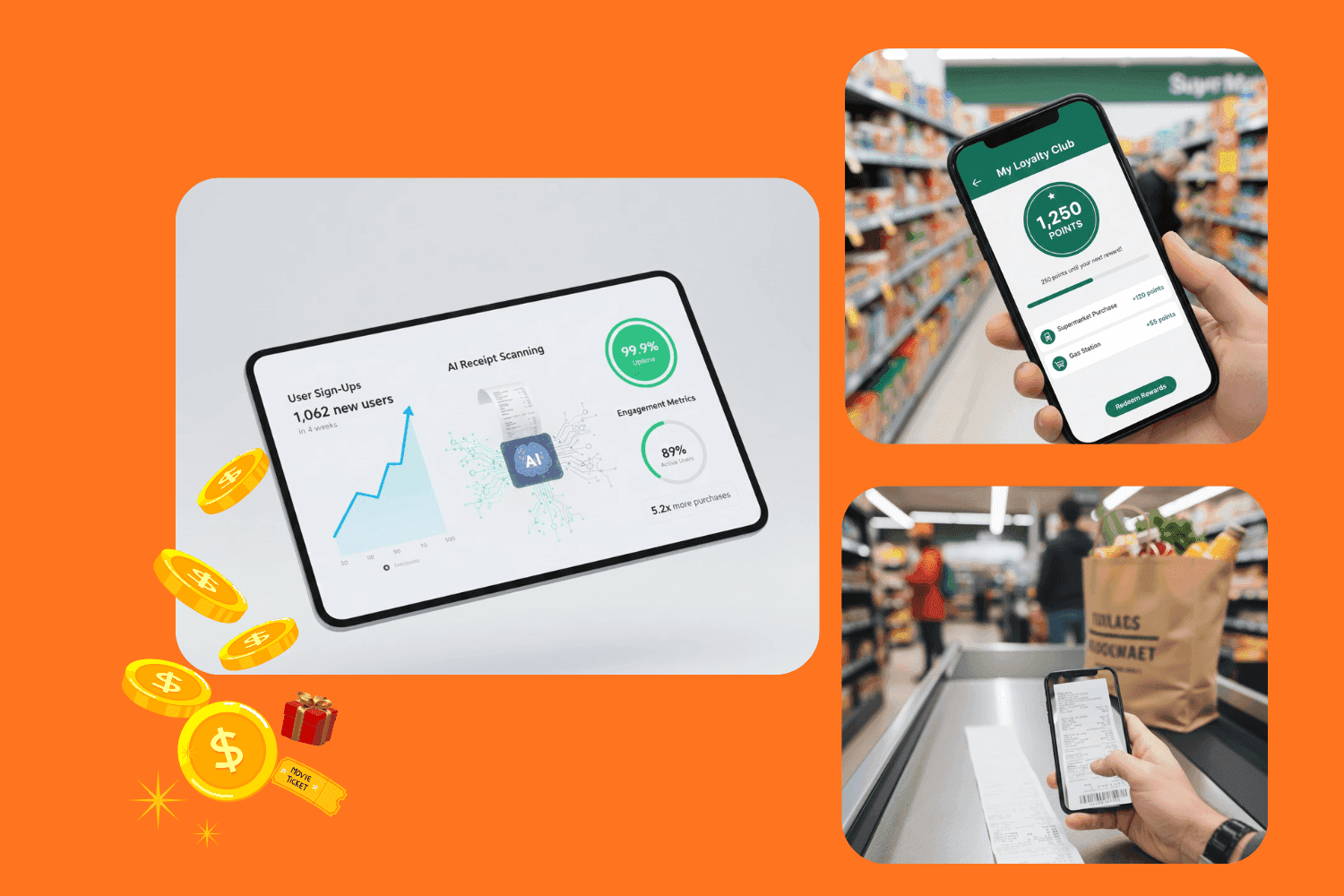
Musgrave receipt scanning software case study for SuperValu and Centra
- Users, week one
- 471
- Users, four weeks
- 1,062
Software Development Services
Bring the prototype, the stuck workflow, or the software that has reached its limit. One team works out what is worth keeping, makes the real product, and stays for the work that comes after launch.
A senior product or engineering lead replies within one business day.
In short
RaftLabs provides software development services from product assessment and prototyping through custom software, AI, automation, integrations, modernization, and growth marketing. Teams can start with an idea, an existing prototype, a product that needs rebuilding, or an operational problem that needs software. Every engagement begins with a scoped first step, clear ownership, and a written path to production.
The whole journey
You do not need to arrive with a service name. Pick the point that best describes the decision in front of you.
We review what already works, talk through the users and workflow, and identify the assumptions that still need evidence. You leave knowing what to keep, what to test, and what the first useful release needs to do.
Prototype or idea → Clear starting pointWe define the first release, the data and integrations behind it, the parts that need rebuilding, and the delivery sequence. The result is a scope, architecture, cost, and timeline that can survive contact with real users.
Direction → Scope and architectureWe design and make the web, mobile, SaaS, AI, automation, and integration work behind the product. One team owns the experience, the systems underneath it, testing, security, and the production launch.
Plan → Production softwareAfter launch, we improve activation, search visibility, AI-assistant discovery, content, and campaigns around the product. The same team can connect what was made to the customers and revenue it was meant to create.
Launch → Customers and growthCore capabilities
Not sure which one fits? Use the routing above, or talk to us.
Use AI and automation where they produce a measurable result, not because it's trendy.
Explore AI & AutomateConnect the systems you already run so data moves without manual re-entry.
Explore IntegrateSelected work

RaftLabs runs product discovery for teams that need to decide what is worth making, builds custom web, mobile, and SaaS products, develops AI agents and automation, connects existing systems, and modernizes legacy software that's become hard to change. We also provide dedicated development teams for companies that need engineering capacity rather than a scoped project. Every engagement starts with a scoping sprint that produces a fixed price and timeline before development begins.
Start from your situation, not the service catalog. If the product decision is still uncertain, start with product discovery. If you need to take a clear product idea to launch, that's custom software development. If you already have a prototype or MVP, that's prototype-to-production work. If manual work is costing your team hours, that's AI and workflow automation. If your existing software is hard to change or scale, that's legacy modernization. If you need more engineering capacity without a full-time hire, that's a dedicated team.
If more than one of these sounds right, or none of them quite fits, tell us the problem directly on a 30-min call. We'll recommend the approach, not sell you the service name that's easiest for us to say yes to.
Yes. Taking over an existing prototype, an inherited codebase, or a half-built product from a previous agency is a common starting point for us, alongside legacy modernization and adding AI capabilities to software that already exists.
We start with a technical audit: code quality review, architecture assessment, security scan, and performance profiling. The audit gives you an honest picture of what you have: what is salvageable, what needs to be rewritten, and what can be improved incrementally. We do not take over codebases blindly. If the audit reveals the system is too fragile to extend safely, we will tell you, along with a realistic cost comparison between remediation and rebuild.
Yes. Dedicated engineers embed directly into your existing team by discipline: frontend, backend, DevOps, or QA. They work in your tools, join your standups, and are matched to your stack within a week, with no recruitment overhead or long notice periods.
This also works alongside a scoped project: our team can own a defined piece of work end to end while coordinating with your in-house engineers on the rest, rather than requiring you to hand over the whole codebase.
Project pricing depends on scope, team size, and delivery requirements. Our planning ranges are $15,000–$35,000 for a basic MVP, $30,000–$60,000 for a standard MVP, and $55,000–$100,000 for a full application build. Complex platforms typically run $100,000–$160,000; enterprise builds run $140,000–$240,000. Minimum project engagement is $9,500.
For ongoing engineering capacity, public per-person pricing is approximately $6,000–$6,500 per month, with a minimum team engagement of $12,000–$15,000 per month. These are planning ranges, not a quote: discovery establishes the scope and delivery plan for your project.
For a scoped fixed-price project, we agree the price before development begins and discuss scope changes before proceeding. Request a 30-min call to discuss your requirements.
Timeline depends on the scope of the first release. Our planning ranges are 6–10 weeks for a basic MVP, 10–14 weeks for a standard MVP, and 14–20 weeks for a full application build. Complex platforms typically take 20–28 weeks; enterprise builds take 24–36 weeks, with larger programs extending beyond that.
Discovery defines the scope, architecture, dependencies, and release plan before development begins. Integrations, data migration, security requirements, and stakeholder availability all affect the schedule. We agree on milestones for design, development, testing, and launch against your specific scope rather than promise the same delivery date for every project.
Yes. We build AI agents and automation pipelines that handle invoice processing, support ticket routing, and document data extraction without manual entry, and we connect the systems you already run through API development, CRM/ERP integrations, and business-systems integration work.
Most effective engagements combine both: automation handles the structured, high-volume work, and AI handles exceptions and judgment calls. We help identify which problem needs which approach before scoping.
Work with us
Describe what you’re building, what isn’t working, or where the bottleneck is. We’ll recommend a starting point and discuss scope, cost, and timeline. A senior product or engineering lead replies within one business day.