Loyalty platform for a utility provider
- 1,100+
- logins in the first 24 hours after launch
Go-to-Market Strategy for Software Companies
Most software products launch with the wrong ICP, on the wrong channels, at the wrong price point. Not because the team is inexperienced - because the GTM strategy was built from assumptions rather than research, and the assumptions were wrong.
RaftLabs builds go-to-market strategies from real user research - the same interviews that shape the product shape the positioning, the messaging, and the channel plan. The strategy starts in week one of the build, not the week before launch.
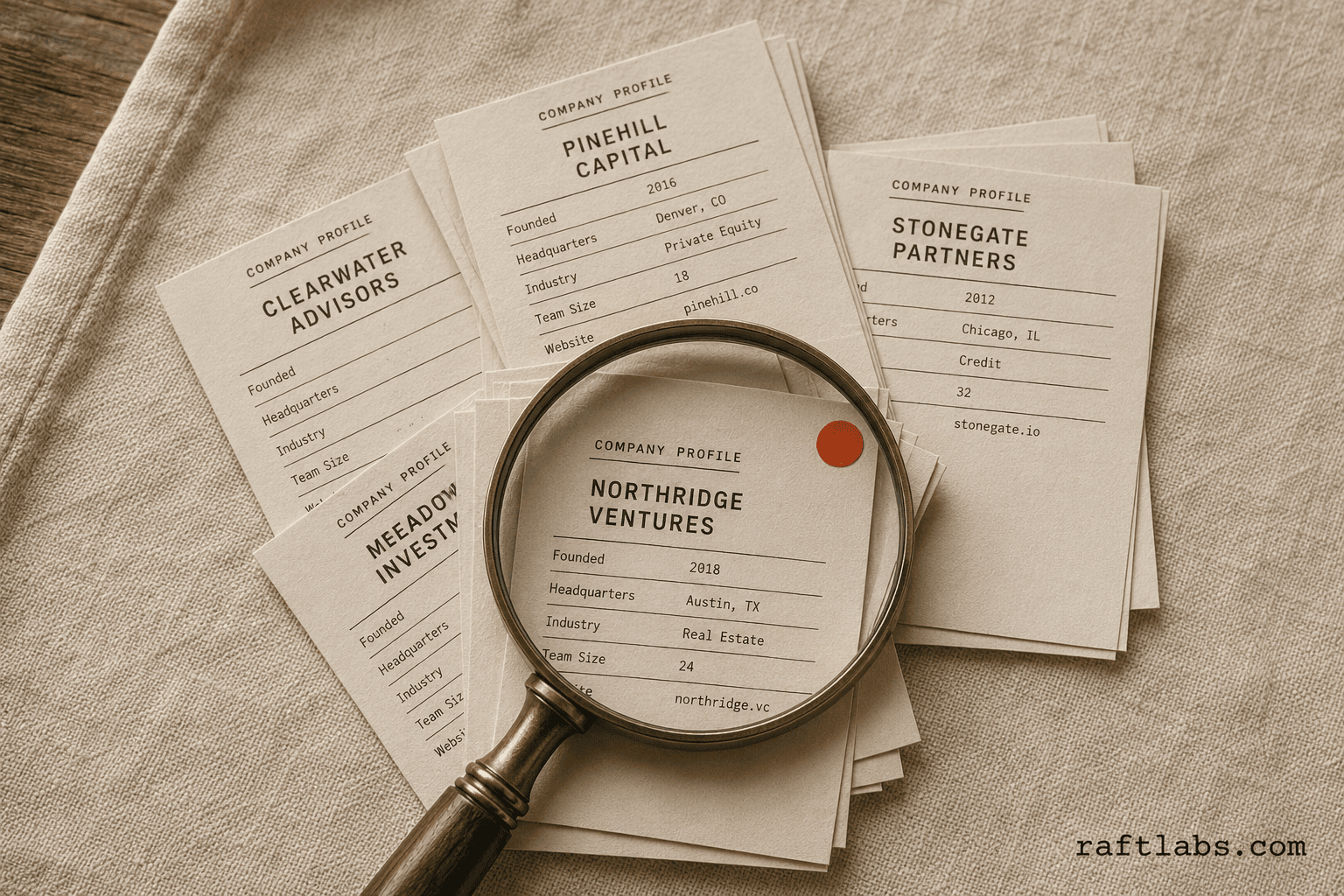
ICP definition from real buyer interviews - not a persona template filled in from assumptions.
Competitive positioning and messaging built to differentiate from alternatives buyers are already evaluating.
Channel selection tied to your unit economics - what can generate a positive-ROI customer at your average contract value.
90-day activation plan with specific milestones, not a strategic document that sits in a folder.
Bring the problem, the current workflow, or the existing code. We reply with a practical next step within one business day.
Trusted by







The brief
Good software decisions begin with the constraint, not a list of features or a preferred technology.
Product ready to launch but no clear answer to who to target first, on which channel, and at what price point?
Already launched once with low traction and not sure whether the problem is the product, the positioning, or the channel?
Building features based on what you assume users want instead of what market research has actually told you?
Plain answer
RaftLabs builds go-to-market strategies for software companies and SaaS products - covering ICP definition from real user research, competitive positioning, messaging frameworks, channel selection based on unit economics, pricing strategy, and a 90-day activation plan. GTM strategy starts in week one of the product build, not after launch, so the product and the market strategy are built in parallel.
What to remember
The product works. The technology is sound. The problem is real. And still the product launches to silence. A few early adopters. A conversion rate that does not justify the acquisition cost. A team that cannot tell whether the failure is the product, the positioning, the price, or the channel.
In most cases it is the positioning and the ICP. The product was built for a market assumption that was never tested with buyers. The ICP is described as a company size and an industry, not as a specific person with a specific problem at a specific stage. The messaging leads with features, not with the consequence of the problem the features solve. The channel was chosen because it felt right, not because the unit economics were modeled.
According to CB Insights' 2024 analysis of post-mortems from VC-backed companies, 43% of startup failures trace to poor product-market fit, not technical execution. For software companies, this almost always means the GTM assumption about who the buyer is and what they care about was never validated with real buyers before launch.
A go-to-market strategy fixes this before launch. Or (if the launch has already happened) it diagnoses which assumption was wrong and rebuilds from there.
We do not come at this only as advisers. We have run this motion on our own products. We rebuilt raftlabs.com as a programmatic-SEO engine of 3,000+ pages. We moved 12,000 monthly visitors to the new stack with zero downtime. We built GrowViral, a referral and viral-marketing platform, for a US marketing agency. And we have launched products that pulled real first-week traction. Energia Rewards drew 1,100+ logins in the first 24 hours and 3,000+ competition entries in the first week. AldiFest pulled 2,000+ sign-ups in its opening week. Launch traction is what a GTM strategy is meant to produce. We have shipped the products that produced it.
What we do
ICP Definition from Buyer Research
We define your Ideal Customer Profile from real interviews with buyers: people who match your target profile and either bought a solution like yours or decided not to. ICP definition from a spreadsheet of firmographic assumptions produces an ICP that describes who you hope will buy. ICP definition from 10 to 15 buyer interviews produces an ICP that describes who actually buys, what they were doing before they found a solution, what triggered the search, what objections they had, and what finally drove the decision. The difference between a persona and an ICP rooted in real research is the difference between a slide deck and a strategy.
Competitive Positioning
We map every alternative your ICP is actually evaluating: not just direct competitors, but "do nothing" and "build internally." We identify the positioning gap: the claim your product can make that no competitor makes credibly, or the segment your product serves better than any alternative. Positioning is not a tagline. It is the answer to the question "why should this specific buyer choose us over the alternatives they are also evaluating?" Answered in terms of their problem, not your features.
Messaging Framework
A documented messaging hierarchy that can be used consistently across every channel and by every person in the company. The framework covers four things: the primary value claim, supporting proof points, objection responses, and channel-specific copy variants. The primary value claim is the main reason an ICP-fit buyer should care. Proof points are the evidence behind it. Objection responses address the most common reasons a qualified buyer does not convert. Copy variants show how the message adapts from a landing page headline to a LinkedIn ad to a sales email. Messaging consistency across channels compounds. A buyer who sees the same clear message in your ad, on your website, and in the sales conversation converts at a higher rate than one who sees three different framings of what the product does.
Channel Selection & Unit Economics
We model the acquisition economics for every candidate channel: paid search, LinkedIn Ads, cold outbound, SEO, content marketing, community, and partnerships. Each is evaluated against your average contract value, gross margin, and target payback period. The output is a prioritized channel stack: which channels reach your ICP within your unit economics, and in what order to activate them given your current stage and budget. We cut channels that cannot work at your economics before you spend time or money testing them.
Pricing Strategy
We validate your pricing model and packaging against the channels you are using to acquire customers and the value the ICP segment derives from the product. Common problems we diagnose and fix. Pricing too low for enterprise sales to cover acquisition cost. Pricing too high for self-serve adoption. Packaging that leads with features rather than business outcomes. Pricing that misaligns with how the ICP measures value (per seat, per outcome, or per usage). Pricing is often the lever with the highest ROI improvement available. A 20% price increase that does not reduce conversion rate is a 20% revenue improvement with zero additional acquisition cost.
90-Day Activation Plan
A specific, sequenced plan for the first 90 days after the strategy is agreed, not a marketing plan with ongoing activities, but a launch sequence with milestones. Week one: what goes live and to whom. Week two to four: what the first acquisition tests are and how you measure them. Month two: which signals tell you the channel is working and what you do if they are absent. Month three: when you decide to scale a channel, cut a channel, or adjust the ICP based on what the data shows. The plan is built to produce a go/adjust/stop signal within 90 days so you are not running a strategy for six months before realizing it is not working.
Not every software product goes to market the same way. The motion has to match your price point and your buyer. We help you pick the one your unit economics can actually support, then build the plan around it.
| GTM motion | Best-fit ACV | Primary channel | Sales cycle | When it wins |
|---|---|---|---|---|
| Product-led (PLG) | Under $5K a year | Self-serve signup, SEO, in-product | Days to weeks | Fast time-to-value; a product a user can try alone |
| Sales-led | $15K a year and up | Outbound, LinkedIn, demos | Weeks to months | Complex buying, several stakeholders, high ACV |
| Channel or partner-led | Varies | Resellers, marketplaces, integrations | Varies | A platform already owns your buyer's attention |
How we work
Buyer interviews with 8 to 12 people who match your target ICP. Competitive landscape mapping. Unit economics modeling across candidate channels. We come in with a structured interview guide and leave with enough data to build a strategy from reality, not assumption.
ICP definition, positioning statement, messaging framework, channel stack with unit economics rationale, pricing model review, and 90-day activation plan. Every element is built from the week-one research, not from a template. The strategy document is a working tool: short enough to act on, specific enough to be useful.
Strategy is reviewed with your team. Gaps and disagreements are surfaced and resolved. Channel-specific materials are produced: landing page copy, ad copy variants, email sequences, sales enablement one-pager. Everything is in place for the first week of active market engagement.
Weekly check-ins against activation plan milestones. Channel performance data reviewed against the unit economics model. ICP fit validated against who is actually converting versus who we predicted would convert. The strategy is adjusted, not abandoned, when signals diverge from predictions, we use the data to refine the positioning and the channel mix, not to start from scratch.
What we plan around
Launching before the product retains
A launch pointed at a product that does not yet retain burns the launch window and the budget. Early acquisition floods a leaky bucket. We check that early users keep coming back before we spend on getting more of them. If retention is not there, the fix is the product, not the funnel.
Betting the launch on one channel
A single-channel plan is a single point of failure. If that one channel underperforms, or gets more expensive, the whole GTM stalls. We sequence two to three channels against your unit economics, so a weak signal on one does not sink the launch.
Targeting the wrong ICP first
Selling to the wrong first buyer produces slow deals, high churn, and misleading feedback. The wrong ICP still buys sometimes, which is what makes the mistake expensive. It looks like traction. We define the ICP from buyer interviews and disqualify the near-misses before you spend on them.
Why us
We do not write a go-to-market strategy from a brief. We write it from buyer interviews. The ICP you leave with is the ICP that real buyers in your target market described to us, not the ICP you assumed from your own intuition about who would want the product. The difference is significant.
For clients building with RaftLabs, go-to-market strategy starts in week one of the engagement. The discovery research that shapes the product roadmap also shapes the ICP, the positioning, and the channel selection. By launch day, the market strategy is already tested, not being written for the first time.
We model acquisition economics before recommending channels. A channel that cannot produce positive-ROI customers at your average contract value is not a channel you should be testing. We eliminate the channels that cannot work at your numbers before you spend time or budget discovering that the hard way.
We have shipped and launched software since 2015, across fintech, hospitality, healthcare, and marketing tech. That range is where the pattern recognition comes from: what works and what stalls across product types, ICPs, and channels. A strategy firm that has never built the product cannot draw on it.
Proof
Useful next steps
Work with us
Sales Intelligence Software Development
See the serviceTry it yourself
AI Discoverability Review
A real person checks it. Not a scanner. 2 business days.
Open the free tool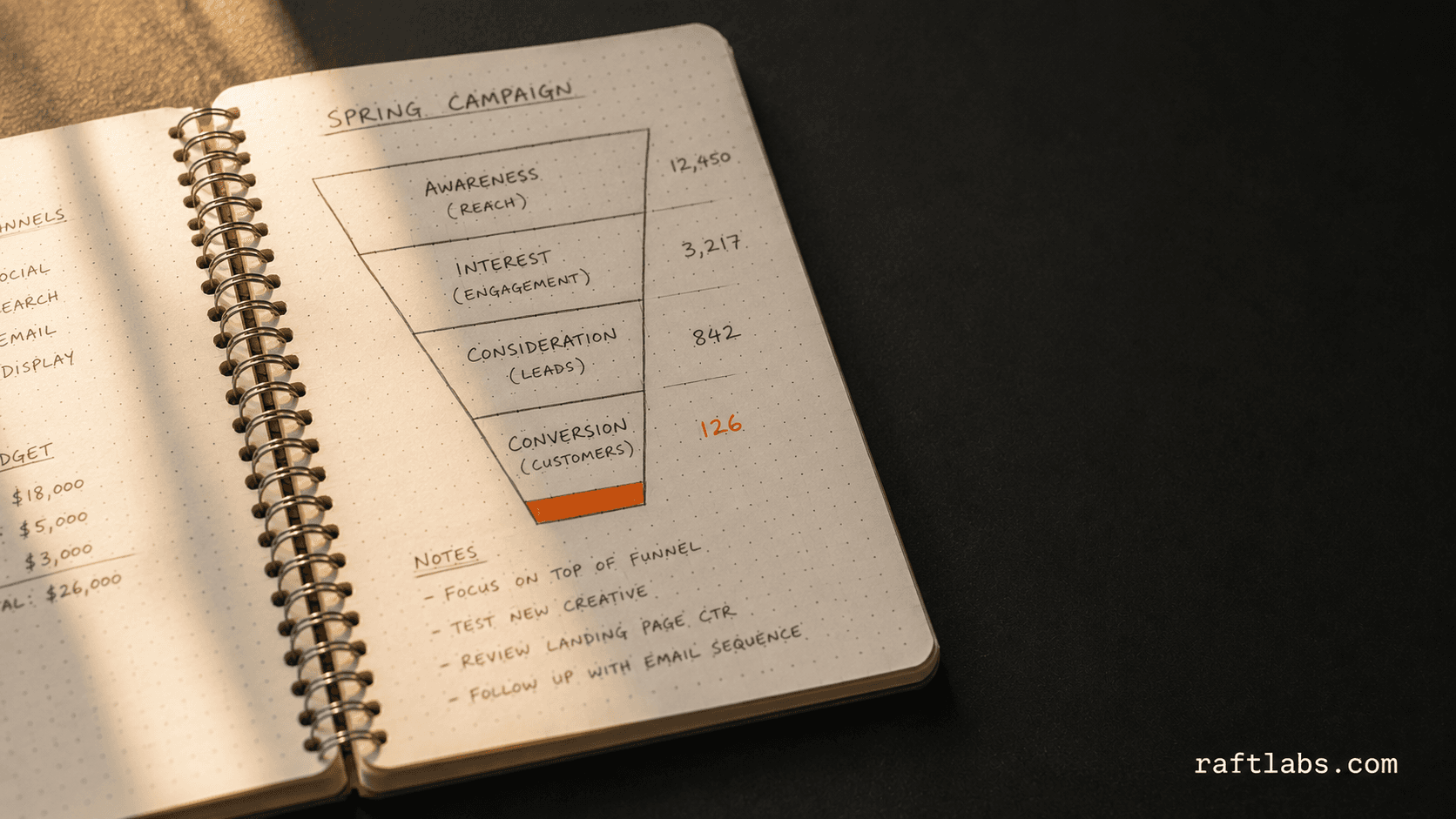
Article
Marketing automation: What works, what doesn't, and where to start
Marketing teams waste 40% of their budget on poorly targeted campaigns and manual tasks AI could automate. Here is where AI genuinely moves the needle - with real benchmarks, not vendor promises.
Read more
Article
AI in your CRM: 4 reasons it fails in the first 8 weeks
Most CRM AI projects produce a working demo, then die. Here are the four failure patterns we see every time - and what to fix before you start the build.
Read more
Article
Gong Pricing in 2026: Per-Seat Costs, Hidden Fees, and the Cost to Build Your Own
Gong costs $1,300-$1,920 per user per year before the mandatory platform fee, which adds $5,000-$50,000 annually. Here is a full breakdown of what you will actually pay, how Gong compares to Chorus, Salesloft, and Clari, and at what team size building your own conversational intelligence platform starts to make financial sense.
Read more
Article
Customer referral software: Build vs buy guide
Referral programs have 3-5x higher conversion than paid ads - but only if the software handles incentive tracking, fraud prevention, and viral loop mechanics correctly. Here is the build-vs-buy analysis.
Read moreA go-to-market strategy is the plan that gets your software product in front of the right buyers through the right channels at the right price point. It answers four questions specifically - not in general terms. Who is the ideal customer (not 'SMBs' but 'operations managers at logistics companies with 20 to 200 staff and a specific problem we can name')? What is the positioning that differentiates you from alternatives they are already considering? Which channels can reach that specific customer at a cost that produces positive-ROI acquisition at your average contract value? What does the launch sequence look like - who do you target first, what do you say, and how do you prove it is working before scaling spend? A GTM strategy that cannot answer all four questions with specifics is not a strategy - it is a slide deck of aspirations.
Before the product is finished - ideally at the start of the build. The most expensive mistake in software product development is building the product without validating the market assumption and then spending six months trying to find buyers who match what you built. GTM strategy should start with the product discovery phase. The user interviews that define the product requirements also define the ICP. The competitive analysis that shapes the product roadmap also shapes the positioning. The unit economics model that determines which features to build also determines which acquisition channels make financial sense. At RaftLabs, GTM strategy starts in week one of the engagement - not as a separate post-launch workstream. By the time the product ships, the positioning is tested, the channels are identified, and early content and SEO work is already underway.
An Ideal Customer Profile is a precise definition of the specific type of company and buyer most likely to buy your product quickly, use it successfully, pay for it consistently, and refer others. Not 'SMBs in the US' - that is a market segment, not an ICP. An ICP includes firmographic characteristics (company size, industry, revenue range, tech stack, geographic market), role-level characteristics (the specific job title and responsibility of the person who makes the buying decision and the person who uses the product daily), situational triggers (what specific event or condition makes this buyer start looking for a solution), and disqualifying characteristics (what makes an otherwise similar company a bad fit). ICPs matter because they determine everything else. The channel you use to reach your ICP, the message that resonates with them, the price point they will pay, the objections they raise, the comparison set they evaluate you against - all of this is shaped by who the ICP is. Vague ICPs produce vague marketing that reaches no one effectively.
Pricing strategy determines whether your GTM is viable before you spend a dollar on acquisition. The fundamental question is whether your average contract value supports the cost of acquiring a customer through the channels available to you. If your average contract value is $500 per year and LinkedIn Ads cost $200 per click, the math does not work - you cannot build a sustainable acquisition engine on that channel. If your average contract value is $15,000 per year, outbound sales and LinkedIn outreach become viable even at high cost per contact. We model channel economics - estimated cost per acquisition across your realistic channel options - against your current or target pricing. This often surfaces a pricing problem disguised as a marketing problem. A product priced at $49 per month that is trying to sell to enterprise procurement teams is not a marketing failure - it is a pricing and packaging problem. We identify this before you spend on campaigns.
A marketing plan covers the tactics - what content to produce, which ads to run, what the email sequence says. A GTM strategy covers the foundation those tactics rest on - who you are targeting, what position you hold in the market relative to alternatives, why a buyer would choose you over those alternatives, and which channels can reach your ICP at a cost that supports the unit economics of the business. A marketing plan without a GTM strategy is tactics in search of a strategy. They produce activity but not compounding growth. The sequence matters - define the ICP, position against the competition, validate the channel economics, then plan the tactics. Reversing the order is the most common GTM mistake we see from funded software companies: they hire a content agency and start producing articles before they have validated who they are writing for or why those readers would become customers.
Yes. For products that have already launched and are generating some revenue but have not found a repeatable growth motion, a GTM audit and strategy rebuild is often the right intervention. We start with a structured analysis of the current state - who is actually buying (vs. who you thought would buy), which channels produced those customers, what the conversion rates are at each stage of the funnel, and what the customers who churned had in common versus those who stayed. From that data, we build a revised ICP, a repositioned message, and a channel stack that matches the reality of who responds to your product - rather than who the original strategy assumed would respond. Many successful SaaS pivots are not product pivots - they are ICP or positioning pivots driven by careful analysis of who actually converts.
Work with us
Most GTM failures trace to a single unvalidated assumption about the ICP or the channel. Tell us where you are, and we will help you identify it before it costs you a launch.
A go-to-market strategy for a software company is a plan that defines who to sell to (ICP), what to say to them (positioning and messaging), which channels to use to reach them, and at what cost relative to unit economics. A complete GTM strategy covers ICP definition from real buyer research, competitive positioning, channel selection tied to average contract value, pricing model validation, and a 90-day activation plan with measurable milestones. GTM strategies built from buyer interviews significantly outperform those built from internal assumptions.
An Ideal Customer Profile (ICP) is a precise definition of the specific type of company and buyer most likely to purchase your product, use it successfully, pay consistently, and refer others. An ICP includes firmographic characteristics (company size, industry, revenue range, technology stack), role-level characteristics (the specific job title making the buying decision and the person using the product daily), situational triggers (what event prompts a search for a solution), and disqualifying characteristics (what makes an otherwise similar company a poor fit). ICPs built from real buyer interviews consistently outperform persona-based ICPs built from assumptions.
Most software product launches fail at GTM because the ICP is described as a company size and industry rather than a specific person with a specific problem. The messaging leads with product features rather than the cost of the problem the features solve. The acquisition channel is chosen based on what the team is comfortable with rather than what the unit economics support. And the GTM strategy starts after the product is built rather than in parallel with it, which means the launch window closes before the marketing motion has any momentum.
A software company should start its go-to-market strategy at the same time as product development begins, not after the product ships. The user interviews that shape the product roadmap also define the ICP. The competitive analysis that informs feature prioritization also informs positioning. The unit economics model that determines which features to build also determines which acquisition channels are financially viable. Starting GTM at launch means starting with no SEO foundation, no content in market, and no audience: the most expensive possible position.
Go-to-market work is shifting from a quarterly plan to a continuous one. AI now compresses the buyer-research step. Interview synthesis, positioning tests, and message variants that used to take weeks take days. That speed is a trap when the ICP underneath is wrong, because it scales the wrong message faster. The teams that win pair faster tooling with slower, first-principles decisions about who the buyer is and why they switch. We build the research foundation first, then use AI to move quickly on top of it.