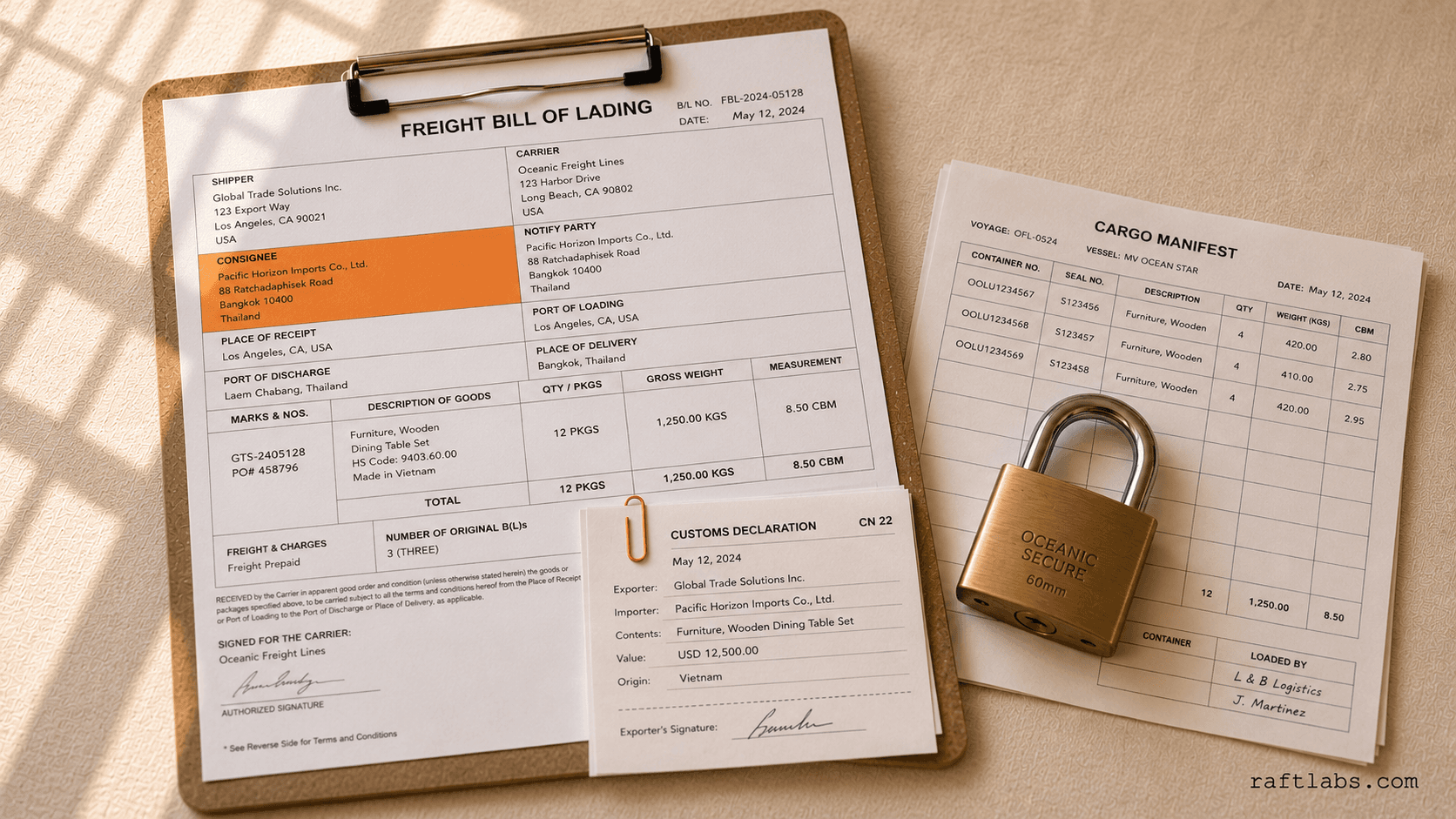





















Multi-Carrier Shipping Platform Scaling to 70+ Countries
- 2K+
- 200+
- 92
Custom software for shipping operators, 3PLs, and supply chain businesses who need multi-carrier platforms, warehouse management, and real-time visibility that off-the-shelf tools can't deliver.
We build the operational layer that sits between your carriers, your warehouse, and your customers, and makes all three work together without manual intervention.
Multi-carrier shipping platforms with FedEx, DHL, UPS, and Aramex API integrations, one interface for all carriers
Real-time shipment tracking and supply chain visibility from pick to delivery
Warehouse management systems built around your actual picking, packing, and dispatch workflows
Route optimisation and fleet management that cuts fuel costs and delivery time
Recognition
Juggling four carrier portals and a spreadsheet to track shipments because your current system can't connect them?
Manual shipment tracking creating errors, delays, and customer complaints your team spends half its day firefighting?
The short answer
RaftLabs builds custom logistics software for shipping operators who've outgrown off-the-shelf tools. We've shipped a multi-carrier platform connecting 70+ countries with FedEx, DHL, UPS, and Aramex in one workflow. Most logistics products launch in 10-14 weeks at a fixed cost, with full source code ownership.
Companies we've built for


Most logistics operations don't have one software problem. They have five: one per carrier portal, one for the WMS, one for the TMS, and one spreadsheet that stitches them together. When shipment volume spikes, the spreadsheet breaks first. When a carrier API sends the wrong status, the customer service inbox fills before anyone on the ops team knows there's an issue.
We built a multi-carrier shipping platform that processes shipments across 70+ countries. The carrier-specific edge cases that derail logistics builds in month three, we hit in week two on that project. We build the operational layer that replaces the patchwork: one system for carrier APIs, shipment tracking, warehouse operations, and customer-facing visibility, built around how your operation actually runs.
Shipment visibility gaps costing you customer trust and ops time
When your team can't see where a shipment is without logging into a carrier portal, every delay becomes a support ticket. According to McKinsey's 2024 Global Supply Chain Leader Survey, only 30% of senior supply chain executives report good visibility beyond their first tier of suppliers, down from 56% in 2022. Your ops staff spend hours chasing statuses they should be able to see in one place. A unified tracking feed that pulls events from all carriers into a single timeline means problems surface before your customer calls, not after. "I definitely recommend RaftLabs, especially to solo founders like me. They were very transparent throughout the whole project. We got a really good product out of it.", Gil Nugraha, Founder at UrShipper
Driver dispatch handled manually, slowing your last-mile performance
When dispatch relies on phone calls, whiteboards, or manual spreadsheet assignments, you lose visibility the moment a driver leaves the depot. Missed delivery windows, unconfirmed drops, and rerouting delays cost you on fuel, customer satisfaction, and repeat business. A digital dispatch system with live GPS and driver app confirmation gives you control over the last mile without adding headcount.
Warehouse picking errors because staff work from paper lists
Paper pick lists and memory-based workflows produce errors that cost you in returns, reshipping, and customer complaints. Each wrong pick is a double-handling event: restock, reship, and apologise. A directed picking system tells each operative exactly what to pick, where to find it, and how to pack it. Error rates drop and throughput goes up without hiring more supervisors.
Carrier rate decisions made on gut feel, not data
If your on-time delivery rates, damage rates, and claims resolution times sit in separate carrier portals, you're negotiating contracts without the numbers to back you up. You could be overpaying on lanes where a cheaper carrier performs equally well. A unified carrier performance dashboard shows exactly which carriers deliver and where the problems concentrate, so routing decisions are based on evidence.
Shipping platforms that connect to FedEx, DHL, UPS, Aramex, and regional carriers through a single API layer. Rate shopping across carriers, automated label generation, and a unified tracking feed so your ops team isn't switching between five carrier portals to find a shipment. We've built a platform that handles shipping across 70+ countries with Shopify and direct e-commerce integrations. That carrier breadth takes years to build without a specialist team.
WMS built around how your warehouse actually runs, not a generic system your team has to work around. Pick, pack, and dispatch workflows, barcode scanning, inventory location management, and inbound receiving flows. Integration with your ERP or order management system keeps inventory levels accurate in real time. We scope the WMS around your physical layout and your team's process before a single line of code is written.
Real-time fleet tracking, driver dispatch, and route optimisation that reduces fuel costs and improves delivery windows. Live GPS feeds, driver mobile apps, and a dispatcher dashboard that shows every vehicle, every route, and every exception in one view. Route optimisation factors in time windows, vehicle capacity, and traffic, not just the shortest path on a map.
End-to-end shipment visibility from supplier to customer. Tracking events pulled from carrier APIs consolidate into a single timeline, visible to your ops team and your customers. Exception management catches delays, customs holds, and failed deliveries before your customer calls to ask where their order is. Branded tracking portals reduce inbound WISMO queries without adding headcount.
Last-mile platforms for delivery operators managing their own fleets or working with local courier networks. Proof of delivery capture, customer notification workflows, delivery slot management, and returns initiation. The last mile is where customer experience is made or broken. We build the software that gives you control over it.
Freight management tools for brokers, forwarders, and cargo operators. Quote generation, booking management, document handling for customs and compliance, and visibility across air, ocean, and road shipments. Carrier rate integrations, shipment status feeds, and customer portals give your clients the information they need without calling your ops team.
Logistics software development is the process of building custom software that manages the movement of goods, from order placement to final delivery. This includes carrier integrations, shipment tracking, warehouse management, route planning, and supply chain visibility. Off-the-shelf logistics platforms like ShipStation or NetSuite WMS solve common problems for standard workflows. Custom development is what you need when your carrier mix, warehouse layout, or operational process is specific enough that a generic platform creates more friction than it removes. RaftLabs has built logistics software for multi-carrier shipping operators, 3PLs, freight brokers, and last-mile delivery companies. We scope the build around the specific problem, not a feature list from a competitor's platform.
Every major carrier, FedEx, DHL, UPS, Aramex, and most regional providers, publishes a documented API for rate shopping, label generation, and shipment tracking. We integrate directly with those APIs and normalise the data so your platform has one consistent data model regardless of which carrier a shipment uses. The practical challenge is that every carrier API has its own quirks: different field requirements for international shipments, different error codes, different update frequencies for tracking events. We've worked through those quirks on production builds. Our multi-carrier shipping platform connects to carriers in 70+ countries. That experience means your integration project isn't our first encounter with a carrier's edge cases.
Yes. Most logistics software projects involve integrating with an existing system of record, whether that's SAP, Oracle, Microsoft Dynamics, a Shopify store, or a proprietary OMS. We scope the integration approach during discovery: what the existing system exposes via API or data export, what needs to be read versus written, and where the authoritative data source for inventory and orders lives. We don't replace your ERP. We build the logistics layer that connects it to your carriers, your warehouse, and your customers. Integration complexity is usually the highest-risk part of a logistics project, so we flush it out early.
A focused logistics product, for example a multi-carrier shipping integration or a WMS for a single warehouse, typically delivers in 10 to 14 weeks. A more complex build, such as a full supply chain visibility platform or a freight management system with multiple carrier integrations, runs longer depending on scope. We scope the project before pricing it. You know what's included, what the delivery milestones are, and what the fixed cost is before development starts. We don't do time-and-materials billing for logistics builds. It creates the wrong incentives and leaves the cost risk with you.
Logistics software development
Freight management, carrier integration, shipment tracking overview
Multi-carrier shipping software development
Rate shopping, label generation, unified carrier tracking
Warehouse management system development
Pick, pack, dispatch, barcode scanning, ERP integration
Transport management system development
Freight booking, load planning, carrier allocation
Fleet management software development
GPS tracking, driver dispatch, route planning, driver app
Supply chain software development
Demand forecasting, PO management, supplier portal
Route optimisation software development
Multi-stop routing, time windows, vehicle capacity
Last-mile delivery software
Proof of delivery, customer notifications, delivery slots
Freight management software
Quote generation, customs documents, air/ocean/road visibility
AI agents for logistics
Autonomous agents for dispatch, shipment exceptions, rate negotiation, and carrier selection
What clients say
Three-year average engagement. Founders and operators describing the work in their own words. No marketing varnish.

I definitely recommend RaftLabs, especially to solo founders like me. They were very transparent throughout the whole project. We got a really good product out of it.
01 / 02
Tell us your carrier mix, your current system, and where the operational friction is. We'll tell you how we'd approach the build.