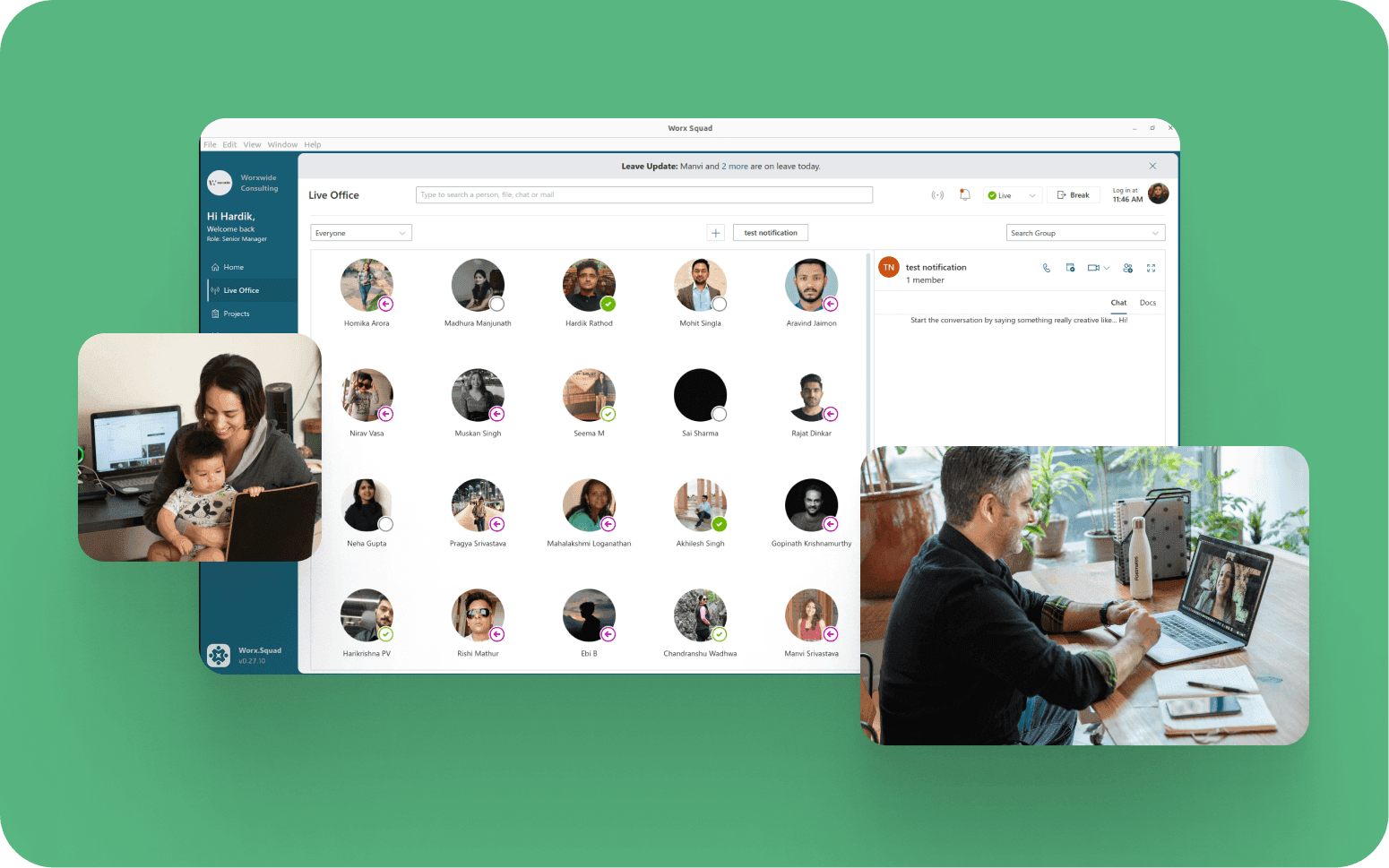
Scalable multi-carrier shipping software for a global logistics platform
- 2K+
- shipments across 70+ countries
AI Agents for Logistics
A tracking dashboard shows you what happened. An AI agent decides what to do about it. When a shipment misses a checkpoint, an agent can classify the exception, check carrier ETAs, draft the customer update, and route the case to a dispatcher only when the situation falls outside its resolution logic. We build logistics AI agents with defined scope, explicit escalation rules, and integration into the carrier APIs, TMS platforms, and customs systems your operations already depend on.
Carrier selection and booking agents that compare rates and confirm bookings
Customs document agents that generate paperwork from shipment data
Delivery exception agents that classify and resolve routine exceptions automatically
Invoice reconciliation agents that catch carrier billing errors before payment
Bring the problem, the current workflow, or the existing code. We reply with a practical next step within one business day.
Trusted by















The brief
Good software decisions begin with the constraint, not a list of features or a preferred technology.
Dispatchers spending hours comparing carrier rates and booking shipments manually for every order?
Delivery exception notifications consuming dispatcher time on routine updates that follow predictable resolution paths?
Plain answer
RaftLabs builds autonomous AI agents for logistics workflows: carrier selection and booking, customs document generation, delivery exception handling, shipment status updates, invoice reconciliation, and demand forecasting. Unlike rule-based automation, these agents reason across shipment data, carrier APIs, and customs requirements to take multi-step actions within defined guardrails. A first agent covering one workflow launches as a validated v1 in about 10 to 14 weeks at a fixed cost, then grows into a multi-agent system.
What to remember
Proof
A tracking dashboard shows you what happened. An AI agent decides what to do about it. When a shipment misses a checkpoint, an agent can classify the exception, check carrier ETAs, draft the customer update, and route the case to a dispatcher only when the situation falls outside its resolution logic.
We build logistics AI agents with defined scope, explicit escalation rules, and integration into the carrier APIs, TMS platforms, and customs systems your operations already depend on. Integration is scoped during discovery because that's where most logistics projects carry the most hidden complexity.
| Dispatch task | Rule-based automation | AI agent | Human dispatcher |
|---|---|---|---|
| Reading a carrier invoice PDF | Breaks the moment the layout changes | Extracts fields with a confidence score, matches against the rate confirmation, flags the discrepancy | Reads and cross-checks by hand, one invoice at a time |
| Classifying a delivery exception | Fires the same canned message for every event type | Sorts weather, address, damage, and customs holds against a taxonomy and applies the right playbook | Interprets each notification, then decides what to do |
| Booking against a routing guide | Follows one fixed rule, no trade-offs | Compares live rates and transit times, applies your routing logic, escalates spot-market calls | Compares carrier options manually for every order |
| A new trade lane or edge case | No path; drops to manual | Routes to a person with the case pre-documented and its reasoning attached | Handles it, but the same judgment is not captured for next time |
The agent sits between the two columns you have today. It takes the interpretive work a rule engine cannot handle and a person should not repeat all day, and it hands the genuine judgment calls back to your team with the case already assembled.
Capabilities
Queries connected carrier APIs and rate engines using shipment parameters, applies your routing guide logic, and submits bookings via carrier API or EDI when a carrier meets all criteria. Confirmations write back to the TMS with PRO number and pickup window. Lane exceptions, spot-market decisions, and new carrier relationships route to your team; the audit trail captures every rate query and booking so lane performance accumulates automatically.
Generates commercial invoices, packing lists, and certificates of origin from structured shipment data. HS code classification uses a trained model plus knowledge base; low-confidence classifications route to a trade compliance reviewer with the rationale attached. New trade lanes require human review before submission; established lanes with validated templates can move to exception-only review.
Classifies exception events, weather delay, address correction, damage, customs hold, against a defined taxonomy and applies resolution logic automatically for classes with playbooks. A weather delay with a strong carrier recovery rate triggers a customer notification with no dispatcher action; a damage report triggers a claim workflow with the case pre-documented. Escalation happens when the exception falls outside the taxonomy or involves a flagged SLA.
Pulls tracking data from carrier APIs and aggregators, normalises it to a unified status taxonomy, and pushes structured updates to customer portals, ERP records, and internal channels. A status cache answers "where is order 98765?" in seconds without a live carrier API call. High-priority shipments get more frequent polling and immediate push notifications on any change.
Matches carrier invoices against rate confirmations, BOLs, and TMS records to catch billing discrepancies before payment, weight disputes, accessorial disputes, rate disputes, duplicate invoices. Discrepancies below a threshold generate a dispute notice automatically; above it, they escalate to a freight auditor with the matched record for review. Monthly reports show total billed, disputed, and recovered by carrier.
Analyses historical volume, seasonal patterns, and confirmed order history to generate lane-level and carrier-capacity forecasts. Capacity risk signals flag lanes where forecast volume exceeds contracted capacity or carrier performance has degraded, each with supporting data attached. Commercial decisions, requesting spot capacity, adjusting contracted volumes, stay with your carrier relations team.
How we work
We map the target workflow, your TMS and carrier API coverage, and escalation logic. You leave week 1 with a written scope document and a fixed-price quote.
Routing guide rules, exception taxonomy, and human-in-the-loop checkpoints defined and confirmed with your operations team.
Agent workflow built against LangGraph, tested against real TMS and carrier sandbox data every sprint.
Production deployment with audit logging and escalation queues staffed from day one.
Start with the smallest workflow that earns its keep, prove it against real shipments, then grow. Invoice reconciliation is often the first agent to pay for itself. Freight-audit guides put manual carrier-invoice error rates in the range of 5 to 15 percent of invoices (freight-audit industry estimates, 2024). An agent that catches weight, accessorial, and duplicate-billing disputes before payment recovers real money in its first months.
Use the tiers below to locate roughly where your scope falls. Both bands are fixed in writing after week 1, before any development starts.
Why us
The engineers who assess your carrier network also build the solution. No bait-and-switch, no offshore handoff after the contract is signed.
We scope the work, calculate the cost, and lock it in writing before any development starts.
Real engagements across SaaS, fintech, healthcare, and logistics, not every one published as a named case study. For multi-carrier logistics specifically, we built UrShipper after four previous vendors failed. It now moves shipments across 70+ countries on integrations with FedEx, DHL, UPS, Aramex, and Shippo.
REST JSON, EDI, and PDF invoices all translate into one schema before the agent reasons over them, so the agent applies the same logic regardless of how a carrier delivers data.
The agent doesn't submit to customs authorities without a review step for new trade lanes. Established lanes can move to exception-only once templates are validated.
Most logistics agent projects fail in predictable places. We design against them from week 1.
The tracking dashboards of the last decade told you what happened. The next layer decides what to do about it and does it, within guardrails you set. The practical path is not one autonomous system that runs the whole operation. It is a set of scoped agents, each owning one workflow, each with a clear escalation path, accumulating an audit trail as they go. We build for that path now: the agent absorbs the interpretive load, your team keeps the judgment calls, and every decision the agent makes is logged and reviewable.
Proof
Useful next steps

Work with us
AI for Logistics and Supply Chain
See the serviceTry it yourself
Logistics Software Cost Calculator
TMS, fleet, freight, or shipping software. Honest build range in 3 minutes.
Open the free tool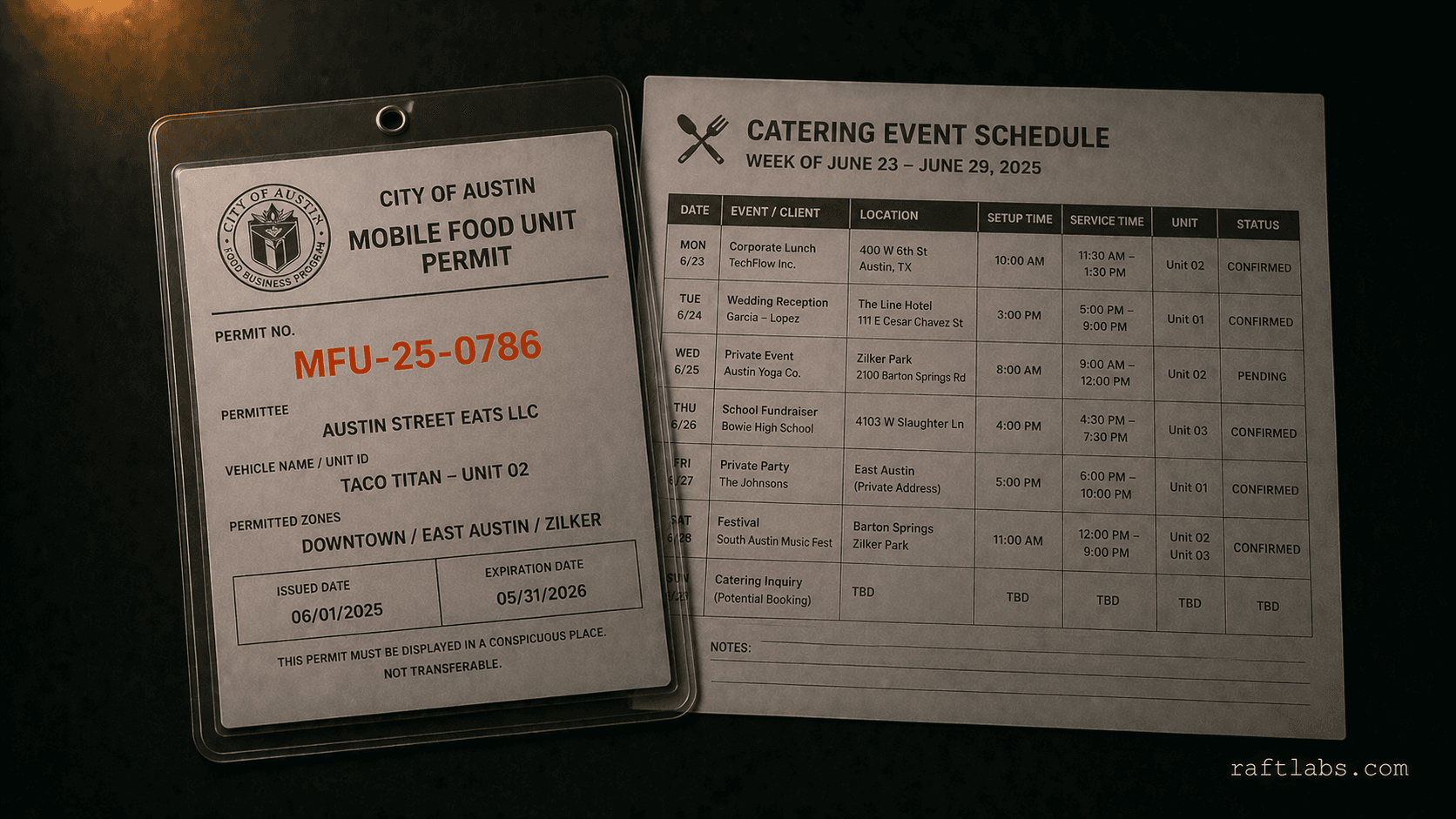
Article
Food Truck Management Software: Build vs. Buy for Fleet Operators
Running 5+ food trucks on spreadsheets costs operators $60,000-$120,000 a year in missed catering bookings, permit lapses, and weather days nobody planned for. Here is what custom food truck management software actually costs, when off-the-shelf tools stop working, and what a build looks like in three phases.
Read more
Article
Cost to Build a Bike Taxi App Like Rapido: Features and What Actually Ships
Bike taxi app development cost, phased feature breakdown, clone vs. custom comparison, and how RaftLabs builds two-wheeler ride-hailing platforms for operators in dense urban markets.
Read more
Article
Last Mile Delivery Software: Build vs. Buy for 3PLs and Courier Operators
Onfleet, Route4Me, and Circuit work until they don't. Here is what breaks at scale, when custom last mile delivery software pays off, and what it costs to build it.
Read more
Article
Car Wash Management Software: Build vs. Buy for Chain Operators
Patheon, WashCard Systems, and DRB Systems work well for simple setups. But when you run multiple locations with fleet billing and membership revenue, off-the-shelf tools hit a ceiling fast. Here is what to build, what it costs, and when custom is worth it.
Read moreA TMS workflow automation executes a predefined rule that runs the same way every time. An AI agent reasons over variable inputs, reading a carrier invoice in PDF format, matching it against the rate confirmation in the TMS, identifying a discrepancy, and generating a dispute notice without a human mapping every field. Agents operate as stateful, multi-step processes that can interpret unstructured inputs, call external systems, and apply judgment logic that would require a rule for every combination in traditional automation. The workflows that benefit most are ones where the current automation is actually a person doing the same interpretive work every day.
We integrate with TMS platforms that expose REST APIs or support EDI transaction sets, including Transplace, MercuryGate, Oracle Transportation Management, Manhattan TMS, and BluJay. Carrier API integration covers FedEx Ship Manager API, UPS Developer Kit, DHL Express API, and USPS Web Tools. For LTL carriers, the NMFTA standard EDI transaction set (204/214/210) is the baseline, with direct REST API integration available for carriers that have published one. Integration scope is confirmed during discovery, as the variance in what different TMS configurations expose via API is large enough to change project scope materially.
Start with one workflow. A focused agent covering one workflow, defined escalation logic, and standard integration starts around $25,000 to $60,000 and launches as a validated v1 in about 10 to 14 weeks, so you can put it in front of real dispatchers and measure it before you commit further. From there it grows: a multi-agent system covering carrier booking, customs document generation, and delivery exception handling with TMS write-back and carrier API integration reaches $60,000 to $130,000 over time. Cost is driven by the number of carrier integrations, TMS API complexity, and customs destination coverage.
Carrier data normalization is built into the agent architecture. The integration layer translates each carrier's native format, REST JSON response, EDI transaction, or PDF invoice, into a unified internal schema before the agent's reasoning logic runs. For carrier invoices specifically, the document intelligence layer handles PDF parsing with trained extraction models. EDI mapping is done per trading partner during integration setup, so adding a new carrier requires configuring the EDI map for that carrier, not modifying the agent's core logic.
Work with us
Tell us the workflow you want to automate, your TMS platform, and your carrier mix. We'll scope what an agent can handle and give you a fixed cost.
Go deeper