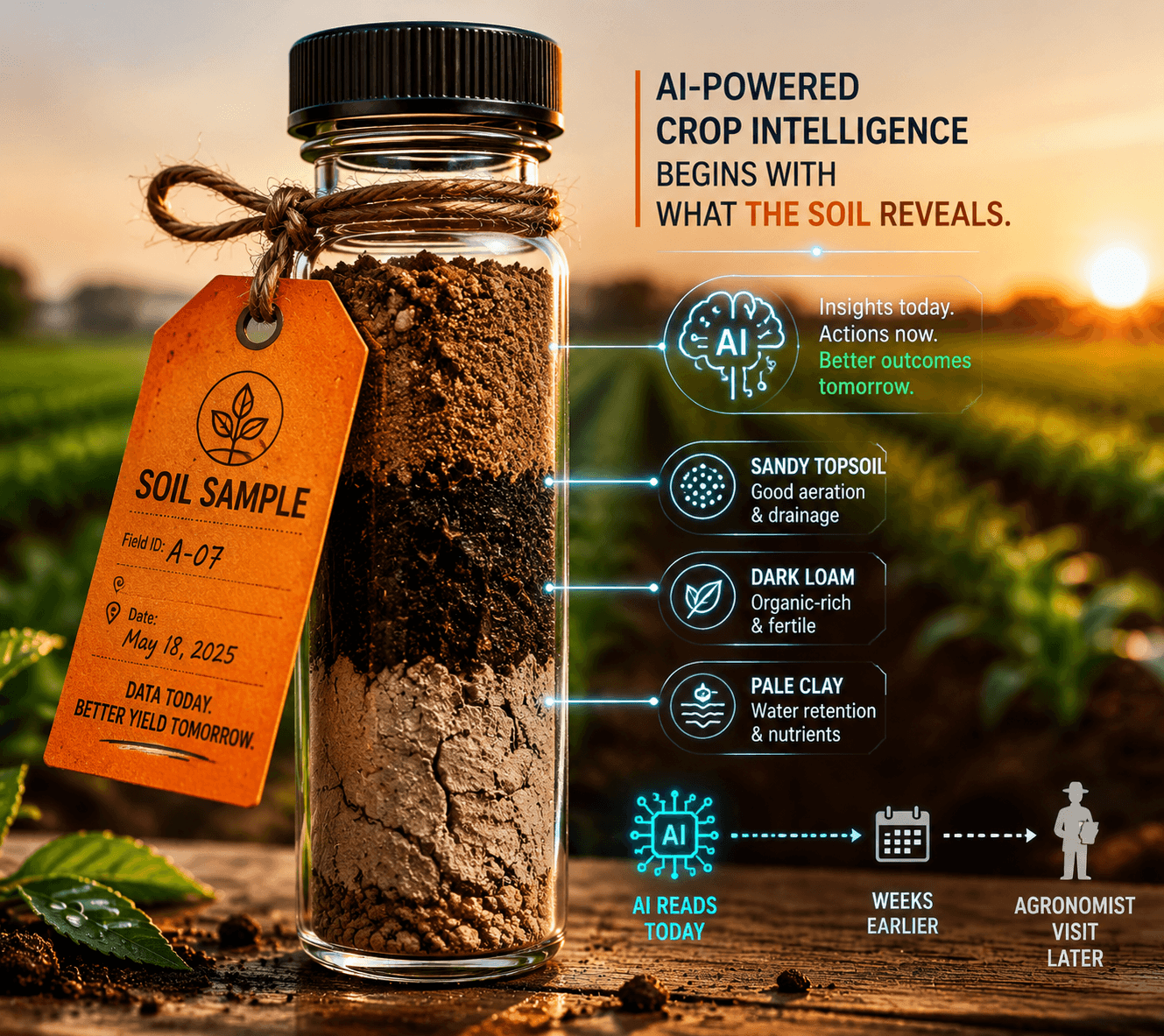
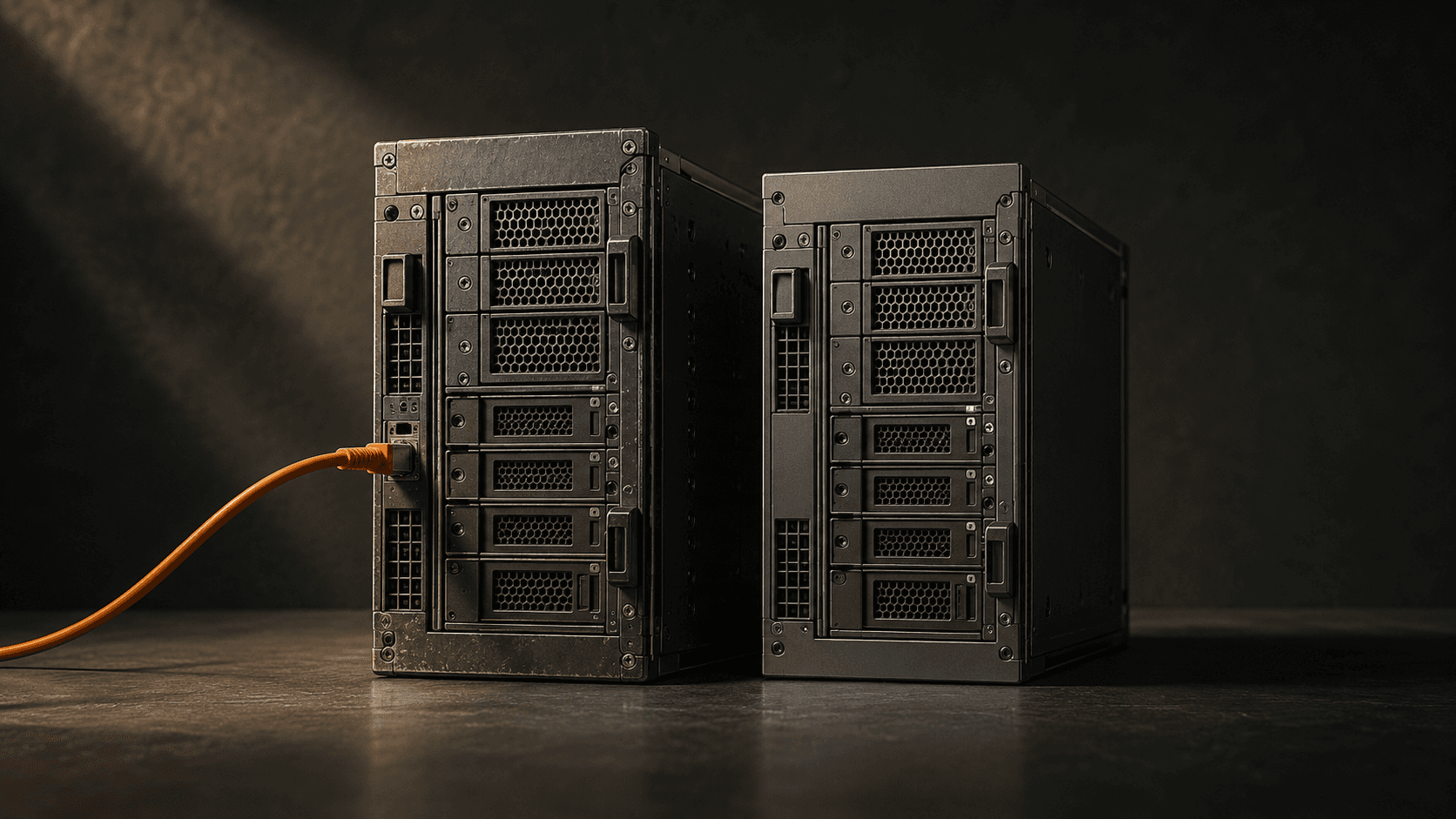
Before you invest in building a machine learning system, you need to know whether your data supports the use case, which approach fits the problem, and what the production architecture should look like. We help product teams, engineering leaders, and business owners answer those questions, with a structured assessment, an architecture recommendation, and a build plan you can execute with your own team or with us.
ML feasibility assessment on your actual data
Architecture design for ML systems integrated with your existing stack
Use case prioritisation, which problems are worth building for
Vendor and tool evaluation for your specific requirements
Bring the problem, the current workflow, or the existing code. We reply with a practical next step within one business day.
Trusted by
The brief
Start with what is not working.
Good software decisions begin with the constraint, not a list of features or a preferred technology.
01
Evaluating ML vendors without knowing which architecture fits your data?
02
Internal team wants to build ML but does not know where to start?
Plain answer
RaftLabs delivers machine learning consulting for product teams and engineering leaders across the US, UK, Europe, Canada, GCC, South Africa, and Southeast Asia. Engagements include data feasibility assessment, use case prioritisation, and production architecture design.
What to remember
A focused ML feasibility assessment for a single use case takes 2–3 weeks and costs $8,000–$20,000.
A broader ML strategy engagement covering multiple use cases and architecture design takes 4–8 weeks and costs $20,000–$50,000.
Engagements are fixed-price with a defined scope and output, not open-ended retainers.
RaftLabs built a HIPAA-compliant AI system for clinical decision support and patient monitoring that cut clinical decision-making time 20%.
An ML pipeline for gas station operations processed 20K+ transactions in a single day of real-world testing and eliminates manual entry errors.
AI development, by the numbers
01
AI products shipped in 24 months
20+
02
from kick-off to production-ready AI product
12 weeks
03
rated by clients on Clutch
4.9/5
04
shipping software and AI products
Since 2015
Most ML projects fail before they start
The failure point is not the model. It is the assumptions made before any code was written: that the data was clean enough, that the use case was well-defined, that the model output would reach the right people, that the engineering team could maintain the system after delivery.
According to Gartner's July 2024 research, only 41% of AI prototypes successfully reach production, and 30% of generative AI projects are abandoned after the proof-of-concept phase. For machine learning projects, this attrition is almost always rooted in skipped feasibility work rather than model quality.
Machine learning consulting surfaces these problems before they become expensive. A structured assessment takes weeks. Reversing a failed ML architecture takes months and burns engineering credibility.
Scope
What we cover
01
ML use case assessment
We evaluate whether your ML use case is feasible with your current data, and whether ML is the right approach at all, training a simple baseline model on a sample of your actual data. A baseline that cannot beat a naive predictor disproves feasibility in hours, and most assessments find a rule-based system handles 80% of the use case at a fraction of the cost.
02
Data audit and readiness
A structured review of every data source: volume, quality, class distribution, and temporal coverage. The most overlooked dimension is feature availability at inference time, so we map every candidate feature to its availability timestamp, assess concept drift risk, and design production monitoring during the audit. The output is a data readiness scorecard.
03
ML architecture design
Production architecture for the full ML lifecycle, from data ingestion to prediction delivery, with reproducible training runs, auditable model versions, and a feature store that stops the same transformation being rebuilt three ways. We make the online versus batch inference call explicitly and design drift monitoring and retraining triggers in from the start.
Built with
MLflow · DVC · Feast · Evidently AI
04
Vendor and tool evaluation
Independent evaluation of ML platforms, data infrastructure, and cloud AI services against your use case, team capability, and budget, with no vendor relationships or referral incentives. Criteria include total cost of ownership at production volume, data residency, lock-in risk, and SLA coverage. The output is a scored comparison with a clear recommendation.
Built with
AWS SageMaker · GCP Vertex AI · Azure ML · Kubeflow · Databricks
05
ML team capability review
Assessment of your in-house team's ML capability against your project's requirements, mapped to the five skill areas most organisations conflate as one: data engineering, model training, MLOps, production software engineering, and ML evaluation. Data engineering is the most common gap and MLOps the costliest. The output is a gap map with a hire, train, or embed recommendation per role.
06
ML roadmap and prioritisation
For organisations with multiple ML use cases competing for the same budget, a structured prioritisation framework across business value, data readiness, implementation complexity, and strategic sequencing. Sequencing is where most programmes go wrong, evaluating use cases in isolation when a feature store built for the first cuts the cost of the next four. The output is a phased 12-24 month programme with investment, metrics, and dependencies per phase.
How we work
From scope to shipped
Every consulting engagement follows the same four phases. Output is locked and price is fixed before work starts.
Week 1
01
Discovery and problem definition
We map the business problem, the available data, and the decision you need to improve. You leave week 1 with a written scope document and a fixed-price quote for the assessment. No work starts without your sign-off.
Weeks 2-3
02
Data audit and feasibility test
We audit your data sources, run a baseline model on a sample of your actual data, and determine whether the use case is learnable. If the data does not support the use case, we say so in week 3 rather than in week 12.
Weeks 3-4
03
Architecture and roadmap
We design the production ML system: feature engineering, model serving, monitoring, and retraining strategy. The roadmap phases and prioritises your use cases by business value and data readiness.
Week 4+
04
Handoff and build option
You receive a structured recommendation document, a scored vendor comparison, and a team gap analysis. For teams ready to build, we can move directly into development with the same team that ran the assessment.
Why us
Why teams choose RaftLabs
01
Senior engineers scope and build
The engineers who assess your ML problem also build the solution. No bait-and-switch, no offshore handoff after the contract is signed. The team you meet in week 1 delivers in week 12.
02
Fixed price before work starts
We scope the assessment, calculate the cost, and lock it in writing before any work starts. A scope change is a change request: priced, agreed, or dropped. It never absorbs into the project and appears on the final invoice.
03
Shipping production software since 2015
Real engagements across SaaS, fintech, healthcare, and logistics, not every one published as a named case study. Track record across AI, SaaS, mobile, automation, and enterprise platforms across healthcare, fintech, logistics, and hospitality.
04
Compliance built in from the start
GDPR, HIPAA, SOC 2 - compliance requirements are scoped in week 1, not retrofitted before launch. We have shipped HIPAA-compliant ML systems for US healthcare clients and GDPR-compliant products for European markets.
What clients say
What our clients say
Three-year average engagement. Founders and operators describing the work in their own words. No marketing varnish.
Testimonial 1 of 2: Amer Abu Khajil
Amer Abu Khajil
Founder, Peak Studios & Perceptional
Canada
I found RaftLabs to be the perfect partner for Perceptional, with their expertise in helping startup founders build MVPs, a free consultation, a prototype that matched my vision, and their unwavering support.
Machine learning consulting is the strategic and architectural work that happens before building an ML system. It covers which ML use cases are feasible given your data, which approach fits the problem, what the production architecture should look like, which tools and platforms to use, and how to structure the team and roadmap. Consulting is valuable when you need to make architecture decisions without having ML expertise in-house, or when you want an independent assessment of a proposed ML approach before committing budget.
Consulting makes sense when the use case is not well-defined, the data situation is uncertain, or internal stakeholders disagree on the approach. A short consulting engagement (2-4 weeks) produces clarity on what to build and why, which prevents expensive course-corrections during development. For teams with a clear use case and confirmed data, moving directly to development with an embedded ML engineer is often faster and cheaper than a separate consulting engagement.
A data audit (volume, quality, labelling, and coverage), a use case evaluation (is the problem solvable with ML given the available data?), a baseline model test (can we demonstrate the approach works before committing to full development?), an architecture recommendation (what production system should this become?), and a build roadmap (phases, timeline, and team requirements). The output is a structured recommendation document you can act on.
Yes. Many consulting engagements involve working alongside your in-house engineers, providing ML architecture guidance, reviewing model approaches, and advising on infrastructure decisions while your team does the implementation work. We can also provide hands-on training for engineering teams new to ML who want to build capability rather than rely on external development.
A focused feasibility assessment for a single use case takes 2-3 weeks. A broader ML strategy engagement covering multiple use cases, data architecture, and team roadmap takes 4-8 weeks. Most consulting engagements end with a clear build recommendation and the option to move directly into development with us.
A focused feasibility assessment for a single use case typically runs $8,000-$20,000. A broader ML strategy engagement covering multiple use cases and architecture design runs $20,000-$50,000. Consulting engagements are fixed-price with a defined scope and output, not open-ended retainers.
Work with us
Know before you build.
Tell us the use case you are considering, the data you have, and what the decision needs to improve. We will tell you whether it is worth building.
Scope and cost agreed before work starts. No surprises. No obligation.
Working prototype within 3 weeks of kickoff.
Pay by milestone. You see progress before each invoice.
60-day post-launch warranty. Bug fixes, UI tweaks, and deployment support. No retainer.























 Canada