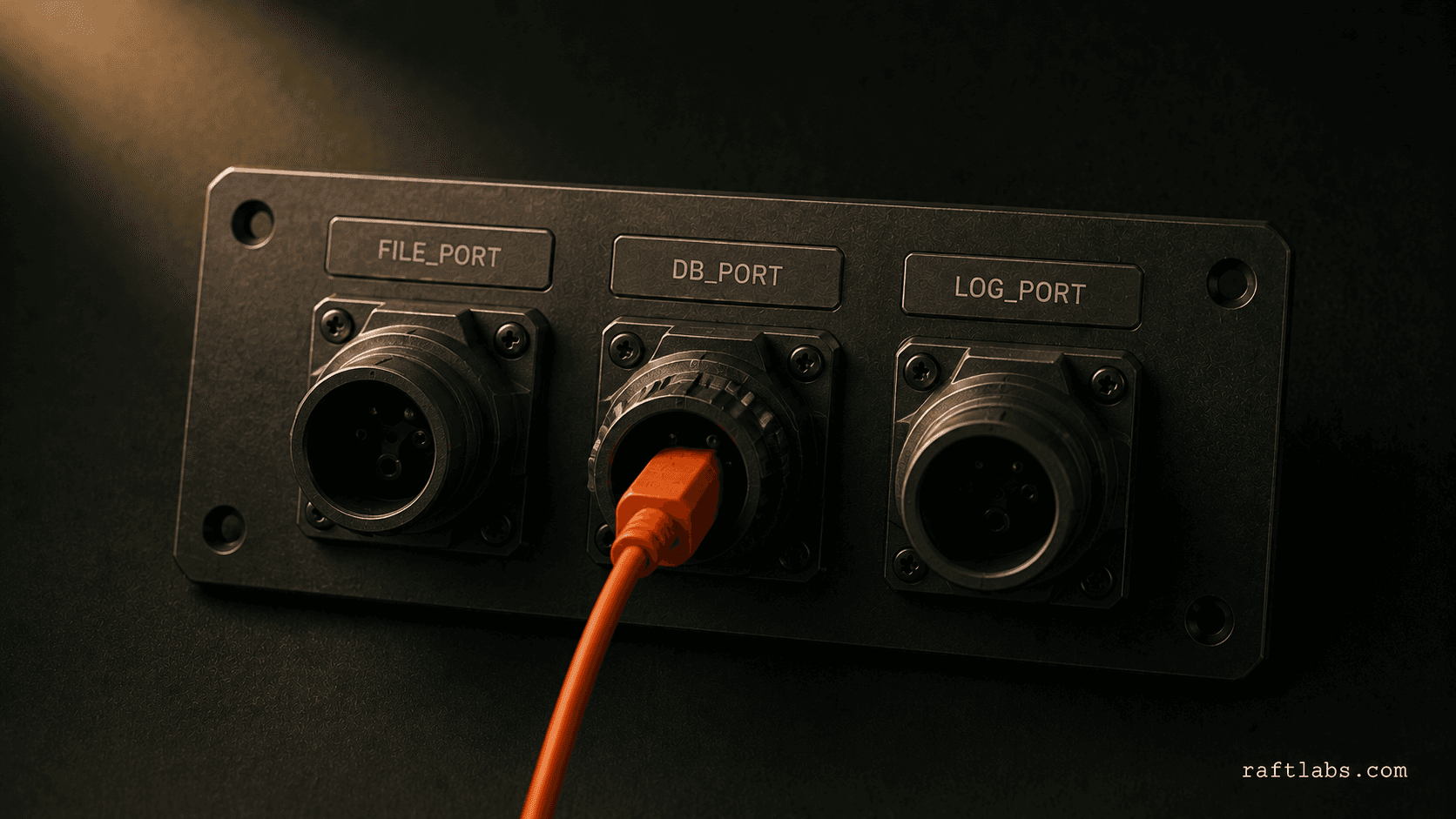
General-purpose language models are trained to be useful to everyone. Fine-tuning makes them specifically useful to you, adapting their behavior, vocabulary, tone, and output format to your domain, your data, and your product requirements. We fine-tune language models on your datasets to improve accuracy on your specific tasks, reduce prompt length and inference cost, and produce outputs that match your brand voice and format requirements without extensive prompt engineering.
Fine-tuning on OpenAI, Llama 3, Mistral, and Phi models
Domain adaptation, output format alignment, and tone calibration
Training data curation, model evaluation, and production deployment
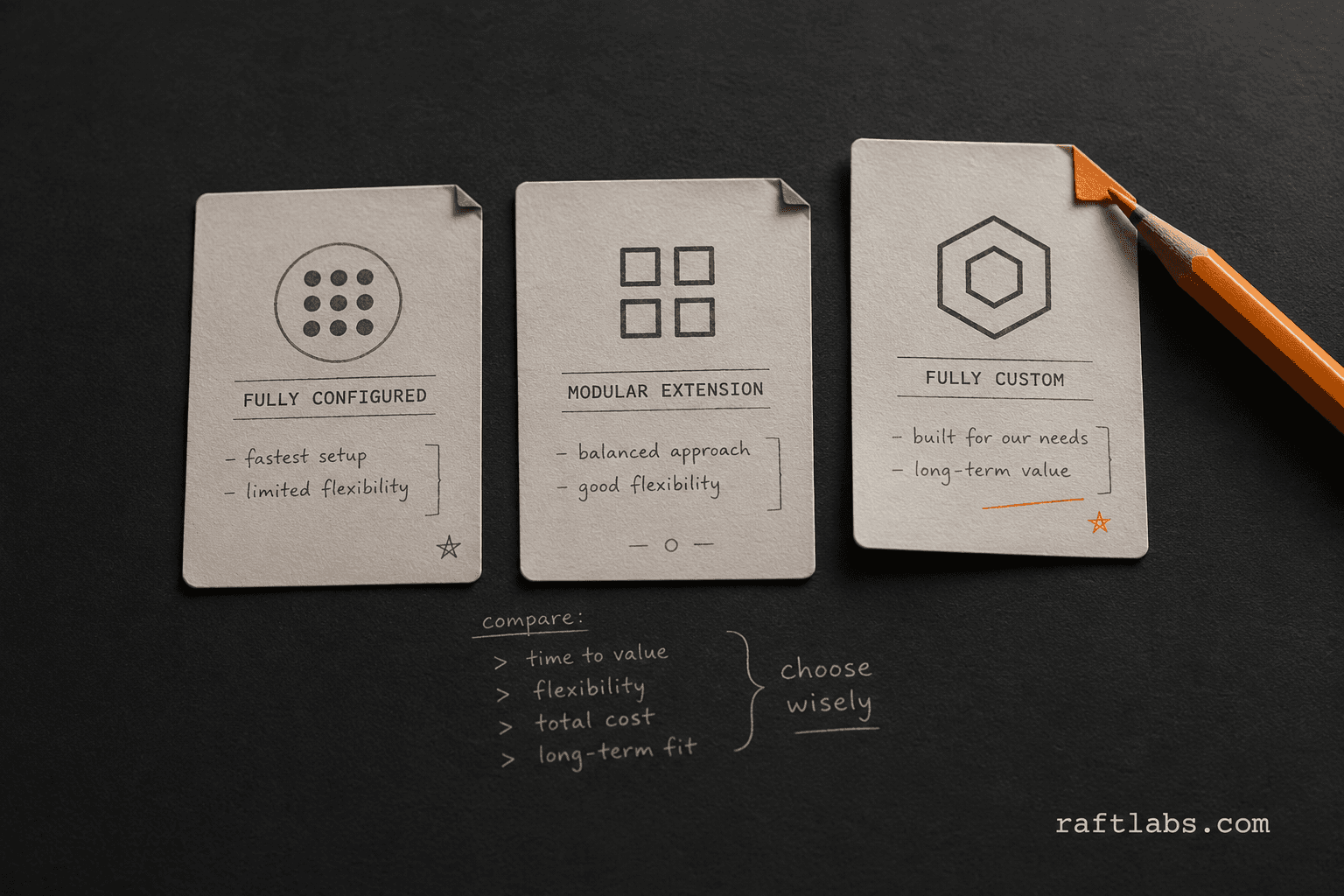
Cost and latency analysis, fine-tuning vs. RAG vs. prompt engineering for your use case
Bring the problem, the current workflow, or the existing code. We reply with a practical next step within one business day.
Trusted by
The brief
Start with what is not working.
Good software decisions begin with the constraint, not a list of features or a preferred technology.
01
Spending significant tokens on system prompts trying to get the model to behave consistently?
02
Base model producing outputs in the wrong format or style despite detailed prompting?
Plain answer
RaftLabs builds LLM fine-tuning solutions for businesses across the US, UK, Europe, Canada, GCC, South Africa, and Southeast Asia. We fine-tune OpenAI, Llama 3, and Mistral models on client data. On well-scoped tasks, a fine-tuned smaller model can meaningfully cut inference cost versus a larger base model.
What to remember
RaftLabs fine-tunes OpenAI, Llama 3, Mistral, and Phi models on client-specific datasets for domain adaptation and output format alignment
A fine-tuned smaller model can match a larger base model on a narrow task while cutting inference cost, when quality holds on your evaluation set
OpenAI fine-tuning project costs range from $8,000 to $25,000; open-source model fine-tuning with infrastructure runs $20,000 to $60,000
We assess whether fine-tuning, RAG, or prompt engineering is the right path before recommending any training work
AI development, by the numbers
01
AI products shipped in 24 months
20+
02
from kick-off to production-ready AI product
12 weeks
03
rated by clients on Clutch
4.9/5
04
shipping software and AI products
Since 2015
When to fine-tune vs. prompt vs. RAG
Most teams reach for fine-tuning too early. The decision tree:
Try prompt engineering first. A well-structured system prompt with few-shot examples solves most output format and consistency problems without any training data.
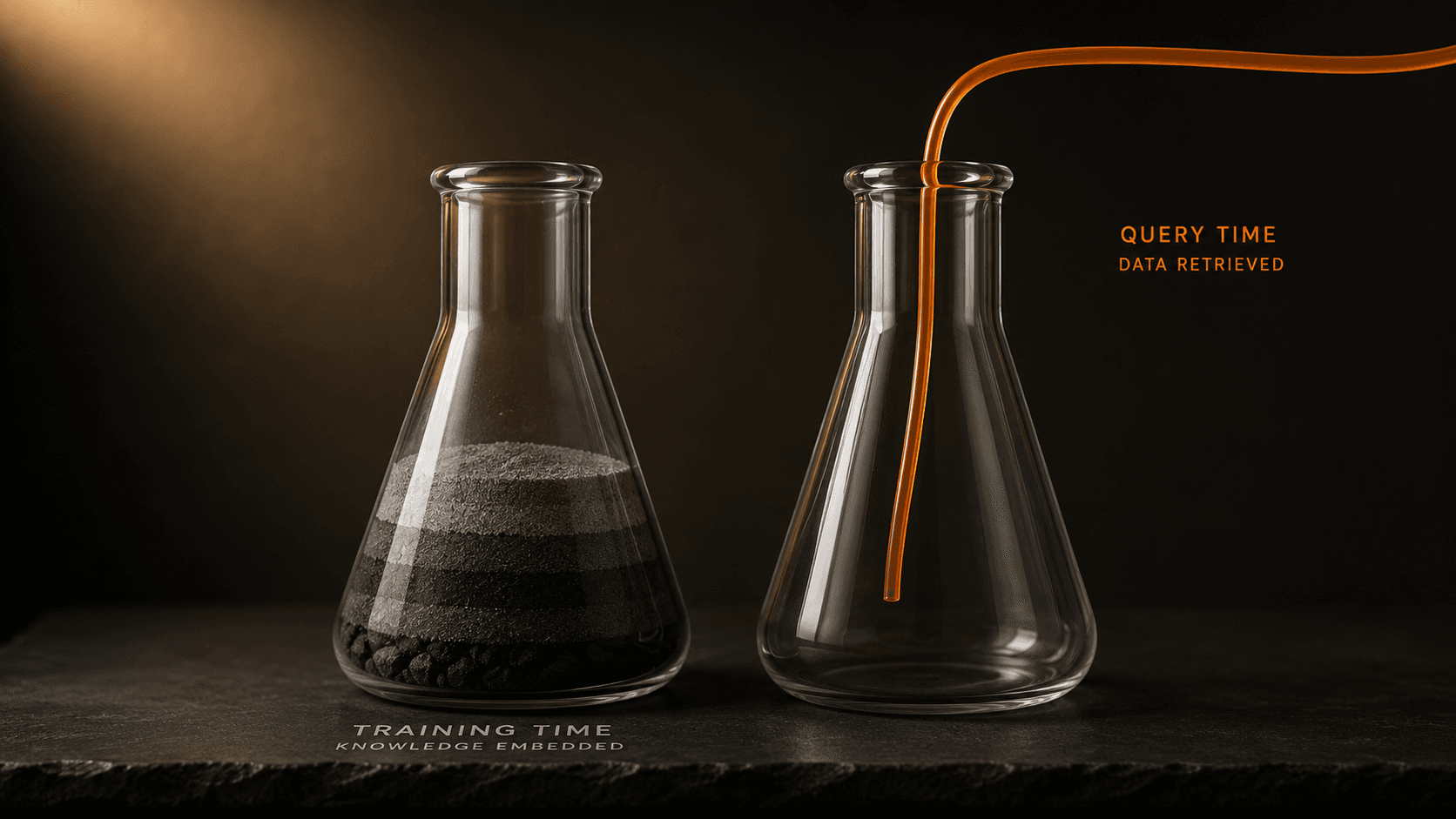
Add RAG if the model needs your knowledge. When the model needs to answer questions about your specific documents, products, or data, retrieval-augmented generation gives it that knowledge without fine-tuning.
Fine-tune when: prompt engineering cannot achieve consistent output format despite detailed instructions, when inference cost at your expected volume makes large model usage uneconomical, or when domain-specific terminology significantly degrades base model accuracy.
We will tell you which path is right for your use case, including if fine-tuning is not the answer.
According to McKinsey's 2024 State of AI report, 65% of companies now use generative AI, with custom and fine-tuned models consistently delivering the highest ROI gains compared to off-the-shelf deployments. For teams running domain-specific workloads, a fine-tuned smaller model can match a larger general-purpose model on accuracy while cutting inference costs significantly.
"Most teams that come to us have already tried prompting extensively and hit a ceiling. The question we help them answer is whether fine-tuning will actually close that gap - because sometimes the ceiling isn't the model, it's the data or the task definition. You have to solve the right problem first."
Ashit Vora, Co-founder, RaftLabs
Services
What we do
01
Training data curation
The quality of your training data determines the quality of the fine-tuned model, and most fine-tuning projects fail on data problems, not model architecture. We audit candidate data for consistency, coverage, and correctness, generate and filter synthetic pairs when your examples are thin, deduplicate near-identical examples to prevent overfitting, and hold out a separate test set to measure generalization rather than memorization.
Built with
GPT-4o
02
Domain adaptation
We fine-tune general-purpose models on your domain vocabulary, terminology, and document conventions, closing the accuracy gap that appears when a base model meets specialized language, from clinical ICD-10 terminology in healthcare to GAAP line items in finance. Before training begins, we build a held-out benchmark of domain-specific examples and measure improvement against the baseline model, not just loss curves on the training set.
03
Output format alignment
When your application needs structured JSON, fixed classification labels, or a consistent brand voice that prompting cannot hold, fine-tuning encodes the format into the model's learned behavior. We start cheaper, enforcing JSON schemas without training, and escalate to fine-tuning when that still produces wrong field values or when a consistent tone must survive diverse user inputs, targeting format compliance above 99% for production extraction and classification.
Built with
OpenAI structured output · JSON schema
04
Inference cost reduction
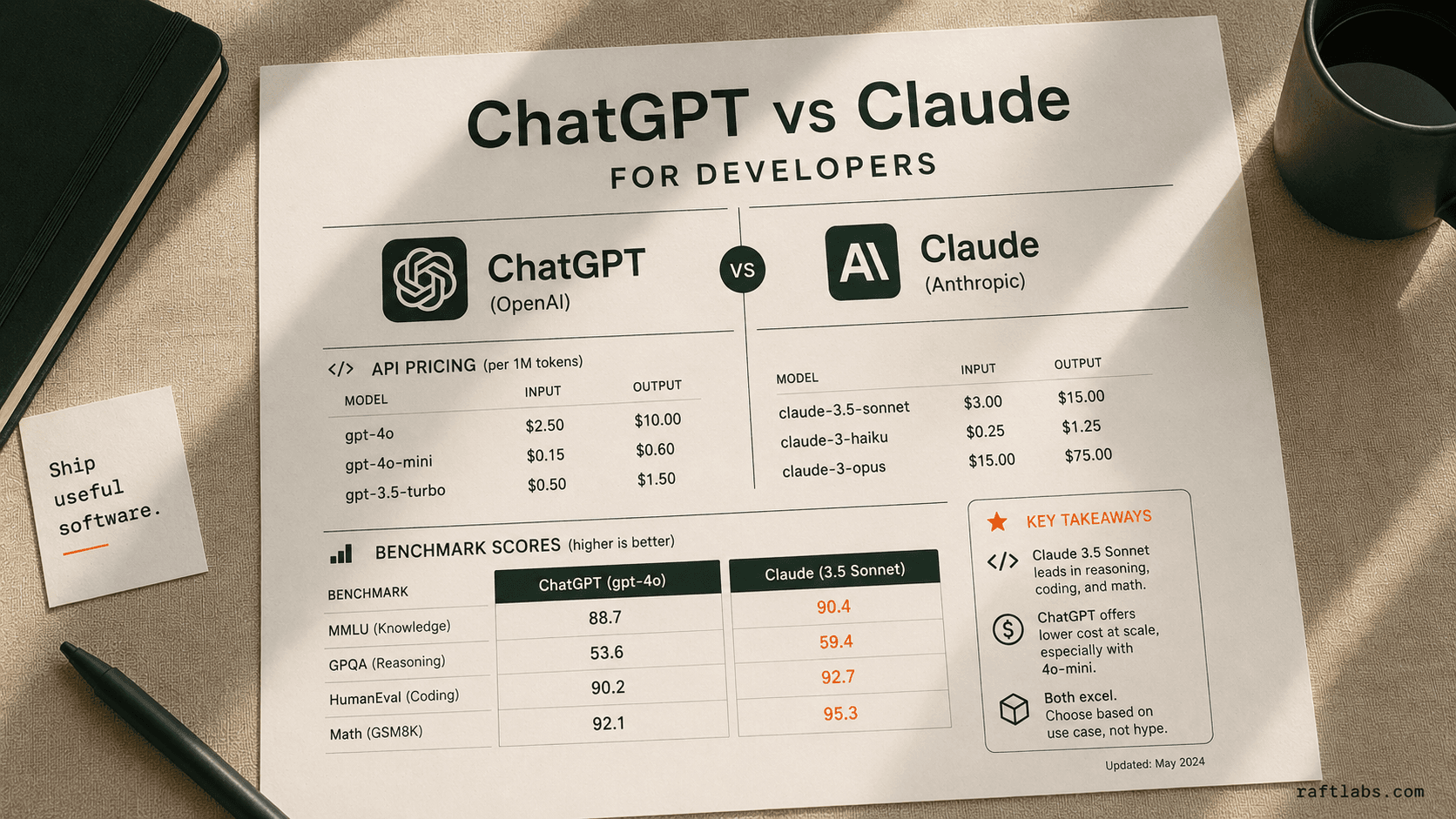
A fine-tuned smaller model can match a larger base model on a narrow, well-defined task at a fraction of the inference cost: moving a task from GPT-4o to a fine-tuned GPT-4o mini can cut output token costs by 88% if quality holds. We test the smaller model against your task first, and where distillation fits, the larger model's outputs become the training data for the smaller one, faster and cheaper than human labeling.
Built with
GPT-4o · GPT-4o mini · Distillation
05
Open-source model fine-tuning
We fine-tune open-source models with parameter-efficient LoRA and QLoRA adapters that cut GPU memory needs by 4-8x versus full fine-tuning, letting a Llama 3 8B model train on a single 24GB GPU instead of a multi-GPU cluster. For production, vLLM serves the fine-tuned model at high throughput, and regulated environments get air-gapped deployment inside your VPC with no outbound network access required.
A fine-tuned model without an evaluation framework is a liability: you cannot prove it improved, and you cannot catch regressions. We build a held-out benchmark of representative examples before any training begins, compare base and fine-tuned models on task-specific metrics like exact match rate and JSON validity, and run the benchmark in CI to block any model update that drops below threshold, while live production outputs are sampled daily to catch drift.
Built with
LangSmith · Langfuse · CI
How we work
From scope to shipped
Every project follows the same four phases. Scope is locked and price is fixed before development starts.
Week 1
01
Discover and scope
We map the problem, the task, and your data. You leave week 1 with a written scope: which model, which fine-tuning approach (LoRA, full, distillation), training data requirements, and a fixed-price quote. No training runs start without your sign-off.
Weeks 2-3
02
Data curation and preparation
We audit your candidate data, design the training format for the target model, and curate or generate examples to the required volume. Quality decisions made here determine 80% of the final model quality.
Weeks 4-8
03
Fine-tune, evaluate, and iterate
Training runs with evaluation against the benchmark after each iteration. We report accuracy, format compliance, and cost metrics. You see the numbers before we recommend a production deployment.
Weeks 8-12+
04
Deploy and monitor
Production deployment with inference infrastructure, monitoring, and automated regression tests in CI. 8 weeks of post-launch support included in every project.
Why us
Why teams choose RaftLabs
01
Senior engineers build what they scope
The engineers who assess your fine-tuning problem also run the training and deploy the model. No bait-and-switch, no offshore handoff after the contract is signed. The team you meet in week 1 ships in week 12.
02
Fixed price before development starts
We scope the work, calculate the cost, and lock it in writing before any training starts. A scope change is a change request: priced, agreed, or dropped. It never absorbs into the project and appears on the final invoice.
03
Shipping production software since 2015
Real engagements across SaaS, fintech, healthcare, and logistics, not every one published as a named case study. Track record across AI, SaaS, mobile, automation, and enterprise platforms across healthcare, fintech, logistics, and hospitality.
04
Compliance built in from the start
GDPR, HIPAA, SOC 2 - compliance requirements are scoped in week 1, not retrofitted before launch. Air-gapped fine-tuning and deployment is available for regulated industries where data cannot leave your infrastructure.
What clients say
What our clients say
Three-year average engagement. Founders and operators describing the work in their own words. No marketing varnish.
Testimonial 1 of 2: Amer Abu Khajil
Amer Abu Khajil
Founder, Peak Studios & Perceptional
Canada
I found RaftLabs to be the perfect partner for Perceptional, with their expertise in helping startup founders build MVPs, a free consultation, a prototype that matched my vision, and their unwavering support.
Fine-tuning is the process of continuing to train a pre-trained language model on your specific data so it adapts to your task, domain, and output requirements. Use fine-tuning when prompt engineering alone cannot produce consistent output format, when you need significant inference cost reduction at scale (a fine-tuned smaller model can outperform a larger model with a long system prompt), or when domain-specific vocabulary significantly degrades base model performance. Fine-tuning is not always the right answer; start with prompt engineering and RAG first.
OpenAI fine-tuning API supports GPT-4o mini and GPT-3.5 Turbo (hosted fine-tuning, no infrastructure required). Open-source models include Llama 3 (8B, 70B), Mistral 7B, Phi-3, and Gemma (require GPU infrastructure for training). Google Gemini fine-tuning is available via Vertex AI. The right model depends on your budget, data privacy requirements, and accuracy needs. Open-source models eliminate per-token costs and run on your own infrastructure.
For OpenAI fine-tuning, 50 to 100 high-quality examples is the minimum; 500 to 1,000 is recommended for reliable improvement; 5,000 or more for significant domain adaptation. Quality matters more than quantity. For open-source model fine-tuning using LoRA or QLoRA adapters, expect 1,000 to 50,000 examples depending on the degree of adaptation required. We assess your existing data and help curate or generate training examples if your dataset is thin.
LoRA (Low-Rank Adaptation) is a parameter-efficient fine-tuning technique that trains a small set of adapter weights rather than the full model. It is cheaper in compute and memory than full fine-tuning while achieving comparable results for most tasks. QLoRA extends this with quantization for even lower memory requirements. LoRA is the standard approach for fine-tuning open-source models on modest GPU infrastructure. We use LoRA and QLoRA for open-source model fine-tuning and full fine-tuning only when the task requires it.
We establish a benchmark before fine-tuning. A representative set of inputs with expected outputs is evaluated on your task-specific metrics (accuracy, format compliance, domain terminology usage, output length consistency). The fine-tuned model is evaluated against this benchmark on a held-out test set. We only recommend production deployment when benchmark improvement is statistically significant. Fine-tuning that does not improve over the baseline prompt-engineered base model is not worth the cost.
Fine-tuning project cost covers training data curation, fine-tuning run costs, evaluation, and deployment. For OpenAI fine-tuning (GPT-4o mini or GPT-3.5), the OpenAI training API costs are low ($1 to $10 for typical datasets); the project cost is primarily in data curation and evaluation work ($8,000 to $25,000). For open-source model fine-tuning with infrastructure setup, expect $20,000 to $60,000 including GPU compute, deployment infrastructure, and evaluation framework.
Work with us
Not sure if fine-tuning is the right path?
Tell us the use case, your current prompt approach, and where the base model falls short. We'll tell you whether fine-tuning is the answer, or whether there's a faster fix.
Scope and cost agreed before work starts. No surprises. No obligation.
Working prototype within 3 weeks of kickoff.
Pay by milestone. You see progress before each invoice.
60-day post-launch warranty. Bug fixes, UI tweaks, and deployment support. No retainer.






























 Canada