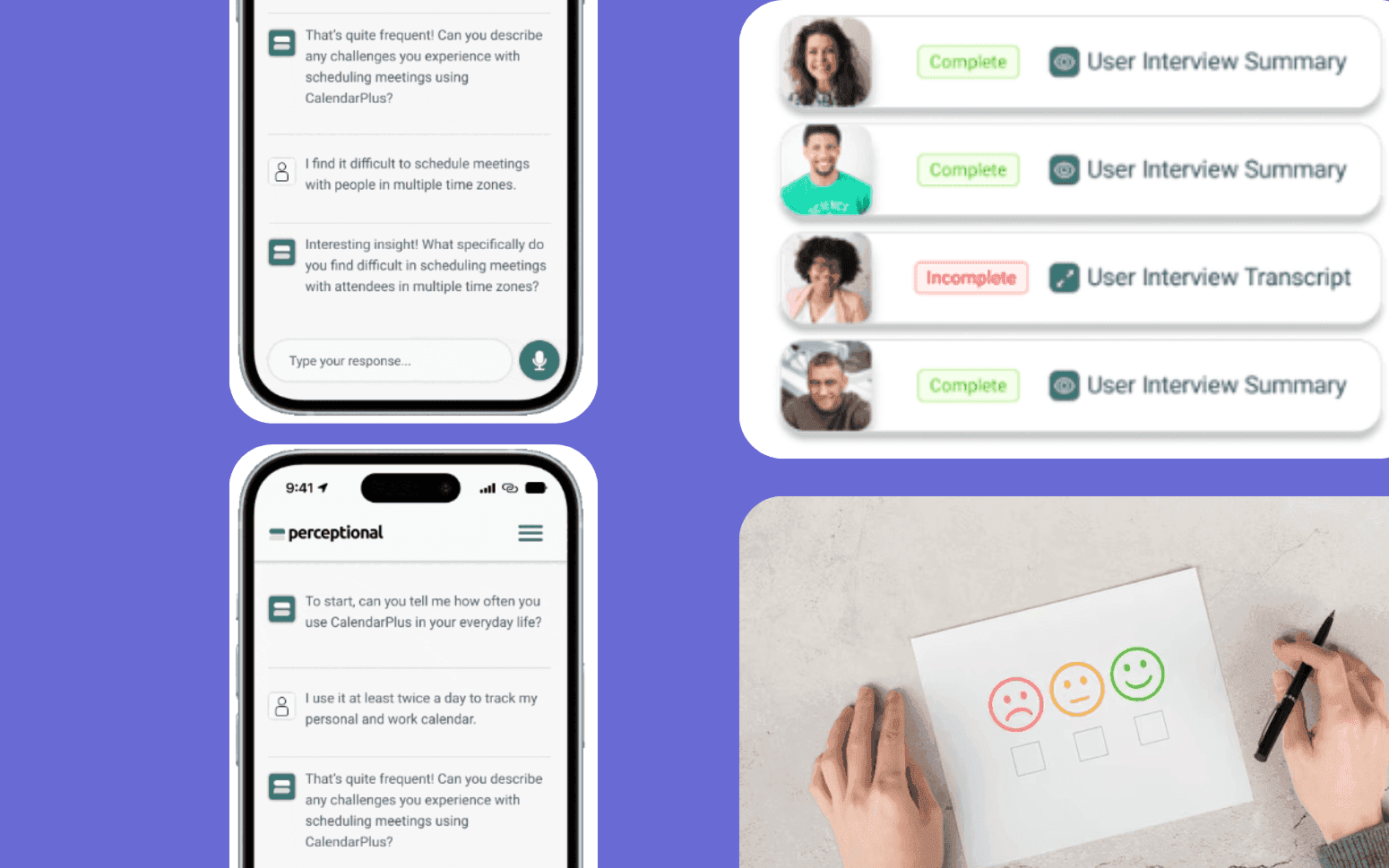
SaaS Conversational AI Chatbot Development for Startup
- 12 weeks
- 4x
A language model trained on public data doesn't know your business. RAG (retrieval-augmented generation) fixes that, by giving the model access to your documents, your database, and your internal knowledge at query time.
We build production RAG pipelines that index your data, retrieve the right context for each query, and generate accurate, source-backed responses. The result is an AI that knows your business because it can read your data, not because it's guessing from training.
Full pipeline: ingestion, chunking, embedding, retrieval, and generation
Source citations on every response, no hallucination without a paper trail
Works with PDFs, Word docs, databases, APIs, websites, and SharePoint
20+ RAG-powered products deployed to production
Recent outcomes
AI chatbot · SaaS startup
Built a RAG pipeline indexing product docs and support history. Resolved 70% of routine queries without human intervention.
70% query deflectionDocument intelligence · Financial services
Indexed 20,000+ daily transactions from PDFs and databases. Source-cited responses eliminated manual verification errors.
20,000+ docs/dayEnterprise knowledge search · Professional services
Deployed multi-source RAG pipeline across SharePoint and Confluence in 12 weeks. Teams cut research time by 60%.
12 weeks to productionRecognition
Your AI gives confident wrong answers because it doesn't know your business?
Users can't trust AI responses because there's no way to verify them?
In short
RaftLabs builds production RAG pipelines for businesses in the US, UK, and Australia. The pipeline covers ingestion, chunking, embedding, hybrid retrieval, re-ranking, and LLM generation with source citations. 20+ products shipped. Single-source pipelines start at $25,000, fixed cost.
Trusted by


RaftLabs is an AI development partner that has deployed 20+ RAG-powered products to production. We are a tech studio, not an agency. One team owns the pipeline from data ingestion through production deployment, with no handoffs between a data engineer, a dev shop, and a separate QA vendor.
Language models are remarkable reasoners. They're poor fact-finders, unless you give them the facts.
A language model trained on public data will answer questions about your proprietary products, your internal processes, and your customer history by either hallucinating plausible-sounding answers or admitting it doesn't know. Neither is acceptable in a production application.
RAG solves this by treating the model's knowledge and your data as separate concerns. The model provides reasoning and generation. Your data provides the facts. Every answer is grounded in something you can point to and verify.
If your use case is adding AI capabilities to an existing product rather than building a standalone pipeline, see our generative AI integration and ChatGPT application development services.
Capabilities
Extracting content from your sources, PDFs, databases, APIs, websites, cleaning and normalising it, splitting it into chunks of the right size for retrieval, and storing the source metadata alongside the content. The quality of ingestion determines the ceiling on retrieval quality.
Converting text chunks into high-dimensional vector representations that capture semantic meaning. We select the right embedding model (OpenAI, Cohere, or open-source) for your language and domain, and generate embeddings that maximise retrieval relevance for your query types.
Storing embeddings in a vector database with efficient approximate nearest neighbour search. Index configuration, metadata schemas, and filtering logic designed for your query patterns. We benchmark retrieval latency and tune index parameters for your scale requirements.
Taking a user query, embedding it, searching the vector store for relevant chunks, re-ranking the results, and assembling the context for the model. We implement hybrid search, query expansion, and metadata filtering to maximise retrieval precision for your specific use case.
Generating accurate, source-backed responses using the retrieved context. System prompts that instruct the model to cite sources, stay within the retrieved context, and indicate when a query falls outside the available knowledge. Structured response formatting for UI rendering.
Measuring RAG performance in production, retrieval precision, answer accuracy, hallucination rate, and latency. Automated test sets for regression testing when you update the pipeline. Dashboards for monitoring query volume, retrieval patterns, and model costs.
Capabilities
Patterns we know work in production.
Index your internal documentation, policies, and SOPs. Give employees a search interface that answers questions directly, sourced from your documents, instead of returning a list of links. Legal teams searching contracts, support teams searching product docs, HR teams searching policy.
Index your product documentation, FAQs, and support history. Build a first-line support AI that resolves the 60% of questions that don't need a human, with source citations so customers can verify. Human agents handle the complex cases that the AI escalates. RaftLabs has shipped this pattern for SaaS products, reducing support ticket volume by 40 to 60% in the first month.
Index large document sets, investment memos, legal filings, research reports, due diligence packs, and query across them in natural language. M&A teams reviewing 500 documents for specific clauses. Legal teams searching across years of contracts for specific terms.
Why us
The engineers who assess your problem also build the solution. No bait-and-switch, no offshore handoff after the contract is signed. The team you meet in week 1 ships in week 12.
We scope the work, calculate the cost, and lock it in writing before any development starts. A scope change is a change request: priced, agreed, or dropped. It never absorbs into the project and appears on the final invoice.
Clients include Vodafone, T-Mobile, Aldi, Nike, Cisco, and Lockheed Martin. Track record across AI, SaaS, mobile, automation, and enterprise platforms across healthcare, fintech, logistics, and hospitality.
GDPR, HIPAA, SOC 2 - compliance requirements are scoped in week 1, not retrofitted before launch. We have shipped HIPAA-compliant systems for US healthcare clients and GDPR-compliant products for European markets.
Tell us about your data sources and what you want the AI to answer. We'll design the RAG architecture and give you a fixed cost.
Process
We audit your data sources, what exists, where it lives, and how it's structured. We map the query patterns your users need to answer and define retrieval requirements. You get a scoped architecture document before a line of code is written.
Data source inventory and access review
Query pattern definition and test case creation
Vector store and embedding model selection
Fixed-cost project scope agreed upfront
We build the pipeline that extracts content from your sources, cleans and chunks it, generates embeddings, and loads it into the vector store. Every document type gets the right pre-processing treatment. Metadata schemas are designed for your filtering requirements.
Document extractors for PDF, database, API, SharePoint, Notion
Chunking strategy tuned to your document types
Embedding generation and vector store indexing
Incremental update pipeline for new and changed documents
We build the retrieval layer that takes a user query, embeds it, searches the vector store, re-ranks results, and assembles the context for the model. Hybrid search, query expansion, and metadata filtering are tuned for your specific query patterns.
Hybrid search combining dense vector and BM25 keyword search
Re-ranking with cross-encoder models
Query expansion and decomposition for complex questions
Retrieval evaluation against real query samples
We build the generation layer, system prompts, context assembly, response formatting, and source citation. We integrate the RAG endpoint into your application or product interface. The AI starts answering questions grounded in your data.
System prompt engineering and guardrail design
Source citation and reference formatting
API integration into your existing application
Streaming response handling for low-latency UX
We measure retrieval precision, answer accuracy, and hallucination rate on a test set of real queries before you go live. Post-launch dashboards track query volume, retrieval patterns, cost, and model latency.
Test set creation and accuracy benchmarking
Hallucination rate measurement and regression testing
Production monitoring dashboards
Framework for retraining when pipeline accuracy degrades
Tell us your data sources, query volume, and use case. We'll design the architecture and give you a fixed cost.
What clients say
Three-year average engagement. Founders and operators describing the work in their own words. No marketing varnish.

 Canada
I found RaftLabs to be the perfect partner for Perceptional, with their expertise in helping startup founders build MVPs, a free consultation, a prototype that matched my vision, and their unwavering support.
01 / 03
RAG as a Service
Managed RAG infrastructure: chunking, embedding, retrieval, and generation as a hosted service.
LLM Integration
Integrate a large language model into your application without building a full retrieval pipeline.
Generative AI Integration
Add AI writing, summarisation, and Q&A capabilities to your existing product.
ChatGPT Application Development
Custom applications built on GPT-4o and OpenAI APIs with your proprietary data.
AI Document Intelligence
AI reading and extraction from invoices, contracts, forms, and scanned records.
Business Process Automation
End-to-end workflow automation with AI exception handling.
RaftLabs builds production RAG pipelines for businesses that need AI to answer questions accurately from their own data. We are an AI development partner, not a dev shop or an agency. One team handles the full pipeline, ingestion, chunking, embedding, retrieval, and generation, with source citations so you can verify every answer. We've deployed 20+ RAG-powered products to production across PDFs, databases, SharePoint, and custom APIs.
Fine-tuning trains the model on your data so it learns patterns from it. RAG gives the model access to your data at query time. Fine-tuning is better for teaching the model how to respond (tone, format, terminology). RAG is better for making the model accurate about specific facts, recent information, and proprietary data that changes. Most production applications use RAG for factual accuracy and fine-tuning (or just good prompts) for behaviour. We'll recommend the right approach for your use case.
We've built pipelines for: PDF and Word documents, HTML and web content, databases (PostgreSQL, MySQL, MongoDB), SharePoint and Confluence, Google Docs and Drive, Notion, emails and support tickets, and custom APIs. The ingestion step extracts text from each source, processes it into chunks, generates embeddings, and indexes them in a vector store. We handle the extraction, transformation, and loading for each source type.
We've built RAG pipelines using Pinecone, Weaviate, Qdrant, PGvector (PostgreSQL extension), ChromaDB, and Supabase Vector. The choice depends on your infrastructure preferences, scale requirements, and whether you want managed hosting or self-hosted. For most applications, PGvector on a managed PostgreSQL instance is the simplest and lowest-cost option. We'll recommend the right vector store for your scale and operational requirements.
Retrieval quality is the hardest part of RAG. We improve it through chunking strategy tuned to your document types (semantic chunking vs. fixed-size vs. paragraph-level), hybrid search (combining dense vector search with sparse BM25 keyword search), re-ranking using cross-encoder models, query expansion and decomposition for complex questions, and metadata filtering so the model only searches relevant document subsets. We evaluate retrieval quality with precision and recall metrics against a test set of real queries before going to production.
A focused RAG pipeline, one data source, one query pattern, one use case, typically runs $25,000--$60,000 including the ingestion pipeline, the retrieval layer, and the generation and response formatting. A multi-source pipeline with custom retrieval strategies, evaluation frameworks, and production monitoring runs $60,000--$150,000. The cost depends on the number of data sources, the complexity of the retrieval requirements, and the scale of the system. Fixed cost, agreed before development starts.
Work with us
We scope RAG Pipeline Development Services in 30 minutes. You walk away with a clear cost, timeline, and approach. No commitment required.
Healthcare AI
HIPAA-compliant AI for patient monitoring, clinical decisions, and care workflows.
FinTech AI
Fraud detection, document processing, and compliance intelligence.
Logistics AI
Route optimisation, demand forecasting, and exception handling.
Insurance AI
Claims automation, underwriting risk scoring, and compliance monitoring.
Retail AI
Personalisation, demand forecasting, and inventory optimisation.
Hospitality AI
Revenue AI, guest communication, and booking automation.