Top 15 Minimum Viable Product Examples to Inspire You
Discover how 15 scrappy MVPs, from Twitter to DoorDash, validated billion-dollar ideas fast, and learn which lean approach is right for your startup.

In this article
Short answer
A minimum viable product (MVP) is the smallest working version of a product that tests a specific assumption with real users before heavy investment. Successful MVPs from Twitter, Zappos, DoorDash, and Slack all tested one core workflow with real users before any serious engineering began. Typical MVP costs range from $5,000 to $50,000 with timelines of 6 to 20 weeks. RaftLabs delivers production-ready MVPs in 8-12 weeks starting from $8,000, with 50+ products shipped.
Key takeaways
- Successful MVPs (Twitter, DoorDash, Zappos, Slack) all tested one narrow workflow with real users before any serious engineering. The pattern is consistent across sectors and decades.
- MVPs fail when teams skip validation, overbuild, or misjudge the core mechanic. Color raised $41M and launched a photo-sharing app nobody understood. Validation before capital is the lesson.
- Concierge and Wizard of Oz MVPs validate demand before writing code, the cheapest way to learn whether your hypothesis is real or just interesting.
- Ruthless scoping is the difference between a 6-week MVP and a 6-month one. If removing a feature still lets the user complete the core action, it waits for v2.
- Typical MVP costs run $5,000 to $50,000 with timelines of 6 to 20 weeks. The single largest budget variable is scope discipline, not team location or tech stack.
Every company you admire today once shipped something embarrassingly simple. The minimum viable product examples that follow prove this better than any theory can. Twitter was an internal SMS tool at a failing podcasting startup. Zappos was a guy with a camera running to local shoe stores to manually fulfill orders. DoorDash was four Stanford students who built a website in 45 minutes using PDF menus and a Google Voice number.
All three of above examples started on the web deliberately. A web app has no app store approval delays, works on any device, and can be iterated on same-day. Mobile comes after the hypothesis is proven, not before.
These are minimum viable product examples that actually worked. Not because they were polished, but because each one tested a real assumption with real users before anyone spent serious money or time building the full product.
The concept behind the minimum viable product, or MVP, is straightforward: find the smallest thing you can ship that generates the feedback you need to make your next decision. But knowing the theory and seeing it in action are two very different things. Looking at how successful companies actually did it cuts through the noise and shows you what "minimum" really means in practice.
This guide covers 15 minimum viable product examples organized by type, a comparison of MVPs against prototypes and proofs of concept, what these builds cost, how to fund one, and a decision framework to help you choose the right MVP type for your specific situation.
Who should read this guide
This guide is built for anyone who is about to make a decision about whether to build, what to build first, or how to validate a product idea before committing serious time and money to it.
First-time and non-technical founders with a product idea and limited runway who are not sure how much to build before going to market. This guide shows exactly what "minimum" looked like for 15 companies that got it right, and one that got it badly wrong.
Technical founders and CTOs who know how to build but need to decide what to build first, how to scope an MVP without over-engineering, and which MVP type fits the hypothesis being tested.
Startup operators and product managers responsible for prioritising features, managing timelines, and justifying scope decisions to leadership. The examples here give concrete reference points for what a well-scoped first version actually looks like across product categories.
Early-stage investors and advisors evaluating whether a founding team understands what it needs to validate before raising or deploying capital. This guide covers how the most capital-efficient early builds in tech history were actually structured.
Entrepreneurs evaluating a development partner. If you are deciding whether to build in-house or work with a product studio, the cost section, decision framework, and portfolio examples give you a realistic baseline for scoping, pricing, and approach.
What you'll find in this guide
This guide goes beyond theory. Every section is built around what founders, operators, and technical decision-makers actually need when deciding whether to build, what to build first, and how to validate before committing serious resources.
15 real MVP examples across five categories: Single Feature, Concierge, Wizard of Oz, Landing Page, and Piecemeal. Each covers what was built, what was skipped, and the lesson for your build.
MVP vs. prototype vs. PoC vs. beta: a clear breakdown of how these four terms differ in practice, when each is appropriate, and why confusing them leads to building the wrong thing.
A decision framework for choosing your MVP type based on product category, validation goal, and available resources.
Realistic cost benchmarks by complexity and industry, with a phase-by-phase breakdown and notes on what drives costs up or down.
A failed MVP case study: Color, the $41 million photo-sharing app that collapsed within months of launch.
Two RaftLabs portfolio examples from real MVP engagements.
Guidance on funding routes and the ten most common development mistakes that kill early-stage products.
Now that you know what this guide covers, let’s look at the core reason MVPs sit at the center of early-stage product decisions.
Why do startups need an MVP?
The minimum viable product examples throughout this guide share one trait: each one tested a specific assumption before the full product was built. Most startups don't fail because their founders lack ambition or their product is badly built. They fail because they build something the market doesn't actually need. According to CB Insights' analysis of 431 VC-backed startups that shut down, poor product-market fit was the root cause of failure for 43%.
The MVP framework exists to surface that problem before it costs you everything. Rather than spending six to twelve months building a full product based on speculations, you test the core hypothesis in weeks. You put something functional in front of real users and watch what they do, not what they say they'll do. Then you use that signal to decide whether to build more, pivot, or stop.
An MVP for a startup is the smallest version of your product that delivers enough value to a specific user to generate the feedback you need to make your next decision. That definition matters because "smallest" doesn't mean "broken." An MVP must be viable: it needs to work well enough for real users to form genuine opinions about it.
A B2B SaaS startup might hypothesize that teams will pay for a core workflow tool, and build only that workflow before adding anything else. SaaS MVPs have a specific constraint that consumer apps don't: you need enough billing and user management logic in place to test whether someone will pay recurring fees.
Building a SaaS application MVP typically takes 10 to 14 weeks because of that infrastructure requirement, even when the feature set is deliberately thin.
Understanding this only works if you can clearly distinguish an MVP from other formats that test different things at different stages.
The teams that consistently hit the shorter end of those build timelines do one thing before development starts: they run a structured product discovery sprint to map the user, define the hypothesis, and scope the feature set. One to two weeks of discovery saves an average of three to five weeks in the build itself.
MVP, prototype, PoC, beta: what each one tests and when to use it
These four terms get used interchangeably in startup conversations when discussing minimum viable product examples and build approaches, and the confusion costs teams months of misaligned effort. Each one serves a different purpose, involves different audiences, and answers a different question.
The difference between a proof of concept (PoC) and an MVP is especially noteworthy. A PoC answers "Can we build this?" An MVP answers "Will people use this and pay for it?" Confusing them is one of the most common early-stage blunders.
For AI-powered products the question adds a third layer: does the model output reliable enough results to be worth testing with users at all? A purpose-built AI MVP has to account for data pipeline setup, model selection, and evaluation before the user-facing product can meaningfully be tested, which is why AI MVPs typically run 10 to 16 weeks versus 6 to 8 for standard web products.
To make these differences easier to understand, the table below breaks each one down side by side.
| Dimension | MVP | Prototype | Proof of Concept (PoC) | Beta |
|---|---|---|---|---|
| Primary question | Will users pay for this and keep using it? | Does this interface/experience make sense to users? | Can this technology or idea actually be built? | Is the product ready for wider release? |
| Audience | Real end users (paying or unpaying) | Internal team and select testers | Internal engineers and leadership | Larger real-user group, typically by invite |
| Stage | Pre-product-market fit | Pre-development validation | Pre-investment or pre-development | Pre-launch |
| Functionality | Fully functional within limited scope | May be non-functional or clickable mock | May not be functional at all | Near-complete feature set |
| Code quality | Production-ready within scope | Throwaway code or no code | Throwaway or experimental code | Production-ready |
| Cost | $5,000 to $50,000+ | $500 to $10,000 | $0 to $5,000 | Significant investment, often $50,000+ |
| Typical timeline | 4 to 12 weeks | 1 to 4 weeks | 1 to 3 weeks | Ongoing (until stable for public launch) |
| Key output | User behavior data, retention signal | Usability feedback, design validation | Technical feasibility signal | Bug reports, readiness signal |
| Example | DoorDash (PDF menus + phone) | Figma wireframe of your product | Internal spike to test an algorithm | Gmail invite-only launch (2004) |
One thing the table doesn't show is platform split. Web MVPs sit at the lower end of that cost range. Mobile app development adds device testing, app store compliance, and platform-specific UI patterns, typically 2 to 4 extra weeks and $8,000 to $15,000 more depending on scope.
A prototype is primarily a design artifact. It answers questions about whether users understand the interface and can complete the intended workflow. Prototypes are often built in tools like Figma, are not backed by real data, and are shown to users in controlled settings.
A PoC can be called a technical artifact. It's often built by an engineer to answer a specific technical question, such as whether a particular API integration will work, whether an algorithm produces the right output, or whether a third-party service can handle the required load. Users rarely see it.
On the other hand, a beta is a near-complete product being tested at scale before public launch. It's much further along than an MVP and answers questions about stability and readiness, not about whether the core concept is valid.
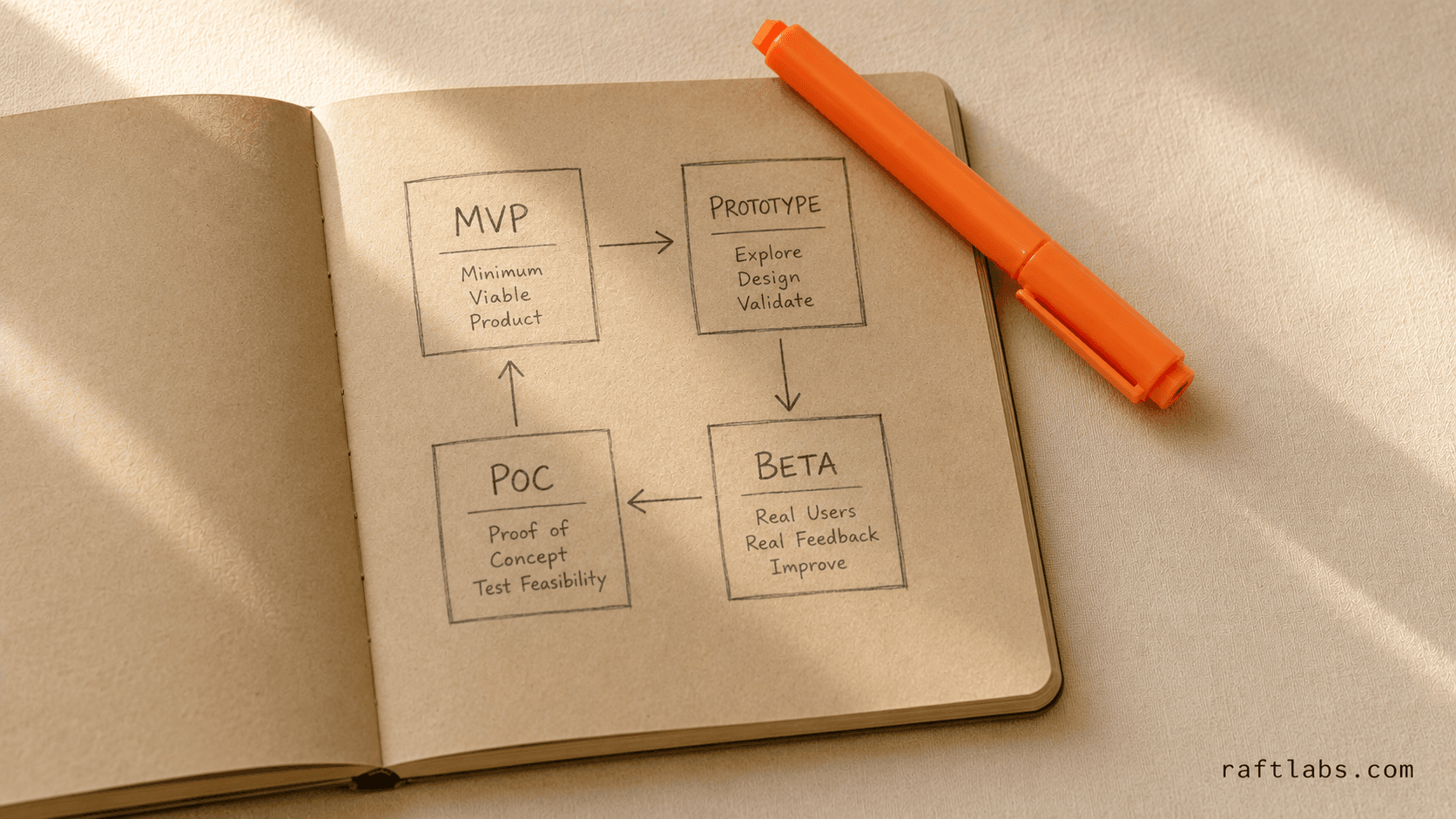
Most startups should start with a PoC or prototype only if they have a technically novel challenge that requires validation before development begins. If the core technology is established (which it is for the vast majority of software products), you should go directly for MVP development.
Now that the roles of each approach are clear, it becomes easier to look at real-world examples of MVPs and understand what they actually tested.
Top 15 minimum viable product examples
These 15 minimum viable product examples are organized by MVP type. For each one, you'll find what the MVP actually consisted of, what was deliberately left out, which country it originated from, and what the lesson is for your own startup.
1. Single feature MVP examples
A Single Feature MVP builds exactly one end-to-end workflow and removes everything else. The discipline is holding the scope line: if a feature doesn't directly enable the single workflow being tested, it waits.
1.1. Twitter: the status update that launched a revolution
Country of Origin: United States | Year: 2006 | Industry: Social Media and Communications
What the MVP was: A single SMS-based feature that let users broadcast a 140-character status message to a small group of followers
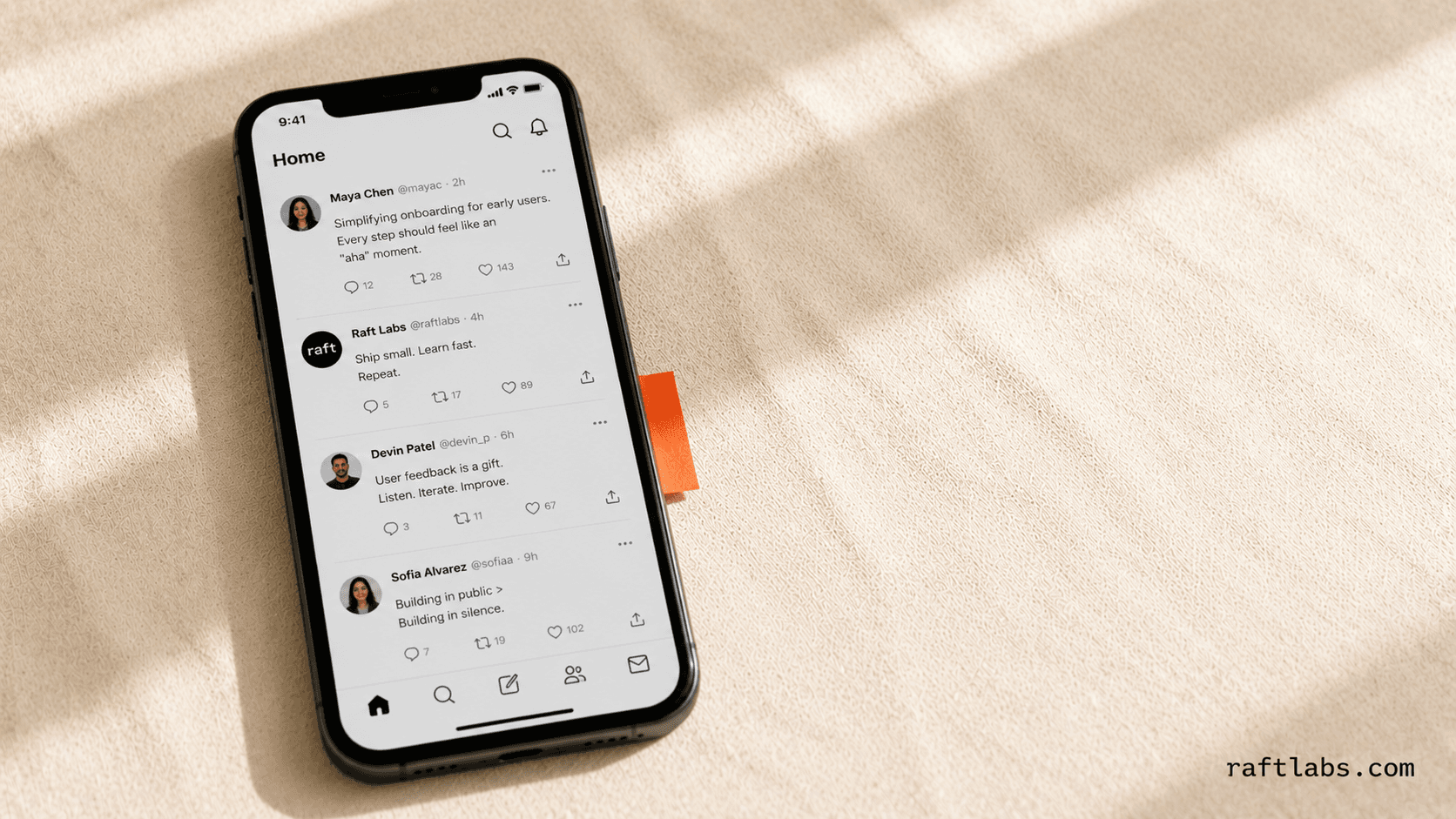
In 2006, Jack Dorsey and a small team at the podcasting startup Odeo were looking for a new direction. Odeo had been made obsolete by Apple's iTunes podcasting integration. During an internal hackathon, Dorsey proposed a concept he'd been thinking about since 2000: a simple service that let individuals broadcast their current status in real time.
The first version, called "twttr," launched on March 21, 2006, with Dorsey posting the first message: "just setting up my twttr." It had no web interface initially. Messages were sent and received via SMS to a short code, 40404.
The first public version launched in July 2006. There were no hashtags, no retweets, no algorithms, and no images. Just a 140-character status update, sent to anyone who followed you.
The 140-character limit wasn't a deliberate product choice: it was a constraint imposed by SMS character limits. Dorsey later explained they left 20 characters for a username, staying within the 160-character SMS maximum.
What was excluded: web-based posting, follower discovery, search, trending topics, replies, direct messages, and any content beyond plain text. Twitter went from a few thousand users after internal launch to its breakout moment at SXSW 2007, where usage tripled over the conference.
The service grew from 400,000 tweets per quarter in 2007 to approaching 100 million (tentative) per quarter in 2008.
The lesson: Constraints can define a product category. The 140-character limit, initially a technical workaround, became Twitter's defining characteristic and the foundation of an entirely new communication format. What you can't do is sometimes more valuable than what you can. This is one of the clearest minimum viable product examples of constraint becoming a competitive advantage.
1.2. Foursquare: gamified check-ins before anything else
Country: United States | Year: 2009 | Industry: Location-Based Social Networking
What the MVP was: A single feature (location-based check-ins with gamification: badges and mayorships) launched at SXSW in March 2009
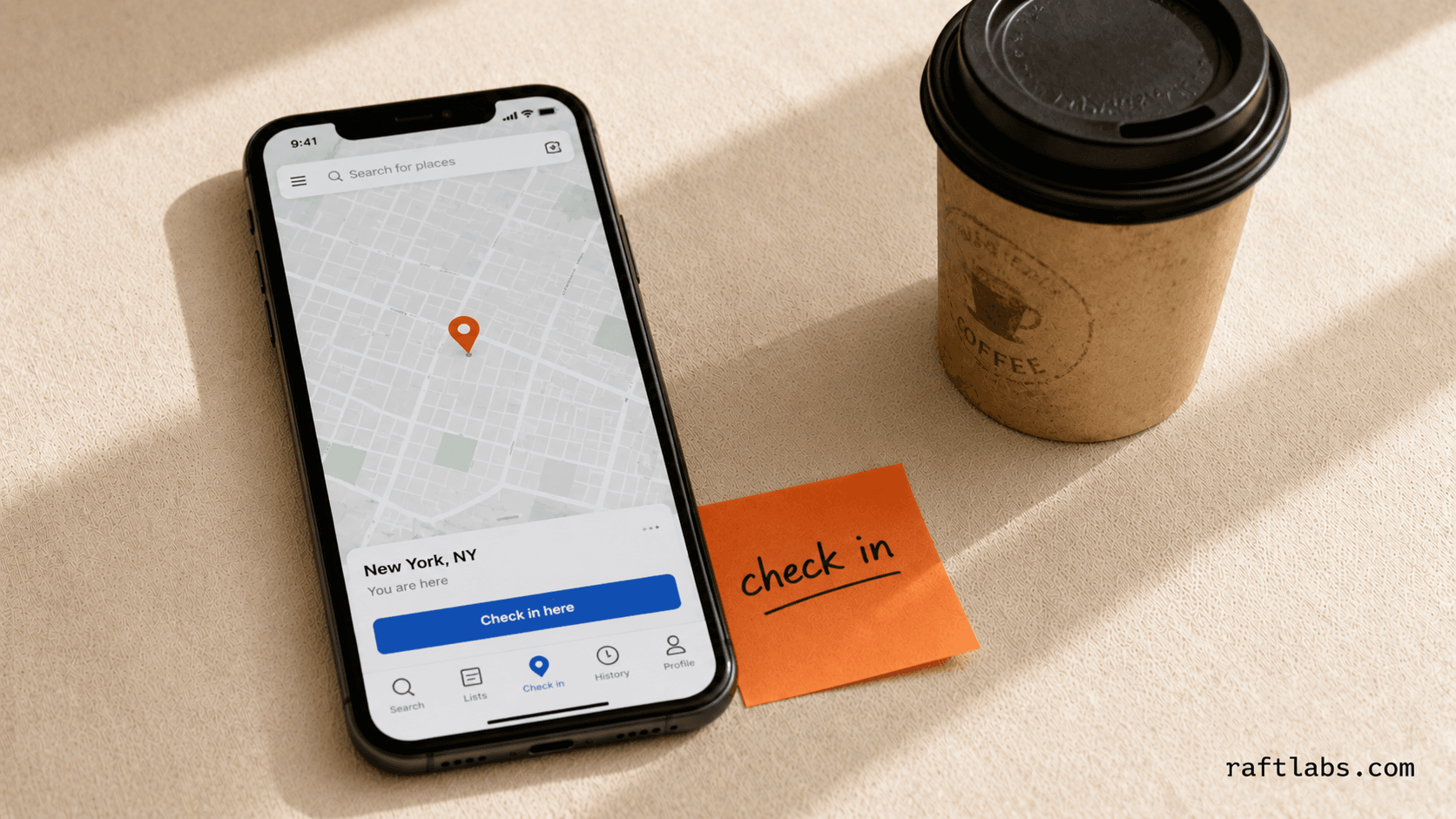
Dennis Crowley and Naveen Selvadurai built the first version of Foursquare sitting at a kitchen table in Crowley's apartment in New York's East Village in early 2009. They had no funding, no team beyond themselves, and no official SXSW passes when they flew to Austin to launch it.
The MVP did one thing: let iPhone users check in to physical locations, earn points and badges, and compete with friends for "Mayor" status (the user with the most check-ins at a given location). By Crowley's own admission, the mayorship feature was added almost as an afterthought because they were worried about user retention past the first month.
What was excluded: venue recommendations, search, tips, partnerships with businesses, analytics for brands, revenue model, and any form of Android support. Foursquare launched at SXSW to 10,000 conference attendees, raised a $1.35 million seed round from Union Square Ventures in September 2009, and reached about 7 million users within two years.
Crowley later revealed the product was "pretty sloppy" at launch: crashes, missing features, poor performance. But the core check-in mechanic worked well enough to prove the concept.
The lesson: A single well-executed game mechanic is enough to validate an entire product category. The MVP doesn't need to be complete. It needs to test the single thing that makes your product different from everything that already exists.
1.3. Slack: the accidental product built from a failing game
Country: Canada | Year: 2013 | Industry: Workplace Productivity and B2B SaaS
What the MVP was: An internal team chat tool built for a game development company, used by the team itself before being offered to outside companies for beta testing
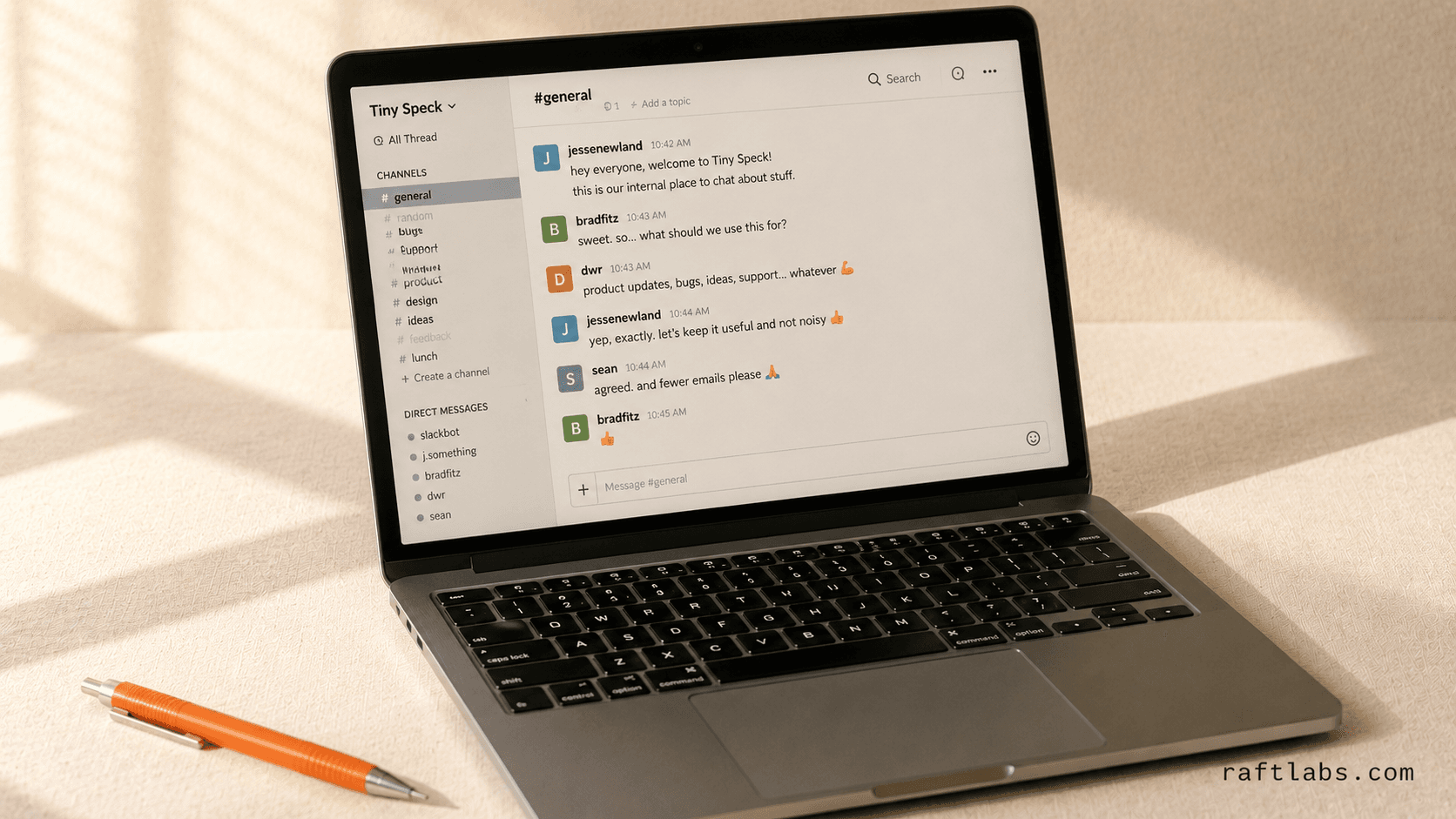
Stewart Butterfield had already pivoted from a failing game (Game Neverending) to Flickr in 2004. By 2009, he was at it again, co-founding Tiny Speck to build a massively multiplayer online game called Glitch. Glitch was built from 2009 to 2012, when it was shut down for lack of traction.
During Glitch's development, Butterfield's team in Vancouver, British Columbia had built an internal chat tool to coordinate their distributed team. It wasn't intended to be a product. It was infrastructure. When Glitch failed in late 2012, the team had almost nothing to show except two things: a skilled team still willing to work together, and this internal chat tool that they'd become completely dependent on.
Butterfield pivoted Tiny Speck into Slack, the company. The MVP was released for beta testing in August 2013. Butterfield and team sent the product to a handful of friendly tech companies and asked them to go all-in on Slack for a week, abandoning email for internal communication entirely. The feedback loop was direct and fast.
What the MVP excluded: integrations with third-party tools (Stripe, Google Docs, etc. came later), voice calls, native mobile apps, and any enterprise features (SSO, RBAC, compliance tools). Almost within two weeks of its preview release, Slack had nearly 15,000 signups. It went from zero to a $1 billion valuation in just eight to ten months. Salesforce finally acquired it for $27.7 billion in 2020.
The lesson: The best product insight sometimes comes from building for your own team first. Slack wasn't designed from market research. It was built to solve a problem the team was living with every day. Your frustrations as a user are valid product hypotheses.
2. Concierge MVP examples
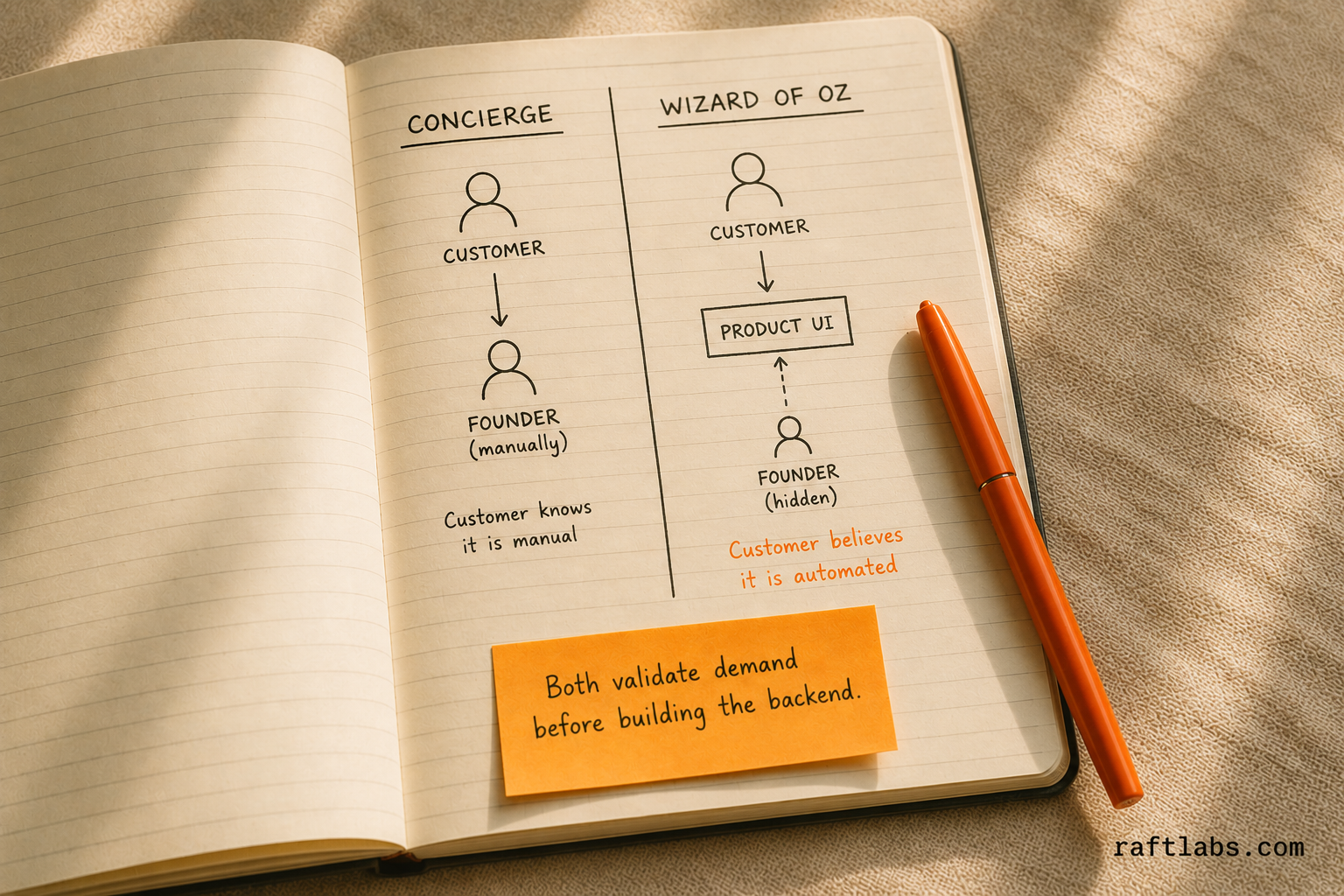
A Concierge MVP delivers the product experience manually. The customer knows they are receiving a service. The manual delivery is the MVP. There is no automated backend and no pretense of automation. The goal is to validate that the service creates enough value for people to want it before investing in building the automation.
2.1. DoorDash: eight PDF menus and a Google Voice number
Country: United States | Year: 2013 | Industry: Food Delivery and On-Demand Logistics
What the MVP was: A website with PDF menus from eight local Palo Alto restaurants and a Google Voice phone number that rang the founders' personal cell phones when someone wanted to place an order
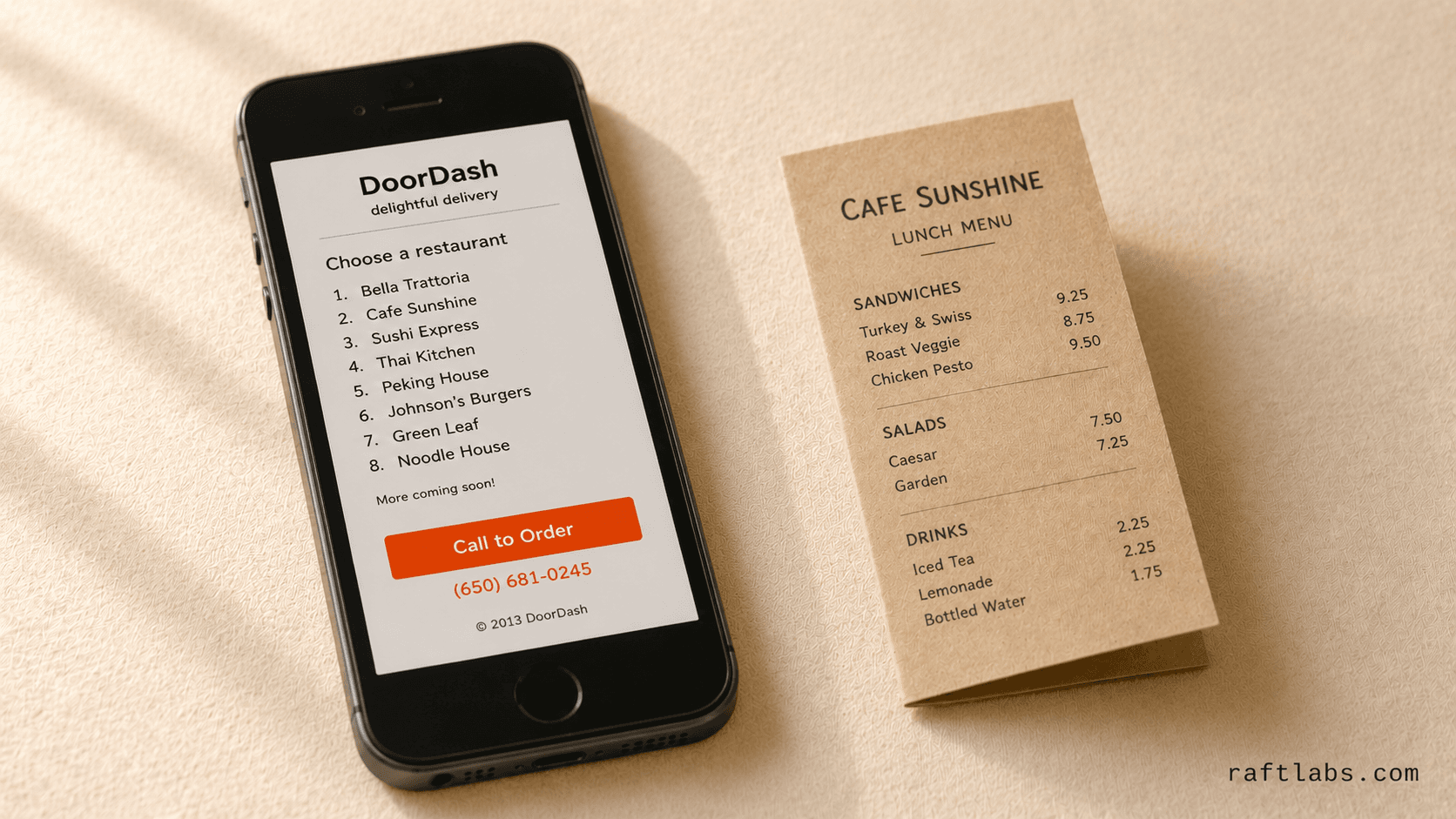
In January 2013, four Stanford students (Tony Xu, Stanley Tang, Andy Fang, and Evan Moore) were working on a class project. They interviewed a macaroon shop owner in Palo Alto named Chloe, who showed them a thick booklet of delivery orders she had turned down because she had no driver. They interviewed nearly 200 other small business owners and heard the same thing repeatedly: delivery is painful, and most restaurants outside of New York can't offer it.
Probably on January 12, 2013, the team spent nearly an hour building PaloAltoDelivery.com. Eight PDF menus from local restaurants. A Google Voice number that rang all four founders' cell phones simultaneously. No online ordering system, no restaurant portal, no Dasher app, no dispatch algorithm. When orders came in, the founders personally drove the deliveries, nights and weekends, while still enrolled at Stanford.
Their first order arrived roughly 45 minutes after the site went live: a customer named in Menlo Park ordered chicken pad thai and spring rolls from Bangkok Cuisine. The first order came in so fast because the customer must have typed the URL directly into the browser, since there was little chance Google had indexed the site yet.
The founders continued doing deliveries themselves and used each delivery as a customer discovery session. Most of the employees who joined DoorDash in the first year were required to do at least one week as a Dasher.
DoorDash later on went on to raise $120,000 from Y Combinator, then $2.4 million in seed funding, and IPO'd in December 2020. It now holds approximately 67% of the US food delivery market.
The lesson: The fastest way to understand a logistics business is to do the logistics yourself, at least for a short duration. For DoorDash, the PDF menus and phone number first validated the demand in 45 minutes. But the deliveries generated product insight that no survey could have produced.
2.2. Instacart: the founder who shopped his own orders
Country: United States | Year: 2012 | Industry: Grocery Delivery and On-Demand Logistics
What the MVP was: A simple website where users could place grocery orders, with Apoorva Mehta personally shopping and delivering each order himself

Apoorva Mehta had tried around 20 startup ideas between 2010 and 2012 before arriving at Instacart. The concept was simple: same-day grocery delivery from existing supermarkets. The MVP was simpler still. Mehta built a basic ordering website, placed a test order himself (ordering items from a local store), then went to the store, bought the groceries, and delivered them to a friend.
That first test (Mehta on both sides of the transaction) was enough to prove the technical workflow. He then opened the service to real users. Almost every order was fulfilled manually by Mehta, who would receive the order, drive to the appropriate store, shop the items, and deliver them. There was no warehouse, no fleet, no proprietary picking technology. Just a website and a founder who knew where the grocery stores were.
Mehta applied to Y Combinator with only a few days left in the application window after the first few orders showed a real demand signal. YC partner Paul Graham famously responded to the application within a few minutes.
Instacart was then admitted to the winter 2012 YC batch. It raised $2.3 million in seed funding shortly after, followed by an $8.5 million Series A in 2013. Instacart also went public via IPO in September 2023 at a valuation exceeding $10 billion.
The lesson: Doing the work yourself isn't just a validation strategy. It's a product research methodology. Mehta understood every friction point in the grocery delivery experience because he had personally experienced every step of it dozens of times before building automation around it.
2.3. Food on the Table: the personal shopper turned into an app
Country: United States | Year: 2009 | Industry: Meal Planning and Consumer Apps
What the MVP was: Manuel Rosso, the founder, personally acting as a concierge for one family, manually checking weekly grocery store sales flyers and building customized meal plans by hand
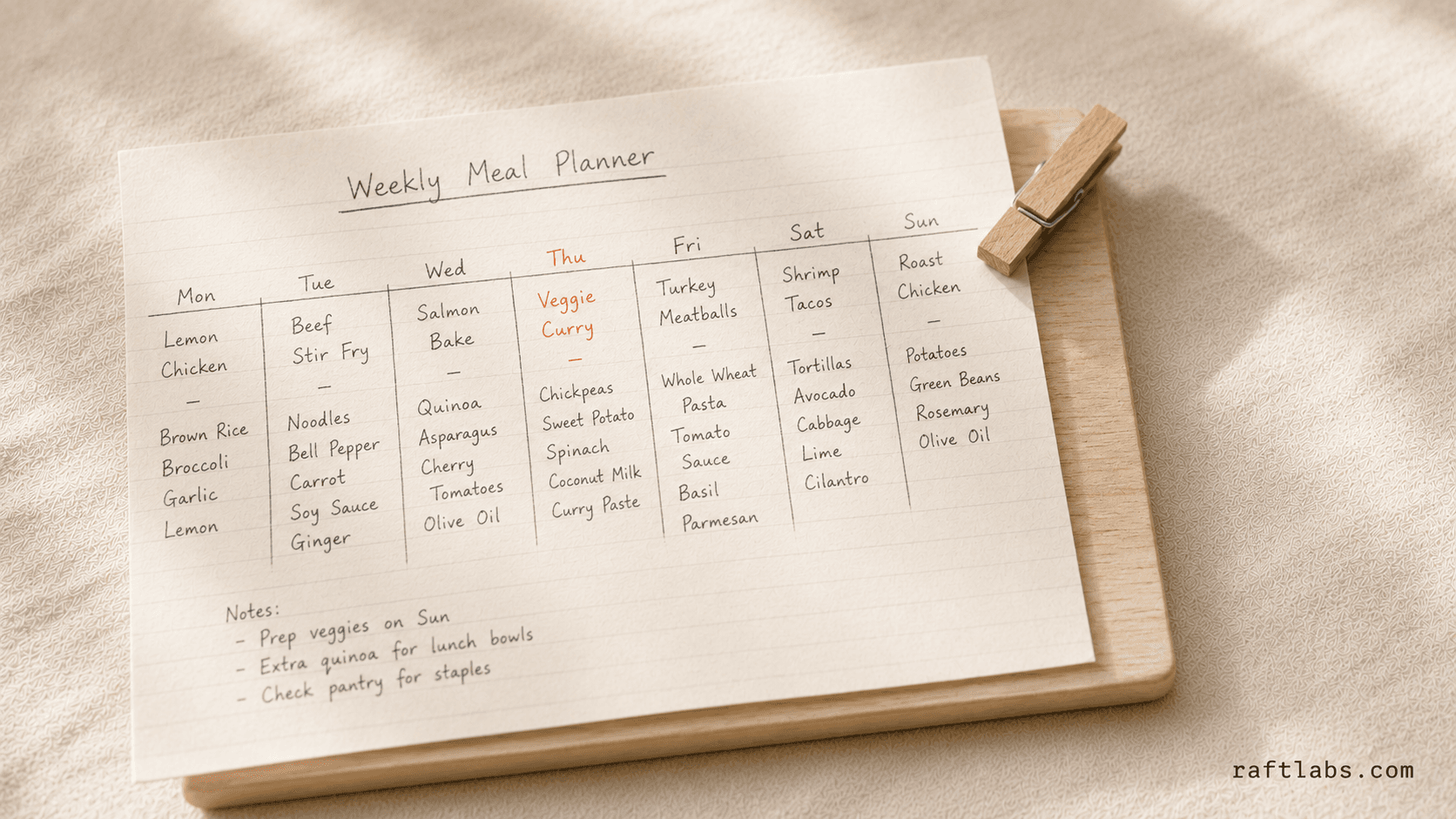
Food on the Table was designed to help families plan weekly meals based on what was currently on sale at their local grocery stores, reducing food waste and making healthy eating more affordable. The hypothesized product was a mobile app. The actual MVP was a founder with a notepad.
Rosso started with a single family in Austin, Texas. Each week, he would manually visit grocery stores, probably collect the weekly sales circulars, identify what was on offer, and hand-craft a meal plan for that one family based on their food preferences and what was cheapest that week. The family received the plan as if it were coming from a working app. They probably didn't know it was all manual.
With one family successfully using the service, Rosso onboarded a second, then a third. Each new family validated the demand further. Only after confirming that families would use the service consistently and valued it enough to keep coming back did the team begin building the actual software.
This is the canonical Concierge MVP example cited by Eric Ries in The Lean Startup. The family-by-family manual delivery approach was intentionally not scalable, which is exactly the point. Scalability comes after validation, not before.
The lesson: Your first customer is a research subject, not a revenue unit. Delivering the service manually, one customer at a time, tells you exactly what the product needs to do. You cannot get that depth of insight from user research alone.
3. Wizard of Oz MVP examples
A Wizard of Oz MVP looks like an automated product to the customer but is actually operated manually behind the scenes. Unlike a Concierge MVP, the customer does not know the service is manual. They believe they are interacting with a real system. The goal is to validate the product experience under realistic conditions without building the backend.
3.1. Zappos: the website that had no inventory
Country: United States | Year: 1999 | Industry: E-Commerce and Online Retail
What the MVP was: A website called Shoesite.com that appeared to offer a large selection of shoes for online purchase, backed by zero inventory. When an order came in, Nick Swinmurn would physically go to a local shoe store, buy the shoes at full retail price, and ship them to the customer

In 1999, Nick Swinmurn couldn't find a specific pair of Airwalk boots at his local mall in the San Francisco Bay Area. He had an idea: sell shoes online. The conventional wisdom was that no one would buy shoes without trying them on first, and VCs rejected him repeatedly on that basis.
Rather than argue with VCs, Swinmurn tested the hypothesis directly. He went to Footwear Etc., a shoe store in Sunnyvale, California, asked permission to photograph their inventory, and listed those shoes on a basic website he called Shoesite.com (later renamed Zappos, from the Spanish word "zapatos").
To the customer, the website looked like a functioning online shoe store. In reality, Swinmurn had no stock, no warehouse, and no fulfillment infrastructure. When an order came in, he would often drive to the local store, buy the exact shoes the customer had ordered at full retail price, and ship them.
Swinmurn lost money on nearly every transaction: he was paying retail and charging retail, absorbing shipping costs. But that was the point. He wasn't trying to build a profitable business yet. He was testing whether people would buy shoes online at all. The answer was yes.
That validation got him in front of Tony Hsieh, whose investment firm Venture Frogs wrote the first check. Zappos reached $8.6 million in sales by 2001 and was acquired by Amazon for $1.2 billion in 2009.
The lesson: Prove the demand before you build the infrastructure. Swinmurn spent no money on warehousing, supplier negotiations, or inventory systems. He spent money on stamps and shoe leather. That minimal investment answered the only question that actually mattered.
3.2. Amazon: the bookstore that was one person in a garage
Country: United States | Year: 1995 | Industry: E-Commerce and Online Retail
What the MVP was: A website that appeared to be a large online bookstore, operated by Jeff Bezos from his garage in Bellevue, Washington, manually packing and shipping each order himself
Jeff Bezos founded Amazon in July 1994 after reading that internet usage was growing at 2,300% annually. He narrowed his product focus to books, a category with millions of titles, an established mail-order precedent (5-10% of books were already sold by mail), and a low enough unit price to reduce the risk of buying without physical examination.
Amazon.com went live on July 16, 1995. The interface looked like a professional bookstore. The reality was that Bezos and a small team were manually processing every order in a garage.
When an order came in, someone would order the book from a distributor (working around the 10-book minimum order by ordering nine copies of an obscure out-of-stock book alongside the one book actually needed), pack it, and personally drive it to the post office. In the first month, Amazon shipped books to all 50 US states and 45 countries.
What was excluded: any product category beyond books, reviews, recommendations, third-party sellers, Prime membership, personalization algorithms, and warehouse infrastructure. Bezos sold over $10,000 worth of books in his first week. The company did not expect to turn a profit for four to five years. It made its first quarterly profit in Q4 2001, posting a 1-cent per share profit on revenues exceeding $1 billion.
The lesson: The first version of Amazon was a manual fulfillment operation dressed in a professional website. Bezos didn't need a warehouse to prove people would buy books online. He needed a garage and a Post Office card.
3.3. Wise (formerly TransferWise): the fintech that ran on spreadsheets
Country: United Kingdom | Year: 2011 | Industry: Fintech and Financial Services
What the MVP was: A basic money transfer website that appeared to customers as an automated peer-to-peer matching system, but every day, co-founder Kristo Käärmann manually recorded each pending transfer and moved the funds by hand
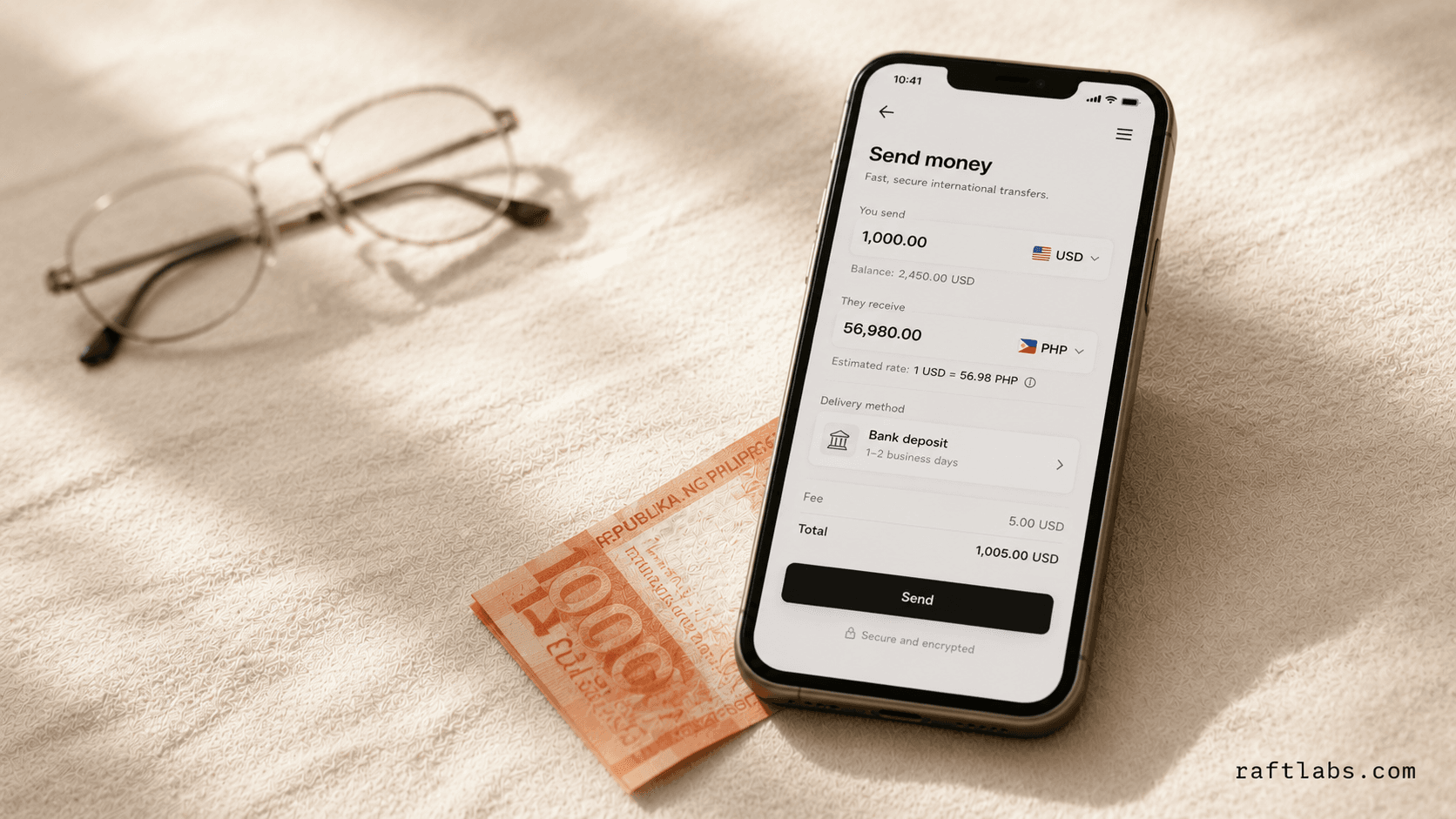
Taavet Hinrikus and Kristo Käärmann were both Estonians living in London in 2011. Hinrikus was Skype's first employee, paid in euros. Käärmann was a Deloitte consultant paid in pounds but carrying a mortgage in euros back in Estonia. They had been quietly solving their own problem by swapping currencies directly with each other at the mid-market rate. No bank fees. No markup. They knew if it worked for two people, it could work for millions.
They hired a freelance engineer to build an MVP and launched TransferWise in January 2011. The website appeared to be an automated matching platform. What users did not see was Käärmann at his desk each evening working through a spreadsheet, manually matching transfers and moving funds himself. Their first customer arrived within minutes of a TechCrunch article going live.
Within a few months, over £1 million had been sent through the platform, with about 70 percent of users returning for a second transfer. That retention figure, not the volume, was the signal that mattered.
What the MVP deliberately excluded: any automated matching algorithm, currency pairings beyond GBP and EUR, a mobile app, business accounts, debit cards, or regulatory infrastructure beyond the minimum required to operate legally.
TransferWise raised $1.3 million in seed funding in 2012, followed by rounds led by Valar Ventures, Andreessen Horowitz, and Richard Branson. It reached $1 billion in monthly transfer volume by 2017 and rebranded to Wise in 2021, completing a direct listing on the London Stock Exchange at an $11 billion valuation. In its most recent full-year results, Wise moved £145 billion for over 15 million customers.
The lesson: The manual phase was not a shortcut. It was the product research. Every transfer Käärmann processed by hand taught him exactly how the matching logic needed to behave at volume. The Wizard of Oz approach was also the reason the automation, when they finally built it, worked correctly the first time. Build the understanding before you build the system.
4. Landing page MVP examples
A Landing Page MVP tests demand by presenting the product concept to a target audience before any product exists. The key metric is behavioral: do users sign up, click "buy," or complete an action that indicates they would use the product? It answers the cheapest version of the most important question: Does anyone care?
4.1. Buffer: the two-page website that validated a $23M business
Country: United Kingdom | Year: 2010 | Industry: Social Media Marketing and B2B SaaS
What the MVP was: A two-page website: page one described the product and included a "Plans and Pricing" button, page two told visitors the product wasn't ready yet and asked for their email

Joel Gascoigne, the founder of Buffer, had a simple frustration: scheduling tweets was cumbersome. He wanted a tool that would let him queue up a series of tweets and have them go out evenly throughout the day without manually timing each one.
Before writing a line of backend code, Gascoigne built a two-page static website in Birmingham, UK. Page one described what Buffer would do. It had a prominent "Plans and Pricing" button. Clicking it didn't go to a pricing page. It went to page two, which said the product wasn't ready yet and asked visitors to leave their email to be notified at launch.
This wasn't just a demand test. When someone clicked the pricing button, it proved two things: that they were interested in the product, and that they were interested enough to learn about paying for it. Gascoigne tweeted the link. People came. Some left emails. He considered the idea validated and spent the next six weeks building the first version.
Buffer launched on November 30, 2010. It had Twitter integration only, no editing of queued tweets, and a maximum queue length of five to seven tweets per day. Within three days of launch, Buffer had its first paying customer.
By the end of the first month, it had about 100 signups and three paying customers. Buffer reached $1 million in annual recurring revenue in January 2013. As of December 2025, Buffer reported $23.3M ARR and over 69,000 customers.
The lesson: The plans and pricing button was the critical addition. A landing page that only collects emails measures interest. A landing page with a pricing click-through measures purchase intent. Those are very different signals.
4.2. Typeform: the form that went viral before it was a product
Country: Spain | Year: 2012 | Industry: B2B SaaS and Data Collection
What the MVP was: A landing page with a teaser video published on BetaList before the product existed, collecting thousands of pre-launch signups for an invite-only beta without any working software publicly available
Robert Muñoz and David Okuniev were running separate web design agencies in Barcelona in 2012, sharing a co-working space in the city centre. A client project asked them to collect visitor information at a showroom gallery.
Every existing form tool was clunky and visually grim, so they built a prototype that presented one question at a time in a clean, conversational interface. Showroom visitors engaged with it immediately. The founders realised they had accidentally built something that could stand alone as a product.
Rather than building a full SaaS platform, they published a landing page on BetaList in October 2012. It had a short teaser video demonstrating what a Typeform felt like and a single call to action: request an invite. There was no pricing, no feature list, and no working product available to anyone outside the founders. The video spread rapidly within tech and design communities, and Typeform gathered approximately 5,000 pre-launch signups before the beta opened.
What the landing page validated was not just interest but a specific kind: the design-savvy early adopter who would share every form they built with their own audience, with a "Powered by Typeform" link on every submission.
What the MVP excluded: paid plans, third-party integrations, logic branching, analytics, or team collaboration features. The beta ran through 2014, by which point Typeform had reached 50,000 signups. Okuniev confirmed that about 80% of new business came from that organic flywheel, with no paid acquisition needed.
Typeform raised a seed round in 2013, a $15 million Series A led by Index Ventures in 2015, and a $135 million Series C in 2021. Revenue reached $140 million in 2024 across more than 125,000 paying customers. The company remains headquartered in Barcelona.
The lesson: Typeform validated a new product category with a page and a video, neither of which required the software to exist yet. If what you are building is genuinely novel, showing it is faster and cheaper than describing it.
4.3. Crazy Egg: the landing page that outearned its product
Country: United States | Year: 2006 | Industry: Web Analytics and Marketing Tools
What the MVP was: A landing page that described a heatmap tool showing where users click on websites, with a sign-up form and a monthly subscription option. The product didn't exist when the page launched
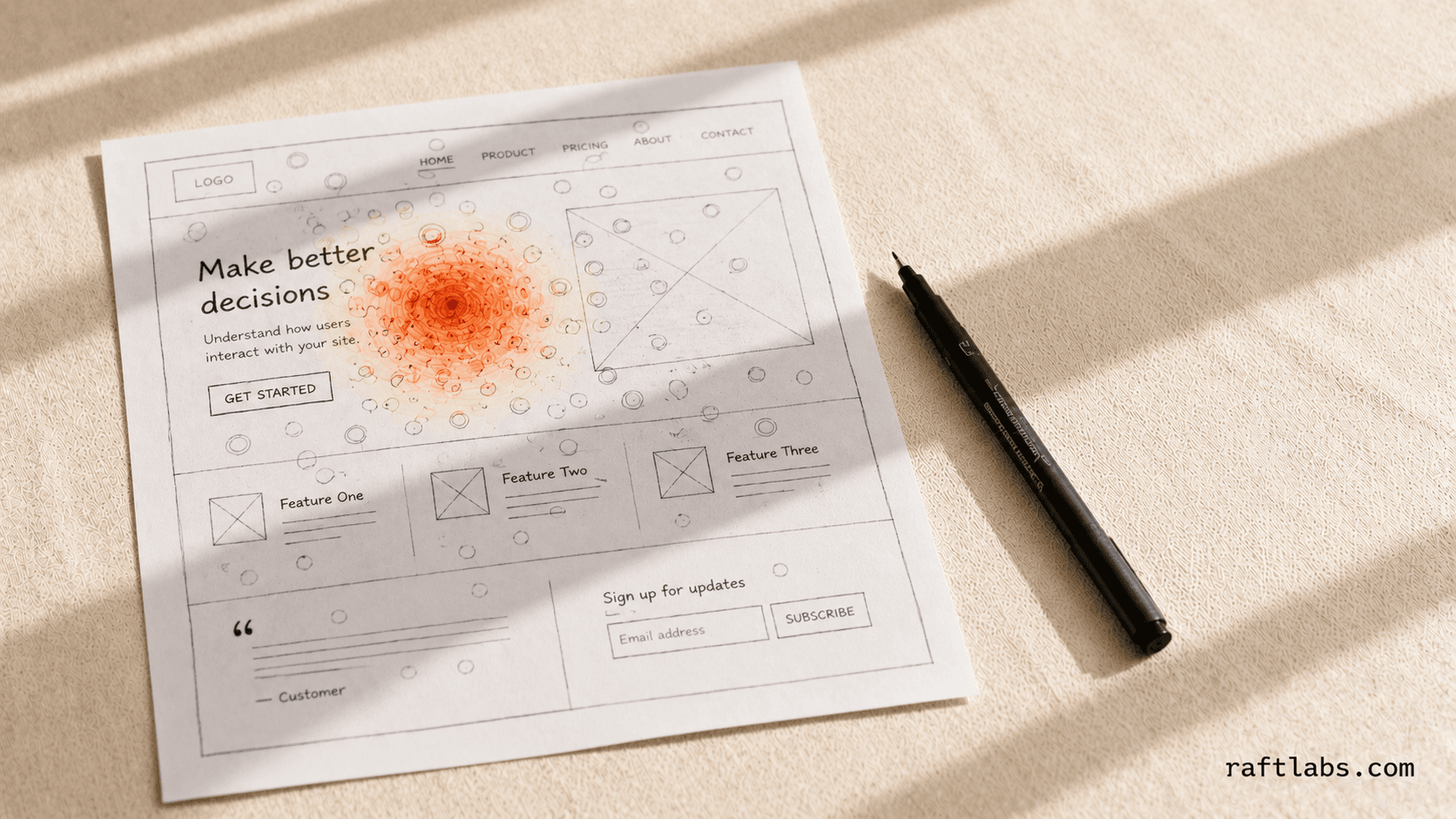
Neil Patel and Hiten Shah built the Crazy Egg landing page in 2006 before writing the core heatmap software. The page described the product in detail: it would show website owners exactly where visitors clicked, using a color-coded heatmap visualization layered over their pages. There was a sign-up form and a pricing page with three subscription tiers.
The landing page generated enough sign-ups and pre-sales to validate the concept and give the team confidence to build the actual product. Critically, it also revealed which pricing tier users were clicking most, which informed the product's monetization strategy before a line of visualization code was written.
By the time the product launched, Crazy Egg had a waiting list that almost justified the full development investment. The landing page had effectively pre-sold subscriptions.
Crazy Egg went on to become one of the most widely used website analytics tools in the world, with hundreds of thousands of customers across its heatmap, session recording, and A/B testing products.
The lesson: The pricing page is not a formality to add after the product is ready. It is a validation instrument. Users who click a specific pricing tier before the product exists are telling you exactly what they expect to pay. That data shapes every architectural decision that follows.
4.4. Product Hunt: a 20-minute MVP that launched a platform
Country: United States | Year: 2013 | Industry: Community and Product Discovery
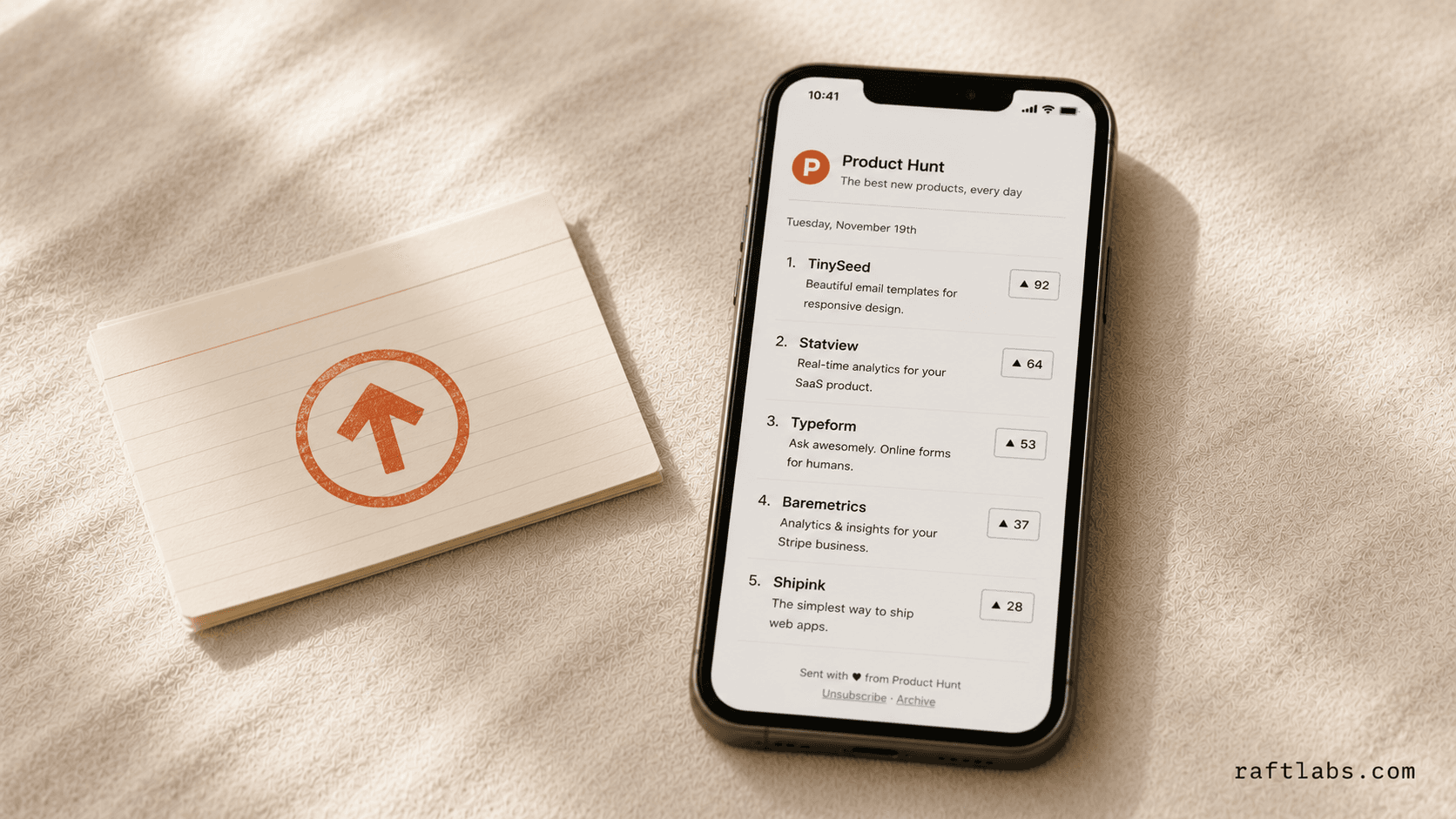
What the MVP was: An email digest created using Linkydink, an existing link-sharing tool, assembled within an hour by Ryan Hoover and shared with a handful of startup founders
Ryan Hoover, then Director of Product at gaming company PlayHaven, noticed that he was spending a lot of time finding and discussing new tech products with friends. There was no single place to discover what was launching in the startup world. Multiple destinations existed (Kickstarter, AngelList, App Store New Releases, TechCrunch), but nothing aggregated them.
One morning in November 2013, Hoover logged into Linkydink, a link-sharing tool built by a UK studio called Makeshift. Linkydink lets you create a collaborative group where contributors could share links, and a daily digest would be automatically emailed to all subscribers.
Hoover used no custom code, no database, no proprietary UI. He created a group called Product Hunt, invited a couple of startup founders and product people he knew, wrote a blog post about it, tweeted the link, and posted to the social platform Quibb.
Within an hour, the MVP existed. Within days, he had hundreds of subscribers. People were proactively reaching out to tell him how much they valued the daily email. That qualitative signal was enough to convince Hoover to build a real product.
The actual Product Hunt website was built by Hoover and engineer Nathan Bashaw over Thanksgiving break 2013. Product Hunt went through Y Combinator, raised $6.1 million in Series A in 2014, and was later acquired by AngelList.
The lesson: If you need custom code to get a clue on whether your idea will have any demand, you have not found the right MVP approach yet. Hoover validated a venture-backed platform with a third-party email tool and just an hour of his time.
4.5. Yelp: reviews via email before there was a platform
Country: United States | Year: 2004 | Industry: Local Business Discovery and Reviews
What the MVP was: An email-based local business recommendation service, where users could email a question (e.g., "Can anyone recommend a good dentist in the Mission?") and their local network would reply with recommendations

Jeremy Stoppelman and Russel Simmons founded Yelp in October 2004, backed by a $1 million investment from PayPal co-founder Max Levchin. The original concept was an email-based service for asking friends for local business recommendations. Users would send a question to Yelp, which would forward it to their network. Friends would reply with suitable recommendations.
The piecemeal aspect was deliberate: rather than building a full review platform from scratch, the founders used the email infrastructure that already existed and the social network users already had to simulate what a local recommendation product would do. The product assembled existing tools (email routing, address book integrations, basic web pages) to deliver the core value proposition.
What the team discovered in those early weeks was surprising: many users weren't using the email request feature at all. They were going directly to a simple section of the site and writing reviews unprompted, without anyone asking them to. That unsolicited behavior was the insight that shaped everything.
Yelp pivoted to focus on the review platform rather than the email recommendation request. The email MVP had revealed user behavior that the product plan had not anticipated.
By 2007, Yelp had nearly 1 million monthly visitors and 4+ million reviews. The company IPO'd in March 2012, raising a huge sum of $107 million.
The lesson: Your MVP will reveal user behavior you didn't plan for. The most valuable information from Yelp's email MVP wasn't confirmation that the hypothesis was right. It was the discovery of a different behavior that turned out to be the actual product.
4.6. GitHub: git hosting built in a weekend from existing parts
Country: United States | Year: 2008 | Industry: Developer Tools and B2B SaaS
What the MVP was: A basic web-based hosting service for git repositories, assembled by Tom Preston-Werner and Chris Wanstrath over a series of weekends using Ruby on Rails, the existing git protocol, and open-source tools already available
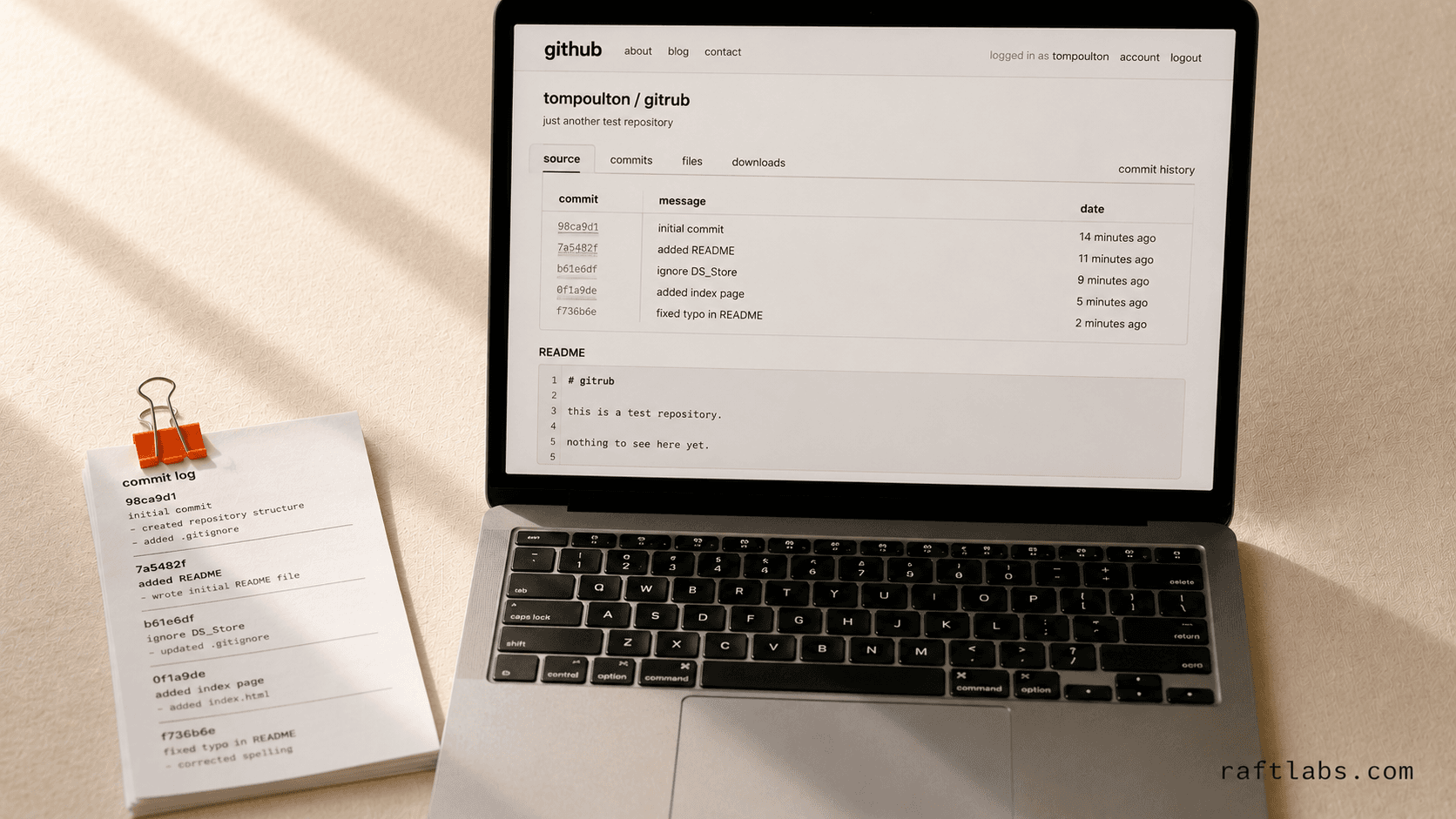
In 2007, version control for software projects was painful. Developers used git, but sharing code with collaborators required either maintaining their own server or relying on existing tools that were clunky. Tom Preston-Werner, a programmer in San Francisco, had an idea: a social hosting platform for git repositories that would make code sharing as easy as any other web service.
Preston-Werner pitched the idea to Chris Wanstrath, who was working at CNET. Neither of them built GitHub by inventing new infrastructure. They assembled existing pieces: the git protocol (already developed by Linus Torvalds), Ruby on Rails as the web framework, Amazon S3 for storage, and probably PostgreSQL for their database.
GitHub's first internal version was built in a series of weekend hacking sessions between 2007 and January 2008.
The MVP launched publicly in April 2008 with extremely limited features: create a repository, push code, view code in the browser, and fork another user's repository. No issues, no pull requests, no wikis, no GitHub Actions, no organizations or teams. Just a way to host and share git repositories without running your own server.
GitHub was bootstrapped with no outside investment for its first three years, growing purely on word of mouth within the developer community. By 2011, GitHub had 1 million repositories. In a surprising turn of events, Microsoft acquired GitHub for $7.5 billion in 2018.
Today it hosts over 420 million repositories and serves more than 100 million developers worldwide.
The lesson: The piecemeal approach is especially powerful in developer tooling, where the tools to build MVP infrastructure already exist and can be assembled faster than any custom build. Preston-Werner didn't need to invent git. He just needed to make it easier to share.
Ready to build your MVP? We scope and ship production-ready MVPs in 8 to 12 weeks at a fixed price. No guesswork on cost, no lock-in on the engagement. Let's scope your MVP
When an MVP fails: the cautionary tale of Color
Not every MVP validates a winning idea. Sometimes the product launches, real users engage with it, and the signal is clear: this does not work. The risk becomes much higher when a team raises significant funding, launches without validating the core mechanic first, and discovers the problem only after the product is in public hands.
Color launched on iOS in March 2011 as a proximity-based photo-sharing app that automatically connected users with others nearby. The idea was simple. Attend a concert or event, and Color would show photos taken by people around you in real time. The company raised over $40 million from investors, including Sequoia Capital and Bain Capital, before achieving meaningful user validation.
The product struggled almost immediately after launch. Early users found the experience confusing and often empty. The core issue was structural. A proximity-based network only works when enough users are in the same place at the same time. For most early users, opening the app showed little to no content. Reports suggested that while downloads were initially high, engagement dropped quickly in the months that followed. Color shut down in 2012 after failing to gain traction.
A few examples of MVPs we built
The 15 examples in this guide prove that the most important thing about an MVP is what you choose not to build. The same principle has shaped every product we have shipped. Here are two from our own portfolio.
1. Sponzee: creator-business marketplace, USA
Sponzee was a startup building a platform to connect content creators with brands for real-time content-driven collaborations. The founding team came to us at the idea stage with no prior product and a clear core hypothesis: that creators and brands would complete meaningful transactions through a structured matching workflow if the right platform existed.
The MVP required three interconnected surfaces to make the core transaction loop testable: a secure admin portal for platform management, an iOS and Android mobile app for creators and businesses, and a responsive web app for content discovery. We scoped each component to its minimum functional requirements and delivered all three within the agreed timeline.
The client's post-launch review was direct: launched in a reasonable amount of time with continuous improvement on UX and functionality. That is the expected output of a well-scoped MVP engagement, a working product in users' hands that is fast enough to generate a real iteration signal.
2. PSi: voice-based decision-making platform, EU
PSi is a real-time, anonymous voice platform that allows organisations to conduct large-scale participatory decision-making with their members and constituents. The co-founders came to us with a new concept and no existing product.
Their core hypothesis was that traditional methods of gathering input from employees and customers, such as meetings, surveys, and consultations, were too slow and too narrow, and that a voice-first, anonymous format would produce broader participation and faster consensus. PSi secured funding from MediaFutures EU, IDEO CoLab, and others to develop the platform.
The MVP scope was tightly defined around the core interaction loop: users join a session, participate in anonymous voice discussions at rotating tables, and vote on outcomes in real time. We built the platform using Next.js, Hasura, and PostgreSQL, with Agora powering the audio communication layer. A nine-person engineering team delivered the full build in 14 weeks.
One of the more technically demanding problems was the speed of splitting users into discussion tables at scale: what had taken five to ten seconds for groups of ten or more was reduced to under one second through code refactoring.
The platform went from concept to production with measurable results: compared to the traditional methods it replaced, PSi achieved 10x broader participant engagement, 98% reduction in session costs, and decisions reached 75% faster.
With these examples in mind, the focus now shifts to how you can structure your own MVP to get the same kind of clarity and results.
How to build your MVP
The 15 minimum viable product examples above reveal a consistent pattern. Every successful MVP followed the same underlying logic, even when the execution looked entirely different. Here are the six decisions that determine whether your MVP generates a useful signal or wastes six months.
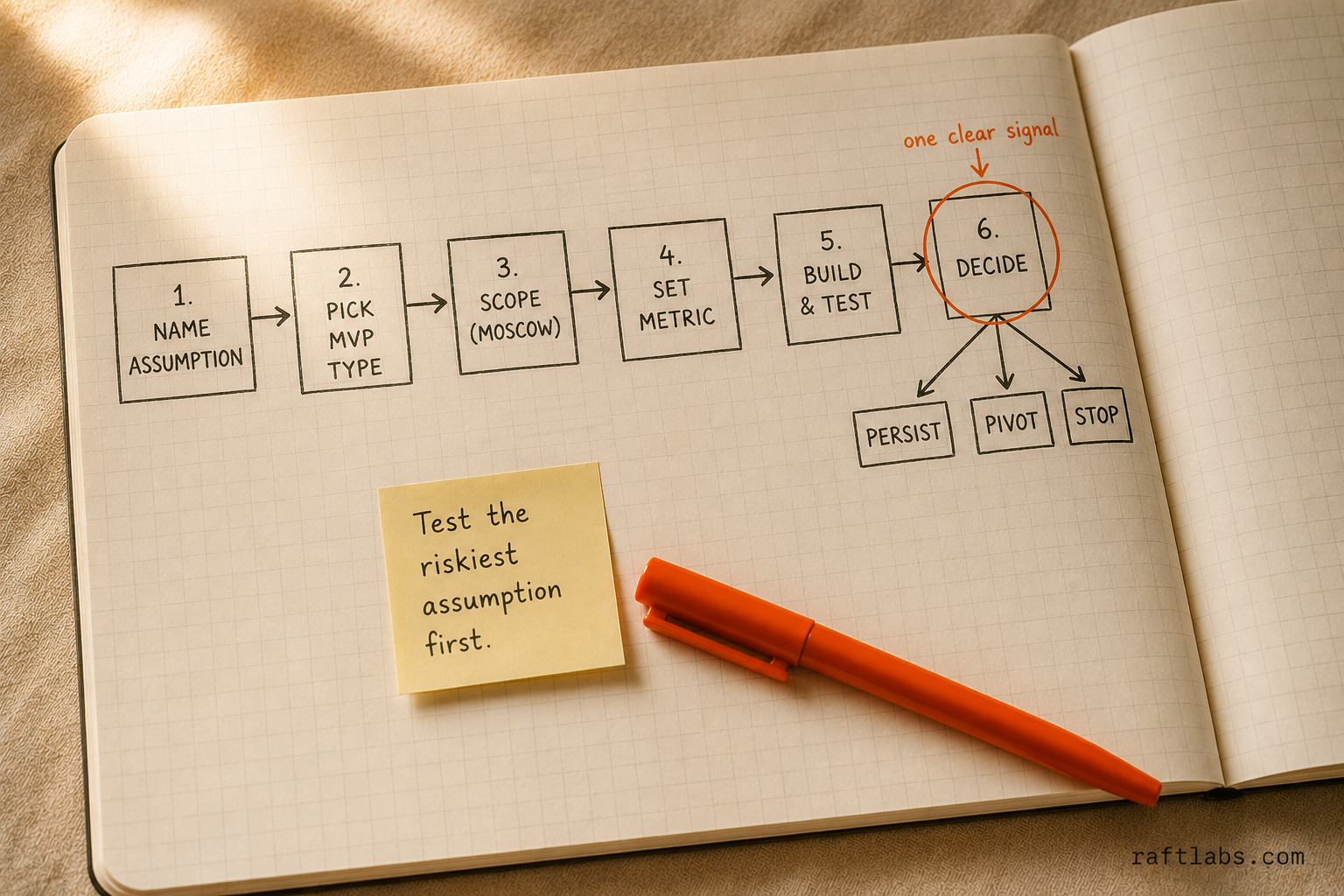
Step 1: Name your riskiest assumption
Every MVP tests one hypothesis. Write it as a falsifiable statement: "I believe [specific user] will [specific behavior] because [specific reason]." If you can't write it that concisely, you have not yet defined the scope of your MVP. The riskiest assumption is the one that, if wrong, often makes the entire product concept invalid.
Step 2: Choose the right MVP type for that assumption
Demand assumptions (will anyone want this?) are best tested with Landing Page or Piecemeal MVPs. Process assumptions (will users complete this workflow?) are best tested with Concierge or Wizard of Oz MVPs. Product experience assumptions (will users keep coming back?) require a Single Feature or SLC MVP. Match the type to the question, not to what looks impressive.
Step 3: Scope ruthlessly using the MoSCoW method
List everything your product could do. Split it into Must Have (the core workflow fails without this), Should Have (improves experience but product works without it), Could Have (nice if time allows), and Won't Have In This Version (explicitly deferred). Most founders include 3x more in the Must Have column than belongs there. The test: can a user complete the core task without this feature? If yes, it is not a Must Have.
Step 4: Define your success metric before you build
Decide before you launch what a successful MVP looks like in numbers. Choose one primary signal: activation rate, day-7 retention, number of paid conversions, orders placed, or emails collected. Metrics defined after launch are usually rationalized, not fairly decided.
Step 5: Build and test with real users fast
Build in two-week sprints. Launch to a cohort of 50 to 200 real users, not friends, not colleagues. Watch what they do, not what they say. Prioritize the critical path (does the core workflow function end to end?) over edge cases and polish.
Step 6: Decide: persist, pivot, or stop
Your launch data tells you one of three things. Signal is strong: scale. Signal is weak but the user segment might be wrong: pivot the positioning. If the core hypothesis is wrong: stop and start the process with a new hypothesis. The startups that survive aren't the ones that got it right immediately. They're the ones who got a clear signal fast enough to act on it.
How much does MVP development cost?
MVP development cost, like minimum viable product examples themselves, varies significantly based on what you're building, who's building it, and whether you're using no-code tools, offshore freelancers, or a professional digital product studio.
MVP development cost by complexity and scope
| Complexity Level | Description | Typical Cost Range | Timeline |
|---|---|---|---|
| No-Code / Low-Code MVP | Built using tools like Bubble or Webflow; single workflow, no custom backend | $5,000 to $15,000 | 2 to 4 weeks |
| Simple Web App MVP | One core workflow, user authentication, basic database, responsive UI | $10,000 to $20,000 | 6 to 10 weeks |
| B2B SaaS MVP | Multi-tenant architecture, admin dashboard, role-based access, billing integration | $20,000 to $35,000 | 10 to 14 weeks |
| Marketplace MVP | Two-sided platform, payments/escrow, matching logic, separate buyer and seller flows | $25,000 to $45,000 | 12 to 16 weeks |
| Mobile App MVP | React Native (iOS + Android), user authentication, core workflow, backend API | $25,000 to $50,000 | 10 to 16 weeks |
| AI-Powered MVP | LLM integration (OpenAI/Anthropic), core AI feature, standard web/app infrastructure | $25,000 to $55,000 | 10 to 16 weeks |
While complexity defines the base cost, industry-specific needs often push that cost higher or keep it relatively simple.
MVP development cost by industry
| Industry | Typical MVP Cost | Timeline | Example |
|---|---|---|---|
| Food & Delivery | $12,000 to $30,000 | 8 to 12 weeks | DoorDash's first real tech build was a basic ordering and dispatch layer built on top of their PDF-menu prototype |
| E-Commerce / Retail | $10,000 to $25,000 | 8 to 12 weeks | Zappos first version was a basic product listing site with manual fulfillment |
| Social / Community | $15,000 to $35,000 | 10 to 14 weeks | Product Hunt's first real website was built in one Thanksgiving weekend by two people |
| Productivity / SaaS Tools | $15,000 to $35,000 | 10 to 14 weeks | Buffer launched with Twitter-only access and a basic queue feature in 7 weeks |
| Location / Marketplace | $25,000 to $45,000 | 12 to 16 weeks | Foursquare's initial iPhone app, built by two people over a few months before SXSW 2009 |
| Communication / Collaboration | $20,000 to $40,000 | 10 to 14 weeks | Slack's first beta was hand-built by a small team over roughly six months |
| Developer Tools | $15,000 to $30,000 | 8 to 12 weeks | GitHub's first version was weekend hacks assembled from existing tools over three months |
| Healthcare / Medical | $25,000 to $60,000 | 12 to 20 weeks | Compliance requirements (HIPAA) add significant scope to even basic builds |
| Fintech / Payments | $30,000 to $70,000 | 14 to 20 weeks | Regulatory requirements and payment gateway complexity add substantially to scope |
| EdTech | $15,000 to $35,000 | 10 to 14 weeks | Most EdTech MVPs start with a basic course or content delivery workflow |
The cost tables above show what a well-scoped build should run. What they cannot show is the compounding cost of a custom build that cuts corners on architecture. An MVP written without a scalable data model, proper authentication, or documented API contracts does not just create rework. It creates a ceiling.
When you try to onboard your first enterprise customer, add a second user role, or integrate a payment provider, you hit that ceiling, and the options are patch and pray or rebuild from scratch. Either path costs more than building it correctly the first time.
To gain more clarity on a custom MVP cost and price optimization strategies, you can check our complete guide: How Much Does MVP Development Cost in 2026?
How to find MVP funding for startups
Building an MVP requires capital. The good news: multiple legitimate funding routes exist for early-stage startups in the US, UK, and Europe that do not require giving up equity, or require very little of it.

1. Bootstrapping
The cleanest form of startup funding. You build using personal savings, revenue from freelance or consulting work, or early customer pre-sales. Buffer's Joel Gascoigne probably committed to a 30-day sprint and launched before he ran out of personal runway. DoorDash launched on a university student budget.
Bootstrapping forces scope discipline that external funding tends to remove, which is often an advantage at the MVP stage rather than a constraint.
2. Friends, Family, and Angel Investors
The most common source of pre-seed capital for a first MVP. Angel investors in the US typically write small early-stage checks in exchange for equity or a convertible note. In the UK, the SEIS (Seed Enterprise Investment Scheme) gives angels meaningful tax relief on early-stage investments, making them substantially more willing to back unproven products.
In Europe, national angel networks in Germany (Business Angels Network Deutschland), France (France Angels), and across the EU serve similar functions and are worth approaching early.
3. Startup Accelerators and Incubators
Y Combinator (US), Techstars (US, UK, Europe), and Seedcamp (Europe) each offer a combination of capital, structured mentorship, and network access in exchange for a small equity stake. The terms, cheque sizes, and equity percentages vary by programme and change over time, so it is worth checking current terms directly on each accelerator's website.
Most expect at least a prototype or early MVP before admission, and the alumni credentials open subsequent fundraising conversations significantly faster.
4. Government Grants and Non-Dilutive Programmes
Real grant money exists for tech startups at an early stage, and none of it usually requires giving up equity. In the US, SBIR grants from the NSF are available to small startups conducting technical R&D. In the UK, Innovate UK runs several grant programmes targeting early-stage companies, and HMRC's R&D Tax Credits scheme allows qualifying startups to reclaim a portion of their development spend.
In Europe, the EIC Accelerator and EIC Pathfinder programmes fund startups at different stages of technical readiness. Eligibility criteria, funding amounts, and application windows change regularly across all of these, so checking the current programme details directly is essential before planning around any specific figure.
5. Crowdfunding
For consumer hardware or products with broad public appeal, Kickstarter and Indiegogo let you validate demand and often collect pre-orders simultaneously. Pebble used a Kickstarter campaign to prove demand before manufacturing a single watch.
The pre-order model provides real capital without dilution and a real market signal at the same time. For equity-based crowdfunding, UK platforms such as Seedrs and Crowdcube allow early-stage startups to raise funds from retail investors, often with a community-building effect that compounds into word-of-mouth growth.
6. Revenue-Based Financing and Startup Loans
The UK's Start Up Loans programme offers government-backed personal loans at a fixed interest rate with mentoring support included and no equity required. In the US, the SBA's loan programmes provide access to capital for small businesses, though documentation requirements can be higher for pre-revenue startups.
Revenue-based financing, offered by firms like Clearco and Capchase, is available once you have some recurring revenue and structures repayment as a percentage of future revenue rather than fixed monthly instalments, preserving cashflow during growth periods.
7. Trade Equity or Services
Some early-stage founders find development partners willing to accept a small equity stake in exchange for building an MVP at reduced or deferred cost. This works when the equity is genuinely meaningful to the partner and when incentives are clearly aligned from the start. The risk is finding the right partner.
Misaligned expectations on timelines, ownership, or the product's direction can stall a build more effectively than a lack of funding, so any equity-for-services arrangement needs a clear agreement in place before development begins.
Not sure what to build? Our discovery process helps you identify the riskiest assumption in your product and build only what tests it. Talk to us
Which MVP Type Is Right for You?
Across all the minimum viable product examples in this guide, the single most common mistake in early-stage product development is choosing an MVP type based on what sounds most impressive rather than what tests the right assumption. This decision framework maps your situation to the right approach.
| If your primary question is... | And your situation is... | The right MVP type is... | Why |
|---|---|---|---|
| Does anyone want this at all? | You have no users and no signal | Landing Page MVP | Cheapest and fastest way to measure demand without building anything |
| Will people pay for this? | You have interest but no paid validation | Landing Page MVP with Pricing | Adding a pricing click-through separates interest from purchase intent |
| Can I deliver this manually before I automate it? | Your product involves a service or workflow, not just software | Concierge MVP | Manual delivery generates qualitative insight no user survey can produce |
| Is this technically feasible before I build the full backend? | You have a novel technical hypothesis | Wizard of Oz MVP | Tests product-market fit under realistic conditions without backend investment |
| Will users return after the first session? | You have early demand signal and need retention data | Single Feature MVP | Retention data requires a functional product used over time, not just a signup |
| Can I validate this in days, not weeks? | You are a non-technical founder with limited time | Piecemeal MVP | Assembling existing tools avoids the development bottleneck entirely |
| Does this specific feature deserve the build investment? | You have an existing product and want to test a new feature | Fake Door MVP | A button that leads to a "coming soon" page measures click intent before dev |
| Is my UX intuitive enough to drive activation? | You have basic demand signal but activation is low | SLC MVP (Simple, Lovable, Complete) | Full-journey polish is needed when rough edges are causing users to leave |
| Do I have two-sided marketplace dynamics? | You have supply and demand sides to validate | Concierge or Wizard of Oz MVP | Manually matching supply and demand is cheaper than building both sides |
| Is my concept technically novel enough to warrant investment? | You have a novel algorithm, AI model, or technical approach not yet proven in your context | Proof of Concept (PoC) first, then MVP | Validate technical feasibility before building the product wrapper |
| Am I ready to test with a larger user base? | You have retention data and feature-market fit | Beta | Use this only after the core hypothesis is validated, not as a shortcut to skip MVP |
| Do I need hardware validation alongside software? | Your product involves physical hardware | Crowdfunding/Landing Page MVP | Confirming demand before committing to tooling and manufacturing is always cheaper than the reverse. |
How to use this table: Identify the primary question you need answered. Match it to a situation. Use the recommended MVP type. If more than one question applies, start with the cheapest type that answers your most fundamental question first, then layer in the next MVP type as you build confidence.
With the approach defined, execution becomes the deciding factor, and this is where most teams run into avoidable problems.
Common Mistakes in MVP Development
These are some of the most common mistakes that slow down MVP development or make the final product harder to use and scale.
1. Choosing the tech stack before defining the scope
Picking a framework or language before the feature list is confirmed is one of the most expensive early decisions a team can make. A stack chosen for theoretical scalability or because a developer is personally familiar with it often creates problems the moment the actual product requirements become clear. The right stack for an MVP is the one that gets your specific core workflow into production fastest, with the lowest long-term maintenance overhead. That answer varies by product type, not by preference.
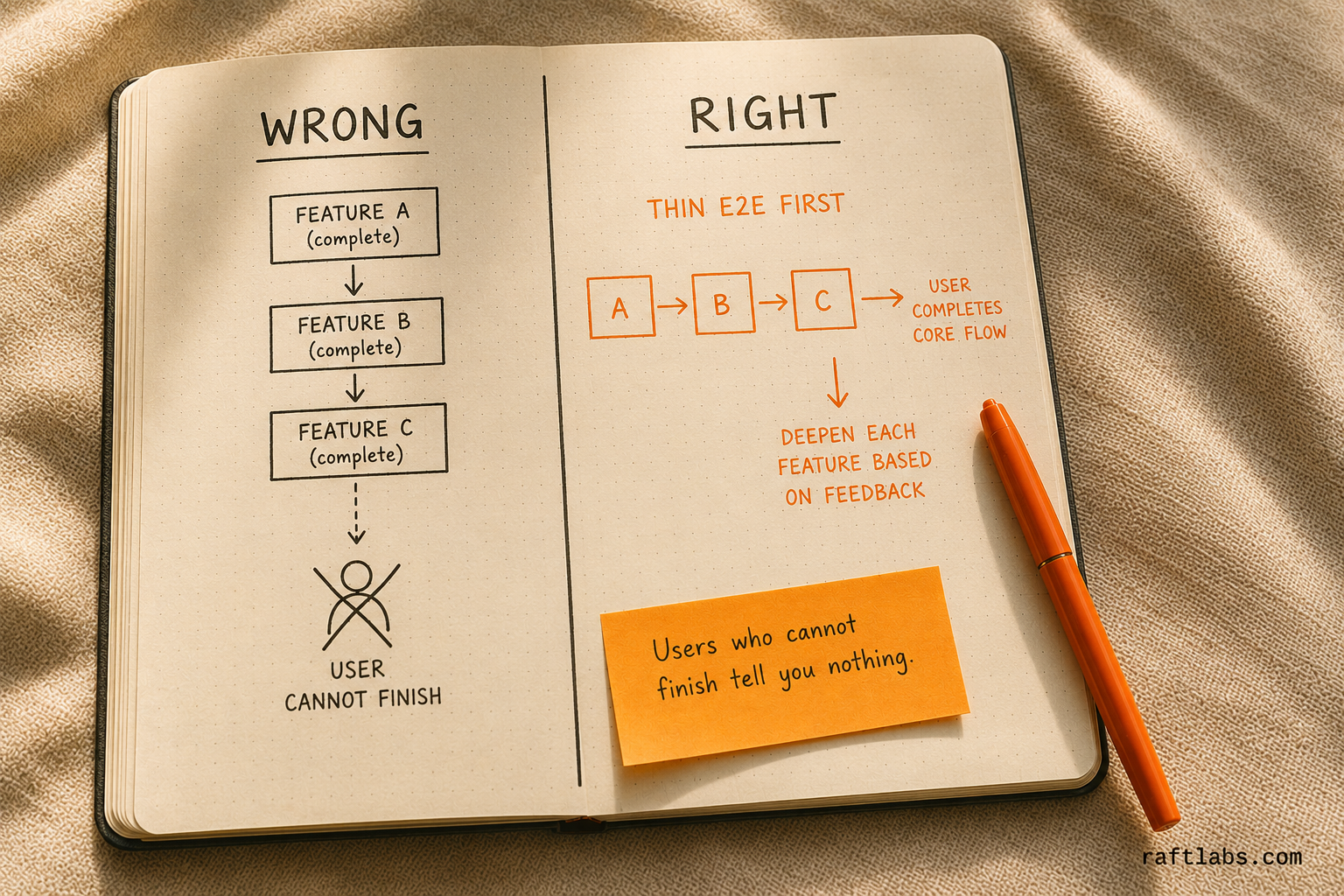
2. Building features in isolation instead of end-to-end first
The most common development pattern for inexperienced teams is to build one feature completely before starting the next. The problem is that an MVP needs a working end-to-end user journey above everything else. A user who can begin a flow but cannot complete it generates no useful feedback. Build the thinnest possible version of the entire journey first, then deepen individual features based on what real users actually struggle with.
3. Skipping wireframes and jumping straight to code
Two days spent on wireframes before development starts consistently saves two to three weeks of rework mid-sprint. When developers are the first people to define how a screen should behave, edge cases get missed, user flows get skipped, and the front end might get built around what is easy to code rather than what makes sense to use.
Wireframes do not need to be polished. They need to be agreed on before the first component is written.
4. Treating authentication as an afterthought
Authentication and user session management are treated as simple problems until they cause a security incident or a data leak that kills the product before it finds traction. Building auth properly from the start, including password reset flows, session expiry, and basic role separation, takes far less time at the beginning than patching it after launch.
For any product handling personal data, this is not optional, regardless of how early-stage the build is.
5. No staging environment
Shipping directly to production without a staging environment means every bug fix and every feature push is a live experiment on real users. A staging environment that mirrors production closely enough to catch real issues before deployment is a basic requirement, not a luxury reserved for later-stage products. Teams that skip it spend disproportionate time managing incidents that proper pre-production testing would have caught.
6. Neglecting error logging and monitoring from day one
When something breaks in production and there is no logging in place, the debugging process becomes guesswork. Setting up basic error tracking and application monitoring at launch, not after the first major incident, means you know when things go wrong, which users are affected, and what caused it.
Tools like Sentry or Datadog take hours to configure and save days of reactive firefighting.
7. Building the admin panel before the user-facing product
Admin dashboards, reporting tools, and internal management interfaces are almost always listed as requirements early in scoping conversations. They are rarely required for MVP launch. Users do not interact with the admin panel, and investors do not evaluate it.
The admin panel earns its build investment only after the user-facing product has validated demand. Building it first delays the thing that actually generates feedback.
8. Over-engineering the database schema upfront
Designing a database schema for every possible future use case before any users have touched the product leads to a structure that is complex to query, difficult to migrate later, and almost never aligned with what the product actually becomes. Start with a schema that supports the current core workflow cleanly. Normalise and extend it as usage patterns reveal what the data actually needs to do.
9. No API documentation between front end and back end
On any MVP where the front end and back end are being built simultaneously by different people, the absence of a clear API contract is a coordination failure waiting to happen. Front-end developers end up building against assumptions that back-end developers did not make, and the integration phase becomes a long negotiation rather than a short handoff. Even a basic shared document defining endpoints, expected inputs, and response shapes prevents the majority of these conflicts.
10. Launching without a rollback plan
Most MVP teams plan carefully for launch day, but not at all for what happens if something critical breaks in the first 48 hours. A rollback plan does not need to be complex. It needs to exist before the first user hits the product. Knowing which version to revert to, how long a revert takes, and who makes the call to do it is basic operational readiness that most early-stage teams skip and some pay for with their early user retention.
Avoiding these mistakes keeps your MVP on track, but choosing the right team determines how smoothly you get there.
What to check before hiring an MVP development partner
Founders come to us when they've calculated the cost of the alternatives. Two full-time senior developers can cost $150,000+ per year each, with a two-to-three-month hiring timeline.
A cheap offshore agency can cost less than $15,000 upfront, but the product might need an additional $30,000 in rework. Neither of those is a great deal.
We build production-ready MVPs at fixed prices, in defined timelines, with a team that has shipped 50+ products in the exact categories most early-stage startups are building.
Every engagement is scoped and priced before a sprint begins. You know the cost before development starts, not after. We know what 8 weeks can hold and what it cannot. If your scope is too large for your timeline, we tell you before we start, not at week nine.
There is no throwaway MVP code at RaftLabs. The architecture is designed to carry you to 100,000 users without a rebuild. You can bring the codebase in-house, show it to investors, or onboard enterprise customers the day after launch. Full codebase ownership, database schema, and AWS infrastructure are yours on day one. Not an add-on to negotiate.
Each project includes a product designer, two to three engineers, and a project lead. No hunting for designers to pair with developers. No handoff delays between agencies.
We have shipped products in your category. TuneClub (music creator monetization platform), Sponzee (creator-business matching marketplace), urShipper (Shopify logistics integration for Indonesia), and Draftly (AI LinkedIn writing assistant) are production products we took from zero. We know where the complexity hides in each category before you discover it at 3 AM.
Sprint-based retainers mean the same team that built your product continues iterating as user feedback comes in, without forcing you to onboard a new team mid-product.
Conclusion
The 15 minimum viable product examples in this guide share a single underlying principle: every one of them tested a specific assumption with the minimum investment required to generate a clear answer.
Twitter's SMS prototype answered whether anyone would use a real-time status broadcast tool. DoorDash's PDF website answered whether local restaurants could build a delivery business. Zappos's photographed shoes answered whether people would buy footwear online. None of them had a full product on day one. All of them had a clear hypothesis and a way to test it.
The pattern is simple once you see it. Start small, test what matters most, and let real user behavior guide what comes next.
If you're ready to move from examples of minimum viable products to building your own, RaftLabs delivers production-ready builds in 8 to 12 weeks (even 6) at fixed prices starting at $8,000.
We've shipped 50+ products for founders at exactly this stage. Begin your MVP journey with us today.
Ask an AI
Get an instant summary of this post from your preferred AI assistant.
Frequently asked questions
- A strong MVP focuses on testing one clear idea with real users and tracks what they actually do. It works reliably within its limited scope and gives clear feedback. A weak MVP either tries to do too many things at once or is too broken to use properly. In that case, the data you get is confusing and not useful. The real test is simple. Can users complete the main action and do they come back again?
- A prototype is mainly for design validation. It helps you check if users understand the flow or interface, often in a controlled setup and sometimes without real functionality. An MVP is a working product used by real users. It runs in a live environment and helps you learn from actual usage over time.
- The common pattern is clear. Founders test the most critical assumption first and keep the effort small. They do not build everything upfront. They first check if users actually want the core value. Once that is proven, they expand. This step-by-step approach reduces risk and saves time.
- If you are just starting and do not have technical skills, simple approaches work best. A landing page or using existing tools to simulate the product can be enough to test demand. These can be set up quickly and help you understand if people are interested before spending on development.
- Only include what is needed for the main user journey to work from start to finish. Think about the key action your user needs to complete and build only what supports that. Anything extra can wait. Many early products become slow because they include features that are not needed yet.