Short answer
RaftLabs built TuneClub, a phygital music learning platform for Irish musicians, that connects digital practice to real-world performance through structured learning pathways, recording submission and creator review, built-in practice tools (metronome, pitch/speed control), and community channels. The platform logged 200+ practice sessions and 120+ creator feedback reviews in the first 60 days, with approximately 100 active learners. TuneClub uses Flutter for the mobile app, Mux for adaptive video streaming, and AWS Lambda for serverless media processing. Delivered in 12 weeks, the platform was built for TuneClub founder Gabe Moynagh, former CEO of a cybersecurity firm and Irish fiddle player.
Gabe Moynagh had been playing Irish fiddle for years and running a cybersecurity company for just as long. When he set out to build a music learning platform, he was not looking for another practice app.
The problem with every existing platform was the same: they stopped at practice. Learners watched tutorials, ran through exercises, and improved in isolation. Nobody was connected to the broader community of musicians they were part of. There was no structured path to a stage. Practice had no stakes.
Gabe's vision for TuneClub was different. He wanted the loop to close: practice with purpose, submit a recording, get real feedback from a creator, and earn your way to a live event (a workshop, a festival session, a recital). Digital preparation tied directly to physical performance.
A previous agency had taken a first pass at the UX and Gabe was not satisfied. He came to us for the build.
We delivered TuneClub in 12 weeks. In the first 60 days, learners completed 200+ practice sessions and creators submitted 120+ feedback reviews. Around 100 learners engaged with structured pathways, with 45 converting to paid users within that window.
before & after
What changed
- No platform connected digital music practice to real-world performance events
- Learners practiced in isolation with no structured path to improvement or performance
- No way for creators (instructors, community leaders) to review learner submissions and give structured feedback
- The product existed only as design mockups with unclear creator and admin roles
- Practice had no stakes: there was nothing to work toward beyond the practice session itself
- Media playback tools for musicians (metronome, pitch control, speed adjustment) were not integrated into any learning platform
- Structured learning pathways connect practice sessions to enrollment in real events and performances
- Learners submit recordings for creator review within the same app where they practice
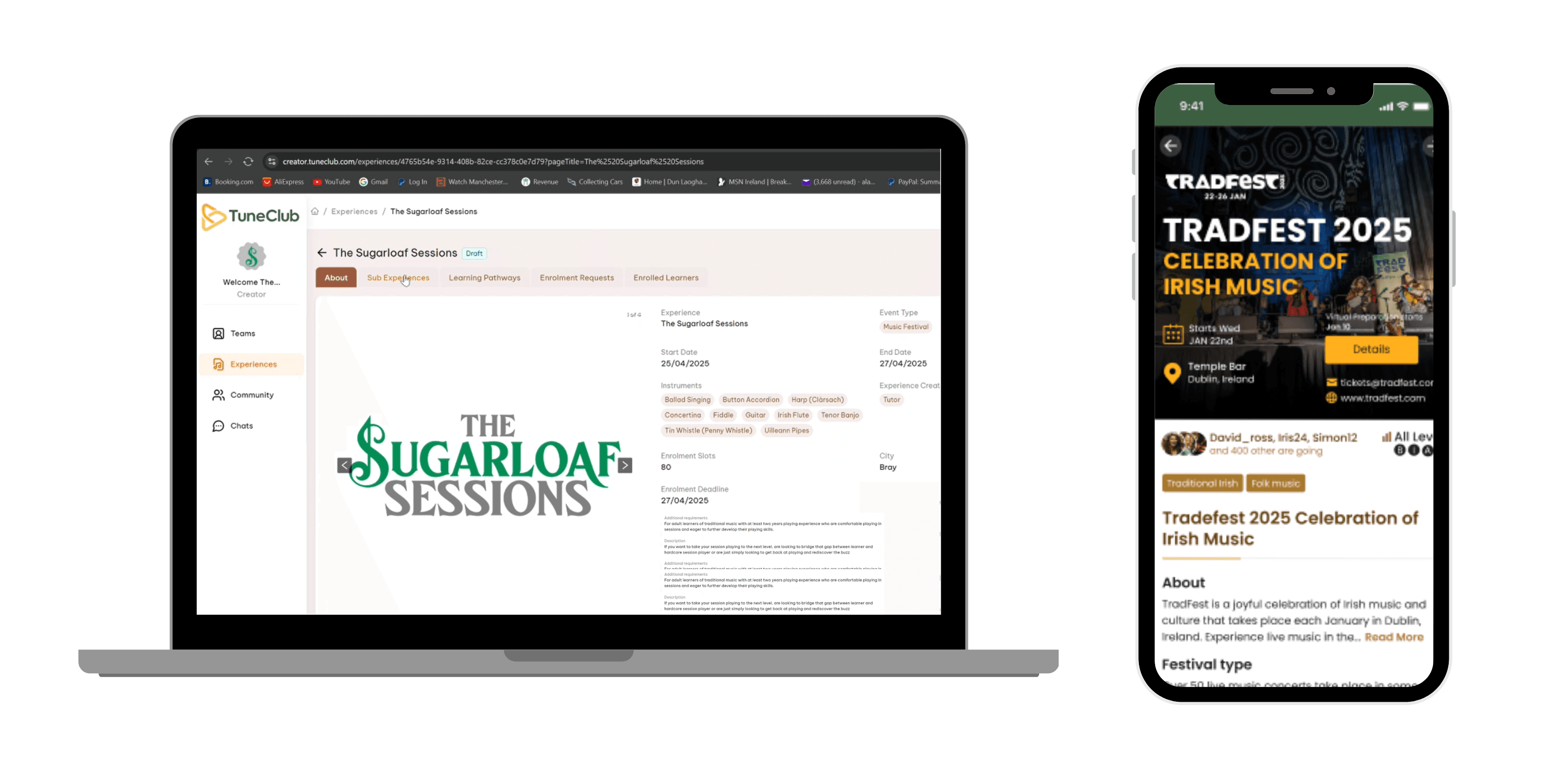
- Creators review submissions, provide feedback, and manage their learner community from a web portal
- Built-in practice tools (metronome, pitch and speed control, recording, clipping) are integrated directly into the learning flow
- Community channels keep learners and creators connected between formal submissions
- Learners track their progress through defined milestones and see their path to the next performance
What we had to solve
- 01
Keeping audio tools reliable during active practice across iOS and Android
Pitch adjustment, speed control, and real-time recording are computationally heavier than standard video playback. The challenge was keeping those tools responsive on a wide range of devices without draining the battery or causing audio glitches mid-session, the kind of failure that breaks concentration and frustrates a musician mid-practice. We built a media abstraction layer in the Flutter app that hid platform-specific playback details, allowing consistent tool behaviour across iOS and Android. Mux handled adaptive video streaming, thumbnails, and captions so we could focus engineering effort on the practice tools themselves rather than media infrastructure.
- 02
Designing a creator review workflow that instructors would actually use
Creators are musicians and community leaders, not software users by training. The submission review workflow had to be fast enough that reviewing a learner's recording did not feel like a second job. We designed the web portal so creators could open a submission, watch the recording, leave timestamped feedback, and move to the next submission without friction. Approval states, team role assignments, and custom feedback questions were all built into the portal, but the interface had to make the daily review task feel light, not administrative.
outcomes
What we achieved
No platform closed the loop from digital practice to real-world performance, leaving musicians practicing without structure or a clear destination.
The product existed only as design mockups. There was no working platform, no defined creator roles, and no way to move a learner from their first session toward a live performance.
Creators had no tools to review learner submissions or manage their community efficiently. Without a feedback loop, learners had no way to know if they were improving.
What clients say
What Our Client Says About Us
Three-year average engagement. Founders and operators describing the work in their own words. No marketing varnish.
 Ireland
RaftLabs excelled in contemporary UI and delivered better high-fidelity wireframes. The team is culturally very strong, and they take a lot of pride in the quality of their work.
You have a vision for a learning platform but no clear path from idea to working product?
the build
What we built
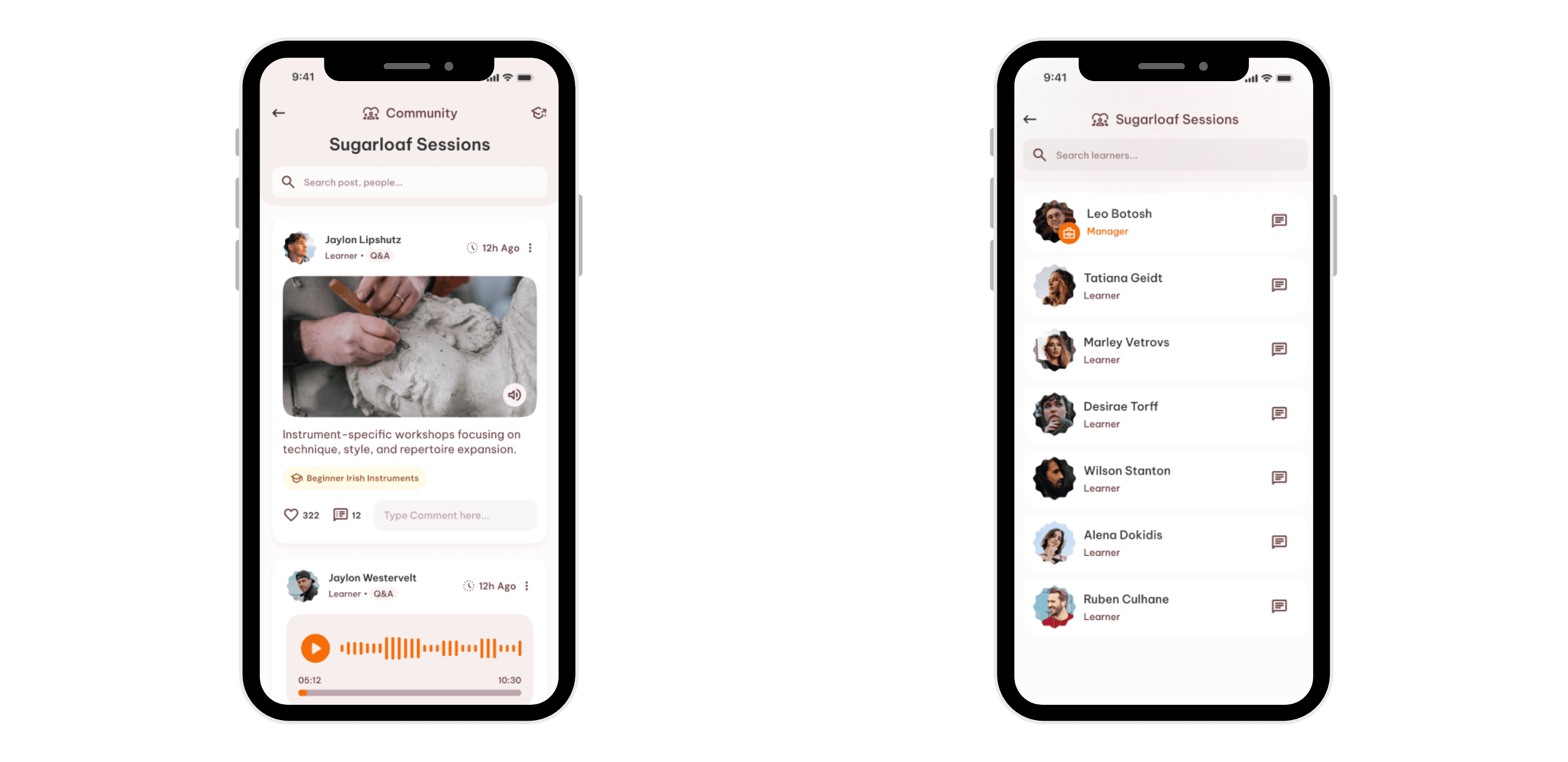
The platform follows a single loop: practice with purpose, submit a recording, get feedback from a creator, and advance toward a real performance. Every feature supports one of those four stages.
Learners practice toward a real event, not an open-ended goal
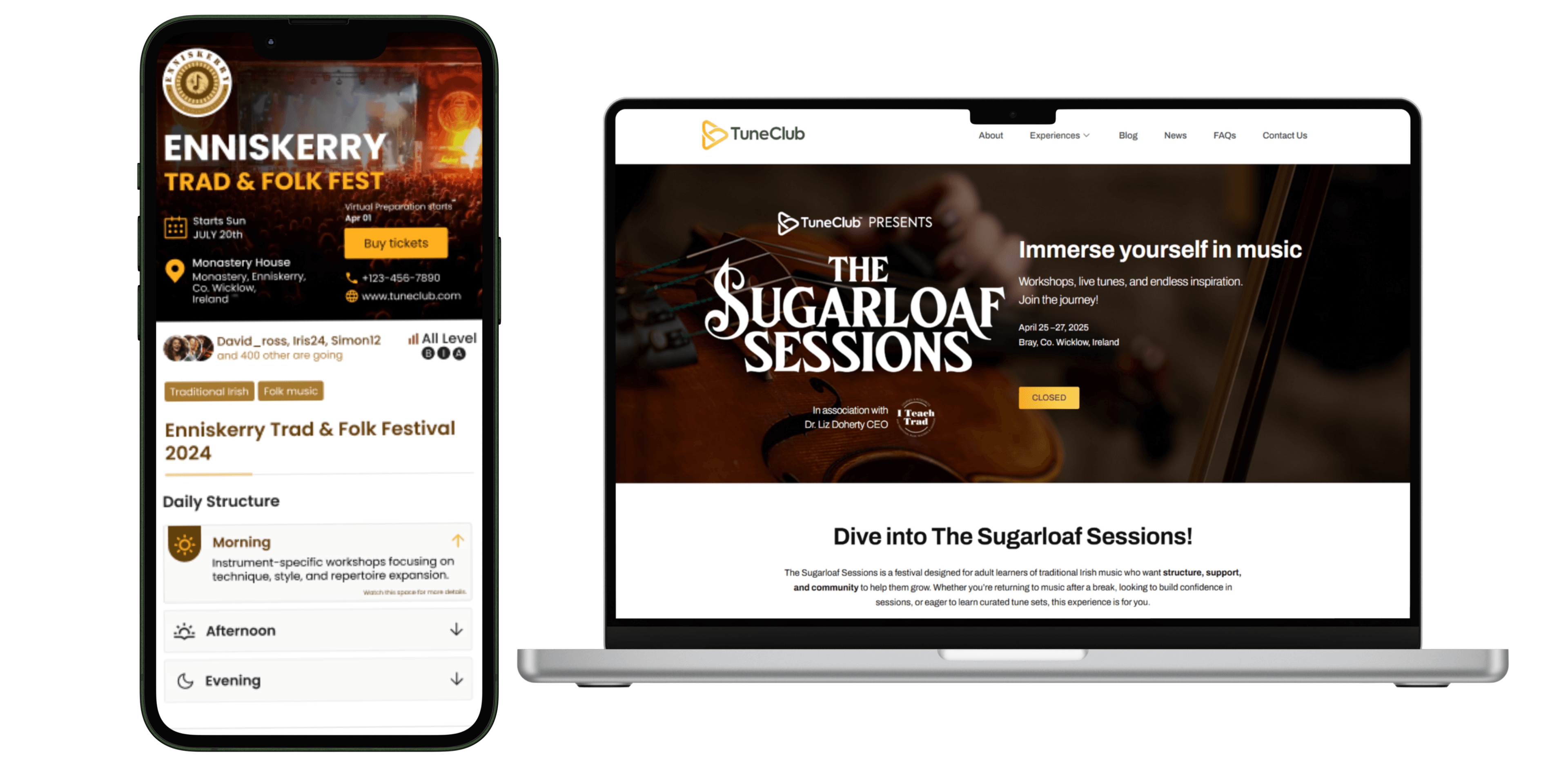
Content follows a clear hierarchy: Experience, Sub-experience, Learning Pathway, Modules, and Tracks or Challenges. Creators optionally attach real dates and locations to experiences (workshops, festivals, jam sessions). Learners practice within the structured content knowing there is a live event they are working toward, making each session deliberate rather than open-ended.
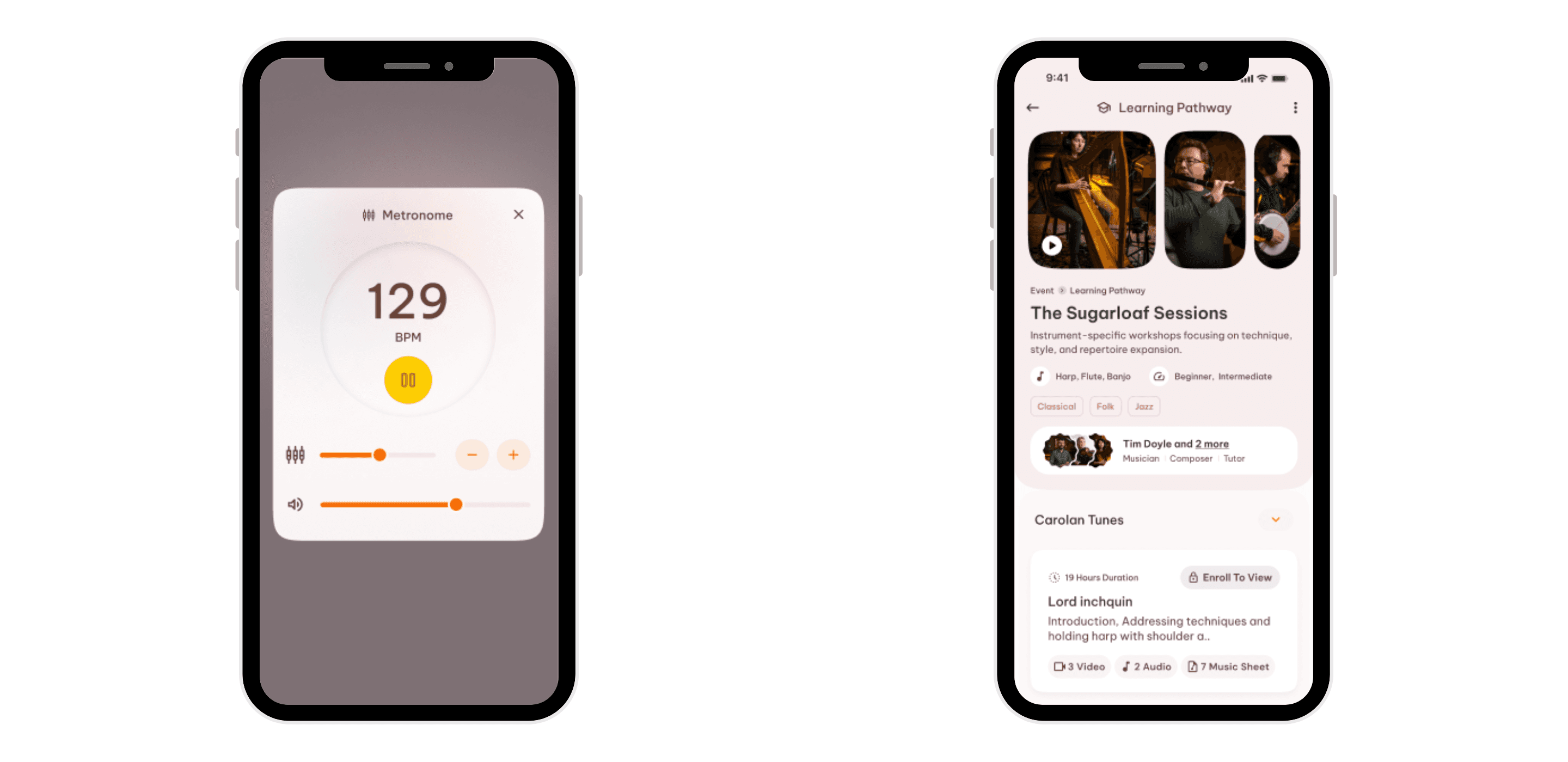
Difficult passages slowed down, transposed, looped, without leaving the lesson
During playback, learners have access to a metronome, pitch and speed control, track clipping, personal notes, and in-app recording. These tools are designed for musicians who want to slow down a difficult passage, transpose to a different key, or loop a specific section without leaving the learning flow. Recordings and notes stay linked to the track they were created on.
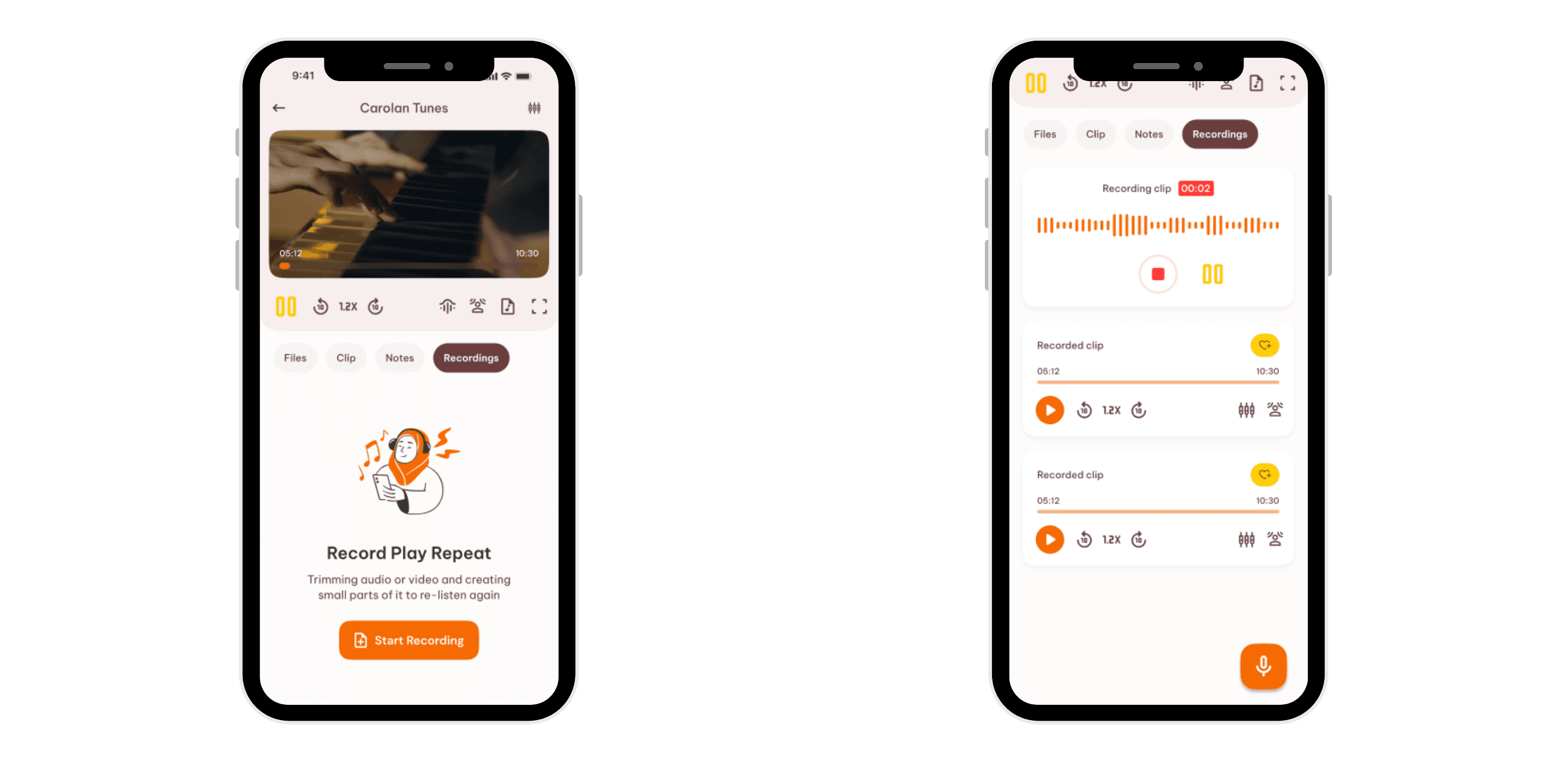
Learners get creator feedback before they advance, all in one place
Learners record practice sessions and submit them for review. Creators receive submissions in their web portal, watch the recording, and provide structured feedback before approving the learner to progress. Custom feedback questions configured by the creator guide what they are looking for in each submission. The loop (practice, submit, review, approve) runs entirely within the platform.
Learners choose which updates reach them; creators reach the right ones
Each experience includes community channels (All, General, Q&A, and pathway-specific feeds) where learners and creators share updates, ask questions, and react to posts. Creators send targeted notifications tied to specific experiences for announcements, deadlines, and new content. Learners control which notifications they receive by category.
Engagement
How we worked together
- 01Weeks 1–2
Discovery and scoping
We map the problem before writing code. Two weeks of technical audit, stakeholder interviews, and prototype, so both teams align on scope and risk before sprint one. - 02Ongoing
Two-week Agile sprints
Each sprint ends with working software, not a status update. You review a real build, request changes, and approve before we move forward. No surprises at handover. - 03Ongoing
Daily async updates
Slack for daily progress, Asana for task visibility, weekly video calls for decisions. You have full visibility without needing to attend every meeting. - 04Final
Handover and warranty
Full code handover with deployment runbooks and documentation. Thirty-day warranty period for production issues at no extra cost.
stack
Why we chose this stack
- 01FlutterThe learner app needed native-level performance for audio tools (pitch control, speed adjustment, real-time recording) on both iOS and Android from a single codebase. Flutter compiles to native code and delivered the audio responsiveness these practice tools required without the overhead of two separate native builds.
- 02MuxLesson videos and learner submission recordings needed adaptive streaming, automatic thumbnails, and captions without building custom media infrastructure. Mux provided all three out of the box and reduced battery drain during playback, which is critical for musicians practicing for extended sessions.
- 03AWS LambdaSubmission processing, notification delivery, and media event handling all run on Lambda. Serverless processing means the platform handles spikes in submission activity (after an event deadline, for example) without provisioning capacity in advance.
- 04Hasura GraphQLThe creator dashboard needed to show new learner submissions and feedback status in real time as they arrived. Hasura's GraphQL subscriptions pushed updates to the web portal live without requiring the creator to refresh the page.
FAQs
A standard LMS delivers content and tracks completion. A phygital platform connects digital learning to physical outcomes: in TuneClub's case, real performance events. Learners do not just watch lessons; they practice with intent, submit recordings to a creator for review, and work toward a workshop or live session. The digital preparation has a physical destination, which changes how seriously learners engage with the practice itself.
The core challenge was pitch and speed control during playback, which involves heavier audio processing than standard video streaming. We built a media abstraction layer in Flutter that hid the platform-specific implementation from the rest of the app. When the underlying audio library changed, the practice tools continued working without code changes in the feature layer. We chose Mux for video delivery because it provided adaptive streaming and battery-efficient playback out of the box, so we could focus engineering time on the musician-specific tools rather than rebuilding media infrastructure from scratch.
Creators log into a React web portal and see a queue of learner submissions. They open a submission, watch the recording, and leave feedback, including timestamped notes if they want to point to a specific moment. Custom feedback questions configured per pathway guide the review. Creators approve or request a re-submission. The learner sees the feedback and the decision in their mobile app immediately. The entire review flow was designed to take under five minutes per submission, so creators could review a batch without it consuming their working day.
We delivered TuneClub (Flutter mobile app, React web portal for creators and admins, Mux media integration, AWS Lambda serverless backend, and Hasura GraphQL API) in 12 weeks. That timeline was possible because we started with a focused core loop (practice, submit, feedback, perform) and built features that supported it rather than building everything at once. Platforms with more complex media types, multiple content tiers, or extensive third-party integrations would require a longer timeline.
Yes. The architecture (structured pathways, submission and review loop, creator web portal, community channels, real-world event integration) applies to any skill-based learning community where a practitioner submits work for expert review and aims toward a real-world outcome. Art, culinary skills, craft, martial arts, and vocational training follow the same loop. The specific tools (metronome, pitch control) are music-specific, but the platform pattern transfers.
Related work
More work like this

ULT Movies reaches 4,000 remote theaters with custom OTT app
Read case study
PSi reaches consensus 75% faster by replacing slow in-person sessions with anonymous real-time voice discussions for 300+ users
Read case study