How Much Does Your Healthcare App Development Cost? Everything You Need To Know

Short answer
Healthcare app development costs $25,000-$160,000 depending on app type and compliance requirements. RaftLabs built a HIPAA-compliant telehealth platform that onboarded 50+ clinics in 12 weeks and cut in-person visits by 60%. A telemedicine MVP starts at $40,000. A full remote patient monitoring platform with EHR integration runs $90,000-$160,000.
Key Takeaways
- HIPAA compliance adds 20-30% to any healthcare app budget through audit logging, encryption architecture, and access controls. It's not a checkbox at the end.
- Telemedicine apps cost more than other healthcare app types because video streaming, EHR integration, and multi-provider workflows each carry separate engineering complexity.
- Starting with an MVP reduces upfront spend but only works if you lock the core workflow before kickoff. Scope changes during sprint one are the top cause of budget overruns.
- Device integration with wearables like CGMs and blood pressure monitors adds 30-50% more testing time than standard app features, due to firmware variability across device manufacturers.
- Custom healthcare software costs more upfront than off-the-shelf tools but reduces long-term spend by cutting dependency on multiple platforms with incompatible data models.
Healthcare app development costs $25,000 to $160,000. The spread is driven by compliance requirements and integration depth, not vendor margins.
A basic telemedicine MVP sits at the low end. A HIPAA-compliant platform with EHR integration, real-time patient data, and multi-provider workflows sits at the high end.
Healthcare app development covers a wide range of products: medication reminders, remote patient monitoring, virtual therapy, and appointment booking. Each type carries a different regulatory footprint, which is the primary cost driver.
This article is for healthcare professionals evaluating a software build, HealthTech founders targeting a specific clinical problem, and organizations looking to improve patient care or data security.
Why digital investment in healthcare keeps growing
A McKinsey survey of 200 global health system executives found that 72% of executives who invested in digital priorities expressed satisfaction across all investment areas. Digital health is not a trend. It's an operating decision.
According to Grand View Research, the global digital health market was valued at $330 billion in 2023 and is projected to grow at 21.9% annually through 2030. That growth is driven by payer mandates, patient demand for remote access, and regulatory pressure to digitize records.
Understanding what drives your specific app's cost is essential before you commit budget.
Factors that drive healthcare software development cost
1. Type of healthcare app
The app type sets your baseline. A medication reminder app carries minimal regulatory overhead. A HIPAA-compliant remote patient monitoring platform with device integrations does not.
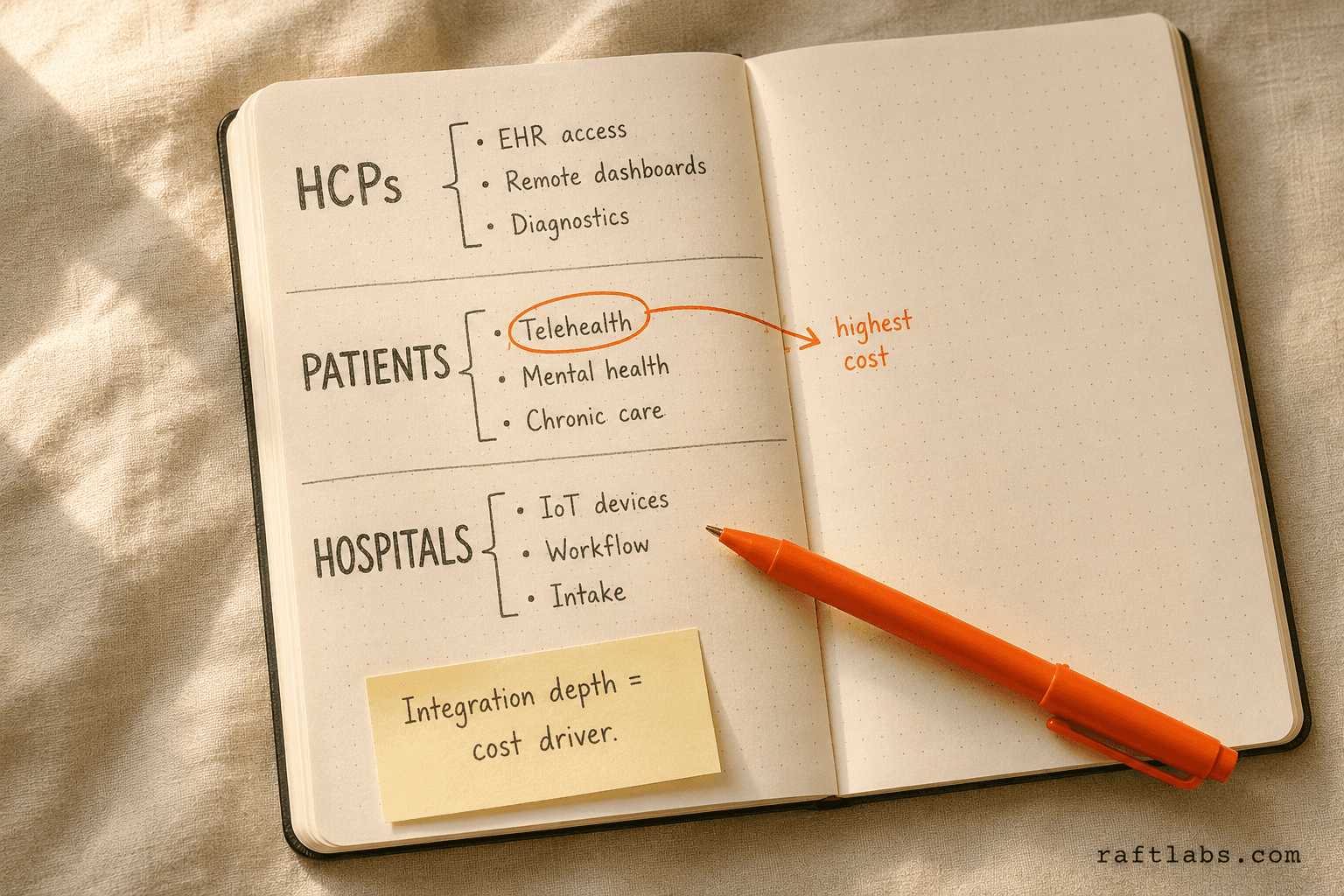
Healthcare apps fall into three categories:
Apps for healthcare professionals (HCPs):
EHR access apps
Remote monitoring dashboards
Diagnostic support tools
Appointment scheduling and billing
Apps for patients:
Telehealth and virtual consultations
Mental health support tools
Chronic disease tracking
Fitness and wellness monitoring
Apps for hospitals and health systems:
IoT medical device integration
Clinical workflow management
Patient intake and triage
Each category carries a different integration requirement and security footprint.
2. Features and functionality
Features are where budgets balloon. Basic user authentication costs far less than multi-factor authentication with role-based access tied to a clinical directory.
Key features that affect cost most:
Video consultation: Requires reliable streaming infrastructure, HIPAA-compliant session recording, and redundant failover. This alone adds $15,000-$40,000 to a telemedicine build.
EHR integration: Connecting to Epic, Cerner, or Allscripts requires HL7 FHIR compliance work and custom API mapping. Budget $10,000-$30,000 per integration.
Device connectivity: Pulling data from CGMs, BPMs, or pulse oximeters requires BLE or API integration plus firmware testing across device manufacturers. This typically adds 30-50% more testing time.
3. Platform choice
Building for iOS only is less expensive than building for both iOS and Android. Cross-platform frameworks like React Native reduce that gap but add their own testing complexity in healthcare contexts, particularly for device Bluetooth integration.
4. Build approach: custom vs. off-the-shelf
Off-the-shelf tools cost less to start. The problem surfaces at month six, when your workflow doesn't match the software's assumptions.
Custom development gives you control over compliance architecture, data models, and clinical workflow. It costs more upfront (typically 2-3x) but reduces total cost of ownership over a 3-5 year horizon. If you're building a platform for multiple health systems or practices, healthcare SaaS development brings additional scope in multi-tenant architecture and subscription management.
Cost breakdown by healthcare app type
Telemedicine app development cost
Telemedicine apps have the highest per-feature cost in healthcare. Video streaming, EHR integration, provider scheduling, and HIPAA-compliant session storage each add significant complexity.
Cost range: $40,000-$160,000
Start with an MVP: basic video consultation, provider availability, and secure messaging. Add prescription management and EHR integration in a second phase.
Fitness and wellness apps
These apps focus on general health rather than clinical data. They typically don't require HIPAA compliance unless they collect and share health data with providers.
Cost range: $15,000-$80,000
The lower cost reflects simpler regulatory overhead and no EHR integration requirement.
Chronic disease management apps
These apps monitor conditions like diabetes or hypertension and often require device integration for glucose meters or blood pressure monitors.
Cost range: $25,000-$160,000
The wide range reflects device complexity. An app that reads from one CGM model is fundamentally different from a platform that supports ten device types with clinical-grade alert logic.
Appointment scheduling apps
Simpler than clinical apps. Core features: real-time calendar availability, automated reminders, and patient notifications.
Cost range: $10,000-$65,000
Health records and EMR apps
These apps require HIPAA compliance by default and often need HL7 FHIR integration with existing hospital systems.
Cost range: $25,000-$150,000+
What HIPAA compliance actually costs
HIPAA is non-negotiable for any app handling protected health information. It adds 20-30% to your development budget through several specific requirements:
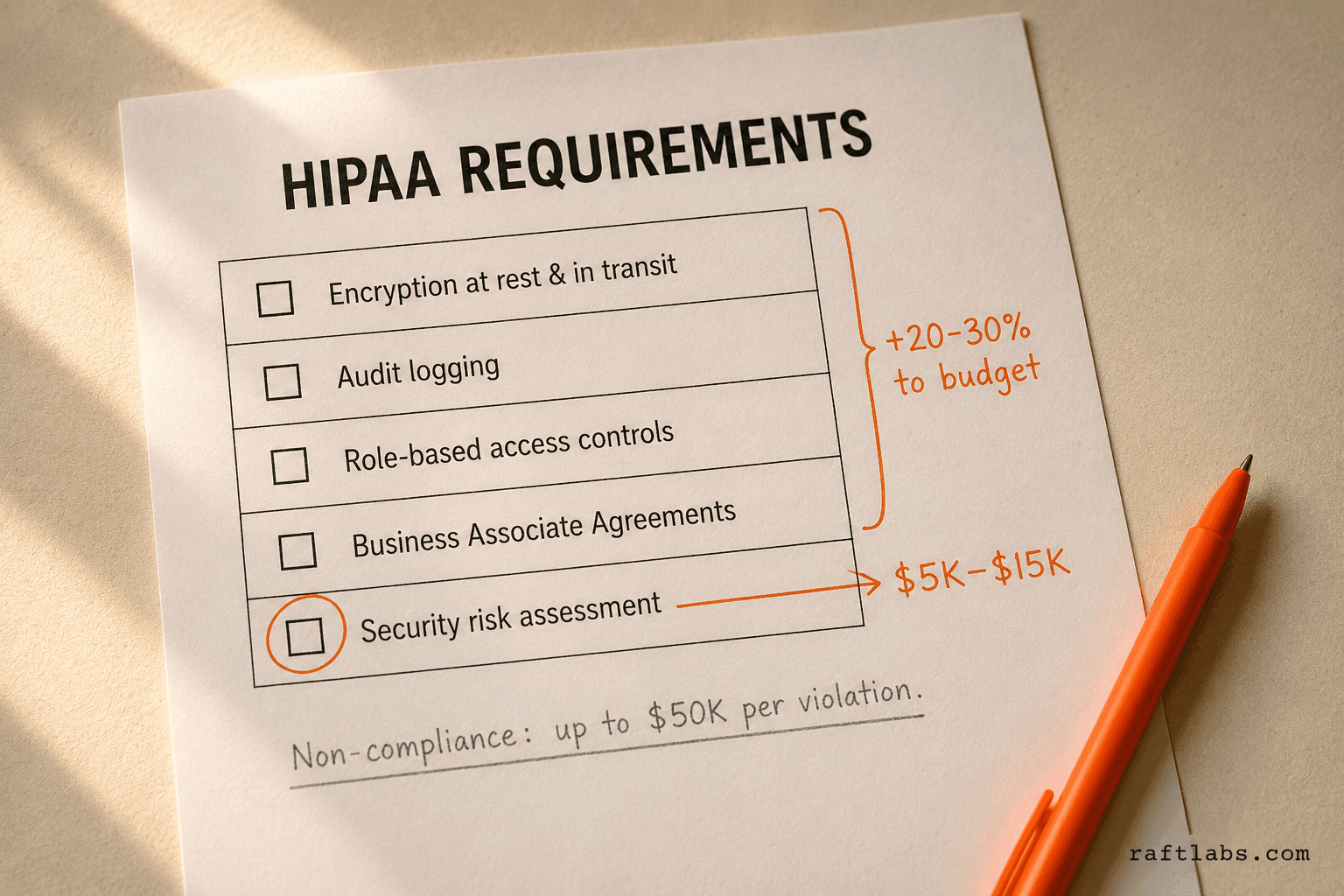
Encryption at rest and in transit: All PHI must be encrypted using AES-256 or equivalent. This affects your database configuration, API design, and storage architecture.
Audit logging: Every access to PHI must be logged with user ID, timestamp, and action. This requires a separate logging service and storage.
Access controls: Role-based permissions must prevent unauthorized access to patient records. This adds complexity to your authentication system.
Business Associate Agreements (BAAs): Every vendor that touches PHI must sign a BAA. AWS, Twilio, and Stripe all offer BAAs, but your dev team must configure their services accordingly.
Security risk assessment: HIPAA requires a formal risk assessment before launch. Budget $5,000-$15,000 for a third-party security audit.
Non-compliance penalties range from $100 to $50,000 per violation. The HHS Office for Civil Rights issued $14.5 million in penalties in 2023 alone, according to their annual enforcement report.
Regional standards beyond HIPAA:
GDPR (European users): Data residency, consent management, and right-to-erasure add $10,000-$25,000
PIPEDA (Canada): Similar to GDPR in scope
PDPA (Singapore): Requires local data storage for Singapore patient data
Cost estimation by development phase
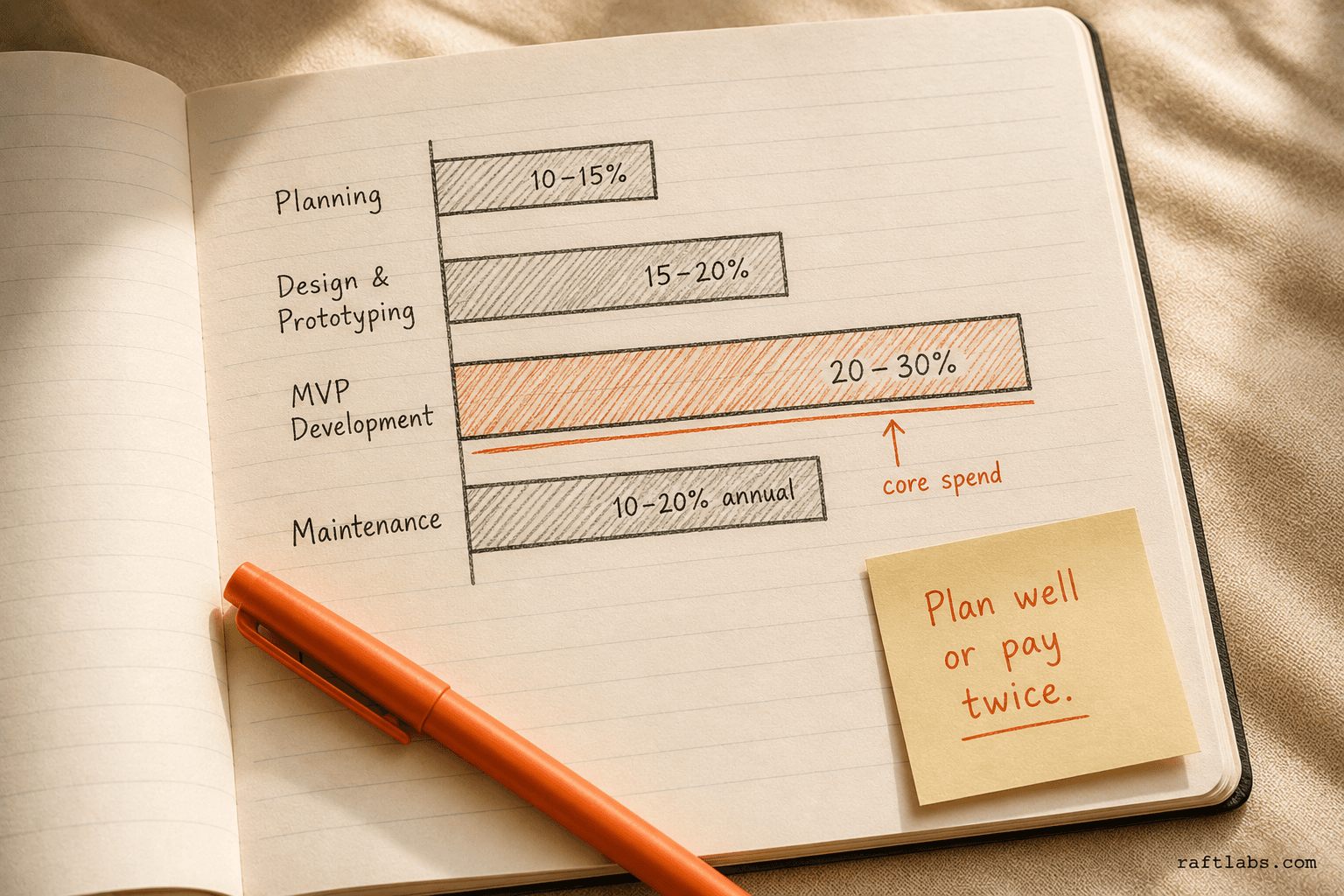
1. Planning (1-3 weeks, 10-15% of budget)
Define features, compliance requirements, and integration targets. Proper planning reduces rework in later stages. Under-investing here is the most common cause of budget overruns.
2. Design and prototyping (15-20% of budget)
Wireframes and interactive prototypes for testing functionality before build. Healthcare UI must meet accessibility standards and clinical workflow requirements. Skipping this step increases development revision costs by 30-40%.
3. MVP development (20-30% of budget)
The core build. Costs vary by complexity, platform choice, and compliance layer. Rigorous testing during this phase reduces post-launch incidents, which average $23,000 to resolve in enterprise healthcare software according to IBM's 2024 Cost of a Data Breach Report.
4. Maintenance (10-20% of budget annually)
Regulatory updates, device firmware changes, and feature iterations. Healthcare apps require ongoing maintenance at a higher rate than consumer software due to evolving compliance requirements.
In-house vs. outsourcing: cost comparison
| Model | Best for | Cost profile | Risk |
|---|---|---|---|
| Freelance developers | Small features, specific tasks | Lower upfront | Limited accountability, no HIPAA expertise |
| Custom software company | Full product builds | Higher upfront, lower TCO | Requires good vendor selection |
| In-house team | Organizations with ongoing development needs | Highest upfront | Slower time to market, training cost |
Software development companies offer the most reliable path for HIPAA-compliant builds. They bring existing compliance frameworks, established testing protocols, and accountability structures that freelancers cannot match.
How to optimize your development budget
Start with essential features only
Every feature you add in phase one delays launch and increases cost. Identify the three things users must do to get value from your app. Build those first. Test with real users. Add features based on what they request, not what you assumed they'd want. To sanity-check your own scope before talking to a vendor, our software development cost calculator gives you a live range based on project type, platforms, and features.
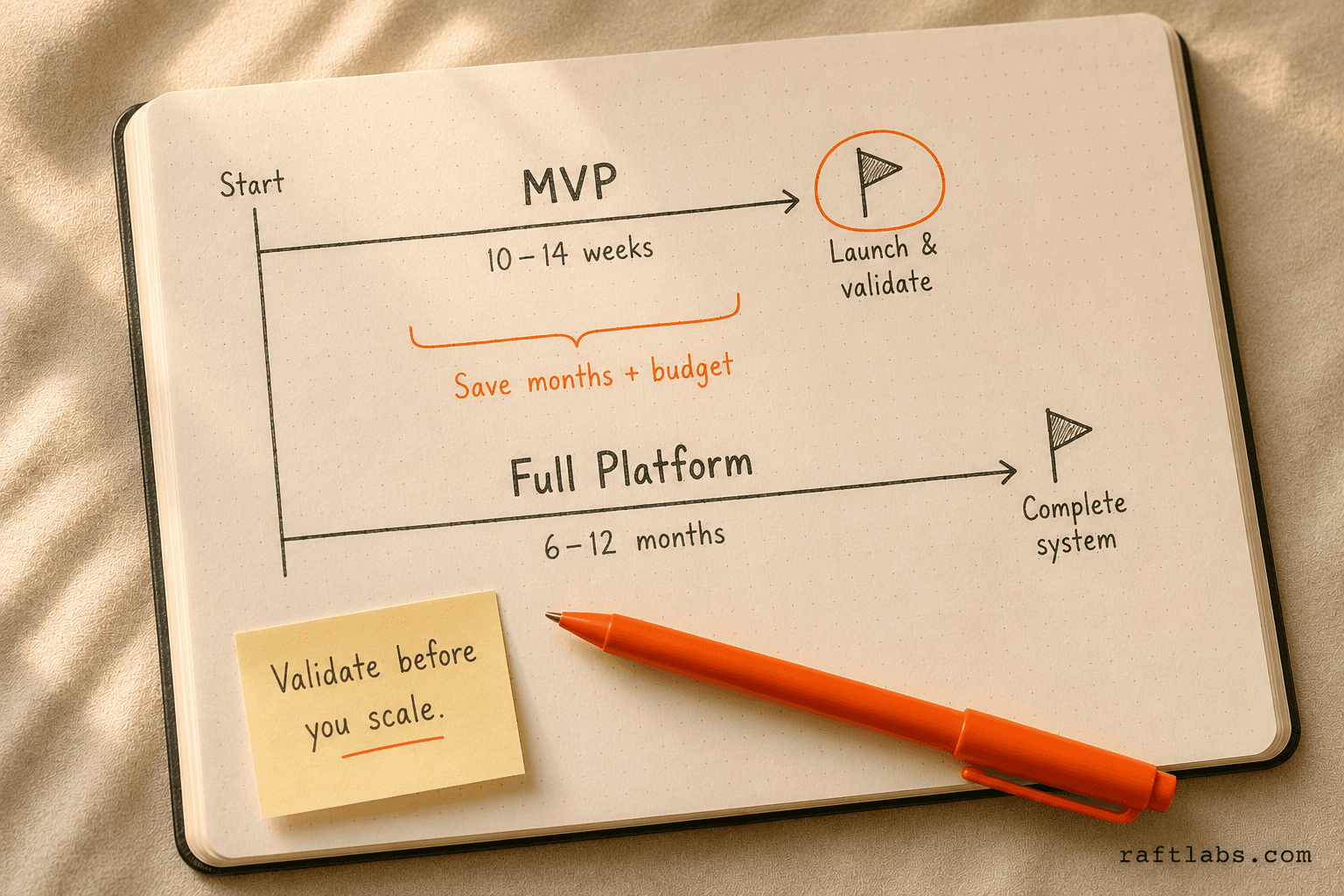
Build an MVP before a full platform
An MVP approach cuts upfront investment and gives you validation data before you commit to a larger build. A telemedicine MVP can ship in 10-14 weeks. A full platform with all integrations takes 6-12 months.
Choose the right development partner
A team that has shipped HIPAA-compliant apps before knows what compliance architecture looks like. They won't discover HIPAA requirements at month three. They won't recommend a database configuration that fails a security audit. Experience in healthcare reduces the number of expensive surprises.
Future cost drivers in healthcare app development
AI and diagnostic automation
The global AI in healthcare market reached $19.68 billion in 2023 and is projected to reach $183.56 billion by 2030, according to Maximize Market Research. Adding AI diagnostic features increases development cost but reduces clinical decision-making time. RaftLabs' remote patient monitoring app reduced clinical decision-making time by 20% through automated device data analysis.
Telehealth growth post-pandemic
Telehealth adoption stabilized at roughly 38x pre-pandemic levels according to McKinsey's 2023 telehealth report. Future telemedicine apps need infrastructure built to handle concurrent load without degradation.
Interoperability requirements
The 21st Century Cures Act mandates data sharing between health systems. Apps that block information sharing now face compliance risk. Interoperability work adds $15,000-$40,000 to builds that need to connect across multiple EHR systems.
RaftLabs' healthcare app work
AI-Enhanced Remote Patient Monitoring
RaftLabs built an AI-driven remote patient monitoring app that automates data analysis from CGMs and blood pressure monitors. The platform reduced clinical decision-making time by 20% for chronic care management teams.
Telehealth App for Patient Access
RaftLabs built a HIPAA-compliant telehealth app that onboarded 50+ clinics in 12 weeks and cut in-person visits by 60%. The platform combines FDA-approved diagnostic tools with remote care workflows for physicians.
RPM App for Senior Patients
RaftLabs developed an RPM app adopted by over 15 clinics. It achieved 50% faster response times within two months of deployment by securely collecting and transmitting health data from multiple device types.
Bottom line
Healthcare app development costs are predictable when you know what drives them. HIPAA compliance, EHR integration, and device connectivity are the three variables that account for most of the budget spread between a $40,000 telemedicine MVP and a $160,000 full platform.
Start by defining your compliance requirements. Then define your integrations. Then scope your features. That sequence gives you an accurate budget before you commit a dollar.
If you're evaluating a healthcare software development project, RaftLabs has shipped HIPAA-compliant platforms across telehealth, remote patient monitoring, and chronic care management. We can help you scope the right build for your clinical problem and budget.
Ask an AI
Get an instant summary of this post from your preferred AI assistant.
Frequently asked questions
- Basic healthcare apps start at $25,000-$50,000. EHR-integrated or telemedicine platforms range from $90,000 to $160,000. HIPAA compliance, which is required for any app handling patient health information, adds 20-30% to the total budget. At RaftLabs, telemedicine MVPs typically run $40,000-$80,000 depending on platform scope.
- Yes, if the app handles protected health information (PHI). HIPAA requires encryption, access controls, audit logging, and a business associate agreement (BAA) with any vendor touching PHI. Non-compliance penalties range from $100 to $50,000 per violation, with annual caps up to $1.9 million per violation category.
- A basic appointment or medication reminder app takes 3-4 months. A telemedicine platform with EHR integration takes 6-12 months. HIPAA compliance review and security audits add 3-6 weeks to any timeline. At RaftLabs, our HIPAA-compliant telehealth app for remote care took under 6 months from scoping to live deployment.
- The five biggest cost drivers are: (1) HIPAA compliance engineering, (2) EHR or device integration, (3) platform choice (iOS, Android, or both), (4) video consultation infrastructure for telemedicine, and (5) ongoing maintenance for regulatory updates. Teams often underestimate device integration, which adds 30-50% more testing time than standard features.
- Off-the-shelf tools cost less upfront but often require multiple platforms that don't share data. Custom software fits your specific clinical workflow, meets your exact compliance posture, and reduces long-term vendor dependency. Custom development typically costs 2-3x more at the start but reduces total cost of ownership over a 3-5 year horizon.