AI for customer service that handles the routine, so your team handles the exceptions.
Manual support operations don't scale. As your customer base grows, ticket volume grows with it, and so does the cost and headcount required to keep response times acceptable. Customer support automation handles the structured, repeatable portion of your support workload, ticket classification and routing, FAQ responses, order status lookups, account queries, and escalation triggers, automatically. Your support team handles the complex cases that actually require judgment. The routine queries run without them.
AI ticket classification, routing, and first-response automation
Self-service resolution for order status, account queries, and FAQ coverage
Escalation workflows that route complex cases to the right agent with context
Integration with Zendesk, Freshdesk, Intercom, and custom support platforms
Bring the problem, the current workflow, or the existing code. We reply with a practical next step within one business day.
Trusted by
The brief
Start with what is not working.
Good software decisions begin with the constraint, not a list of features or a preferred technology.
01
Support team spending most of their time answering the same questions instead of solving hard problems?
02
Response time SLAs slipping as ticket volume grows faster than headcount?
Plain answer
RaftLabs builds AI for customer service for businesses across the US, UK, Europe, Canada, and the UAE: AI ticket classification, FAQ automation, and escalation workflows that integrate with Zendesk, Freshdesk, and Intercom. For e-commerce and SaaS, 40-70% of routine tickets are automatable. Fixed-price single-channel builds start at $20,000, with the first automated workflow live within 4 weeks.
What to remember
For e-commerce and SaaS businesses, 40-70% of inbound tickets are typically automatable with AI classification and FAQ automation.
A single-channel automation system with ticket routing and escalation workflows starts from $20,000.
Single-channel builds take 8 to 12 weeks from signed scope to production, with the first automated workflow live within 4 weeks.
Integrates with Zendesk, Freshdesk, Intercom, HubSpot Service, Salesforce Service Cloud, and custom ticketing systems.
The support queue that stopped scaling with headcount.
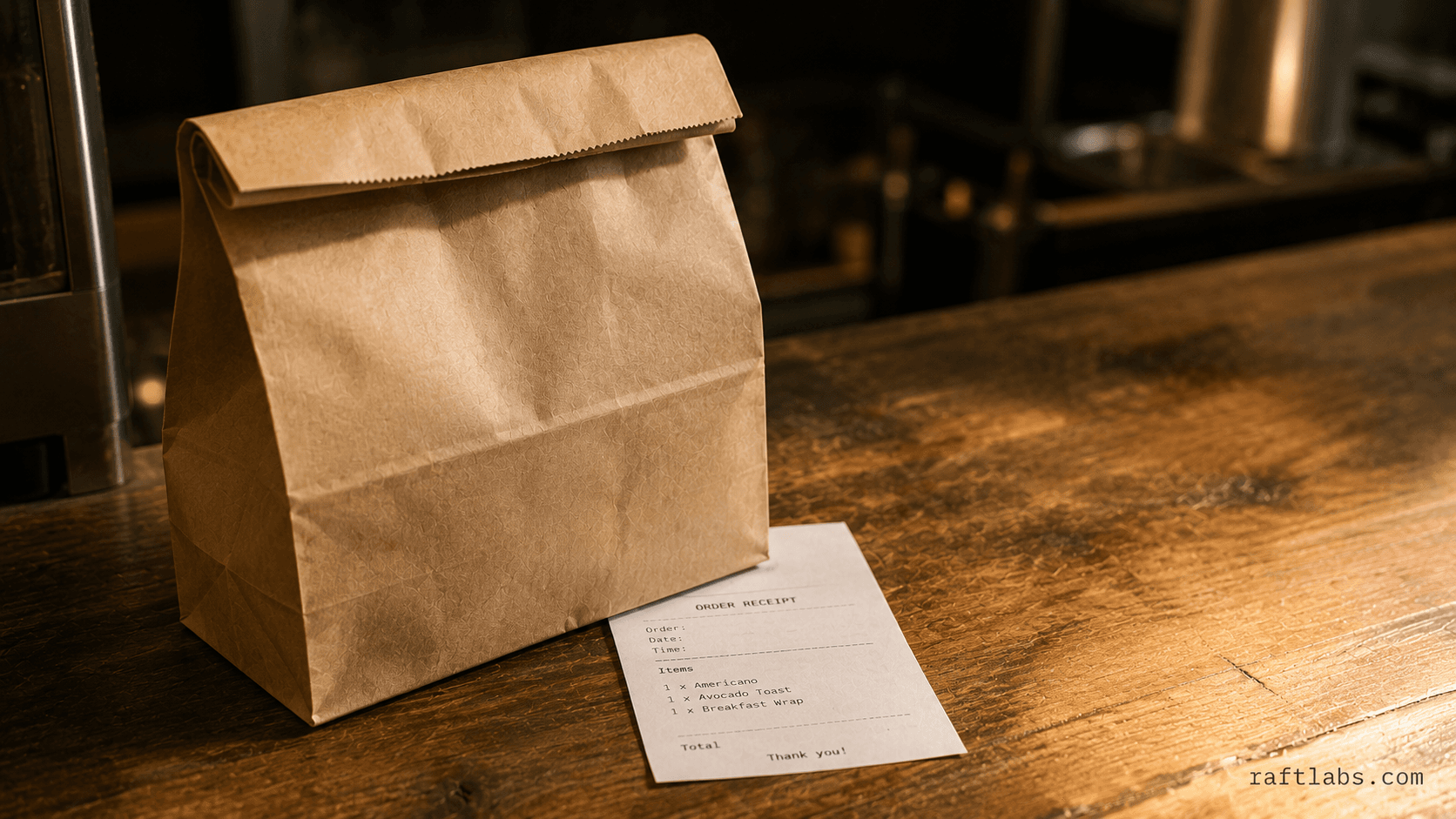
A support team used to scale one way: more tickets, more agents. Someone reads "where is my order?", looks it up, pastes the tracking link, closes the ticket, then does it again a few hundred times a day.
Now the automation reads the ticket first. It classifies the intent, pulls the order status from the connected system, sends the tracking link, and closes routine cases on its own. What reaches an agent is the fraction that genuinely needs judgment: the complaint, the billing dispute, the edge case.
The answer already lived in your systems. The agent was doing retrieval, not support. Automation handles the retrieval. Agents handle the exceptions.
Every support agent who spends their day answering "where is my order?" or "how do I reset my password?" is doing data retrieval, not customer support. The information exists in your systems. The answer follows a pattern.
According to a December 2024 Gartner survey, 85% of customer service leaders plan to explore or pilot customer-facing conversational AI in 2025. Gartner also predicts agentic AI will autonomously resolve 80% of common customer service issues by 2029 (Gartner, 2025). Automation readiness is now a near-universal priority, not a competitive edge, and the teams that move first on a structured deployment capture the efficiency before the window closes.
RaftLabs has been shipping production software since 2015, with a 4.9/5 client rating on Clutch. One team studies your ticket data, designs the automation, and runs it in production. RaftLabs has shipped production software since 2015 for clients across the US, UK, Europe, Canada, and the UAE. Compliance requirements, GDPR, HIPAA, SOC 2, are scoped in week 1, not retrofitted before launch.
Proof
of routine tickets automatable for e-commerce and SaaS
40-70%
From historical ticket-mix analysis
to the first live automated workflow, then iterate
4 weeks
Typical single-channel build
average client rating across delivered projects
4.9/5
Clutch, verified reviews
Automation pays off when your ticket volume is high and the answers already exist in your systems.
Everything on the left should already be true for your support operation. Even one thing on the right, and a better help center is the smarter first step.
A fit
01
High inbound ticket volume where the same routine queries, order status, account access, documented FAQs, repeat all day.
02
Tickets whose answers already live in connected systems: order management, CRM, subscription platform, and help desk.
03
You run Zendesk, Freshdesk, Intercom, or a custom ticketing system and want automation inside it, not a rip-and-replace.
Not a fit
01
Low ticket volume where a well-organized help center already covers demand.
02
A support workload that is mostly complex, judgment-heavy cases with little routine repetition.
03
No historical ticket data to train classification and routing against.
What we build
What we automate
01
AI ticket classification and routing
Inbound tickets are classified automatically on arrival using a model trained on your historical ticket corpus: issue type, urgency, customer tier, and required expertise. High-confidence tickets route straight to the correct queue; the 10-20% below threshold go to a review queue a team lead confirms with one click. Routing rules live in a configuration UI, so support managers change logic without code changes. It works inside your existing help desk, Zendesk, Freshdesk, Intercom, HubSpot Service Hub, or Salesforce Service Cloud, with no migration.
02
Self-service chatbot and FAQ automation
AI chatbot deployed in your website support widget and optionally your mobile app. Authenticated users self-serve on their own data: order status, subscription and billing history, password resets, refund status. FAQ automation runs a RAG pipeline over your knowledge base, so answers come from your documentation with a citation link, not hallucinated generic responses. Containment typically starts at 25-45% of queries resolved without a ticket, improving to 40-65% as coverage expands.
03
First-response automation
Automated first responses go out within seconds for high-confidence classifications, and they contain the specific answer, not a generic acknowledgement: an order status query gets the live status and tracking link. Medium-confidence tickets get an acknowledgement with a reference number and a realistic resolution estimate. Sensitive categories, complaints, refunds, legal mentions, negative sentiment, are never auto-answered; they flag for human review in priority queues. All responses use your brand-approved templates, with configurable send timing.
04
Order and account query automation
Order and account queries are the highest-volume automation category for e-commerce and subscription businesses, because the answers already exist in connected systems. Integrations to Shopify, Stripe, PayPal, Chargebee, and Recurly pull order status and normalize carrier tracking into plain language, fetch refund status, and read subscription and billing detail. Authentication is verified before any account data is returned, customers only see their own records, and every lookup is logged to an audit trail.
05
Escalation and priority workflows
Escalation logic combines rules and AI signals to surface tickets before they become complaints: repeat contacts, high-value accounts, trigger keywords, and sentiment scoring calibrated on your ticket history. SLA breach prevention alerts at 70% of the window and upgrades priority at 90%. When a ticket escalates, the agent receives a compiled context card: conversation history, account summary, escalation reason, and steps already taken. Agents resolve escalated cases faster with the full context package than when they start cold and ask the customer to repeat themselves.
06
Support platform integration
Automation integrates into your existing support platform rather than replacing it, so agents keep their current tool. It works inside Zendesk, Freshdesk, Intercom, Salesforce Service Cloud, or Help Scout. Beyond the help desk, the layer connects to your OMS, CRM, and subscription platform for the data answers require. Integrations use OAuth 2.0 with read-only scopes wherever possible, and a webhook event bus keeps classification and routing fast, typically well under a second.
How we build it
01
Ticket analysis and automation mapping
Before development begins, we analyze a sample of your historical tickets, typically 2,000 to 10,000, to build an objective picture of your ticket mix. The output is an automation opportunity map: categories ranked by volume, estimated automation rate, required data sources, and achievable confidence. Order status might be 94% automatable; billing disputes 0%. We start with the highest-volume, simplest-to-automate categories, and the analysis happens before pricing, so the estimate reflects your actual scope, not a template.
02
Integration with your backend systems
Support automation without backend data integration produces generic responses: it can answer FAQs but cannot tell a customer where their order is. We integrate the systems the answers live in, Shopify, WooCommerce, Stripe, Chargebee, Salesforce, and HubSpot: your OMS for orders, your billing platform for subscriptions, your CRM for customer data, and unified carrier tracking. Every integration ships with retry logic and circuit breakers, so a backend outage degrades gracefully to an agent instead of erroring at the customer.
03
Classification and routing model
The classification model is trained on your labeled historical tickets, not a generic model that has never seen your product terminology and complaint patterns. We agree performance targets with you before deployment and calibrate them per category against your own data. Automated-response categories target high recall; escalation detection gets the strictest target, because missing an escalation is worse than over-escalating. The exact thresholds come from your ticket history, not a template number. Multilingual pipelines handle mixed-language ticket bases, and the model retrains during the first year on newly resolved tickets as your product and terminology evolve.
04
Evaluation and confidence calibration
The confidence threshold that separates automated response from human review is the most important operational parameter in the system, and it is calibrated empirically per category, not set arbitrarily. We tune for high precision on automated responses at the highest recall each category supports, and the numbers we commit to come from your data, not a brochure. A production dashboard tracks containment rate, automation accuracy, and missed escalations, the most critical metric, with drift indicators that trigger retraining. It is built for support operations managers, no data science background required.
40-70% ticket deflection, without sacrificing customer experience.
We analyze your historical ticket data, identify the automatable volume, and build the system that handles it. The routine runs on automation; your team handles the exceptions.
How it works
From audit to automated support
Every support automation project follows the same four phases. We start with your real ticket data, not assumptions.
Week 1
01
Support audit and scope
We analyze your current ticket volume, category distribution, and resolution patterns. We identify which query categories are automatable at high confidence and which need human judgment. You leave week 1 with a written scope and a fixed-price quote.
Weeks 2-3
02
Intent model and routing design
We design the intent classification model and routing logic. Thresholds are set per category, not globally. High-volume, high-confidence categories go to automation. Complex or low-confidence tickets route to human agents.
Weeks 4-8
03
Build, integrate, and tune
We build the automation layer, connect it to your helpdesk (Zendesk, Intercom, Freshdesk), and run accuracy tests against your historical ticket data. The first automated workflow goes live around week 4. QA runs in parallel with every sprint.
Weeks 8-12
04
Deploy and monitor
Production deployment with monitoring activated. Automation rate, deflection rate, and CSAT tracked from day one. Post-launch support is included: intent tuning and model adjustments as real-world queries reveal gaps. Multi-channel builds extend this phase to weeks 12-16.
What clients say
What clients say
Three-year average engagement. Founders and operators describing the work in their own words. No marketing varnish.
Testimonial 1 of 3: Paula Castro
Paula Castro
Reservations Officer, City Break Apartments
Ireland
Working with RaftLabs has been amazing. The team is super responsive and quick to address our needs. They built a booking platform that's been a game changer for our team and our guests.
Ticket classification, FAQ automation, and escalation routing for one channel (email or chat), integrated with your support platform. 8 to 12 weeks, with the first automated workflow live within 4 weeks.
Multi-channel system, $50,000-$120,000
Email, chat, and a self-service portal with order management integration. 12 to 16 weeks, depending on the number of backend integrations and the size of your ticket corpus.
What it costs
Customer support automation, starting at $20,000.
We analyze your ticket mix, then give you a firm quote before any development starts.
Start with one channel, prove the containment rate, then expand to chat and self-service in a second phase.
Starting investment
Starts at $20,000
Single-channel builds ship in 8 to 12 weeks, with the first automated workflow live within 4 weeks. Most teams start on one channel, then add self-service and order-management integration once it's deflecting tickets.
No hourly billing
We analyze your ticket mix and lock that price in writing before development starts. A scope change is a priced change request, agreed before work begins, never absorbed into the final invoice.
Measured from day one
Every system ships with a monitoring dashboard tracking containment rate, automation accuracy, and false-escalation rate. You see the deflection numbers in real time, not in a quarterly report.
The percentage depends on your ticket mix. For e-commerce and SaaS businesses, 40-70% of inbound tickets are typically automatable, order status, tracking, account access, subscription questions, and documented FAQ coverage. The remaining 30-60% are complex cases that require human judgment, complaints, billing disputes, technical problems, and edge cases. Automation is most valuable when it handles the high-volume routine queries so agents can focus their time on the cases where they actually add value. We analyze your historical ticket data during scoping to estimate the realistic automation rate for your specific query mix.
We integrate with all major support platforms via API, Zendesk, Freshdesk, Intercom, HubSpot Service, Salesforce Service Cloud, Help Scout, and custom-built ticketing systems. Integration approach depends on what each platform exposes via API or webhook. For platforms without API access, we use UI automation. We also integrate with the backend systems the support team needs to answer queries, your CRM, order management system, subscription platform, and product database.
Every automation system we build has a clear escalation path. When a query falls below a confidence threshold, involves a complaint or negative sentiment, or contains specific escalation triggers (refund requests, legal mentions, repeat contacts), it routes to a human agent with full context, the customer's history, the query classification, and any automated steps already taken. The agent gets everything they need to resolve the case without asking the customer to repeat themselves. Escalation rates typically start at 30-50% and reduce as the system learns from resolved cases.
A focused automation system, one support channel (email or chat), with ticket classification, FAQ automation, and escalation routing integrated with your support platform, typically runs $20,000-$50,000. Multi-channel systems covering email, chat, and self-service portal with order management integration run $50,000-$120,000. Cost depends on the number of channels, the complexity of the backend integrations, and the volume of FAQ content to automate. We scope every project before pricing it.
A single-channel system with ticket classification, FAQ automation, and escalation routing typically takes 8 to 12 weeks from signed scope to production. The first automated workflow is usually live within 4 weeks. Multi-channel systems with multiple backend integrations run 12 to 16 weeks. Timeline depends on the number of integrations, the size of your ticket corpus for model training, and how quickly your team can review and approve the FAQ content coverage.
Yes. We sign a mutual NDA before accessing any ticket data or system credentials. Your historical ticket corpus, customer data, and internal workflows are confidential. We work under NDA on every project, including during the discovery and scoping phase before a contract is signed.
Work with us
Tell us where the work is stuck.
Bring the rough workflow, half-built product, or messy brief. We will map the smallest useful first move, then send scope, timeline, and price in plain English.
Scope and cost agreed before work starts. No surprises. No obligation.
Working prototype within 3 weeks of kickoff.
Pay by milestone. You see progress before each invoice.
60-day post-launch warranty. Bug fixes, UI tweaks, and deployment support. No retainer.




























 Ireland