Smart Home App Development Company

Custom software for smart home device manufacturers, home automation integrators, and proptech startups whose product vision has outgrown what off-the-shelf platforms and consumer apps can deliver. When your device ecosystem spans multiple protocols, your users are managing 15 connected products from 6 different apps, and your energy data is locked in a vendor dashboard you can't control or brand, we build the unified platform your hardware deserves.

  • Device control and automation rule engines built for your specific protocol stack, not retrofitted from a generic IoT template

  • Multi-protocol integration across Matter, Z-Wave, Zigbee, Wi-Fi, and Bluetooth with a single unified app experience

  • Energy monitoring dashboards with real-time consumption data, cost projections, and usage pattern insights

  • Voice assistant integration with Amazon Alexa, Google Home, and Apple HomeKit, plus remote access via AWS IoT or Azure IoT Hub

Recognition

Sound familiar?

  • Your devices support Matter, Z-Wave, and Zigbee, but your app treats each protocol as a separate silo with no shared automation rules?

  • Users are churning because setup takes 40 minutes and the app crashes when two devices trigger simultaneously?

  • Your energy monitoring data lives in the device firmware but you have no dashboard to show customers what they are actually saving?

The short answer

RaftLabs builds custom smart home app development solutions for device manufacturers, home automation system integrators, and proptech startups. We ship device control and automation apps, multi-protocol IoT backends supporting Matter, Z-Wave, and Zigbee, energy monitoring dashboards, and voice assistant integrations with Amazon Alexa and Google Home. Most projects deliver in 10 to 16 weeks at a fixed, agreed cost.

What is smart home app development?

Smart home app development is the process of building software that connects, controls, and automates IoT devices inside a residential or commercial property. It covers mobile and web apps that communicate with devices over protocols like Matter, Z-Wave, Zigbee, Wi-Fi, and Bluetooth, cloud backends that manage device state and user automations, and the integrations that tie those apps into voice assistants like Amazon Alexa and Google Home.

01 Diagnosis

Problems we solve for smart home businesses

  1. 01
    Problem

    Your users need six apps to control their home

    Solution

    Device fragmentation is the most common reason smart home products lose users after onboarding. A household with a smart thermostat, door lock, lighting system, security camera, and energy monitor from different manufacturers ends up with five separate apps, each with its own login, automation vocabulary, and notification style. No shared automation rules can bridge them. Scheduled routines set in one app have no awareness of device state in another.The result is a premium product that delivers a budget experience. Retention data from Parks Associates shows that complexity during setup and daily use is the top reason smart home users abandon devices within the first 30 days. A custom app that consolidates device control, exposes a shared automation rule engine, and connects to the platforms users already rely on, Alexa, Google Home, Apple HomeKit, converts a collection of gadgets into a coherent product.

  2. 02
    Problem

    Your energy data is locked in firmware with no customer-facing dashboard

    Solution

    Smart plugs, EV chargers, solar inverters, and HVAC controllers generate granular energy consumption data. Most device manufacturers surface that data only as a raw reading on a local display or inside a vendor dashboard that the end user cannot access, brand, or act on. The business opportunity, helping customers understand what they are spending, proving the value of the hardware, and surfacing upsell moments around tariff changes or device upgrades, sits unused.An energy monitoring dashboard pulls consumption data from the device API, converts watt-hours into cost projections using local utility tariffs via providers like Green Button Connect, displays usage patterns over time, and pushes alerts when consumption crosses a threshold. It turns a one-time hardware sale into a daily engagement surface and gives your customer success team the data to prove ROI at renewal.

  3. 03
    Problem

    Automations break when two devices trigger at the same time

    Solution

    Automation rule engines built on simple if-this-then-that logic fail under real household conditions. When a motion sensor, a door sensor, and a time-based trigger all fire within the same second, race conditions in the rule evaluator produce unpredictable behaviour: lights that don't turn on, locks that re-lock immediately, or HVAC routines that cancel each other out. These failures are hard to reproduce and harder to explain to a customer support team.A reliable automation engine processes events in a defined priority order, resolves conflicts through a declarative rule model rather than sequential script execution, and gives users a visual rule builder that shows them exactly what will happen and in what order. Building this on top of AWS IoT Rules Engine or a custom state machine removes the class of timing bugs entirely and cuts support tickets about automation failures.

  4. 04
    Problem

    Your installer portal is a spreadsheet and a Slack channel

    Solution

    Home automation system integrators manage dozens of simultaneous installations. Without purpose-built software, job tracking happens in spreadsheets, device provisioning requires a technician on-site with a laptop running vendor-specific tools, and there is no remote diagnostics capability when a customer calls to say their system is down. The integrator's margin gets eaten by repeat site visits that could be avoided with remote access.A system integrator portal covers job and customer management, remote device provisioning via QR code or serial number, live device health dashboards, over-the-air firmware update management, and a customer-facing portal where homeowners can view their system status and log support requests. It reduces the average cost per installation and gives the integrator a service revenue line from ongoing remote monitoring contracts.

02 What we ship

Smart home software we build

  1. Device control and automation apps

    We build the iOS and Android apps that give users direct control over every device in their home from a single screen. Real-time device state updates arrive via WebSocket or MQTT push so the app reflects the current state of every bulb, lock, thermostat, and sensor without manual refresh. Room and zone grouping lets users control related devices together. Scene and routine management allows them to create multi-device automations triggered by time, location, sensor state, or voice command.

    The automation rule engine sits in the cloud backend, not the app, so rules execute even when the user's phone is offline. Conflict resolution logic handles simultaneous triggers. A visual rule builder with a simple condition-action model keeps the experience accessible to non-technical users without limiting what power users can configure.

    Built for smart home device manufacturers shipping a companion app, home automation system integrators replacing manual control panels, and proptech platforms adding device control to a resident-facing app.

  2. Multi-protocol IoT integration

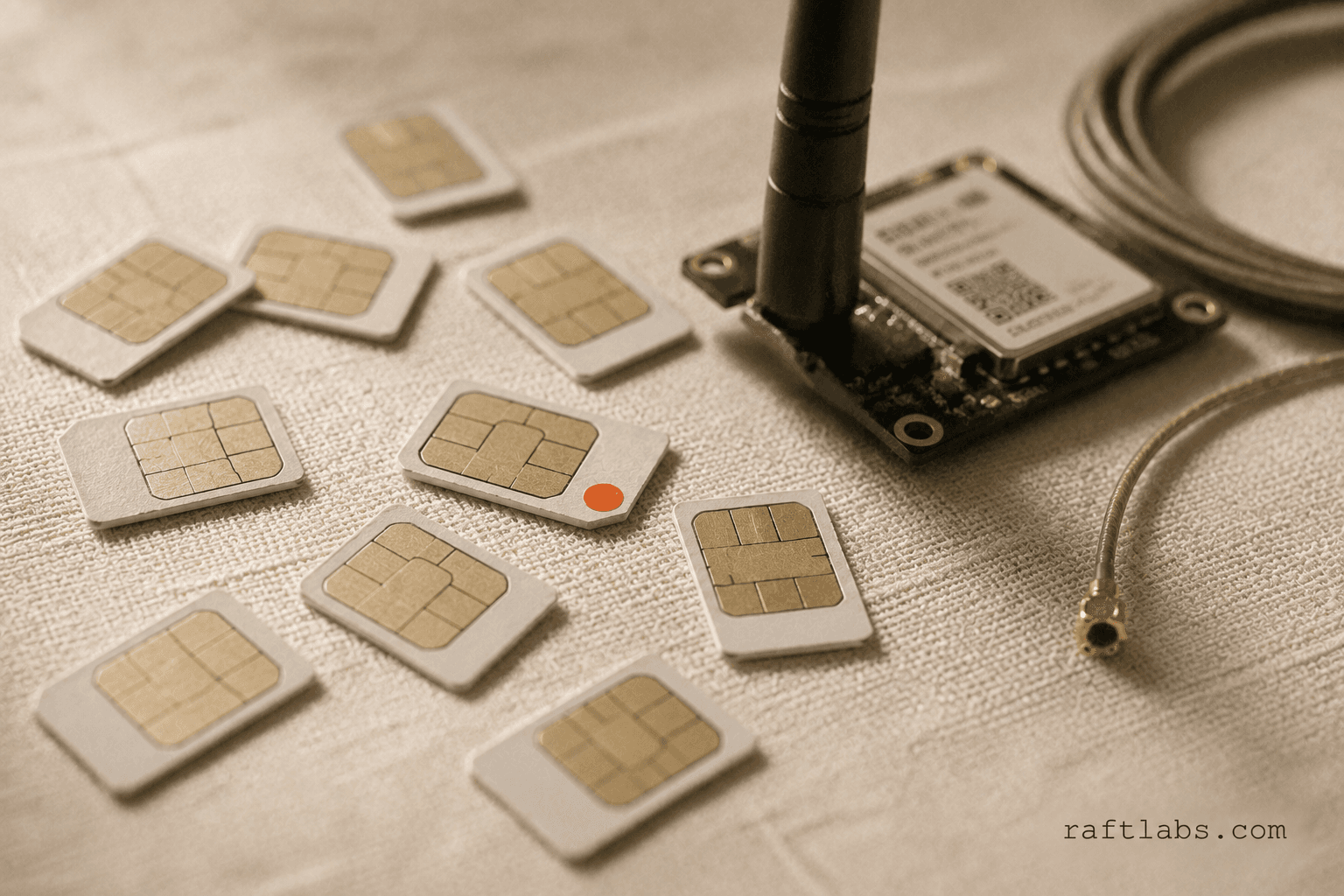
    We build the backend integration layer that connects devices across Matter, Z-Wave, Zigbee, Wi-Fi, and Bluetooth into a single device management API. A software or hardware bridge, typically running on a Raspberry Pi, Home Assistant OS, or a custom embedded Linux device, handles protocol translation. The cloud backend built on AWS IoT Core or Azure IoT Hub manages device registry, shadow state, and command routing regardless of which protocol the physical device uses.

    Matter certification support is included, covering the Connectivity Standards Alliance SDK integration, device attestation, and the onboarding flow that works with Apple, Google, and Amazon Matter controllers. For legacy Z-Wave and Zigbee devices that predate the Matter standard, we build bridge firmware that exposes them as Matter-compatible endpoints so they appear natively in every major smart home ecosystem.

    Built for device manufacturers adding Matter support to an existing product line, system integrators managing mixed-protocol installations, and platform builders who need a protocol-agnostic device layer underneath their app.


  3. Energy monitoring dashboards

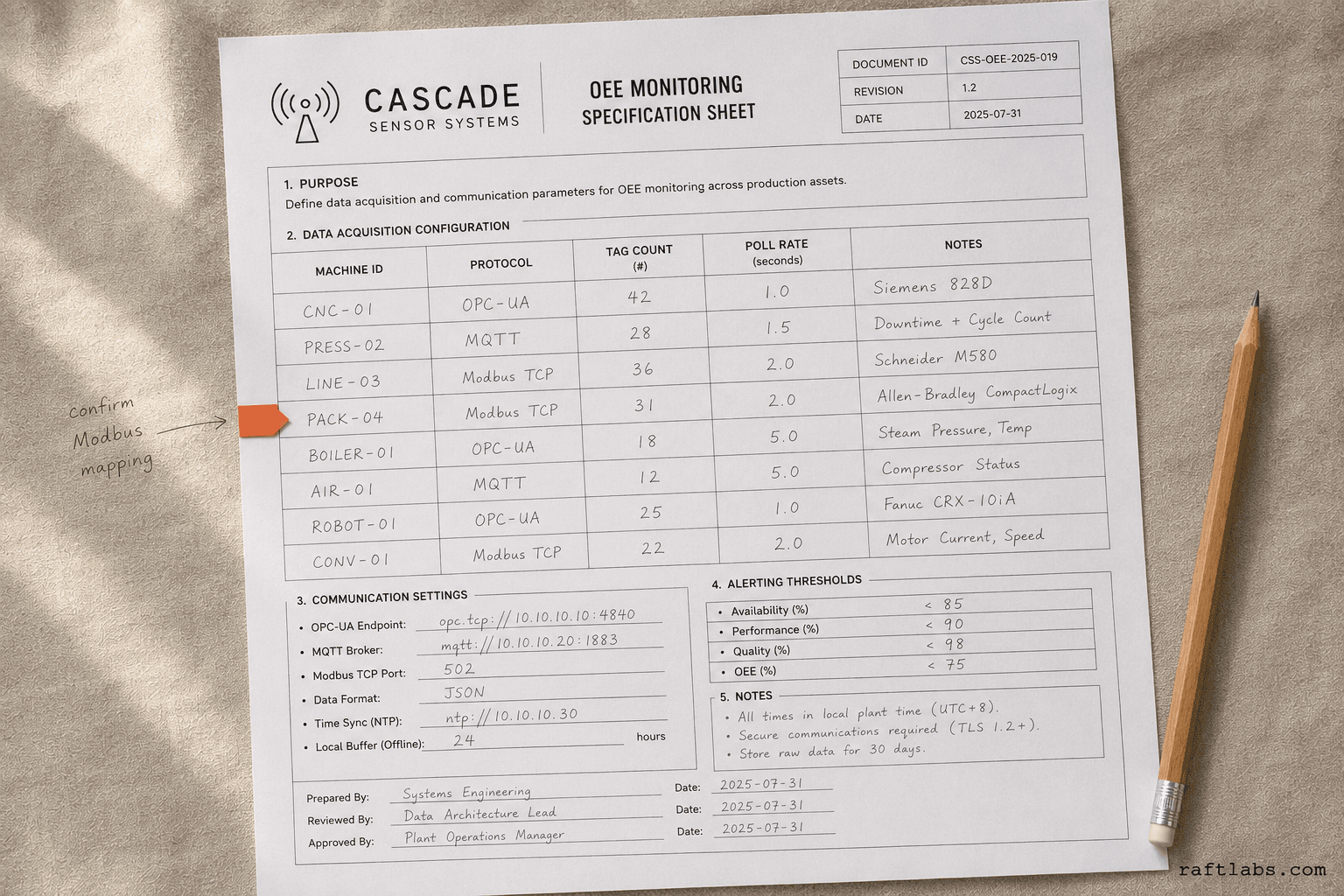
    We build the data pipeline and visualisation layer that turns raw watt-hour readings into actionable customer insights. Device telemetry arrives via MQTT or REST from smart plugs, EV chargers, solar inverters, and HVAC controllers. A time-series database, typically InfluxDB or AWS Timestream, stores consumption data at per-minute granularity. A processing layer converts consumption into cost projections using local utility tariffs, pulled from Green Button Connect or manually configured by the user.

    Customer-facing dashboards display real-time consumption, daily and monthly cost trends, per-device breakdowns, and carbon impact estimates. Alerting rules notify users when consumption crosses a set threshold or when a device draws unusual power outside of expected patterns. A separate analytics view for system integrators shows portfolio-level energy performance across all managed properties.

    Built for smart energy hardware manufacturers, utilities building a customer engagement layer on top of smart meter data, and proptech platforms where energy efficiency is a tenant-facing feature.

  4. Voice assistant integration

    We build the cloud-side integration that makes your devices controllable by voice through Amazon Alexa, Google Home, and Apple HomeKit. Alexa integration uses the Alexa Smart Home Skill API, account linking via OAuth 2.0, and the Alexa Voice Service to expose devices as native Alexa entities with support for directives like TurnOn, SetBrightness, SetThermostatMode, and LockDoor. Google Home integration uses the Google Home Developer Platform and the Smart Home Actions fulfillment API.

    Apple HomeKit integration uses the HomeKit Accessory Protocol, either natively via the MFi program or bridged via Homebridge for rapid prototyping. All three integrations share the same normalized device API on your backend, so a single code change propagates to all voice platforms. Certification submission support for the Alexa Smart Home program and Works with Google Home badge is included.

    Built for device manufacturers whose customers expect voice control, system integrators whose clients use mixed smart home ecosystems, and consumer app builders adding hands-free operation to an existing product.

  5. Remote access and system integrator portals

    We build the operational tooling that lets system integrators manage their installed base remotely, reducing truck rolls and increasing service margins. A secure remote access layer, built on AWS IoT Secure Tunneling or a self-hosted WireGuard mesh, lets technicians reach any device on a customer's LAN from a browser-based portal without exposing the home network directly to the internet. Device health dashboards show online status, signal strength, firmware version, and last-seen timestamps across every installation.

    Over-the-air firmware update management covers staged rollouts, version pinning for stable installations, and automatic rollback when a device fails to respond after an update. A customer-facing portal gives homeowners a read-only view of their system status and a support request channel. Job and customer management tools replace spreadsheet tracking with a structured workflow from site survey through installation sign-off to ongoing monitoring contract.

    Built for home automation system integrators scaling beyond 50 active installations, smart home device manufacturers who sell through the integrator channel, and managed service providers adding smart building monitoring to their portfolio.

  6. Security and access control apps

    We build the mobile and cloud software layer for smart access products: door locks, video doorbells, intercom systems, garage controllers, and commercial access control panels. Real-time video streaming from camera-equipped devices uses WebRTC for low-latency live view and HLS for recorded playback stored in AWS S3 or Azure Blob Storage. Access event logs with timestamped photos and video clips give homeowners a complete audit trail. Shared access management lets users grant time-limited or permanent access to family members, cleaners, or guests with a single tap.

    Two-factor authentication, biometric unlock, and end-to-end encryption for all video streams confirm that physical access data stays private. Geofencing automations lock the door and arm the security system when the last household member leaves, and reverse those actions on return. Integration with property management platforms like Yardi or Entrata adds tenant-level access control for multifamily and short-term rental operators.

    Built for smart lock and doorbell manufacturers, residential security companies building a proprietary app, and property managers replacing physical key management with a digital access control system.

03 How we work

How we build smart home software

  1. 01

    Discovery

    We map your device hardware, the protocols it uses, the cloud infrastructure already in place, and the user journey from unboxing to daily use. We identify where the current setup creates friction, unsupported protocol versions, a missing automation layer, an energy data pipeline that stops at the device, and agree a fixed scope and price before any code is written. Discovery typically takes one to two weeks and produces a specification detailed enough to build from.
  2. 02

    Design

    We design the device data model, the cloud backend architecture on AWS IoT or Azure IoT Hub, and the mobile app experience. Protocol bridge design happens here: we specify exactly which hardware or software component translates between Matter, Z-Wave, and Zigbee, and how device shadow state flows to the app in real time. UI design covers device control, automation rule builder, energy dashboard, and notification center, with usability testing against the real device behaviors before a line of production code is written.
  3. 03

    Build

    Two-week sprints with working software at each checkpoint. Core device connectivity and control ships first. The automation rule engine, energy data pipeline, and voice assistant integrations follow in subsequent sprints. We use MQTT for device-to-cloud messaging, WebSocket for real-time app updates, and REST for configuration and portal APIs. Integration tests run against real hardware throughout, not just emulators, so protocol edge cases surface during build rather than during user testing.
  4. 04

    Launch and support

    Phased rollout starting with a controlled cohort of real devices and users before full release. App store submission support covers iOS App Store and Google Play review requirements for smart home and IoT apps, including the HomeKit entitlement review process for Apple. Post-launch monitoring covers device connectivity rates, automation execution success rates, and push notification delivery. We stay on for the first production cycle, typically 60 days, to handle the device behavior edge cases that only appear at scale.

Companies we've built for

Vodafone
Nike
Microsoft
Cisco
T-Mobile
Aldi
Heineken
GE

04 Track record

What smart home businesses get when they work with us

Week delivery for smart home apps and IoT platforms
10-16
Software products shipped across IoT, mobile, and web
100+
Years building connected product software
6+
Cost delivery, agreed before development starts
Fixed

06 Client voices

What our clients say

Three-year average engagement. Founders and operators describing the work in their own words. No marketing varnish.

D
Daniel Reeves
USA flagUSA
CEO

RaftLabs nailed what other agencies couldn't — they started with our business problem and worked backwards to the right product. We were live in 14 weeks.

07 Why us

Why choose us?

  1. 01

    We've seen your problem before

    The industry changes. The broken process usually looks the same. Across 14+ industries and 100+ products, we recognise your problem fast, and we frame the fix around your margin and your operations.

  2. 02

    We own the number, not the ticket

    We measure success the way you do: hours saved, revenue earned, margin recovered. We stay through launch and growth, so the result is ours to own.

  3. 03

    Serious businesses trust us

    Vodafone, T-Mobile, Cisco, Energia, Aldi, Nike. Six years, 100+ products in production, 4.9 on Clutch. Serious businesses keep coming back because we stay accountable long after launch.

08 Questions

Frequently asked questions

Yes. We architect a unified device management layer that abstracts the protocol differences and exposes a consistent control and automation API to your app. Physically, a bridge device or software hub translates between protocols. From the user's perspective, every device lives in one app, shares automation rules, and reports to a single dashboard. We specify the bridge architecture during discovery based on your existing hardware.

A focused build covering device control, automation rules, and a companion mobile app typically delivers in 10 to 14 weeks and costs between $30,000 and $65,000. A platform covering multi-protocol integration, energy monitoring dashboards, voice assistant integrations, and a web portal for system integrators runs $65,000 to $150,000. Fixed cost is agreed before development starts.

Yes. Alexa integration uses the Alexa Smart Home Skill API and the account linking flow to expose your devices as Alexa-controllable entities. Google Home integration uses the Google Home Developer Platform and Actions SDK. Both require your devices to have cloud-reachable endpoints, which we build as part of the same engagement. Apple HomeKit integration via the HomeKit Accessory Protocol is also available.

Smart home products carry elevated security obligations because a breach means physical access to someone's home. We implement TLS 1.3 for all device-to-cloud communication, mutual certificate-based authentication between devices and the cloud backend, end-to-end encryption for remote access sessions, role-based access control for multi-user households, and audit logs of every access event. Security architecture is designed in from day one, not added after the compliance review.

Yes. We build the complete software layer: firmware-side MQTT or CoAP communication protocol, cloud backend on AWS IoT or Azure IoT Hub, device management portal for your operations team, and the consumer-facing iOS and Android apps. You keep ownership of all code and infrastructure from day one. We can also stay on as a retained engineering partner post-launch.

Ready to build your smart home software?

Tell us what you are building and we will scope it out together.

  • Scope and cost agreed before work starts. No surprises. No obligation.
  • Working prototype within 3 weeks of kickoff.
  • Pay by milestone. You see progress before each invoice.
  • 60-day post-launch warranty. Bug fixes, UI tweaks, and deployment support. No retainer.
  • All conversations are NDA-protected.