Energy & Utility Software Development Company
Your billing system was built before time-of-use tariffs were standard. Your smart meter data feeds a system your ops team can't readily query. Your customers switch because self-service means a PDF form on your website. We fix all three, on top of what you already have, not instead of it.
Customer self-service portals that reduce inbound call volume and improve satisfaction, built on top of your existing billing system
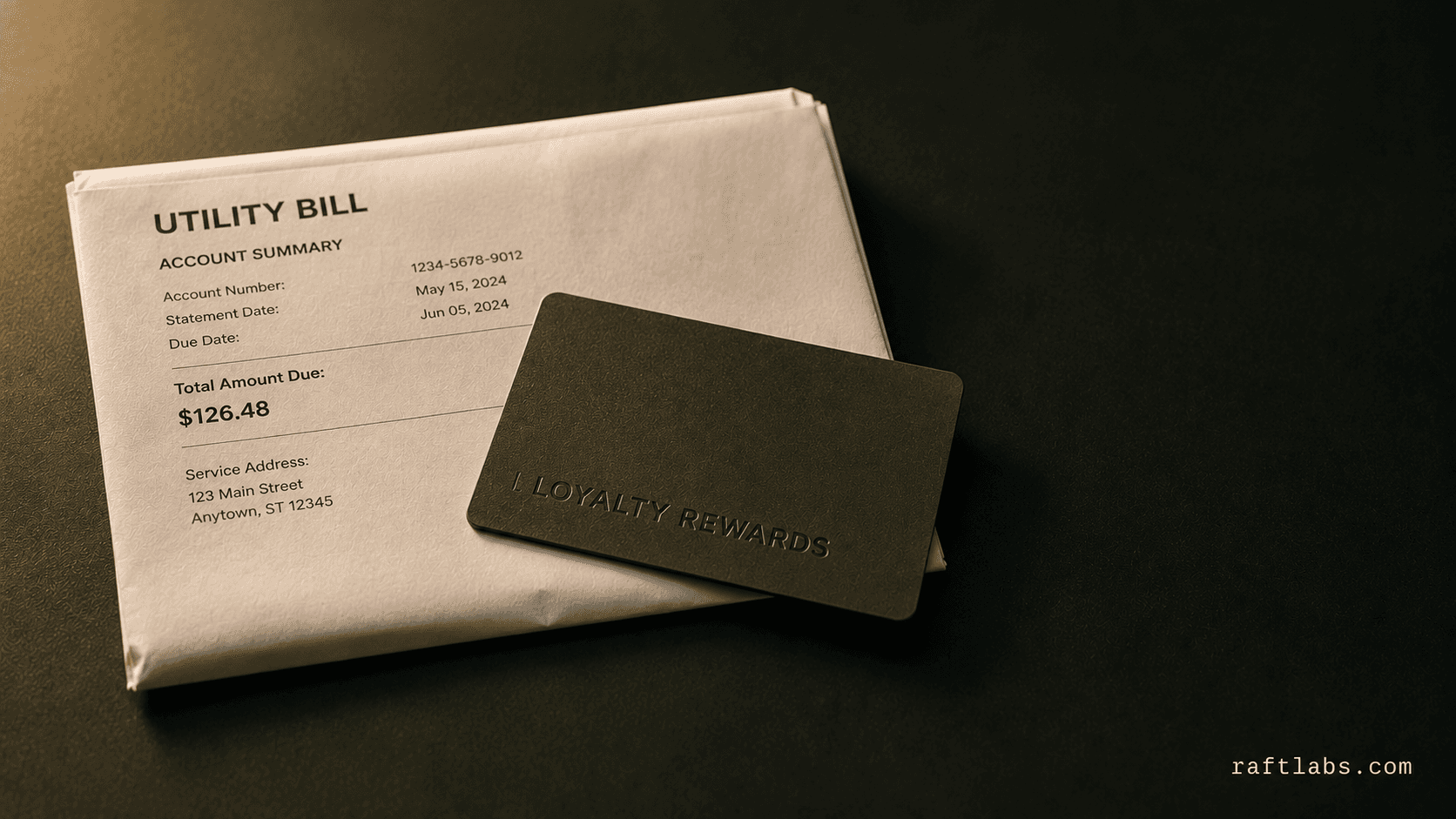
Loyalty and rewards programs that turn a utility bill into a reason to stay. We built one for 300K+ customers.
Billing automation for complex tariff structures, time-of-use pricing, and multi-site accounts
Smart meter data integrations that turn raw IoT reads into dashboards your customers and ops teams actually use
3+ years RetentionWeek 1 First milestoneFixed price Pricing
The problem
Sound familiar?
Legacy billing system failing to handle new tariff structures, every new product launch requires a workaround?
Customer churn rising because competitors offer a self-service portal and you still route everything through a call center?
Short answer
RaftLabs builds custom software for energy and utility companies: customer portals, billing automation, loyalty and rewards programs, smart meter integrations, and energy analytics platforms. We built a loyalty platform for an Irish utility provider that now serves 300,000+ customers, driving engagement in a sector where churn is the default outcome. Most utility software products go live in 12 to 16 weeks at a fixed cost, with full source code ownership transferred to you.
01 Diagnosis
Problems we solve in energy and utilities
- 01Problem
Asset monitoring data siloed in OEM portals with no single operations view
SolutionGeneration assets at different sites report to different SCADA systems and OEM head-end portals. There's no single view of portfolio performance. Operations managers pull data manually into spreadsheets to build a daily picture. That lag means faults go undetected and output decisions are made on yesterday's numbers. We build consolidated dashboards that ingest from multiple RTU and SCADA sources, normalize readings, and give your operations team a single live view across all sites.
- 02Problem
Maintenance planned on fixed schedules, not on what the asset is actually telling you
SolutionFixed-schedule maintenance treats every turbine, transformer, and generator the same regardless of actual condition. High-utilisation assets miss early fault signals. Low-utilisation assets get serviced unnecessarily. Both cost money. According to ABB's 2023 Value of Reliability survey of over 3,200 plant maintenance decision-makers, more than two-thirds of industrial businesses experience unplanned outages at least once a month, at a median cost of $125,000 per hour. We connect IoT sensor data and operational telemetry to your maintenance planning so service intervals follow what the asset is signaling, not the calendar.
- 03Problem
Compliance reporting done manually, with regulators expecting structured submissions
SolutionEnergy retailers and network operators face regular reporting obligations: Ofgem, CRU, AEMO, and equivalent bodies across markets. Manual compliance reporting takes staff days each cycle, introduces transcription errors, and creates audit risk. We build reporting automation that pulls structured data from your billing and metering systems and produces regulator-ready outputs on schedule, without someone manually assembling spreadsheets.
- 04Problem
Dispatch decisions made on yesterday's schedule, not today's asset faults
SolutionField maintenance teams are dispatched against a planned schedule with no visibility into which assets have flagged live faults since the plan was set. Technicians arrive at sites that don't need urgent attention. Critical faults at other sites wait for the next scheduled visit. We build field dispatch tools that surface live asset status so operations can re-prioritise jobs based on current conditions, not yesterday's plan.
02 What we ship
Energy and utility software we ship
Customer portals and self-service platforms
Self-service portals that give residential and business customers control over their account without calling your contact center. Usage history, billing statements, payment management, tariff switching, and meter read submission: all in a portal your customers will actually use. We build on top of your existing billing system via API, so the portal is a new front end on your current system of record, not a replacement.
Billing and tariff management systems
Billing automation for utilities managing complex tariff structures, time-of-use pricing, seasonal rates, multi-site accounts, and demand charges. Custom billing engines for cases where your existing platform can't handle a new product type without a workaround. Reconciliation tools, exception handling, and billing dispute workflows that cut the operational overhead of billing at scale. Built to work alongside your core billing system, not replace it.
Loyalty and rewards programs
Loyalty platforms that give utility customers a reason to stay beyond inertia. Points for on-time payment, energy-saving behavior, paperless billing adoption, and referrals, redeemable against bill credits, partner rewards, or charitable donations. We built a loyalty platform for an Irish utility provider that now serves 300,000+ active customers. In a market where customers switch on price alone, a well-designed loyalty program changes the retention equation without requiring a price cut.
Smart meter data platforms and IoT integrations
Data platforms that ingest smart meter reads, normalize them, and surface them as actionable information for customers and ops teams. Half-hourly consumption dashboards, anomaly detection for unusually high usage, and automated alerts that cut customer bill shock. Integration with HAN devices, SMETS2 meters, and head-end systems. Your data is already there. We build the platform that makes it useful.
Energy analytics and reporting dashboards
Operational and commercial analytics for energy businesses that need more than what their billing system's reporting module produces. Portfolio-level consumption analysis, tariff performance reporting, cohort-level churn analysis, and regulatory reporting outputs. Business intelligence dashboards that pull data from your billing system, smart meter platform, and CRM into a single view for commercial and operations teams.
Field service and asset management systems
Field service tools for utilities managing meter installations, maintenance visits, and network asset inspections. Mobile apps for field engineers with job assignment, site information, photo capture, and digital sign-off. Asset registers for network infrastructure with maintenance history, inspection scheduling, and regulatory compliance records. Moving from paper-based field processes to mobile tools cuts transcription errors in asset records and reduces job completion time.
03 How we work
How we build energy software
- 01
Operational and data discovery
We map your current data sources: SCADA systems, AMI head-ends, billing platforms, field service tools. Then we document the gaps between where data is generated and where operational decisions are made. Energy software projects live or die on data quality and integration scope. We define both before writing a line of code. - 02
Scope and fixed price
We scope the build around the specific problem, whether that's a consolidated operations dashboard, a billing automation layer, or a customer portal on top of an existing billing system. You receive a fixed cost and delivery timeline before development starts. No hourly billing, no scope creep invoices. - 03
Integration-first build
Energy software almost always runs alongside existing platforms rather than replacing them. We start with the integration layer: SCADA connectors, billing system APIs, AMI data ingestion. Then we build the application on top of normalized, reliable data. Getting the data layer right first means the application delivers accurate information from day one. - 04
Handover and knowledge transfer
We deliver the platform with your team trained on operational workflows, admin configuration, and the integration architecture. Full documentation covers data flows, API connections, and the operational processes the software supports. You own the source code outright.
Trusted by



























04 Track record
What we've shipped in energy and utilities
- Energy and utilities businesses served
- 4+ markets
- Asset monitoring and maintenance
- IoT + predictive
- Software products shipped
- 100+
- Cost delivery
- Fixed
05 Case studies
Case studies
06 Client voices
What our energy and utilities clients say
Three-year average engagement. Founders and operators describing the work in their own words. No marketing varnish.
Testimonial 1 of 2: Nuala C.
Nuala C.
Director, BrandFire
 Ireland
The RaftLabs team demonstrated exceptional collaboration and attention to detail throughout the development of the new Energia Rewards platform. The platform has now successfully launched, delivering a smooth, rewarding experience for our customers.
- 300K+
- Users managed on the platform
- 1K+
- Logins within the first 24 hours
01 / 02
07 Why us
Why choose us?
- 01
We've seen your problem before
Across dozens of industries, we recognise your situation fast, then frame the fix around your margin and your operations, not a generic template. - 02
We own the number, not the ticket
We measure success the way you do: hours saved, revenue earned, margin recovered. We stay through launch and growth, so the result is ours to own. - 03
Serious businesses trust us
Vodafone, T-Mobile, Cisco, Energia, Aldi, Nike. Building since 2015. Serious businesses keep coming back because we stay accountable long after launch.
08 Questions
Common questions
Energy and utility software development is building custom technology for organizations that generate, distribute, or retail energy: electricity, gas, water, and heat. This includes customer-facing tools like self-service portals and mobile apps, operational tools like billing systems and field service platforms, and data platforms that make smart meter and IoT data actionable. Off-the-shelf platforms like Salesforce Energy and Utilities Cloud or SAP IS-U handle common utility workflows. Custom development becomes necessary when your tariff structure, customer engagement model, or regulatory environment creates requirements that a packaged platform can't meet without heavy configuration or expensive vendor customization. RaftLabs has built for utility providers, energy retailers, and smart energy startups. We understand the data model, the regulatory context, and the operational constraints.
Smart meter integration depends on your market and your meter estate. In Great Britain, SMETS2 meters communicate via the DCC infrastructure, and data access goes through a DCC Other User license or via a licensed Data Collector. In Ireland and other markets, the approach varies by DSO and head-end system. We scope the integration around what your market's data infrastructure actually allows, not a theoretical ideal. Once the data is flowing, we build the normalization layer that converts raw half-hourly reads into the consumption data your platform needs. We've integrated with head-end systems and third-party data aggregators to deliver half-hourly consumption dashboards, anomaly detection, and customer-facing usage insights.
Utility companies hold a significant amount of personal data: consumption history, payment records, and smart meter data that can reveal behavioral patterns at a household level. GDPR treatment of smart meter data as personal data is established. The legal basis for processing (contract, legitimate interest, or consent) needs to be clear for each use case. We build customer portals and data platforms with data minimization, purpose limitation, and subject access request workflows built in from the start, not bolted on after a DPA audit flags a gap. We're not a legal firm and we don't give GDPR legal advice. We build the technical controls your DPO can review and your lawyers can confirm are the right foundation.
Yes, but only if the program is designed around what utility customers actually value, not a generic points scheme. The Irish utility client we built for had a straightforward problem: customers were switching on price because there was no other reason to stay. The loyalty platform we built gave customers a tangible reason to stay beyond their contract term: points for energy-saving behavior, on-time payment, and referrals, redeemable against bill credits and partner rewards. The platform now serves 300,000+ active customers. Loyalty in utilities works when the rewards are relevant, the earning mechanics are visible, and the redemption is simple. Generic points programs fail because customers forget they exist. We design the engagement model alongside the platform so the program actually gets used.
Related services
- 01
Business Process Automation
Automate meter reading workflows, tariff change processing, billing runs, and customer complaint routing.
- 02
AI Agent Development
Autonomous agents for demand forecasting, outage prediction, and customer usage anomaly detection.
- 03
AI Document Intelligence
Extract structured data from energy contracts, compliance filings, meter reports, and audit documents.
- 04
Custom Software Development
Custom SCADA integration, energy management platforms, and customer portals built for your utility operations.
What we build for energy companies
Related services
- 01
Smart Grid Analytics Software Development
AMI data pipelines, load forecasting, and outage analytics turned into decisions your ops team can act on.
- 02
AI Development
AI systems for predictive maintenance, anomaly detection, and energy forecasting.
- 03
Predictive Analytics
Demand forecasting, renewable output prediction, and asset performance models.
- 04
Machine Learning Development
ML models for equipment failure prediction and grid load optimization.
- 05
Custom Software Development
Custom energy management systems, customer portals, and operational dashboards.
Talk to us about your energy software project.
Tell us your current platform, your tariff structure, and where the customer experience breaks down. We'll tell you what we'd build and how long it takes.
- Scope and cost agreed before work starts. No surprises. No obligation.
- Working prototype within 3 weeks of kickoff.
- Pay by milestone. You see progress before each invoice.
- 60-day post-launch warranty. Bug fixes, UI tweaks, and deployment support. No retainer.
- All conversations are NDA-protected.
Useful next steps
More on manufacturing & energy
Service
Service
Manufacturing Execution System Software
See the serviceService
Service
Print Management Software Development
See the serviceService
Service
AI for Energy and Utilities
See the serviceService
Service
Web-to-Print Software Development
See the serviceProof
Proof
How Snelweg Deals moved from offline car resale to a structured digital auction marketplace
Read the case studyTry it yourself
Try it yourself
Build vs Buy Calculator
The real cost of building in-house (most teams miss 40%).
Open the free tool