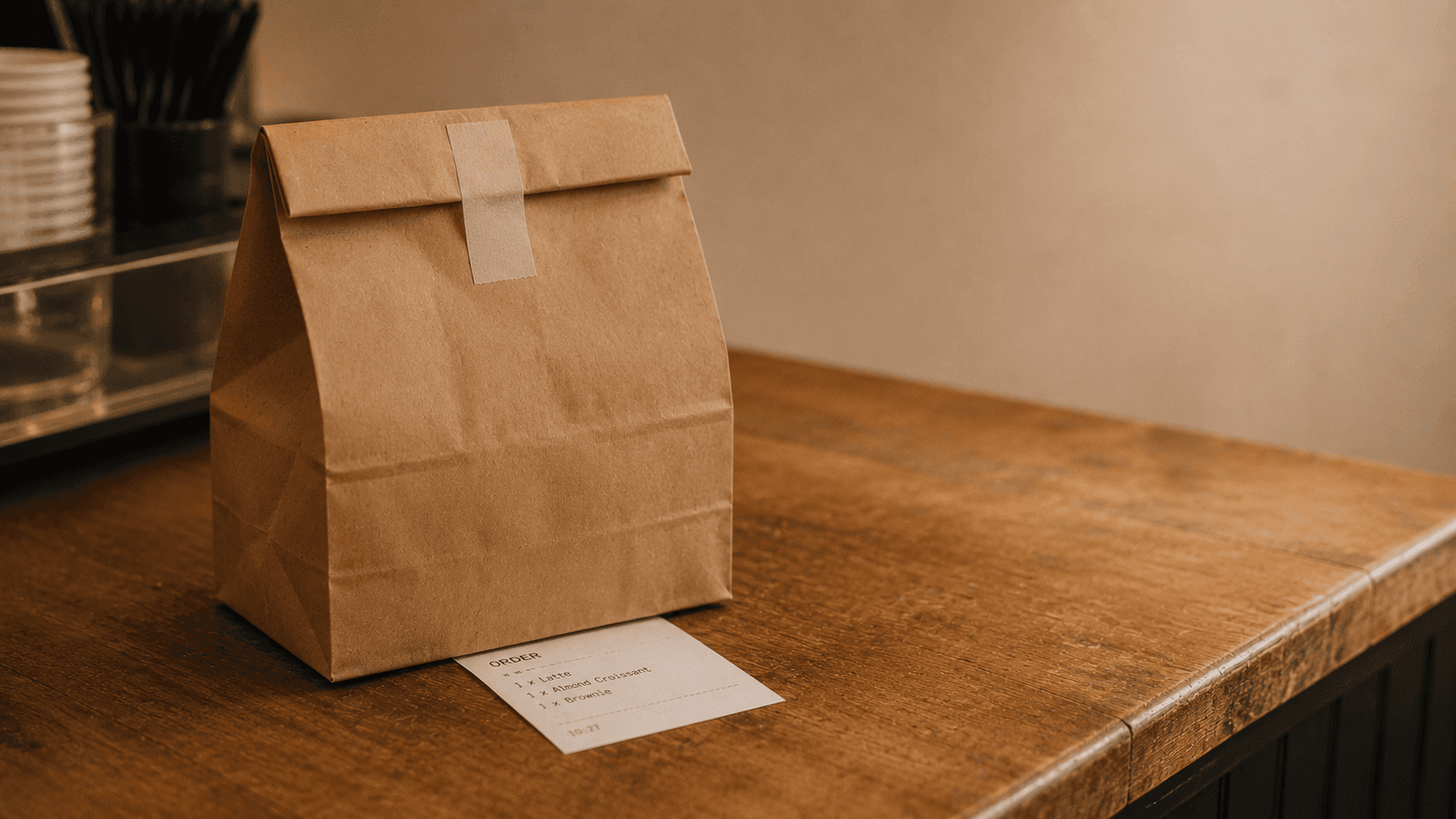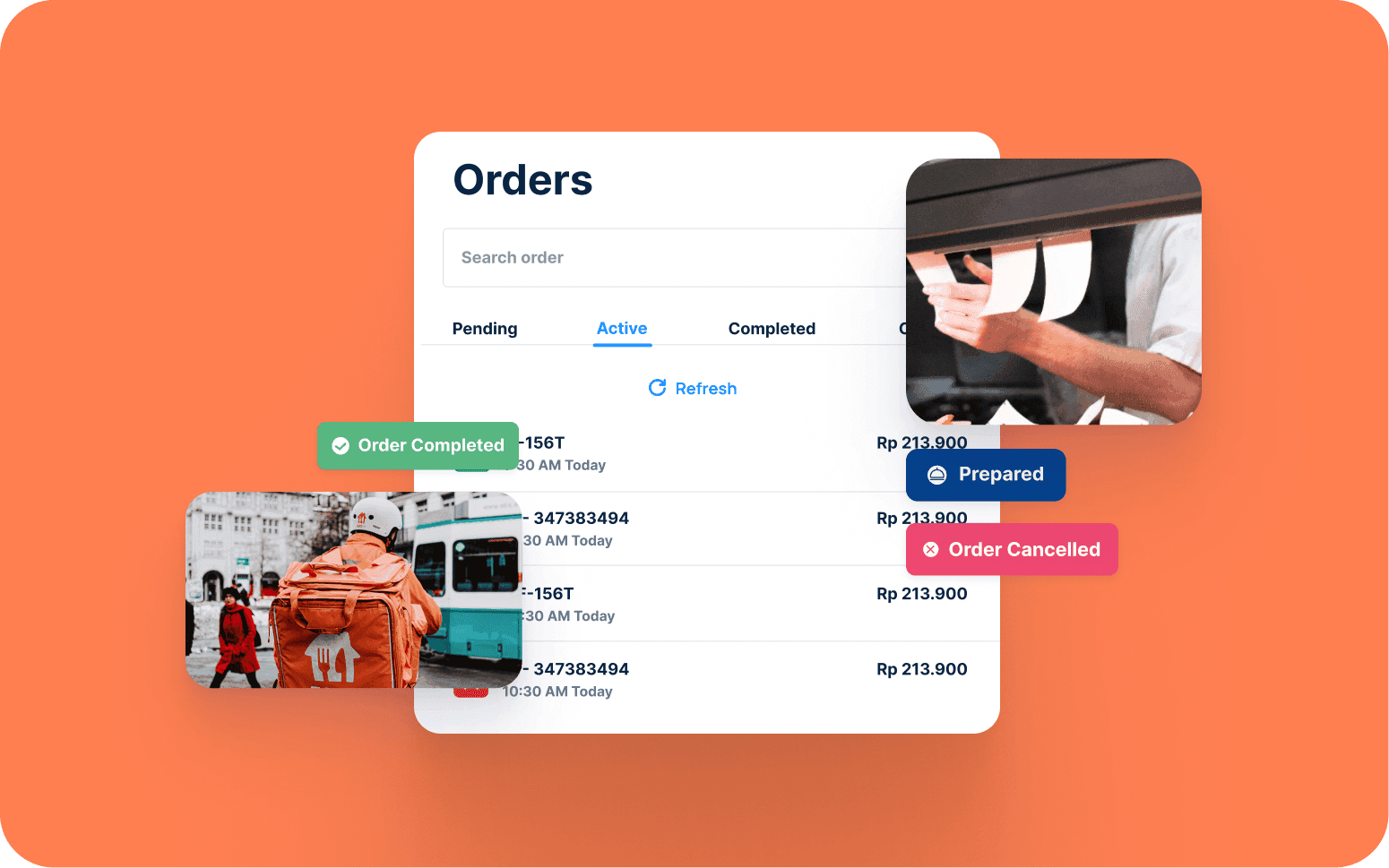
Centralised App for Food Order Management Across Multiple Locations
- 3x
- 12 weeks
Food businesses run on thin margins and high operational complexity. A reservation platform that won't talk to the kitchen, a delivery app charging 30% commission on every order, an inventory system showing last week's stock: these aren't software inconveniences. They're profit problems.
We build systems that fit your actual operational model. POS and reservations in one place, delivery dispatch that routes by proximity, and marketplace logic that handles specialty producer inventory. Not a generic platform patched to approximate your requirements.
Restaurant management with POS, reservations, and inventory
Food delivery platform with ordering, dispatch, and tracking
Online ordering system branded to the restaurant
Food marketplace for specialty and artisan producers
Recognition
Running a restaurant group where reservations live in one system, orders in another, and inventory in a spreadsheet, with no unified view of which menu items are most profitable and which are about to go out of stock?
Have a food delivery marketplace idea but the generic platforms available can't handle real-time driver tracking, dynamic pricing, or restaurant-specific prep time logic?
In short
RaftLabs builds custom software for food businesses: restaurant management systems with POS and inventory, food delivery platforms with automated driver dispatch and real-time order tracking, branded online ordering systems, food marketplaces for specialty and artisan producers, and supply chain tools. Most projects deliver in 10 to 14 weeks at a fixed cost agreed before work starts.
Companies we've built for





Every food business has the same core problem: operations move fast and the systems rarely keep up. A table turns, an order fires to the kitchen, a driver picks up a delivery, and a stock item hits zero, all in the same 20 minutes. When those events live in separate tools, someone is always catching up by hand.
We build software that connects those events. Restaurant management shows one view of the floor, the kitchen, and the stock room. Delivery platforms know where every driver is and what every kitchen's current wait time is. Ordering systems talk to the same menu database regardless of where the order comes from. Food marketplaces handle the inventory and fulfilment logic that specialty producers actually need.
Restaurant group managing reservations in one system, orders in another, and inventory in a spreadsheet with no unified view
When the floor manager can't see the kitchen queue and the kitchen can't see which items are running low, decisions get made on guesswork. Menu items go 86 after a guest has already ordered. Inventory counts happen manually at the end of each shift. A unified restaurant management platform connects the floor, the kitchen, and the stock room so everyone works from the same live picture. The result: fewer voids, fewer stockouts, fewer manual reconciliations.
Third-party delivery aggregator taking 25-30% commission on every online order placed through their platform
A restaurant paying 25% commission to a delivery aggregator on every order is subsidising someone else's business with margin that should fund growth. When online order volume is significant enough that aggregator fees are a material cost, a branded ordering system with direct-to-kitchen routing and optional delivery logistics recovers that margin. The customer relationship goes back to the restaurant, not the platform.
Food delivery marketplace needing real-time driver tracking and prep time logic that generic marketplace platforms cannot model
A food delivery operation that dispatches a driver before the kitchen has finished cooking, or assigns every restaurant the same 20-minute prep time regardless of order complexity, will deliver cold food late. Generic marketplace platforms can't model the prep time and kitchen readiness logic that food delivery requires. A custom dispatch system that adjusts driver assignment based on real kitchen status is the difference between a good delivery operation and a chaotic one.
Specialty food marketplace idea blocked because generic e-commerce platforms cannot handle perishable inventory windows or producer-specific fulfilment
A specialty food marketplace where a producer lists fresh product with a 72-hour availability window, manages their own packing and despatch, and ships only to certain postcodes can't be built adequately on a generic e-commerce template. The inventory, fulfilment, and geographic constraint logic that food commerce requires needs to be built in. Approximating it through a combination of apps breaks every time product goes out of season.
Custom restaurant management platforms with POS, table management, and real-time kitchen communication. Menu management syncs across dine-in, online ordering, and delivery channels from a single source. Inventory tracking includes par-level alerts and wastage recording. Profitability reporting covers menu item, shift, and location. For restaurant groups that need more than a point-of-sale terminal and a spreadsheet.
End-to-end food delivery platforms with customer ordering, automated driver dispatch, and real-time order tracking. Restaurant dashboards include prep time controls, order acceptance, and kitchen status. Delivery zone management, dynamic pricing, and surge configuration are built in. Operations reporting covers order volume, delivery times, and driver performance. For operators who want to own their delivery infrastructure rather than pay per-order commission to aggregators.
Branded online ordering systems for restaurants and restaurant groups. Menu syncs to the same data source as the POS, so a price change or item 86 updates everywhere at once. Orders route directly to the kitchen display or printer. Table-side QR ordering, collection, and delivery options sit in one system. Customer accounts and order history support repeat purchase. Your brand on the ordering experience, not a third-party platform's.
Marketplace platforms for specialty food producers, artisan makers, and farm-direct suppliers. Producer onboarding and product listing management are included. Order management routes fulfilment to each producer. Subscription box and recurring order support handles weekly schemes. Buyer-facing search and filtering covers the full producer catalogue. The infrastructure for a food marketplace that a generic e-commerce template can't replicate.
Inventory and supply chain tools built for food businesses with perishable stock and short replenishment cycles. Real-time stock levels span locations. Expiry tracking and FIFO rotation alerts prevent waste. Purchase order management connects to suppliers. Wastage recording ties to menu-level cost reporting. For food businesses where a stockout or overstock isn't just a cost issue; it's a food safety issue.
Reporting and analytics tools that connect sales, inventory, labour, and delivery data into one view. Menu item profitability accounts for food cost and labour. Sales break down by channel: dine-in, collection, and delivery, with contribution margin per channel. Demand forecasting by day and daypart reduces prep waste. Location benchmarking supports multi-site operators. The reporting layer that turns operational data into decisions.
We map your operational model, whether you're a restaurant group, a delivery operator, or a marketplace, and identify the exact points where the current systems create delay, cost, or lost revenue. For delivery platforms, we map prep time logic, dispatch rules, and driver management needs. You receive a fixed-price specification before development begins.
We design the data model around the specific requirements of your food operation: menu versioning across channels, real-time stock deduction, order routing logic, and for delivery platforms, the dispatch state machine that connects kitchen readiness to driver assignment. Multi-location hierarchy is designed from the start for restaurant groups.
Development runs in two-week sprints with working software shown at each checkpoint. POS, ordering, kitchen display, inventory, and dispatch modules are built in parallel where dependencies allow. Third-party integrations, such as payment processors, mapping APIs for driver tracking, and printer or KDS hardware, are built and tested against live environments during this phase.
Go-live is phased to avoid disruption during peak service periods. We provide onboarding for front-of-house, kitchen, and operations teams. Post-launch support covers adjustments from real service conditions, with handover to your team or an ongoing arrangement.
Custom software makes sense when your business model has requirements that existing platforms can't support without a fragile set of workarounds. Common triggers include: a restaurant group where head office needs real-time visibility across locations but the POS only syncs overnight; a delivery operation where the commission structure of existing aggregators makes the unit economics unworkable; or a food marketplace for specialty producers where the inventory and fulfilment logic is too specific for a generic e-commerce template. If an off-the-shelf platform would genuinely serve your needs, we'll say so. Custom development carries ongoing maintenance cost that SaaS platforms absorb for you.
A food delivery platform is end-to-end infrastructure: customer ordering, driver dispatch and tracking, restaurant dashboards, delivery zone management, and operations reporting. It's built for operators who want to run their own delivery network. A white-label online ordering system is scoped to the customer-facing ordering experience, branded to the restaurant, integrated with the POS and kitchen, and covering collection, table ordering, and direct delivery. It's built for restaurants who want to own the customer relationship for online orders without building delivery logistics. The right choice depends on whether you need to manage your own drivers.
Yes. Food producer marketplaces have specific requirements that generic marketplace platforms handle badly: perishable inventory with short availability windows, producer-specific fulfilment logic, subscription and recurring order models for weekly box schemes, and geographic delivery constraints. We build the producer onboarding, inventory management, order routing, and buyer-facing storefront as a system designed around these constraints. The platform can support a mixed model: direct DTC orders from the producer and a marketplace layer where buyers discover and order from multiple producers in one checkout.
Start with the system that has the highest operational cost in its current form. For most restaurants, that's the ordering and POS layer. A unified system that handles dine-in, online ordering, and kitchen communication eliminates the manual work that comes from running separate systems for each channel. For a delivery operator, start with the dispatch and tracking layer; manual driver assignment is the first thing that breaks at volume. For a food marketplace, start with producer onboarding and order routing. Those are the hardest to retrofit later. We scope projects to identify the highest-value starting point before recommending a build.
Restaurant management software development
POS, table management, inventory, profitability reporting
Food delivery platform development
Driver dispatch, restaurant dashboards, real-time tracking
Online food ordering system development
Branded ordering, kitchen routing, loyalty
Food and produce marketplace development
Producer onboarding, subscription boxes, batch management
What clients say
Three-year average engagement. Founders and operators describing the work in their own words. No marketing varnish.

 Indonesia
RaftLabs helped us build a platform that truly transformed how our customers order and engage with our brand across multiple locations.
01 / 02
Tell us your current setup and where it breaks down. We'll scope the right system for your food business and give you a fixed cost.