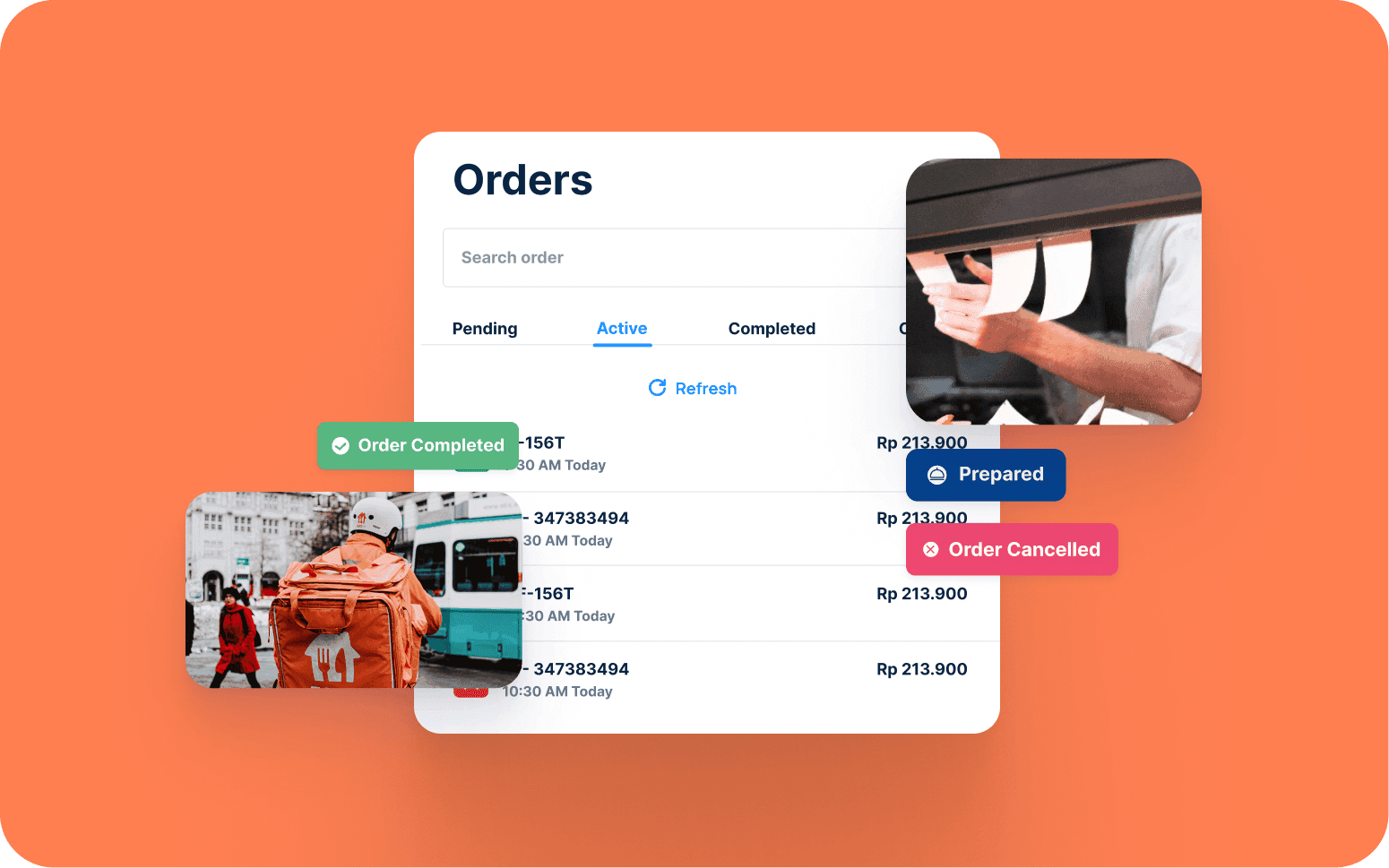
Centralised App for Food Order Management Across Multiple Locations
- 3x
- 12 weeks
RaftLabs builds custom restaurant management platforms, POS, table and reservation management, menu management, kitchen display system integration, staff scheduling, inventory tracking, and profitability reporting.
We build systems where the menu is managed once and flows to every channel. Where the kitchen sees orders from the floor, the website, and the delivery platform in one queue. Where head office sees sales, voids, and wastage across all locations in real time.
POS with table management and split billing
Centralised menu management synced to all ordering channels
Kitchen display system integration with order routing
Inventory tracking with wastage alerts and reorder triggers
Recognition
Running a restaurant chain where head office has no real-time visibility of sales, voids, and wastage across locations because the POS data only syncs overnight?
Menu changes that require updating three systems separately, the POS, the online ordering widget, and the delivery platform listing, because none of them share a master menu?
In short
RaftLabs builds custom restaurant management software, POS with table management and split billing, centralised menu management synced to all ordering channels, kitchen display system integration with order routing, and inventory tracking with wastage alerts and reorder triggers. We also build profitability reporting by menu item, shift, and location for restaurant groups. Most restaurant management projects deliver in 10-14 weeks at a fixed cost.
Companies we've built for





Most restaurant groups are running three or four separate systems that were never designed to talk to each other. The POS manages floor orders. A separate platform handles online orders. Reservations live in a booking tool that the kitchen can't see. Inventory is tracked in a spreadsheet. When a rush hits, staff are translating between these systems by hand. When management wants to know which menu items are profitable across locations, someone is pulling exports and building a report in Excel.
The real cost is not the software subscriptions. It's the labour spent bridging systems and the decisions made on data that is a day old. A restaurant group with five locations and an overnight POS sync doesn't know at 2pm that the lunch service at location three ran out of a key ingredient and started substituting. Head office finds out at end of day. Or not at all.
We build restaurant management systems where the operational data is in one place. POS, kitchen, ordering channels, and inventory share the same data layer. Management sees what is happening across the estate now, not in the morning report.
Point-of-sale with table layout management, course firing, and split billing, integrating with Toast, Square, Clover, or Oracle MICROS via their respective APIs or webhook event streams where a native build on top of an existing POS is not the right fit. Orders placed at the table go to the kitchen display in the right sequence, starters before mains, courses held until the table is ready. Course firing is controlled by the server from the table view with a one-tap hold or fire action that updates the kitchen display in real time.
Split billing handles the most complex scenarios without voiding and re-entering the order: split by seat, split by item, even split across a configurable number of covers, or custom split with partial amounts. Card payment via integrated payment terminal, digital wallet (Apple Pay and Google Pay via contactless reader), and cash handling all settle to the same bill record. Labour scheduling is built into the same management layer with shift planning, role-based access for staff accounts, and overtime alerts that trigger before a shift crosses the overtime threshold, giving managers the chance to adjust before the cost is locked in. For restaurants where the floor experience is the product and the POS must not create friction for staff.
Reservation system built into the same platform as the POS. When a table is booked, the floor plan updates in real time so the host view always reflects current table status. When a walk-in is seated, the reservation view adjusts and estimated wait times for the waitlist recalculate based on actual table turnover rates for that service period. Waitlist management shows queue position and estimated wait time to the waiting guest via SMS, with automatic table-ready notifications when a table becomes available.
Automatic SMS confirmation goes to the guest at booking, with a reminder 24 hours before the reservation. No-show tracking records unattended reservations against the guest record for rebooking decisions on high-demand services. Online ordering integration with DoorDash Drive, Uber Eats API, and Olo connects delivery and pickup orders to the same order management flow as floor orders, so the kitchen sees everything in one queue. The allergen matrix for the menu is managed centrally and surfaced at the point of order, when a guest has a recorded allergy, the server sees a flag before confirming the order. This covers allergen compliance requirements for food businesses without requiring a separate allergen management system.
Single menu database synced to the POS, the online ordering system, and the delivery platform integrations via the DoorDash Drive API, Uber Eats API, and Olo. A price change or an item removal made in the central menu manager updates everywhere, the POS screen, the online ordering widget, and the third-party delivery listing, without separate logins to each platform. Menu version control handles seasonal changes, time-limited specials, and location-specific overrides with audit history so you can see who changed what and when.
86'd item management is a real operational pressure point. When the kitchen runs out of an ingredient, the 86'd flag is set in the kitchen display and propagates to all ordering channels in real time, online orders and delivery orders cannot be placed for that item until the flag is cleared. This prevents the kitchen from receiving orders it cannot fulfil and avoids refunds and cancellations on platforms where cancellation rates affect your merchant standing. The allergen matrix is managed centrally per menu item and version-controlled alongside the recipe, when a recipe changes, the allergen matrix is updated as part of the same workflow. Modifier and option management with upsell prompts at the point of order completes the menu management layer.
Kitchen display system (KDS) integration or custom-built display showing all orders, floor, online, and delivery, in a single queue prioritised by fire time. Order routing by kitchen station is configured per menu item category: cold starters to the cold prep station, grill items to the grill station, fryer items to the fry station, and desserts held until the main course bump. Each station sees only the items routed to it, with course grouping so grill knows the cold starter has been called and the main is ready to fire.
KDS integration works with hardware from established providers, Epson and Star Micronics receipt printers for stations without a display, and custom Android tablet displays for stations that need a full order view. Bump bar support lets kitchen staff mark items complete without touching a touchscreen, which matters in a hot, wet kitchen environment. Course status is visible to the floor team's view so servers know when to clear plates and when the next course is ready without walking to the pass. The system logs time-to-bump per station per service, which feeds into the reporting layer for kitchen throughput analysis. For kitchens where order routing by voice or paper tickets is the primary source of errors and delays.
Ingredient-level inventory tracking linked to the menu via recipe-level COGS tracking. When a dish is sold, the recipe ingredients are deducted from stock at the configured yield percentage, the system accounts for prep yield, not just purchase unit. This produces a theoretical food cost figure for each service period: what the food cost should have been based on items sold, at the recipe COGS. Actual food cost is recorded via stock counts, waste logs, and purchase receipts. The gap between theoretical and actual food cost, known as the variance, surfaces where portioning errors, spoilage, or unrecorded waste are occurring.
Par-level alerts trigger when an ingredient approaches the reorder threshold during service, the kitchen manager sees a low-stock alert before running out mid-service rather than discovering the shortage when the item is already depleted. Wastage recording with reason codes, prep waste, cooking error, spoilage, customer return, or void, is logged per item per shift. Purchase order management with supplier integration allows direct reorder from the inventory screen when stock falls below par. For restaurant groups where food cost percentage is the largest controllable number on the P&L and the gap between theoretical and actual food cost is currently invisible until the month-end count.
Profitability reporting at the menu item level: revenue, food cost percentage (actual and theoretical), and contribution margin per dish, updated in real time as sales are recorded. The three key P&L metrics, food cost %, labour cost %, and prime cost % (food cost + labour cost as a percentage of revenue), are displayed at the location, shift, and group level so operators see the numbers that drive profitability decisions without building the report from POS exports.
Sales by channel, dine-in, collection, and delivery, with margin comparison shows which channel is the most profitable after platform fees are accounted for. Void and discount reporting by staff member and shift identifies patterns that indicate training issues or policy abuse. Location benchmarking for multi-site groups shows each location's performance against the group average and against a selected peer location, a useful tool for identifying the locations where operational gaps are causing margin leakage. Labour cost against revenue by shift closes the prime cost view. The allergen compliance matrix is reportable by menu item and version for regulatory audit purposes. For restaurant operators and finance teams who need the data to make menu, pricing, and staffing decisions without building the report from raw exports each week.
Off-the-shelf POS platforms work well for single-site restaurants with standard ordering models. Custom software becomes the right choice when your business has requirements those platforms cannot support cleanly. Common triggers include: a multi-location group that needs real-time consolidated reporting across sites rather than siloed POS accounts; a restaurant model where the ordering flow, tasting menus, pre-ordered set menus, or tableside order modifications, is complex enough that the standard POS screen creates friction for staff; or a group that needs menu data to flow automatically to an online ordering system and delivery platform via the DoorDash Drive, Uber Eats, and Olo APIs without manual re-entry.
Other common triggers are recipe-level COGS tracking with theoretical versus actual food cost variance reporting (Toast and Square do not produce this out of the box at the recipe level), kitchen display routing with station-specific views for kitchens with complex station setups, and labour scheduling with overtime alert integration into the same reporting layer as food cost and revenue. The key question is whether the gap between what the platform provides and what you need can be closed with configuration or integrations, or whether it requires a custom build. We scope every project and will tell you which applies to your situation before you commit to development.
Multi-location architecture means separating location-level operations from group-level management. Each location runs its own POS, floor management, and kitchen display with real-time data. Group-level management sees consolidated reporting across all locations with drill-down by site, food cost %, labour cost %, prime cost %, sales by channel, and void and discount data available at both the group and location level without waiting for overnight syncs.
Menu management is centralised, a change made at group level propagates to all locations with the option to allow location-level overrides for specials and location-specific pricing. 86'd item flags set at a location affect that location's ordering channels only, not the full group. Staff accounts are scoped to their location with group-level admin access for operations managers. Integration with a single accounting system at group level, typically via a CSV or API export in the format your accounting system accepts, produces a consolidated P&L without manual aggregation. The architecture is designed so that adding a new location is a configuration task, provisioning the new location's POS, linking it to the central menu and reporting layer, not a development task that requires code changes.
Yes. We integrate with major kitchen display systems, KDS hardware from Epson, Star Micronics, and custom Android displays, via standard print protocols and API layers where available. Where a restaurant already has kitchen printers, the system can route orders to the existing printer fleet without replacing hardware. We also build custom KDS interfaces for restaurants where the standard KDS layout does not match the kitchen workflow, for example, a kitchen where the pass is separate from the stations and the expeditor needs a different view from the section cooks.
A focused POS and ordering system for a single-site or small group, covering POS, table management, kitchen display integration, and basic inventory, typically runs $12,000 to $35,000. A full platform for a multi-location group, adding centralised menu management, multi-channel order sync, inventory tracking with wastage, and group-level profitability reporting, typically runs $25,000 to $70,000. The range is driven by the number of locations, the complexity of the ordering model, and the integrations required with existing systems. We scope and price every project before development starts.
What clients say
Three-year average engagement. Founders and operators describing the work in their own words. No marketing varnish.

 Indonesia
RaftLabs helped us build a platform that truly transformed how our customers order and engage with our brand across multiple locations.
01 / 02
Tell us your current systems, how many locations you operate, and where the operational gaps are. We'll scope a platform built around your restaurant model.