SaaS Product Development Lifecycle and Best Practices

Short answer
The SaaS product development lifecycle has 5 stages: ideation and planning, design, development, testing, and deployment. RaftLabs builds SaaS MVPs in 6-8 weeks when scope is locked before kickoff. The full lifecycle from ideation to a market-ready product runs 12-20 weeks depending on feature complexity and compliance requirements.
Key Takeaways
- The most common cause of SaaS budget overruns is scope changes during sprint one. Locking features before kickoff is more valuable than any agile process you put in place after.
- Multi-tenant architecture reduces hosting costs at scale but requires more upfront planning. Single-tenant setups are faster to ship but cost significantly more per customer to operate past 500 users.
- An MVP takes 6-8 weeks when scope is fixed. Each week of scope debate post-kickoff adds roughly 1.5 weeks of delay to the final delivery date.
- Post-launch iteration is the stage most founders underfund. SaaS products that stop shipping after launch lose 15-20% of users within 90 days according to Mixpanel's 2024 retention benchmarks.
- Surveying 20-30 target users before writing a single line of code is the most cost-effective quality check in the entire lifecycle. It costs hours; skipping it can cost months of rework.
Most SaaS products don't fail because of bad code. They fail because the team skipped a stage, or rushed through it, and the gaps compounded into something too expensive to fix after launch.
The SaaS development lifecycle is not a formality. It is a sequence of decisions that determines whether your product ships on time, stays within budget, and retains users past the first 90 days.
According to Statista's 2024 SaaS market report, the global SaaS market is expected to reach $307.3 billion by 2026. The opportunity is real. So is the competition from teams that execute each stage well.
This guide covers the five stages of SaaS development, the practices that matter at each stage, and the specific mistakes that cost founders the most time and money.
What is a SaaS product?
A SaaS product is a cloud-based software application users access over the internet without installing it locally. The provider hosts and maintains it. Users pay a subscription.
SaaS products you likely use: Google Workspace, Zoom, Slack, Shopify, Notion. Each of these ships updates continuously, scales without user intervention, and generates revenue through recurring subscriptions rather than one-time licenses.
The business model is what makes the development lifecycle different from building a standalone app. A SaaS product is never finished. It ships, it iterates, and it must retain users month after month.
The 5 stages of SaaS product development
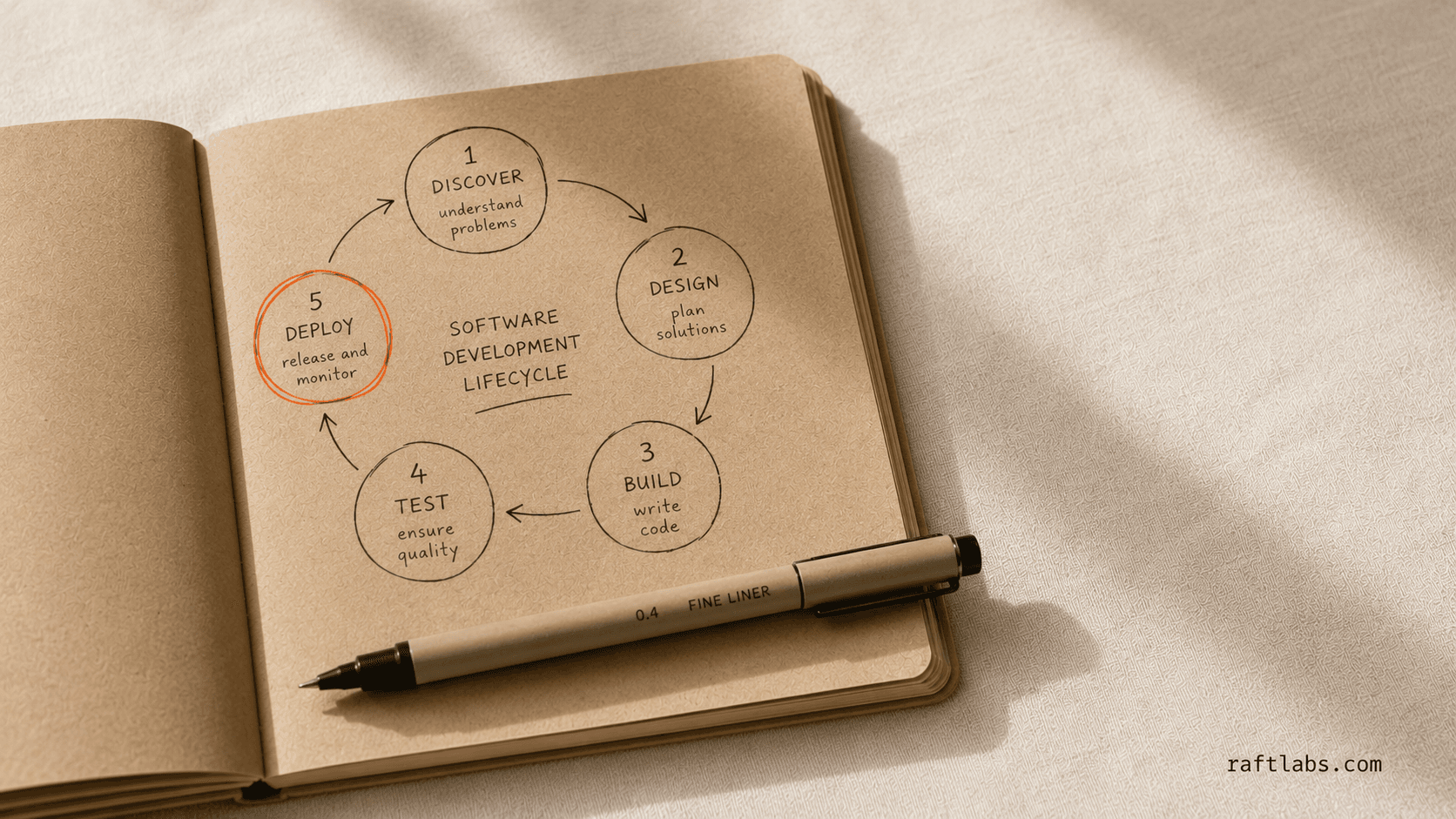
Stage 1: Ideation and planning
This stage does three things: validates the idea, identifies the audience, and defines the business strategy. Skip any one of these and you will rebuild something expensive later.
Idea validation
Not every idea turns into a product anyone uses. The fastest way to check is direct user research: survey 20-30 people who match your target user before writing a line of code. Ask them to describe the problem, not whether they like your solution. If they cannot describe the problem clearly, the market may not be there.
Competitive analysis at this stage is not optional. Find the five closest competitors. List what they do well and where users complain. Your differentiation comes from the gap between their limitations and what users actually need.
Market research
Define your target audience specifically. Age, role, industry, and decision-making authority all affect what the product needs to do and how it should be designed. A SaaS for accountants at mid-market companies looks completely different from a SaaS for freelancers, even if they manage similar data.
This specificity also affects pricing. If your audience is enterprise finance teams, annual contracts and SSO are table stakes. If your audience is independent contractors, monthly billing and a mobile app matter more.
Business strategy
Define your revenue model before development starts. Subscription tiers, usage-based pricing, and freemium models all shape which features need to ship at launch. A freemium model requires a conversion path from free to paid that is baked into the product from day one, not bolted on after.
Set a clear timeline with milestones. Vague goals like "ship when it's ready" produce vague timelines. Specific milestones like "MVP to 10 beta users by week 8" create accountability.
Stage 2: Design
Design is where you confirm that users can actually complete the core workflow in the product. It is not primarily about aesthetics.
UI/UX design
Users want to complete their task in as few clicks as possible. Every extra step in a core workflow is a risk to retention. At RaftLabs, after building over 20 SaaS products, the consistent pattern is that users abandon features that require more than three steps to discover.
Design for the most common workflow first. Optimize it until it is obvious. Then design the secondary features.
Prototyping
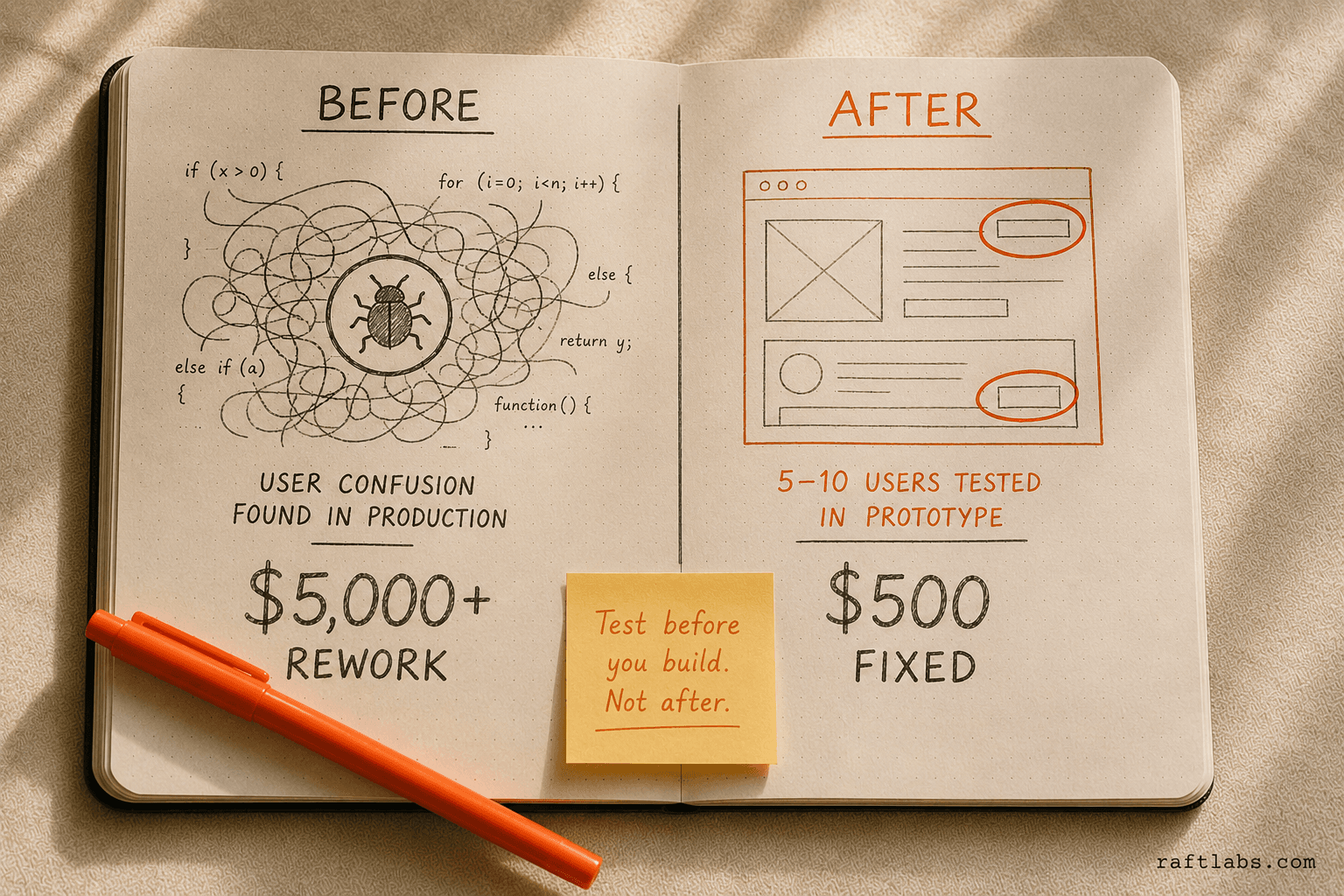
Build wireframes and interactive prototypes before development starts. Test them with five to ten users from your target audience. You are not looking for approval. You are looking for confusion. Any step where users pause, backtrack, or ask a question is a design problem that costs $500 to fix in a prototype and $5,000 to fix in production code.
This stage accounts for 15-20% of total development cost. Teams that skip it typically spend that money twice: once on development, once on redesign.
Stage 3: Development
Development is the longest stage in the lifecycle. The two decisions that most affect outcomes are team composition and tech stack selection.
Building the team
A functional SaaS development team needs:
A product manager to own the roadmap and translate business requirements into engineering tasks
Backend developers for server-side architecture, APIs, and database design
Frontend developers for the user interface
QA engineers for testing throughout the build, not just at the end
Teams that add QA only at the final testing stage consistently ship more bugs and spend more on post-launch fixes.
Technology stack selection
Your tech stack locks in your cost structure, compliance posture, and scalability ceiling. The decision made in week one determines what you can and cannot build at month twelve.
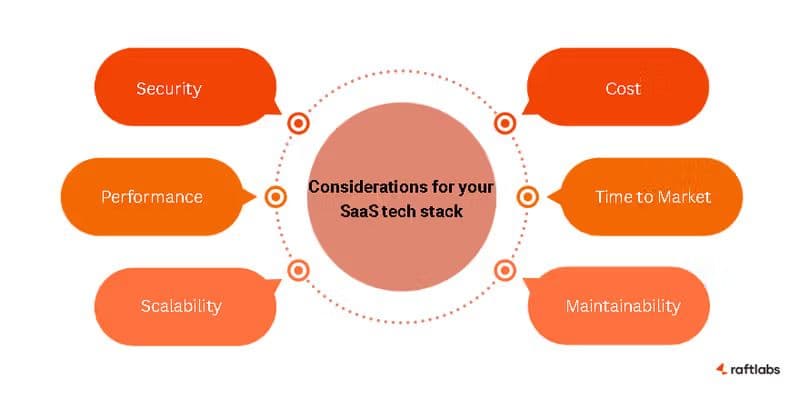
Common proven combinations:
Frontend: React or Next.js with TypeScript
Backend: Node.js (Express or NestJS) or Django (Python)
Database: PostgreSQL for relational data, Redis for caching
Cloud: AWS or Google Cloud for backend services, Vercel for frontend
Multi-tenant architecture should be a day-one decision. It reduces hosting costs significantly at scale but requires upfront planning for data isolation. Single-tenant setups are faster to ship but cost 3-5x more per customer to operate at scale.
For detailed guidance on stack selection, see our guide to choosing the right SaaS tech stack.
Also Read: Cost of Building a SaaS Product
Stage 4: Testing
Testing is the stage most teams compress when deadlines slip. That decision consistently produces more expensive problems after launch.
Manual testing checklist
Three areas require manual review:
- Usability testing: Can users complete the core workflow without guidance? Every moment of hesitation is data.
- UI consistency: Fonts, colors, and design elements must match across all pages. Inconsistency signals poor quality to enterprise buyers.
- Functionality testing: Every button, form, and feature must do exactly what it says. Test every state: empty, populated, error, loading.
Automated testing
Automated tests catch issues manual testers miss and scale across code changes:
- Performance testing: Does the app maintain response times under concurrent user load? Google's research shows a 1-second delay in page load time reduces conversions by 7%.
- Security testing: Automated vulnerability scanning before launch. The average cost of a data breach reached $4.88 million in 2024, according to IBM's Cost of a Data Breach Report, a 10% increase over the prior year.
- Scalability testing: Can the system handle 10x your expected launch traffic? Launch surges are common and unpredictable.
Stage 5: Deployment
Launch is not the finish line. It is the beginning of the feedback loop that determines whether the product grows or stalls.
Smart marketing at launch
A launch without an audience is a tree falling in an empty forest. Before launch:
Identify the communities where your target users gather: LinkedIn groups, Slack communities, Reddit threads, industry forums
Build a pre-launch email list from your prototype testing participants
List on Product Hunt, G2, and relevant SaaS directories for initial visibility
Build the feedback loop immediately
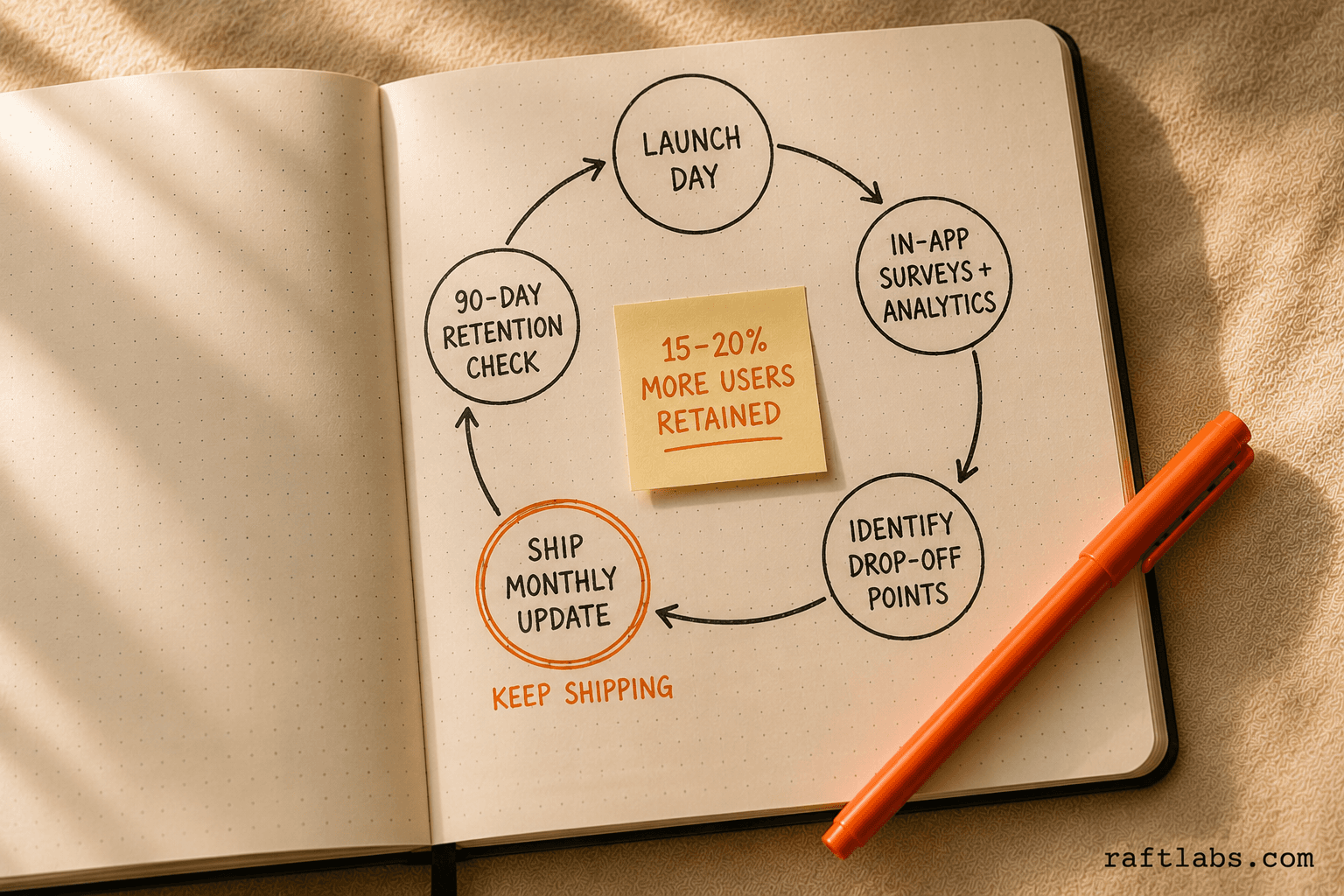
In-app surveys and usage analytics should go live on day one. You need to know which features users actually use, where they drop off, and what they ask support about. This data drives your first three months of iteration.
Mixpanel's 2024 retention benchmarks show that SaaS products that ship at least one meaningful update per month retain 15-20% more users at the 90-day mark than products that go quiet after launch.
Monitor from day one
Set up error tracking (Sentry), performance monitoring (Datadog or New Relic), and user behavior analytics (Mixpanel or PostHog) before launch day. You want to see problems as they happen, not in user complaint tickets.
Best practices for SaaS development
Automate repetitive processes early
Manual processes introduce errors and consume engineering time that should go toward product improvements. Automate: deployment pipelines, test execution, error alerting, and customer onboarding sequences. The earlier you automate, the more you compound the benefit.
Use multi-tenant architecture for cost control
A multi-tenant setup allows multiple customers to share the same application instance with isolated data. It reduces infrastructure costs, simplifies maintenance, and lets you push updates to all customers simultaneously. For most B2B SaaS products, this is the right default architecture.
Let user data drive your roadmap
Feature requests from sales calls are biased toward the loudest customers. Usage data tells you what users actually do. Instrument every core workflow and review the data weekly. Ship features that address the most common drop-off points first.
Keep security and compliance current
Security debt compounds. Encryption, access controls, and compliance frameworks should be part of your initial architecture, not retrofitted later. Retrofitting GDPR compliance onto a product that was not designed for it costs 3-4x more than building it in from the start. The same applies to HIPAA, SOC 2, and ISO 27001.
Common SaaS development challenges
Scalability under load
Poor scalability produces downtime at the worst possible time, during a product launch or a press mention. A microservices architecture distributes load across independent services. AWS or Azure auto-scaling handles traffic spikes without manual intervention.
Data security breaches
The average cost of a SaaS data breach reached $4.88 million in 2024, according to IBM's data. Preventive measures (encryption, two-factor authentication, regular security audits, and dependency updates) cost a fraction of breach response.
Integration complexity
Third-party API integrations break. Versioning changes, rate limits change, and endpoints deprecate. Plan for integration maintenance from day one. Use standardized API patterns (REST or GraphQL) and maintain integration test coverage.
Subscription lifecycle management
Free trial conversions, upgrade flows, and cancellation handling are product problems, not just billing problems. Automated subscription management tools (Stripe Billing, Recurly) reduce manual errors and customer friction at billing touchpoints.
SaaS products RaftLabs has built
PDC Remote Care
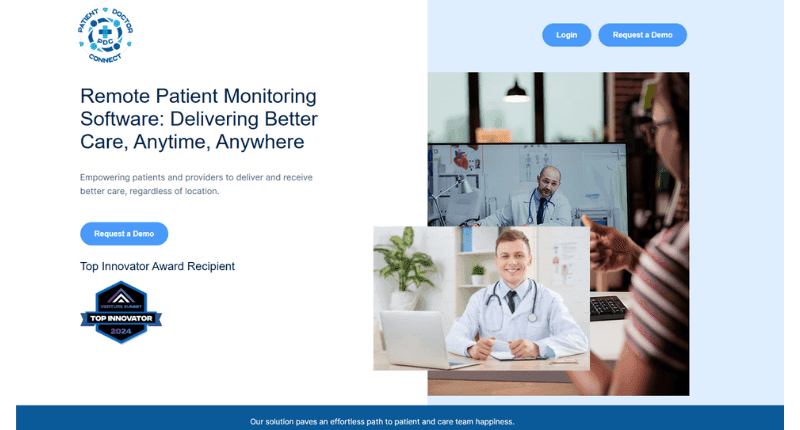
A remote patient monitoring platform with AI-driven insights for real-time monitoring and personalized care recommendations. Adopted by 15+ clinics. Achieved 50% faster clinical response times within two months of deployment.
PSi (People Supported Intelligence)
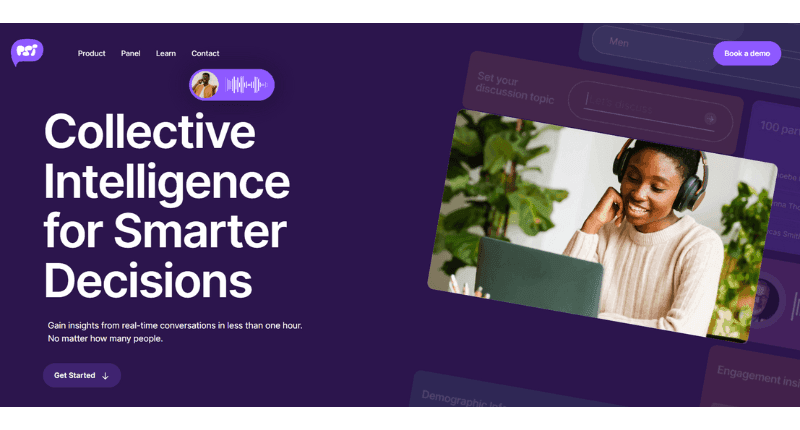
An AI-powered web application that analyzes large-scale conversations to support decision-making. Used by organizations to gather real-time insights from thousands of participants simultaneously.
Perceptional
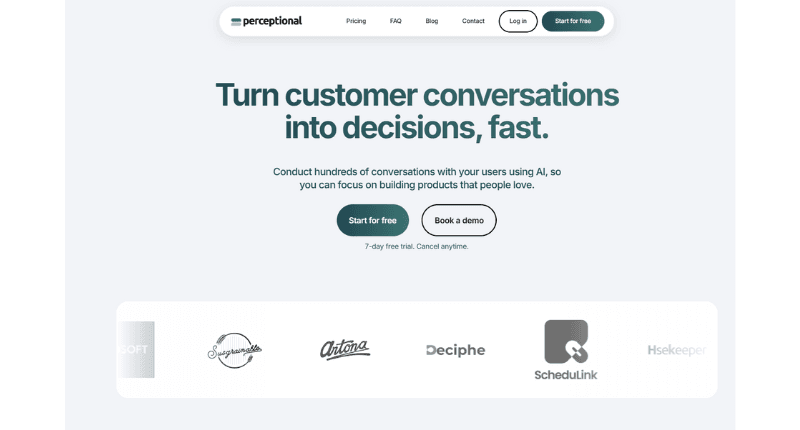
A user research platform built on AI-powered chat interviews. Generates automated follow-up questions in real time, replacing static survey forms with adaptive conversations.
SEKOU
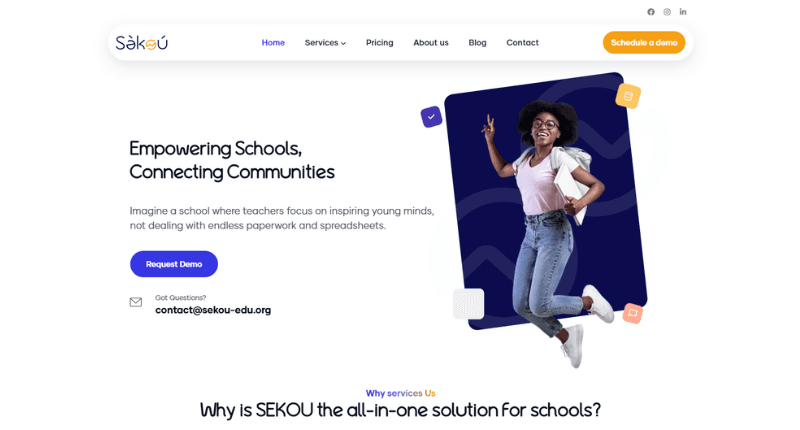
A multilingual learning management system designed for K-12 schools in French-speaking African countries. Automates attendance, grading, and parent-teacher communication in a single platform.
Conclusion
The SaaS development lifecycle works when you treat each stage as a prerequisite for the next. Validation before design. Design before development. Testing before deployment. Iteration after launch.
The teams that skip stages do not save time. They spend more of it later fixing what they cut.
If you are planning a SaaS build and want to understand what the right scope, timeline, and budget look like for your specific product, RaftLabs has shipped 20+ SaaS products across healthcare, fintech, education, and enterprise tooling. We can help you structure the build correctly from day one.
Ask an AI
Get an instant summary of this post from your preferred AI assistant.
Frequently asked questions
- The five stages are: (1) ideation and planning: validate the idea, define the audience, and set a business strategy; (2) design: create UI/UX wireframes and interactive prototypes; (3) development: build the frontend, backend, and integrations on the chosen tech stack; (4) testing: manual usability testing plus automated performance, security, and scalability testing; (5) deployment: launch with monitoring, then iterate based on user data. At RaftLabs, MVPs ship in 6-8 weeks when scope is locked at stage one.
- An MVP typically takes 6-8 weeks. A market-ready product with full features and integrations takes 12-20 weeks. Compliance requirements like HIPAA or SOC 2 add 4-6 weeks. The biggest timeline variable is how quickly the team locks scope. Each week of scope debate after kickoff adds roughly 1.5 weeks to final delivery.
- Validation confirms real demand exists before you spend on development. Surveying 20-30 target users before writing code costs hours and can reveal that the core assumption is wrong. Discovering the same thing at month three costs tens of thousands of dollars in sunk engineering time.
- Multi-tenant architecture lets multiple customers share the same application instance while keeping their data isolated. It lowers hosting costs significantly at scale. A single-tenant setup typically costs 3-5x more per customer to operate past 500 users. The tradeoff is more upfront planning for data isolation and access control.
- Evaluate three things: their experience with your app type (B2B, healthcare, fintech each carry different requirements), their approach to testing and QA (ask to see a testing checklist from a prior project), and their post-launch support model. A partner who treats maintenance as optional will cost you more in rework than they save in hourly rates.