How to Build a Customer Loyalty Rewards Program
How to build a customer loyalty rewards program that drives retention. Covers program types, design decisions, and a real example from Energia Rewards built by RaftLabs.

In this article
Short answer
RaftLabs builds customer loyalty rewards programs that drive measurable retention. Define objectives, choose a reward model (points, tiered, or cashback), integrate with your CRM and POS, and track redemption rate. Loyalty members generate 12-18% more revenue per year than non-members.
Key takeaways
- The loyalty management market is projected to surpass $41.2 billion by 2032. Loyal customers have higher purchase frequency and lifetime value than standard customers.
- 77% of customers with retail subscriptions want to join loyalty programs. Programs that offer personalized rewards outperform generic discount-only structures on retention metrics.
- The four main loyalty program types are points-based, tiered, subscription, and cashback. The right model depends on purchase frequency, average order value, and customer segment.
- Custom loyalty platforms give full control over rewards catalog, data ownership, and integration with existing POS and CRM systems. Off-the-shelf tools are faster to launch but limit program differentiation.
- Measuring loyalty program success requires tracking repeat purchase rate, average order value, referral rate, and redemption rate. Sign-up numbers alone tell you nothing.
Customer loyalty rewards programs are a proven retention tool. They give customers a reason to come back, reward consistent spending, and give brands a measurable edge over competitors who compete only on price.
The numbers back this up. The loyalty management market is on track to surpass $41.2 billion by 2032. Loyal customers return more often and carry a higher lifetime value than one-time buyers. 77% of customers with retail subscriptions want to join loyalty programs, and nearly half are ready to sign up the moment it's offered.
The non-obvious insight: most loyalty programs fail not because they lack rewards, but because they're designed around what the brand wants customers to do rather than what customers actually value. Personalized rewards consistently outperform generic discount structures on every retention metric that matters.
The sections below cover how to design a loyalty program that holds up, the tradeoffs between program types, and a real example of one we built.
What is a customer loyalty rewards program?
A customer loyalty rewards program is a structured initiative that recognizes customers for repeat business by giving them exclusive benefits, discounts, and rewards. The goal is to make staying with your brand more valuable than switching to a competitor.
These programs use a customer rewards platform to manage and deliver benefits at scale. A customer points system tracks activity across purchases, referrals, and engagement. Done well, a loyalty program doesn't just retain customers - it turns a segment of them into advocates who bring in new ones.
Check out our: Custom Loyalty app development services to build as per your business needs.
How to create a customer loyalty rewards program
1. Define objectives and goals
Start with a specific business problem you're solving. Increase repeat purchases? Reduce churn in a particular customer segment? Grow average order value? Set a measurable target - for example, increasing 90-day retention by 20% within 12 months. Without a number, you can't tell if it's working.
2. Understand your customers
Pull data on purchasing patterns, engagement frequency, and average spend before you design anything. Customers who buy weekly behave differently from customers who buy once a quarter. Segment by behavior, not just demographics, and build rewards that match each segment's actual habits.
3. Design the program structure
Choose a points-based system where customers earn points per dollar spent and can redeem for rewards. Add tiered levels (Silver, Gold, Platinum) if your customer base has meaningful spend differences between segments - tiers are most effective when the gap between levels feels achievable, not aspirational. Include milestone rewards for anniversaries and referral bonuses for successful introductions.
4. Determine the types of rewards
Good options: discounts and coupons, free products after a set number of purchases, early access to new products, VIP event invitations, and partner offers from complementary brands. Match the reward type to what your customers actually want, not what's cheapest to give.
5. Build the enrollment process
Keep sign-up simple: website, mobile app, and in-store. Ask only for name and email to start. Every additional field you add drops completion rates. Customers should be able to join at checkout with minimal friction.
6. Create a marketing and promotion plan
Launch across every channel your customers use. Keep members updated on new rewards via email and app notifications. Use purchase and behavior data to personalize what you send - a customer who buys skincare shouldn't get emails about kitchen appliances.
7. Integrate with existing systems
Connect the rewards program to your CRM so every customer interaction is tracked. Connect to your POS so earning and redemption happen automatically, not through manual processes that introduce errors. Gaps in integration are the leading cause of loyalty program trust failures.
8. Monitor and analyze performance
Track enrollment rates, active participation, redemption rates, and repeat purchase rate. Don't treat sign-up numbers as success - a program with 10,000 members and a 3% redemption rate is a failing program. Track what customers do, not just whether they joined.
9. Keep improving
Update rewards quarterly. Add seasonal or limited-time offers to keep participation from plateauing. Simplify anything members consistently find confusing, based on direct feedback.
10. Confirm legal and ethical compliance
The program must meet data privacy requirements (GDPR in Europe, CCPA in California) and consumer protection laws. Publish clear terms and conditions. Vague or hidden rules are a fast way to lose the trust you're trying to build.
Also Read: How much does Loyalty app development cost to plan your budget.
Types of customer loyalty reward programs
1. Points-based programs
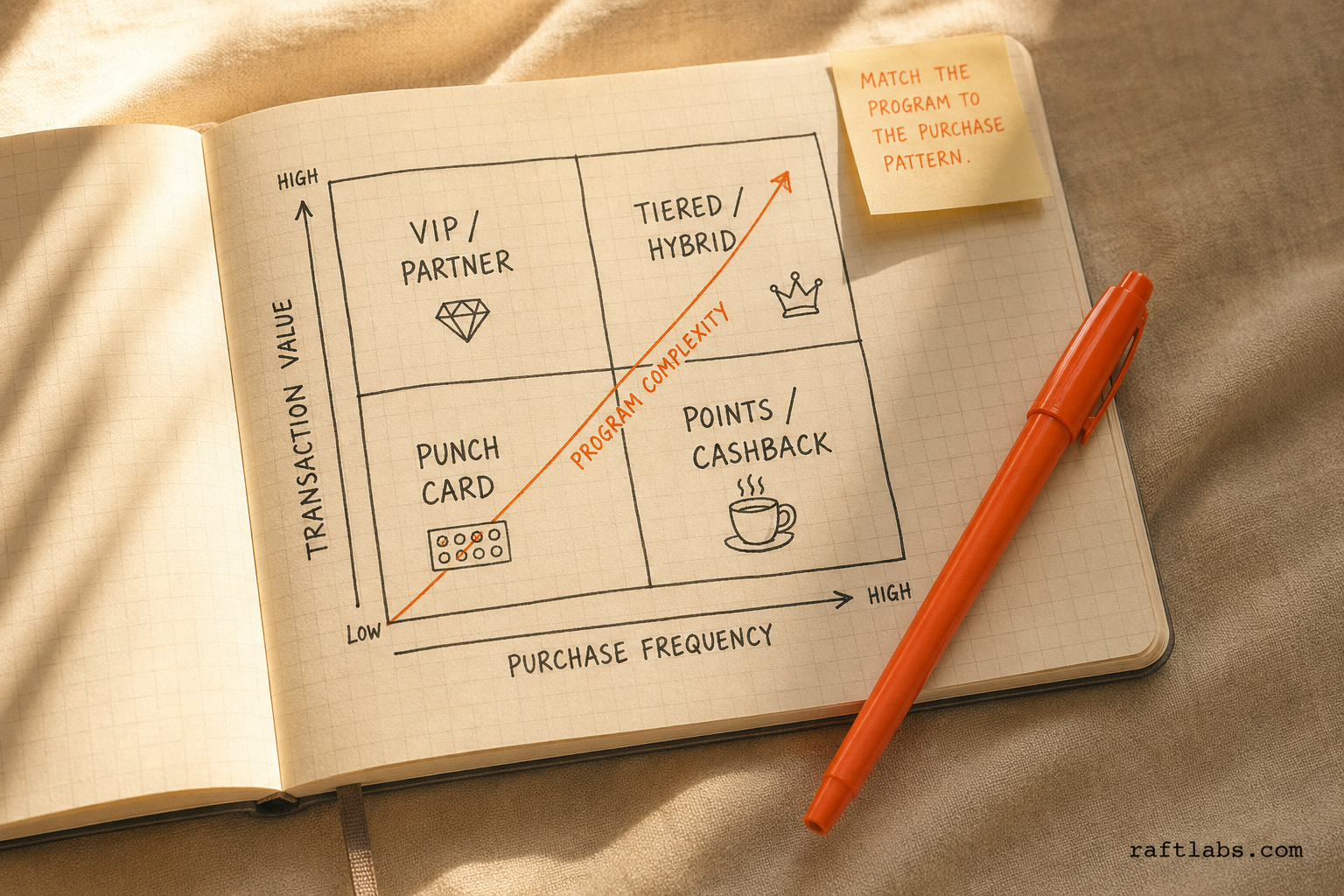
Customers earn points for every purchase or qualifying activity and redeem them for discounts, free products, or experiences. Example: a coffee shop where $1 spent earns 10 points, and 100 points earns a free drink.
When it works: High-frequency, low-to-mid ticket purchases - coffee, groceries, fuel, QSR. Customers see progress quickly, which drives repeat visits.
When it doesn't: Low-frequency, high-ticket purchases like furniture or cars. If a customer buys once every two years, points accumulate too slowly to be motivating.
Non-obvious pitfall: Points that expire frustrate customers more than having no program at all. If you add expiry, make it long (18-24 months minimum) and communicate it clearly.
2. Tiered rewards programs
Customers move through levels based on spending or engagement, with higher tiers offering better benefits. Example: an airline moving customers from Silver to Gold to Platinum, with priority boarding and free upgrades at the top.
When it works: Brands where a small percentage of customers drive a disproportionate share of revenue. Tiers reward and retain that high-value segment while giving lower-tier customers something to aspire to.
When it doesn't: Businesses with a narrow spend distribution, where most customers spend similar amounts. If everyone ends up in the same tier, the program doesn't differentiate.
Non-obvious pitfall: Customers who just miss a tier upgrade feel worse than customers who never tried. Make sure the gap between tiers has a visible and achievable path.
3. Cash back programs
Customers receive a percentage of their purchase amount back as cash or credit. Example: a credit card that credits 2% cash back monthly.
When it works: Price-sensitive markets where customers respond to tangible savings. Simple to understand, low administrative overhead, and easy to track.
When it doesn't: Premium brands where the emotional value of the purchase is the point. Cash back can feel transactional and undercut the brand experience you've built.
4. Discount programs
Customers get immediate savings on purchases as a percentage off or a fixed reduction. Example: a clothing retailer offering 10% off every purchase to members.
When it works: Frequent, habitual purchases where the discount tips the decision in your favor at the moment of purchase.
When it doesn't: If discounts become the primary reason customers choose you, you've trained them to expect lower prices. Removing the discount later feels like a price increase.
5. Punch card programs
Customers earn a punch or stamp for each purchase. After a set number, they get a reward. Example: a sandwich shop giving a free sandwich after ten purchases.
When it works: Simple, high-frequency service businesses - cafes, salons, car washes. Low tech overhead and easy for staff to manage.
When it doesn't: Anywhere that needs to track customer behavior across channels or connect spending to broader business data.
6. Referral programs
Customers earn rewards for bringing in new customers. Both parties typically get a benefit. Example: a subscription box service that gives $10 in credit to both the referrer and the new subscriber.
When it works: Products with high word-of-mouth potential and a customer base that genuinely likes the product. Referred customers have 37% higher retention than non-referred customers and a 16% higher lifetime value.
When it doesn't: Products where the customer wouldn't recommend it anyway. Incentivizing referrals on a mediocre product produces low-quality new customers who churn quickly.
7. Partner programs
Customers earn rewards across multiple businesses partnered together. Example: a hotel chain where points are redeemable with a car rental partner.
When it works: Brands whose customers have adjacent spending habits - travel + dining, fitness + supplements, fuel + grocery. Partnerships extend perceived value without increasing your own reward costs.
When it doesn't: Partnerships where the brands feel unrelated. A customer who books luxury hotels doesn't necessarily care about a discount at a budget car rental company.
8. VIP or exclusive programs
High-value customers get access to exclusive perks, early product releases, or private events. Example: a luxury brand offering VIP members early access to new collections.
When it works: Brands where exclusivity is part of the product. The program reinforces the positioning rather than contradicting it.
When it doesn't: Mass-market brands where broad participation is the goal. A loyalty program that only rewards the top 2% of customers misses 98% of your retention opportunity.
9. Spend-based programs
Rewards are based on total spending over a defined period. Example: a beauty retailer offering a $50 gift card for every $500 spent within a year.
When it works: Categories with variable spend, where you want to incentivize customers to consolidate their purchases with you rather than splitting across competitors.
When it doesn't: Low-margin categories where the reward cost eats into profitability before the incremental spend makes up for it.
10. Hybrid programs
These combine elements from multiple program types. Example: a grocery loyalty program where customers earn points, get discounts on selected items, and receive monthly cash back on total spend.
When it works: Mature programs with a segmented customer base and the infrastructure to manage complexity. Hybrid programs can match different reward types to different customer segments.
When it doesn't: Early-stage programs or small teams. Complexity in rewards design scales directly to complexity in customer support. Start simple.
Each type of customer reward program has its own strengths and can be shaped to fit your customer base.
Benefits of customer rewards programs
A well-designed program delivers measurable business outcomes, not just warm feelings. Here's what the data actually shows:
Loyal customers spend 12-18% more per transaction than first-time buyers who haven't been enrolled in a program.
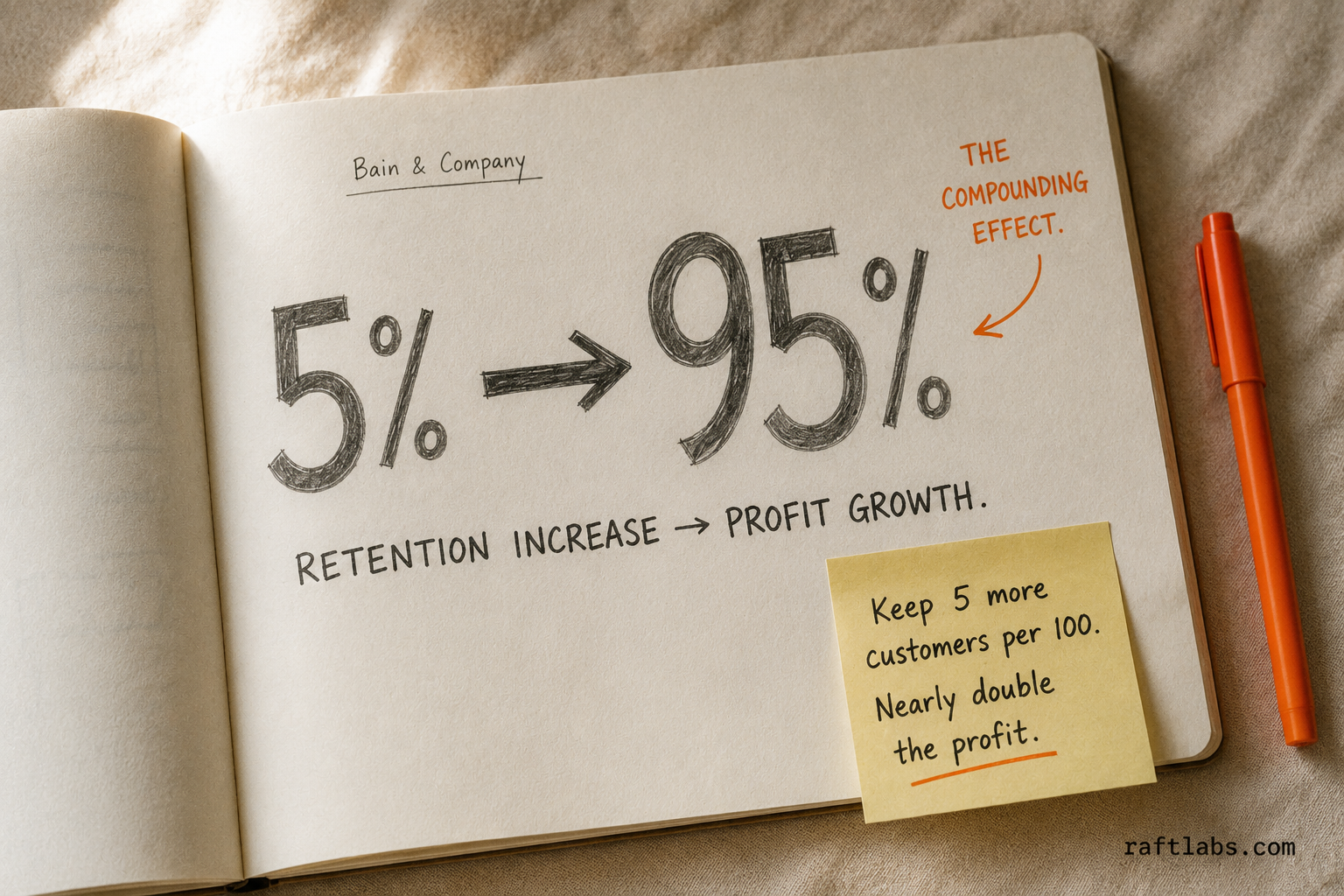
Increased customer retention: even a 5% increase in retention rate produces a 25-95% increase in profit, depending on industry.
Higher customer lifetime value: customers who redeem rewards are 4-5x more likely to buy again within 90 days.
Positive word-of-mouth: loyalty members are 3x more likely to recommend a brand to a friend than non-members.
Competitive differentiation: in commodity categories, a well-executed program is often the only meaningful reason to choose one brand over another.
Data collection: a loyalty program is your best source of first-party customer data - purchase history, frequency, preferences - at a time when third-party data is increasingly unreliable.
Cost-effective retention: acquiring a new customer costs 5-7x more than retaining an existing one. Programs that hold existing customers for longer are almost always the most efficient marketing spend.
A loyalty program works when it's designed around real customer behavior. It doesn't work when it's a discount mechanism in disguise.
Also Read: Top 10 Loyalty application development companies
Challenges of running a customer rewards program
Loyalty programs are harder to maintain than they look. Here are the real obstacles, and why each matters.
1. Integration with existing systems. Connecting rewards to your CRM and POS so that points are accurately tracked is the most common technical failure point. Gaps here create discrepancies that frustrate customers and erode trust in the program.
2. Accurate tracking. Points must be correctly credited for purchases, and redemptions must be logged properly. An error that shorts a customer their reward is noticed. The customer who didn't get their free coffee tells five people.
3. Simplicity. Complicated rules kill participation. If a customer can't explain how to earn and redeem rewards in one sentence, the program is too complex.
4. Adapting to feedback. Customer preferences shift. A program that was compelling at launch may feel stale in 18 months. Build regular review cycles into your operations from the start.
5. Fraud prevention. Rewards programs attract abuse if not monitored. Points manipulation, fake referrals, and account sharing are common at scale. Solid safeguards need to be in place before the program goes live, not after you discover the first exploit.
6. Managing costs. Every reward has a cost. The program has to produce enough incremental revenue to justify that cost. This math needs to be modeled before launch, not after six months of running at a loss.
7. Legal compliance. Data privacy (GDPR, CCPA), consumer protection laws, and clear terms and conditions are mandatory. Unclear consent mechanisms can create regulatory exposure that outweighs the program's value.
8. Consistent communication. Customers forget about loyalty programs if they don't hear from you. Inconsistent or unclear messages about how to earn and redeem reduce active participation.
9. Ongoing evaluation. Track retention, engagement, and satisfaction on a fixed schedule. Programs that run without data review drift toward irrelevance.
10. Scalability. A program that works for 1,000 customers needs different infrastructure than one handling 500,000. Plan for growth before you're forced to rebuild under load.
These challenges are solvable. The businesses that run successful programs treat them as products - with an owner, a roadmap, and regular improvement cycles - not as set-and-forget marketing campaigns.
Discount-based vs. reward-based loyalty programs
This is the most common design decision, and the answer depends on your business model.
Discount-based programs
Pros:
Immediate gratification: customers save money now, not at some future redemption point.
Simple to understand and operate.
Increased purchase frequency: a discount on the next purchase is a direct incentive to return.
Works well with price-sensitive buyers.
Cons:
Frequent discounts signal lower quality to some customers, especially in premium categories.
Margin erosion is real if discount depth isn't tied to incremental revenue.
Customers who come for the discount leave when the discount stops. You haven't built loyalty - you've built price dependence.
Reward-based programs
Pros:
Long-term engagement: points accumulate over time, creating an ongoing reason to return.
Personalization: rewards can match individual preferences, not just price sensitivity.
Stronger brand connection: a well-designed reward program creates an experience, not just a transaction.
Flexibility: rewards can include experiences, early access, and exclusive products - things competitors can't easily copy.
Cons:
More complex to design and explain.
Delayed gratification. Some customers lose interest before reaching a redemption threshold.
Higher administrative cost than a simple discount structure.
Which works better?
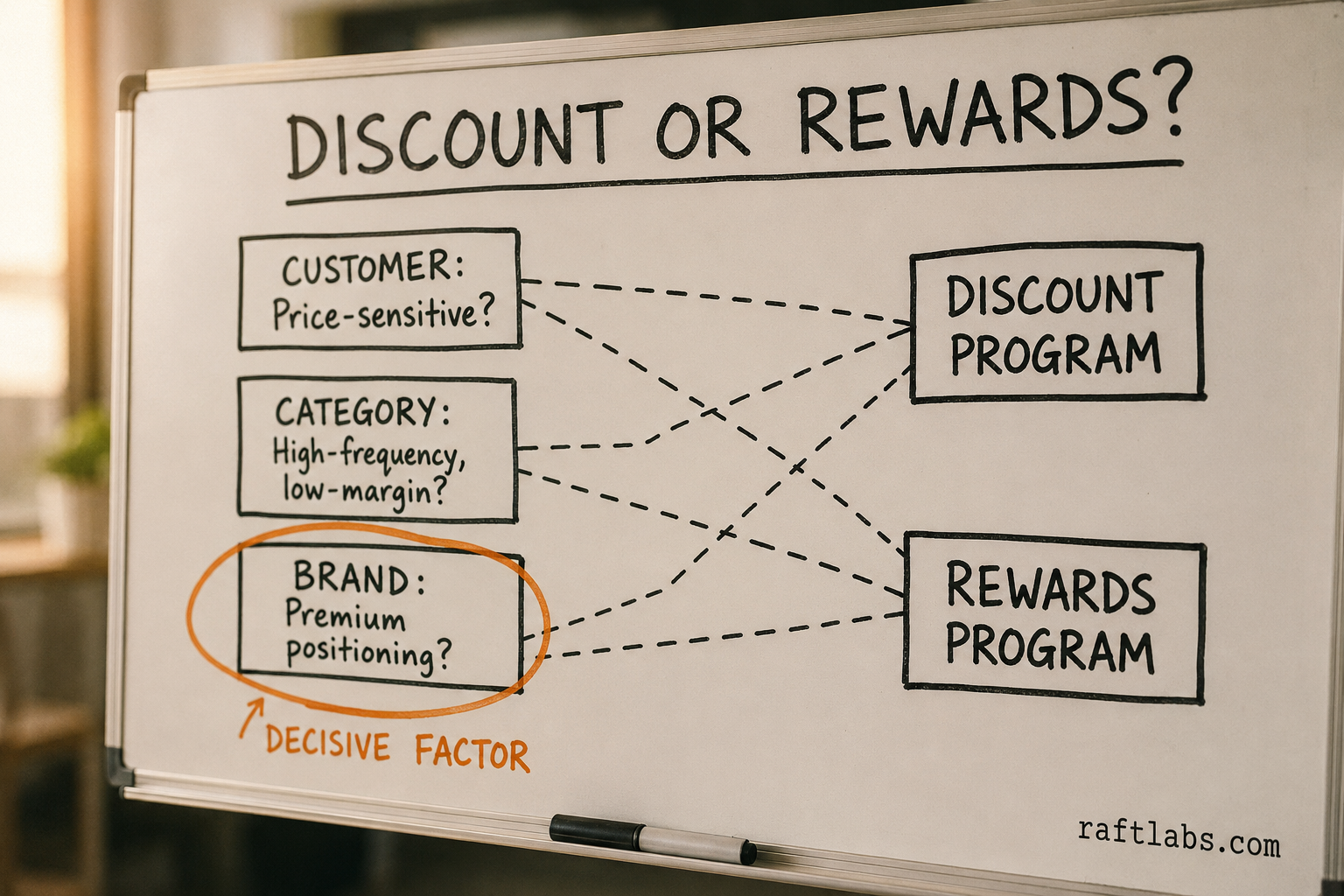
It depends on three factors:
Customer demographics: price-sensitive or value-focused buyers respond better to discounts. Customers buying for experience or status respond better to rewards.
Product category: high-frequency, low-margin purchases favor discounts. High-value or infrequent purchases favor rewards that create a premium experience.
Brand positioning: discount programs actively contradict premium positioning. Reward programs reinforce it.
Many businesses get the best results from a hybrid: points that can be redeemed for discounts or for exclusive rewards, giving customers a choice. This handles a wider range of preferences without forcing you to choose between margin and engagement.
The right choice isn't universal. It comes from knowing your customers well enough to design what actually changes their behavior.
The loyalty rewards platform we built: Energia Rewards
Energia is a leading electric and gas utility company in Ireland. They wanted to keep customers loyal in a competitive energy market where switching providers is easy and the product itself is a commodity.
The solution was Energia Rewards - a program built through a collaboration between marketing agency BrandFire and RaftLabs as the software development partner.
What the Energia Rewards platform offers
Energia Rewards gives Energia's customers access to pre-paid vouchers, discount codes, and competitions through a rewards account they manage online.
The program is built around three principles: make the benefits easy to find, make redemption frictionless, and make the program feel worth belonging to. The user interface is clean and direct - customers browse available rewards, see what they qualify for, and redeem with a single click.
Competitions as an engagement layer
Beyond static discounts, Energia Rewards includes competitions as an active engagement mechanism. Customers participate in prize draws and multiple-choice challenges, winning rewards for correct answers or random selection.
This matters because passive benefits (a voucher sitting in an account) don't create the same emotional engagement as active participation. Competitions give customers a reason to log in even when they're not about to make a purchase.
How the platform was built
RaftLabs handled software architecture and development. BrandFire handled the marketing strategy, reward curation, and campaign execution.
The split worked because the skills don't overlap. Building a reliable points system, integrating it with Energia's existing customer data, and building a management interface for the rewards catalog is an engineering problem. Designing the reward catalog, managing partner relationships, and communicating program updates to members is a marketing problem. Both halves are necessary, and combining them into a single vendor rarely produces the best result in either.
This collaboration demonstrates that businesses can develop a loyalty and rewards platform that serves customers directly while reinforcing the brand's positioning.
Analytics driving continuous improvement
BrandFire and RaftLabs built analytics into the platform from the start. The system tracks registrations, logins, rewards viewed, and redemptions at the individual customer level.
This data feeds back into the program design. Rewards that get high views but low redemptions usually have a friction problem at the redemption step. Rewards that get low views may need better placement or communication. The analytics make it possible to diagnose these issues and fix them rather than guessing.
The result
Energia won Customer Experience of the Year at the Irish Loyalty & CX Awards 2023. The award reflects what the data showed throughout - a program customers actively used and valued, not one they signed up for and forgot.
Build a loyalty and rewards platform for your business
If you're looking to improve retention and give your customers a reason to stay, a well-designed loyalty program is one of the highest-ROI investments you can make. Similar to Energia Rewards, a custom platform gives you full control over your rewards catalog, your data, and how the program grows over time.
Engineers at RaftLabs have built loyalty platforms across multiple industries. Build a loyalty and rewards platform that fits your customer base and your business model.
Get in touch with RaftLabs to scope out what your program could look like.
Ask an AI
Get an instant summary of this post from your preferred AI assistant.
Common questions
- A customer loyalty program is a way for companies to reward customers for coming back and buying again. It helps build a stronger connection with customers by offering things like discounts, perks, and special deals. The goal is to keep customers coming back and turn them into brand fans.
- A loyalty rewards program helps your business by: Increasing customer retention Boosting sales Strengthening customer relationships When customers feel rewarded, they're more likely to come back and tell their friends about you.
- Here are some ideas for rewards you can offer: Discounts Free products or services Early access to new products or events Points that can be traded for gifts Customized offers tailored to customer preferences
- To measure success, track: How often customers come back How much they spend How much time they spend in your store or app Customer feedback This will help you see what's working and where you can improve.
- The cost of building a loyalty platform depends on things like: The features you want (e.g., mobile app, website integration) The size of your customer base Whether you need custom design and development It can range from a few thousand dollars for basic features to tens of thousands for a fully customized platform. For more details, check out our pricing page.