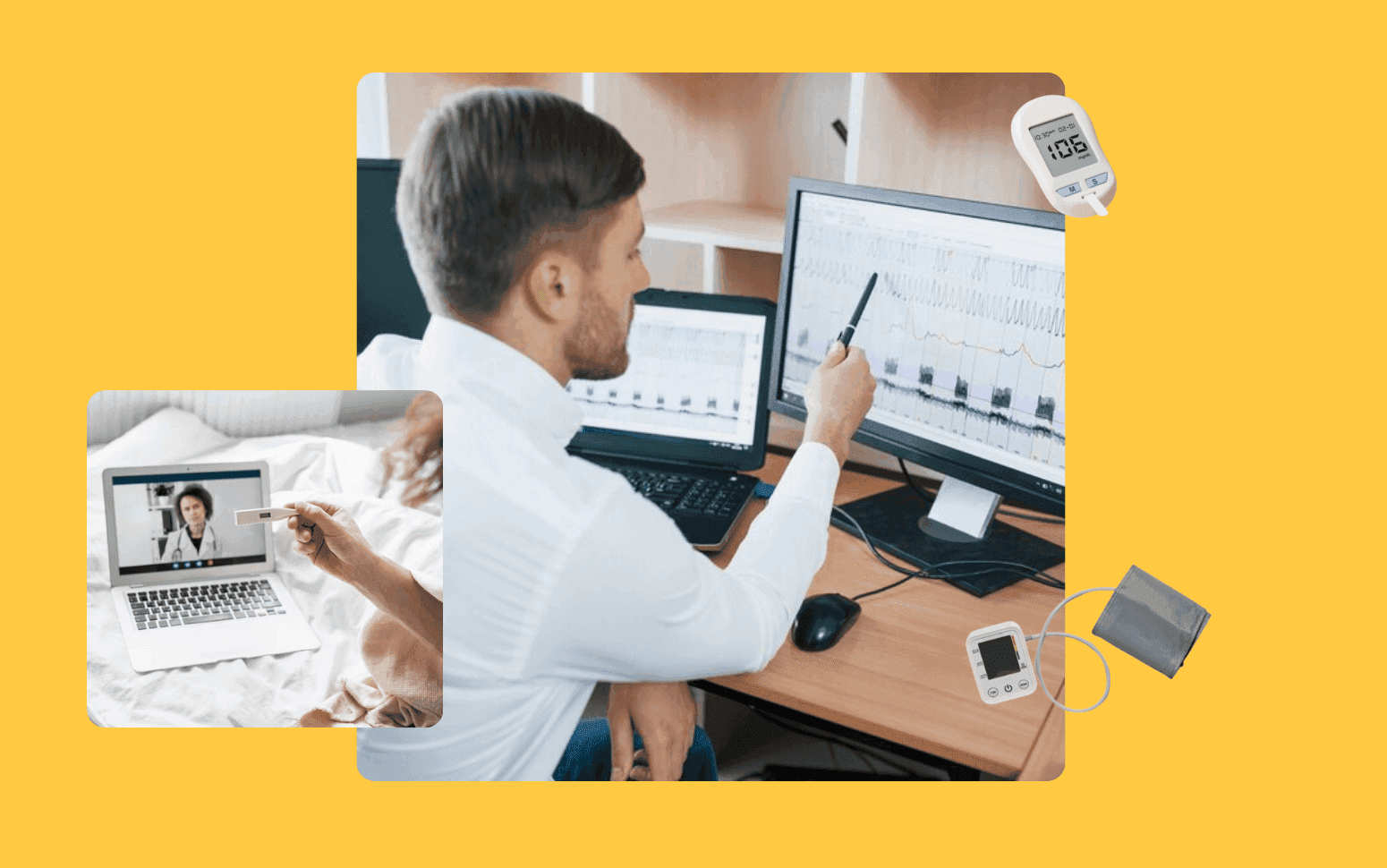
AI Remote Patient Monitoring Cuts Hospital Readmissions
- 30%
- 12 weeks
Family members paying for or overseeing a relative's home care have no direct visibility into what happens during each visit. They rely on the caregiver calling them, or calling the agency office themselves, to find out whether the visit happened, how it went, and whether anything concerning occurred. That reliance doesn't scale, and the gap in transparency is a direct trust problem for the agency.
We build family communication portals for home care agencies that give families real-time visit updates, care task summaries, incident notifications, schedule visibility, and billing access without routing every question through a coordinator. Fewer inbound calls, stronger family confidence, and a documented communication record the agency can point to at any review.
Real-time visit check-in and check-out notifications
Care task completion summary after each visit
Incident alerts directly to the family
Schedule and caregiver profile visibility
Recognition
Family members calling the office multiple times a week to ask whether the caregiver showed up, how the visit went, and what their loved one ate, consuming coordinator time and signalling a care transparency problem?
Families discovering a fall or incident 48 hours after it happened because the caregiver reported it to the office but nobody notified the family directly?
In short
RaftLabs builds custom family communication portals for home care agencies. The portal delivers real-time push and email notifications when a caregiver checks in and checks out of each visit, a care task completion summary after every visit with caregiver notes, incident alerts sent directly to the family at the time of reporting rather than relayed through a coordinator, schedule and caregiver profile visibility so families know who is coming and when, and billing and invoice access for the family member who is the payment contact. The result is fewer inbound calls to the coordination team, stronger family trust in the agency, and a documented communication record that supports care quality and client retention. Fixed cost, 10 to 12 week delivery.
Companies we've built for





Family communication is a care quality problem and a business retention problem at the same time. Families who feel uninformed about their relative's care are far more likely to switch agencies, not because the care quality is poor, but because they can't see that it isn't. A family that calls the office three times a week asking for updates has already lost confidence in the agency's ability to communicate proactively. The portal exists to prevent that confidence from eroding.
The instinct of most agencies is to solve the communication problem by asking coordinators to call families more often. That approach doesn't scale past a small caseload. A coordinator managing forty clients can't make proactive update calls after every visit. The portal shifts that communication burden from the coordination team to the system: families get the information they need when they need it, automatically, without a coordinator picking up the phone.
Push notification and email sent to the family member when the caregiver checks in at the visit and again when they check out. The notification includes the caregiver's name, the scheduled visit start time, and the actual arrival time if different from what was planned. A late arrival notification is triggered if the caregiver checks in beyond a configurable threshold past the scheduled start, so the family knows before they call the office to ask. The visit completion notification includes the actual visit duration so the family can see the visit ran to its full length rather than being cut short.
After each visit, the family portal displays which care tasks were completed and which were not, with any caregiver notes attached to that visit record. Medication Administration Record (MAR) status is visible per dose for families monitoring a relative's medication adherence: whether each prescribed dose was given, refused, or missed during the visit. The task categories visible to families are configured by the agency: personal care completion, nutrition and hydration, medication prompt, mobility and exercise, household tasks, so the agency controls the level of clinical detail shared. Care notes written by the caregiver during or after the visit are visible to the family in the portal, with the agency able to moderate which note types are shared and which are kept internal to the coordination team. All care notes and task records are stored with encryption at rest, and the communication channel between the family portal and the care management system uses HIPAA-compliant encrypted message transport.
The family portal displays the profile of the caregiver assigned to each visit: name, photo, qualifications, and languages spoken. A visit history per caregiver shows the family how many times a particular caregiver has worked with their relative, which matters for families tracking continuity of care. Families can book a scheduled video call directly through the portal to speak with the assigned care coordinator without navigating phone menus. Photo and video sharing of resident activities is available to families through the portal with family-only access controls so media is never visible to other clients or the general public. When a substitute caregiver is assigned to a regular slot, because the regular caregiver is absent, the family receives a notification so they're not surprised by an unfamiliar face at the door.
A family-facing schedule view shows upcoming visits with date, time, duration, and assigned caregiver. Schedule changes made by the agency are reflected in the portal in real time: a rescheduled visit or a changed caregiver appears immediately without the family needing to call to confirm the arrangement. When a family member wants to request a schedule change, they can submit the request through the portal and it's routed to the coordinator as a task rather than arriving as a phone call that may be missed or not documented.
When an incident is reported by the caregiver or logged by the coordinator, such as a fall, a change in condition, or a safeguarding concern, the family is notified immediately via push notification and email with the agency's documented response at the time of reporting. Incident reports require mandatory acknowledgement from the designated family contact before the notification can be marked as received, creating an auditable confirmation record. The system maintains a HIPAA-compliant audit trail of all incident communications: timestamps, delivery status, and acknowledgement events, that satisfies CMS and CQC compliance documentation requirements and supports CCRC and assisted-living state regulatory reviews. Families can log a concern through the portal themselves, and that concern is routed to the coordinator as a flagged task rather than a phone call that may not reach the right person. The resolution status of each concern is visible in the portal so the family can see whether the agency has responded and what action was taken.
Family members who are the billing contact for the client can view invoices, payment history, and upcoming billing dates directly in the portal. Each invoice is downloadable as a PDF for personal records or insurance submissions. Where the agency has configured online payment, private pay clients can pay directly through the portal via Stripe, with card-on-file recurring billing for regular weekly care charges and one-click payment for ad-hoc invoices. Funding source documentation, including long-term care insurance claim submissions and private pay receipts, is viewable by authorised family members so the person managing the financial side of care has a single place to find what they need.
Access is configured per client record. The agency can grant portal access to multiple family members for a single client: a primary contact, an adult child managing the finances, a sibling who wants visit summaries, each with a different access level. The primary contact might have full access including billing and care notes. A second family member might see visit summaries and the schedule but not financial records. The access tiers are defined by the agency during configuration so sensitive information, including billing details and clinical care notes, is only visible to the family members the agency and the primary contact have authorised to see it.
The agency configures which care note types and task categories are visible to families in the portal. Internal coordination notes, including staffing comments, billing flags, and internal communications about the client, are never visible in the family portal. Care tasks visible to families are set at the task category level: personal care, nutrition, medication prompt, mobility, and household tasks can be individually toggled on or off. Clinical observation notes written by a caregiver can be moderated before they appear in the portal, or set to appear automatically depending on the agency's preference. The configuration is done once during setup and can be adjusted by the agency administrator at any time.
The portal reduces the volume of routine inbound calls: the calls asking whether the caregiver showed up, what happened during the visit, and when the next visit is scheduled. Families who would have called three times a week to get that information can find it in the portal without picking up the phone. The coordination team still handles calls about care plan changes, concerns that require a conversation, and scheduling requests that need discussion. The portal captures those requests too, since concern logs and schedule change requests submitted through the portal are routed to the coordinator as tasks, so the communication is documented rather than relying on the coordinator's memory of a phone call.
A family portal covering real-time visit notifications, care task summaries, schedule visibility, caregiver profiles, incident notifications, and billing access typically takes 10 to 12 weeks from requirements sign-off to go-live. Adding integrations with an existing care management system or scheduling platform adds time depending on the API availability of the existing system. If RaftLabs is also building the underlying care management platform, the portal is added as a module rather than a standalone build, which reduces the total timeline. Cost is fixed and agreed before development starts based on the features, integrations, and number of configurable access tiers scoped in discovery.
What clients say
Three-year average engagement. Founders and operators describing the work in their own words. No marketing varnish.

 USA
USAAll of the sprints were completed on schedule and on budget. We highly recommend RaftLabs!
01 / 02
Tell us what care information families currently ask for most and how coordinators handle those requests today. We'll scope a portal that reduces inbound calls and builds family trust.