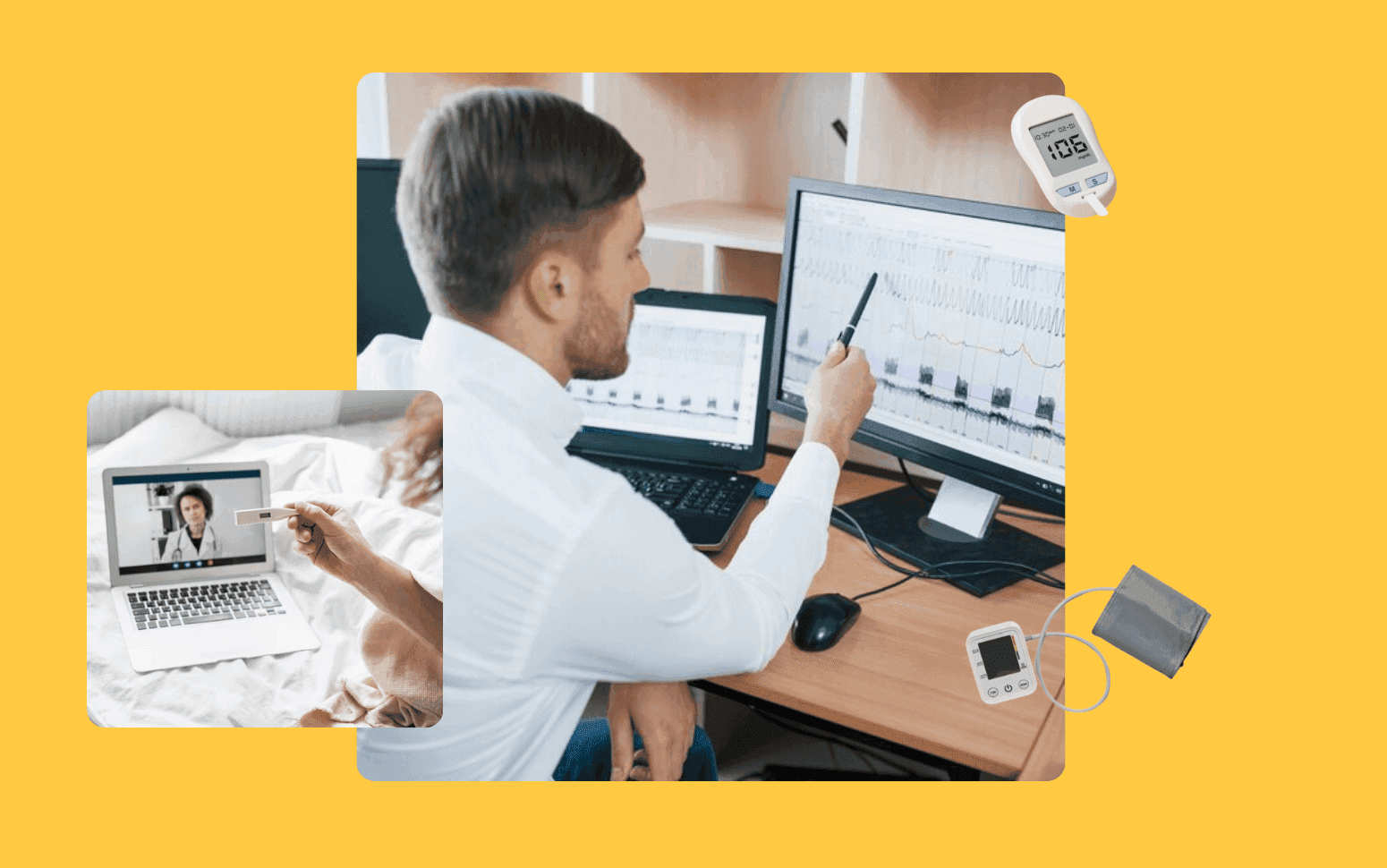
AI Remote Patient Monitoring Cuts Hospital Readmissions
- 30%
- 12 weeks
Classroom-based field force training does not scale. When a pharma company adds a product line, enters a new market, or onboards a cohort of reps, the training bottleneck becomes the launch bottleneck.
We build custom HCP training platforms that deliver product knowledge and compliance modules digitally, with competency assessments, e-signature sign-off, and manager dashboards that show who is ready to be in front of a doctor and who is not.
We built a pharma training platform that cut field force onboarding from 6 weeks to 10 days
Mobile-first training modules with video, interactive content, and offline access for reps in the field
Compliance training with e-signatures and 21 CFR Part 11 audit trail
Role-based content delivery so reps see modules relevant to their product line and territory
Recognition
Field force onboarding taking 6 or more weeks because training relies on classroom sessions, printed manuals, and in-person sign-offs that can't run in parallel?
No reliable way for managers to know which reps have completed mandatory compliance modules and which have not before a product launch or territory expansion?
In short
A pharma HCP training platform delivers product knowledge and compliance training to field reps via mobile modules, tracks completion and competency assessment results, and produces audit-trail records for regulatory sign-off. RaftLabs built a pharmaceutical training platform for a global pharma company that reduced field force onboarding from 6 weeks to 10 days. We deliver HCP training platforms in 10 to 14 weeks at fixed cost.
Companies we've built for




Pharmaceutical field forces have a training problem that generic LMS products do not fully address. Medical representatives must learn complex clinical data, product positioning, and compliance obligations before any interaction with a healthcare professional. The traditional method, covering classroom sessions, printed reference manuals, in-person knowledge checks, and manual sign-off sheets, works for a cohort of 10. It breaks at 100 and collapses at 1,000.
The pharma company we worked with was running new-hire onboarding over 6 weeks. Training events required reps to travel to central locations. Completion was tracked in spreadsheets. There was no reliable way to verify that a rep had passed a knowledge check before they were assigned a territory. Regulatory sign-off for compliance modules relied on physical signatures that had to be collected, scanned, and filed. The compliance team had no real-time view of who had completed what.
We replaced that process with a digital training platform. Modules were delivered to reps on their phones. Knowledge checks were built into the module flow. E-signatures and completion certificates were generated automatically. Managers could see team progress in a dashboard. Onboarding time dropped from 6 weeks to 10 days, not because the training content was shortened, but because the delivery was no longer constrained by scheduling, travel, or manual administration.
Custom is better than a generic LMS like Cornerstone or Docebo when your training content is tied to regulated products, when compliance sign-off needs an audit trail that would withstand regulatory scrutiny, when your rep population is split across territories with different product lines, and when your HR and onboarding systems need to feed directly into the training platform without a manual provisioning step. Generic LMS products are horizontal tools. A pharma training platform is a compliance and enablement system that happens to deliver training content.
Training modules are built for the device reps actually carry. Video content plays inline without a separate player, interactive exercises run on mobile browsers without plugins, and knowledge checks are designed for thumb navigation rather than mouse and keyboard. Modules are structured around learning objectives tied to product lines and compliance requirements so the content matches what the rep is accountable for knowing. Offline access is built in from the start, because reps in the field often have unreliable connectivity. Content syncs when the device reconnects, completion is logged against the rep's profile, and the manager's view updates automatically. Module versions are controlled centrally so when a product label changes or a compliance module is updated, reps see the new version on next access and a re-completion requirement is triggered if the update is material.
Compliance modules require more than completion clicks. Regulatory sign-off means a rep has read the content, understands its implications for their conduct in the field, and has formally acknowledged it with an identity-bound electronic signature. We build compliance training flows where the e-signature is cryptographically tied to the user identity and timestamp, stored in an immutable audit record, and exportable in formats that satisfy 21 CFR Part 11 requirements. Completion certificates are generated automatically for each compliance module and attached to the rep's training record. The compliance team can pull audit reports at any point showing which reps have signed off on which modules, when, and on which version of the content. Re-certification workflows trigger automatically when content is updated or when the annual recertification cycle requires a new sign-off.
A rep covering a cardiovascular product line in the US doesn't need to see the oncology modules. A territory manager needs access to the same product content as the reps on their team, plus the manager-specific training on coaching and performance reviews. Role-based content delivery means each user sees a curated training catalogue rather than a full library. Content is assigned based on role, product line, territory, and training stage. A new hire sees a structured onboarding path with prerequisite dependencies: module B can't be started until module A is completed and assessed. An experienced rep transferring to a new product line sees a targeted gap-fill curriculum without repeating content they've already passed. Assignment rules are configured in the admin console so when a rep's role or territory changes, their content assignments update automatically.
Knowledge checks at the end of each module test recall of the content just covered. Competency assessments at the end of a training path test whether the rep can apply the knowledge across the product line. Pass thresholds are set per assessment, typically 80% for product knowledge modules and 100% for compliance modules where there's no acceptable failure mode. Re-take rules define how many attempts are allowed before a manager review is required. Assessment questions are drawn from a randomised bank so reps who re-take an assessment see a different question set. When the rep passes, a timestamped certificate is issued to their profile and the completion is recorded in the audit trail. Certificates carry an expiry date for modules that require periodic re-certification, and expiry alerts notify both the rep and their manager in advance.
A product launch with 200 reps in the field requires someone to know, at any moment, who is trained and who is not. Manager dashboards show team completion rates by module and by individual rep, assessment scores across the team, training gaps for reps who are behind the expected completion timeline, and upcoming expiry dates for modules that require recertification. Drill-down from team view to individual rep gives the manager the full training record for any rep they're responsible for. Regional managers see aggregate data across multiple teams. The compliance team gets a platform-level view showing completion rates across the entire field force, filterable by region, product line, and module. Dashboard data is near-real-time so the view during a product launch reflects completions that happened an hour ago, not yesterday's batch report.
When a rep joins the company and is entered into the HR system, their training platform account is provisioned automatically. Role, region, and product line assignments flow from the HR record into the training platform without a manual step from the L&D or admin team. The onboarding training path is assigned automatically based on the rep's role and start date, and the onboarding countdown begins from day one without waiting for someone to log in and configure an account. When a rep changes role or territory, the HR system update triggers a content reassignment in the training platform. When a rep leaves, their account is deprovisioned and their training records are archived according to the retention policy. The integration handles the routine cases without manual intervention so the L&D team isn't spending time on account maintenance for a field force of several hundred people.
Generic LMS products handle the core mechanics of content delivery and completion tracking. They don't handle pharma-specific requirements well. Compliance training with 21 CFR Part 11-grade audit trails, e-signatures bound to user identity, and certificate generation that satisfies regulatory scrutiny requires more than what a horizontal LMS provides out of the box. Role-based content delivery that maps to territory and product line, integration with pharma-specific HR and onboarding systems, and offline mobile access for field reps add further complexity. If your training programme has no regulatory dimension, a generic LMS is reasonable. If it does, and most pharma field force training does, the configuration overhead, compliance gaps, and ongoing workarounds of a generic platform typically cost more than a custom build that handles these requirements natively.
Compliance modules use e-signatures that are tied to the user's identity and the specific document version being signed. The signature event captures the user ID, timestamp, document identifier, and version number, and this record is written to an immutable audit log. Signatures can't be altered or deleted by any application user. The audit record format and retention satisfy 21 CFR Part 11 technical requirements for electronic signatures in systems subject to FDA oversight. Completion certificates reference the audit record and are generated automatically at the point of sign-off. The compliance team can export the full audit trail for any user, module, or date range at any point, whether before an inspection, at the close of a product launch, or as part of a routine compliance review.
Yes. Content assignment rules are configured in the admin console using a combination of role, product line, territory, and training stage attributes. A rep in the US cardiovascular territory sees only the modules assigned to their role and product line. A rep who transfers to oncology sees a gap-fill path that covers the oncology-specific content they haven't yet completed. New modules assigned to a product line are automatically pushed to every rep carrying that product line without a manual assignment step. Admin users can override assignments for individual reps, adding or removing a module outside the standard rule set, and the audit trail records who made the change and when.
A focused HCP training platform covering mobile module delivery, compliance e-signatures with audit trail, role-based content assignment, competency assessments, manager dashboards, and HR system integration typically costs $40,000 to $75,000. The range depends on the number of roles and content assignment rules, the complexity of the HR integration, whether video content encoding and hosting is included in scope, and the number of languages required for multinational deployments. Cost is fixed and agreed before development starts. A more detailed estimate requires understanding the size of your field force, the structure of your product lines and territories, and which systems need to integrate with the platform.
What clients say
Three-year average engagement. Founders and operators describing the work in their own words. No marketing varnish.

 USA
USAAll of the sprints were completed on schedule and on budget. We highly recommend RaftLabs!
01 / 02
Tell us the size of your field force, the product lines they cover, and how training is managed today. We'll tell you what we'd build and how.