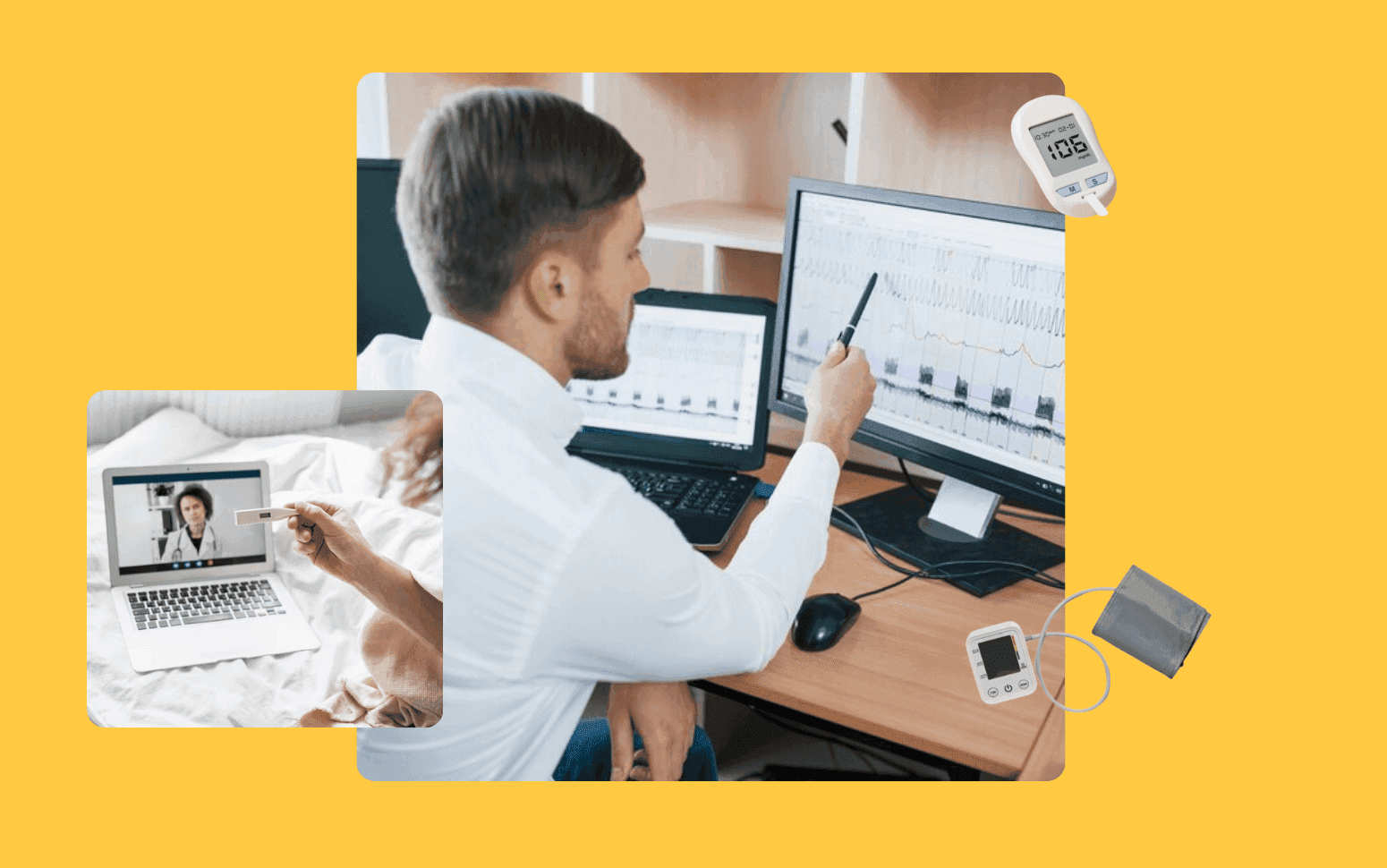
AI Remote Patient Monitoring Cuts Hospital Readmissions
- 30%
- 12 weeks
Generic EHR platforms are designed for medical offices: appointment-centric, diagnosis-centric, built for 10-minute visits. Mental health practices run on 50-minute sessions, treatment plans reviewed quarterly, and outcome measures tracked across months. The documentation workflow is different, and software designed for general medicine doesn't fit it.
We build custom EHR software for therapy practices, group practices, and behavioural health organisations. Clinical documentation built for your modalities, outcome tracking built into the clinical workflow, and billing logic designed for mental health CPT codes.
Progress notes and SOAP documentation built for mental health modalities
Treatment plan creation, review, and sign-off workflows
Outcome measure tracking (PHQ-9, GAD-7, PCL-5, custom instruments)
HIPAA-compliant data handling and audit trail
Recognition
Clinicians spending more time on documentation than with patients because the EHR doesn't fit mental health workflows, progress notes, treatment plans, and outcome measures designed for general medicine, not behavioural health?
Patient records split across an EHR and paper because the system can't handle group therapy notes, couples sessions, or the documentation requirements of your specific modality?
In short
A mental health EHR is built around the documentation requirements of behavioural health, progress notes by modality, treatment plan management, and standardised outcome measure tracking. RaftLabs builds custom mental health EHR software for therapy practices, group practices, and behavioural health organisations that need clinical documentation designed for mental health workflows, not general medicine, with HIPAA-compliant data handling and a complete audit trail.
Companies we've built for








General EHR platforms are structured around medical appointments. The documentation workflow assumes a physician sees the patient, writes a SOAP note, orders a test or medication, and closes the encounter. That model doesn't describe a therapy practice. Mental health clinicians write progress notes that reference the treatment plan, track symptom change across months, document therapeutic interventions by modality, and run outcome measures on a defined schedule. None of that fits naturally into a general medical record.
The documentation mismatch has a real cost. Clinicians spend time adapting their notes to fields designed for something else. Outcome measures live in a separate spreadsheet because the EHR has no place for them. Group therapy notes require workarounds because the system assumes one clinician, one patient, one encounter. Paper persists alongside the software because the software doesn't cover the full clinical record.
A custom mental health EHR is built around your documentation workflow from the start. Note templates match your modalities: CBT, DBT, EMDR, group therapy. Treatment plan workflows match your review cycle. Outcome measures are delivered, scored, and surfaced in the clinical view without manual steps. The result is a system clinicians use consistently, which is what makes the record reliable.
Progress note templates built for each modality your practice uses (CBT, DBT, EMDR, psychodynamic, and group therapy) include structured fields and freetext sections. SOAP (Subjective, Objective, Assessment, Plan), DAP (Data, Assessment, Plan), and BIRP (Behaviour, Intervention, Response, Plan) note formats are all supported as configurable templates, because different clinicians and different payers use different formats. Session type determines which template appears so clinicians are never adapting a general note to fit a specialised session.
Structured fields capture presenting concerns, interventions used, client response, risk summary, and plan without requiring clinicians to repeat the same section headings from memory each session. The risk summary field in every progress note includes mandatory documentation fields for suicidal ideation, homicidal ideation, and self-harm. This keeps the duty-to-warn documentation required for Tarasoff obligations in a consistent and auditable format rather than buried in freetext. Notes auto-populate client name, clinician, session date, and duration from the appointment record. Previous session notes are accessible in one click from the documentation view. DSM-5 diagnostic code selection with automatic ICD-10-CM mapping keeps the diagnosis on the progress note matched to the code used on the insurance claim.
Treatment plan creation with problem list, goals, measurable objectives, and planned interventions documented in structured fields. Goals are written against a SMART objective framework with baseline severity, target state, and the standardised outcome measure (PHQ-9, GAD-7, PCL-5) used to track progress. FHIR R4 resources handle care coordination where the practice shares treatment data with a primary care physician or a care team: the CareTeam resource documents the treating clinician and coordinating GP, and the ClinicalImpression resource carries the structured assessment at each review cycle.
Goal progress ratings updated at each session link back to the treatment plan so the clinical record shows progress over time and the supervisor can see the full treatment arc in one view. Review cycles are set at plan creation with automated reminders when a review is due. The treatment plan sign-off workflow captures clinician and supervisor signatures using SMART on FHIR launch context where the EHR is embedded in an existing clinical environment, allowing launch from the EHR without a separate login. Amendments are tracked with version history so the audit trail shows what the plan said at each point in treatment, a requirement for peer review, accreditation, and insurance audit purposes.
Standardised instruments (PHQ-9, GAD-7, PCL-5, and any custom measures your practice uses) are delivered to clients digitally before or between sessions via the client portal or an SMS link. Instrument responses are scored automatically using the validated scoring algorithms for each instrument (PHQ-9 total 0 to 27, severity bands at 5/10/15/20; GAD-7 total 0 to 21, severity bands at 5/10/15). FHIR R4 Observation resources carry each scored result with the instrument reference (LOINC code), the individual item scores, the total score, and the observation date, enabling structured data exchange with care team members or referring physicians.
Trend charts display score history in the clinician's session view alongside the current progress note so the clinician can see at a glance whether PHQ-9 has moved since the last session. Clinically significant changes trigger a flag. PHQ-9 item 9 (suicidal ideation question) responses above zero surface as an immediate alert requiring acknowledgment before the session note can be closed. GAD-7 severity threshold crossings from moderate to severe trigger a review flag. Population-level outcome reporting aggregates anonymised score distributions for practices reporting to payers, commissioners, or accreditation bodies under routine outcome monitoring requirements. Score history is stored in the client record and visible in the treatment plan view alongside the goal targets the score is meant to track.
Scheduling built for therapy practice session types (individual, couples, family, and group) with session duration and modality linked to the appointment type. Recurring appointment series created at booking so weekly or biweekly clients don't require manual rescheduling each time. Waitlist management with priority sorting by urgency, insurance, and wait time. Cancellation tracking records late cancels and no-shows against the client record for clinical and billing purposes. Room and telehealth link assignment at the appointment level without a separate scheduling system.
Mental health CPT code application by session type, modality, and duration maps the key outpatient behavioural health codes (90791 for psychiatric diagnostic evaluation, 90834 for individual psychotherapy at 45 minutes, 90837 for individual psychotherapy at 60 minutes, 90847 for family psychotherapy with patient present, and 90853 for group psychotherapy) to appointment types. The correct code is applied to the claim without the billing team selecting from the full CPT catalogue. Telehealth modifier coding (modifier 95 for synchronous telehealth, place of service 10) is applied automatically for video sessions. Modifier stacking rules for add-on codes (90836, 90838) are enforced to prevent claim rejections.
Insurance eligibility verification before the appointment confirms coverage status in advance. Claim generation from the closed session note includes diagnosis linkage (ICD-10-CM from the DSM-5 mapped code on the progress note), rendering provider NPI, and billing provider NPI. Electronic remittance advice (ERA) processing via X12 835 applies payments and adjustment reason codes automatically to the client account, with exception queuing for denials that require follow-up. EOB (explanation of benefits) copies are stored against the client record for reference. Superbill generation for self-pay and out-of-network clients includes all required fields for clients submitting claims to their insurance independently.
Client-facing portal with secure messaging to their clinician, access to session summaries where the practice shares them, document collection for consent forms and releases, and appointment confirmation. Outcome measures are delivered through the portal before sessions: a PHQ-9 delivered via secure portal link 24 hours before the appointment means the clinician opens the session note with current scores already populated. Appointment reminders sent by email and SMS reduce no-shows without manual outreach.
Consent forms, release of information forms, and the Notice of Privacy Practices are delivered and signed through the portal before the first session using an embedded e-signature workflow. For practices treating substance use disorders, the re-disclosure restriction notice required by 42 CFR Part 2 is included in the intake consent package and signed before any substance use information is collected. The signed document is stored against the client record with a timestamp. The HIPAA minimum necessary standard applies to what is shared with care team members through the portal. When a treating psychiatrist requests a summary for medication management coordination, the system generates a structured summary that includes the treatment plan and outcome scores without transmitting the full psychotherapy notes, which carry stricter disclosure restrictions under HIPAA. New client intake forms collected through the portal before the first session give the clinician background information before the intake appointment.
A general medical EHR is built around encounters, diagnoses, and procedures. Mental health care runs on a different model: time-based sessions, treatment plans reviewed over months, outcome measures tracked across an entire course of treatment, and documentation requirements that vary by modality. Progress note templates for CBT differ from those for EMDR or group therapy. Billing uses mental health CPT codes with specific modifier rules. Group therapy documentation requires one session record with individual progress notes per member. A mental health EHR is designed around these requirements from the start rather than forcing behavioural health workflows into a medical record structure.
Mental health records carry additional sensitivity under HIPAA and under specific federal and state statutes. Psychotherapy notes (the clinician's personal observations and impressions recorded separately from the rest of the medical record) have stricter disclosure rules than general medical records. They can't be disclosed without specific patient authorisation, even to other treating providers, without meeting the exception criteria. Substance use disorder treatment records are protected under 42 CFR Part 2, which imposes re-disclosure restrictions stricter than standard HIPAA. Records can't be shared without the patient's specific written consent that identifies the recipient, the purpose, and an expiration condition.
We build on HIPAA-eligible infrastructure: encryption at rest (AES-256) and in transit (TLS 1.2 minimum), role-based access controls that restrict clinician access to their assigned clients, and a full audit trail that logs every view and change with the user, timestamp, and action. Business Associate Agreements are in place with all cloud infrastructure providers. The HIPAA minimum necessary standard is applied to data exchange. Care coordination summaries shared via FHIR R4 CareTeam and ClinicalImpression resources contain the treatment plan and outcome scores, not the full psychotherapy notes. We're not a HIPAA compliance consultant. Your legal and compliance team should review the full requirements for your state and payer context. Our architecture provides the technical foundation; your policies and staff training complete the programme.
Yes. Group session documentation requires a session-level record linked to multiple clients, with individual progress notes for each group member within that session. The system supports group session types with a single session note and per-member progress sections. Attendance is tracked at the member level so a client who misses a session has an accurate attendance record. Billing for group sessions uses the correct CPT codes and per-member claim generation. Group composition management tracks active group membership, waitlist for the group, and session history for each member.
A focused mental health EHR covering clinical documentation, treatment plans, scheduling, and billing for a single-site group practice typically takes 14 to 18 weeks from requirements sign-off to go-live. Outcome measurement integration and client portal add four to six weeks. Multi-site deployments and practices with complex group therapy documentation requirements take longer. We migrate existing client records where the source system supports data export. Clinicians receive role-specific training before go-live. Post-launch support covers the first billing cycle to catch any claim submission issues.
What clients say
Three-year average engagement. Founders and operators describing the work in their own words. No marketing varnish.

 USA
USAAll of the sprints were completed on schedule and on budget. We highly recommend RaftLabs!
01 / 02
Tell us your clinical documentation workflow and the problems your current system creates. We will scope a system built for how your practice runs.