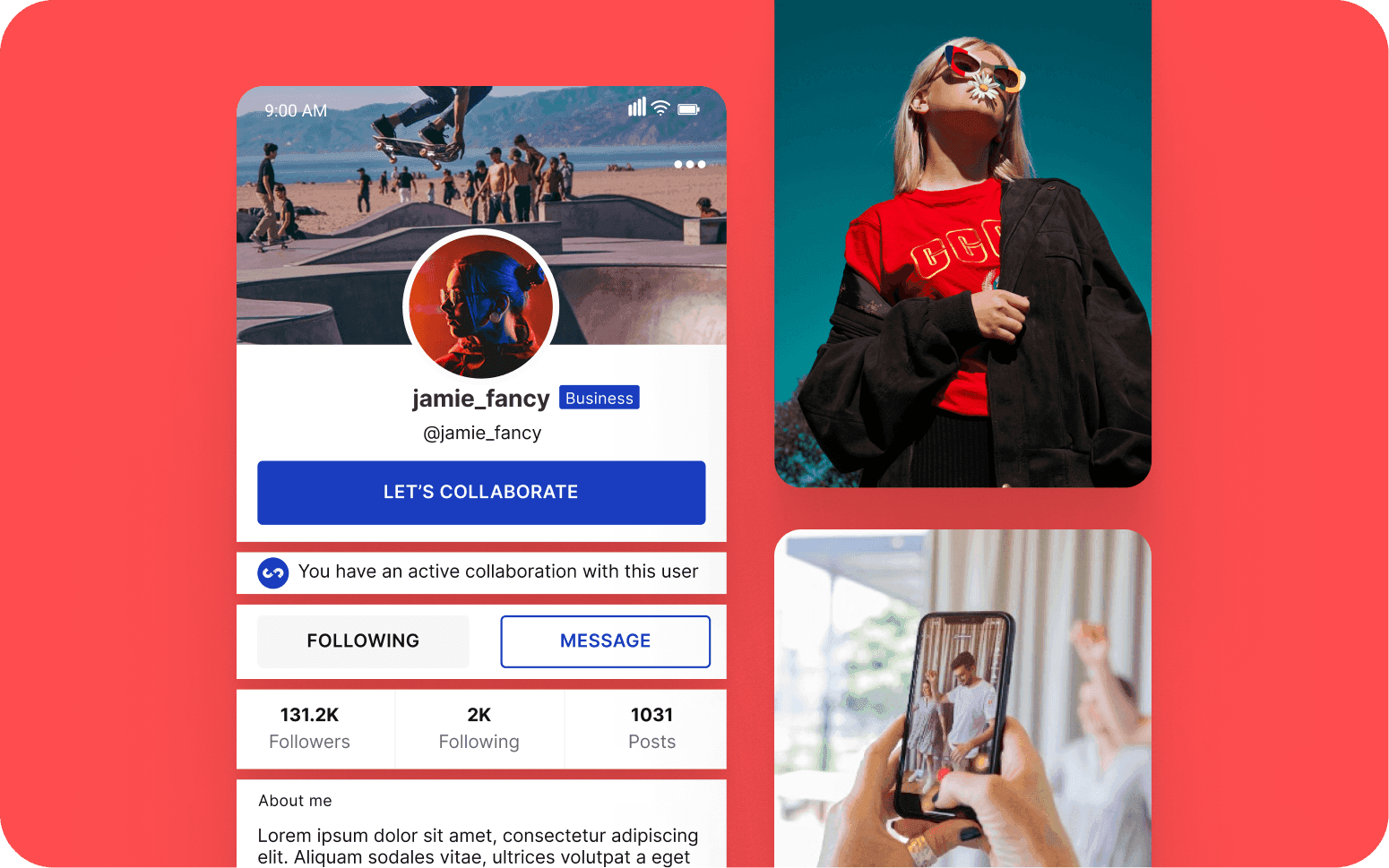
Sponzee Connects Brands and Creators in a Social Commerce Revolution
- 25%
- 2x
- 16 weeks
Running subscriptions, ad-supported content, and pay-per-view from separate systems means no unified revenue view and a finance team that reconciles data manually at month-end. A single monetisation platform handles all three models with one source of truth for reporting.
We build custom content monetisation platforms for media companies, publishers, and content creators running multiple revenue streams who need them to work together.
SVOD subscription billing with Stripe and dunning management
AVOD with server-side ad insertion via Google DAI or AWS MediaTailor
TVOD pay-per-view and rental purchase flows
Unified revenue reporting across all models
Recognition
Running SVOD, ad-supported, and pay-per-view models simultaneously but managing them across three different systems with no unified revenue view?
Your content generates revenue across subscriptions, ads, and licensing but your finance team has to manually reconcile them all at month-end because the systems don't connect?
In short
A custom content monetisation platform lets media companies run SVOD, AVOD, and TVOD revenue models from a single system rather than managing them across separate tools with no unified revenue view. RaftLabs builds content monetisation platforms with subscription billing, server-side ad insertion, pay-per-view, article paywalls, creator revenue sharing, and consolidated finance reporting. Most builds deliver in 10 to 14 weeks at a fixed cost.
Companies we've built for








Most media businesses don't run a single monetisation model. A broadcaster might offer free ad-supported content, a premium subscription tier, and pay-per-view for major events. A publisher might have a metered article wall, a subscription for full access, and an affiliate revenue stream from distribution partners. Managing each model in a separate system means the data never lines up and the finance team spends the end of every month manually building a picture that the platform should generate automatically.
A unified content monetisation platform holds all revenue models in the same system. Subscription billing, ad revenue, transactional purchases, and affiliate payouts are tracked against the same content catalogue and the same user accounts. Revenue reporting is a query against one database, not a spreadsheet assembled from three exports.
The engineering challenge is that each model has different requirements. Subscription billing needs lifecycle management: trials, renewals, dunning, upgrades, and cancellations. Ad-supported delivery needs server-side ad insertion that doesn't break on ad blockers. Pay-per-view needs purchase flows with regional pricing and rental expiry. Building these on separate systems creates the reconciliation problem. Building them on a shared data model from the start avoids it.
Stripe subscription integration with configurable plan tiers (different content access levels, price points, and billing cycles in the same system). Monthly and annual billing with annual discount handling and upsell prompt at renewal for monthly subscribers. Trial period management with configurable length, payment method capture at trial start, and a trial conversion email sequence in the final days before the trial ends. Upgrade and downgrade flows with proration calculated by Stripe at the point of change, applied to the next invoice without a manual credit. Dunning management for failed payments uses Stripe's Smart Retries combined with a configurable retry schedule: initial retry at 3 days, second at 7 days, final at 14 days, with subscriber notification emails at each failure and access suspension after the final retry without manual intervention. Subscription pause and cancellation with a win-back offer at the cancellation step (a discounted rate or a pause option reduces immediate churn for subscribers who intend to return). Entitlement management controls access at the content level: each piece of content is tagged with the minimum tier required to access it, and the entitlement check is evaluated server-side at playback or article request so access control can't be bypassed by client-side manipulation. Subscriber analytics by plan tier, geography, and acquisition channel for the finance and content teams, with MRR and ARR tracking broken out from the same source.
Server-side ad insertion (SSAI) integrated with Google DAI or AWS MediaTailor stitches ads into the video stream at the server rather than injecting them via the player. Ad blockers don't interrupt ad delivery and the viewing experience stays consistent: no buffering gap at the ad break, no blank screen where an ad blocker has removed the tag. The SSAI layer uses VAST (Video Ad Serving Template) and VMAP (Video Multiple Ad Playlist) standards: VAST defines the ad creative and tracking URLs for a single ad; VMAP defines the ad break schedule for a full content item including multiple mid-roll positions. Pre-roll, mid-roll, and post-roll placement with configurable frequency capping per session so a viewer doesn't see the same ad four times in a single episode. Advertiser targeting parameters (content category, viewer geography, device type) are passed to the ad decision server at manifest request time. Ad analytics by placement position, content item, and campaign period for your ad sales team. Programmatic fill via the ad decision server handles unsold inventory. Direct advertiser booking management provides a campaign dashboard for your direct sales team to traffic their own placements, set flight dates, and report on delivery without engineering involvement for each campaign setup.
Single purchase and rental purchase flows from the same content detail page, with clear pricing and format distinction. Stripe Payment Intent handles the transaction: when a user selects a PVOD (Premium Video on Demand) purchase or a rental, the payment intent is created, the card is charged, and the entitlement record is written to the user's account in a single atomic sequence. The content doesn't unlock until the payment confirmation is received, preventing access on failed payments. Rental expiry windows configurable by title (48-hour, 7-day, or custom) with the expiry clock starting from first play rather than from purchase for rental titles, which is the standard that major studios expect. Purchase confirmation and receipt delivered by email with the purchase record available in the user's account library. Library view for purchased content is separate from subscription content so the user's owned titles persist even if they cancel their subscription. Regional pricing lets the same title be priced differently by territory (a new release priced at $24.99 in the US and equivalent local pricing in the UK, Australia, and other markets). Digital locker functionality for buy-once titles registers purchased content against the user's account in a manner compatible with UltraViolet or Movies Anywhere registry where the studio rights permit cross-platform access. Gift purchase with Stripe-generated code and recipient redemption flow covers the use case where one user buys access for another, common for event-based PVOD releases.
Article or content paywall with a configurable free article allowance per month for a metered model: readers get a defined number of free reads before hitting the conversion prompt. The article count is tracked server-side per authenticated user and per device fingerprint for anonymous visitors, so clearing browser cookies doesn't reset the meter. Hard paywall for premium content sections requires subscription regardless of free article count. A specific content category or author series can be placed behind a hard wall while the rest of the catalogue remains metered. A reader registration wall sits before the subscription paywall so anonymous visitors become identified users before they're asked to pay. This gives the platform an email address to re-engage via drip campaigns if the visitor doesn't convert immediately. Affiliate programme integration with UTM parameter tracking attributes each subscription or purchase to the correct affiliate ID for revenue share calculation. A/B testing of paywall placement, free article allowance threshold, and conversion messaging is managed in the platform's configuration layer so the content team can test variants without a code deployment for each experiment. Conversion tracking from free to paid by traffic source, content type, and referring affiliate. Loyalty tier for subscribers includes benefits configured per plan level (ad-free experience, offline download access for mobile, and watch history sync across devices as tier-based differentiators).
Configurable revenue share percentage by creator tier or individual agreement, applied against gross SVOD, AVOD, or TVOD revenue attributed to the creator's content during the payout period. Bundle packaging is supported: where a content bundle combines material from multiple creators, the revenue is split across creators based on their individual bundle share percentages rather than full-catalogue share, so creators in a bundle are compensated accurately for their contribution. Monthly payout calculation with the breakdown visible to the creator in their earnings dashboard before payment is sent, reducing creator support queries about disputed amounts. Payout via Stripe Connect for direct bank transfer or via invoice-based bank transfer for creators on formal licensing agreements. A creator earnings dashboard shows revenue by content item, time period, and revenue source (subscription revenue versus TVOD purchase revenue versus ad revenue share, each as a separate line). Affiliate partner revenue tracking with UTM attribution attributes affiliate-driven subscriptions and purchases to the correct affiliate ID at the time of acquisition. The attribution window is configurable (a 30-day last-touch model is typical for subscription products). Affiliate payout schedule uses the same configurable percentage logic as creator revenue share. Churn prediction analysis using XGBoost with features including usage frequency, content completion rate, and payment history identifies subscribers at elevated churn risk before they cancel, so the platform can trigger a targeted retention offer rather than a generic win-back email after the cancellation has already happened.
A consolidated revenue dashboard across SVOD, AVOD, and TVOD so total platform revenue is visible without switching between systems. MRR (Monthly Recurring Revenue) and ARR (Annual Recurring Revenue) tracking for subscription revenue with new subscriber revenue, churn revenue, and expansion revenue (upgrades minus downgrades) broken out as separate cohort lines so the finance team can see net revenue movement rather than just a total. Ad revenue by placement type, content category, and month is displayed in the same view as subscription revenue so total platform revenue across both models is visible in one chart. Transactional revenue by content title shows which TVOD releases earn the most and how revenue curves change with release timing. A new release and a catalogue title follow different revenue decay curves. Territory revenue breakdown by country and region is required for rights reporting to distribution partners and licensors under territorial licence agreements. Affiliate and creator payout liability is accrued in the reporting dashboard so the finance team can see the gross revenue, the creator and affiliate payouts due, and the net platform revenue for each period. Finance export in CSV or Excel format compatible with QuickBooks, Xero, or your accounting system so the month-end reconciliation is a single download, not a manual assembly exercise across three separate billing and ad revenue systems.
Yes. The three models share a content catalogue, user account system, and reporting database. The difference is in how access is granted and how revenue is recorded. A subscriber gets access based on their Stripe subscription entitlement. An AVOD viewer gets access in exchange for ad impressions served via VAST/VMAP through the SSAI layer. A TVOD buyer gets access based on a Stripe Payment Intent purchase record. All three access grants are stored against the same user account and the same content item, which is what makes unified reporting possible. The platform enforces the correct access type based on the user's state (subscriber, purchaser, or ad-supported viewer) without requiring three separate systems or three separate login flows. A user who is a subscriber and has also purchased a TVOD title has both entitlements on their account and the system serves the higher-privilege access when applicable. The unified data model is also what makes churn prediction and viewer behaviour analysis possible across all revenue models simultaneously.
Client-side ad insertion (where the video player pauses, calls an ad server, fetches the ad, plays it, and then resumes the content) is visible to ad blockers and creates buffering gaps between content and ads. Server-side ad insertion stitches the ad into the video stream before it reaches the player. From the player's perspective, the ad is part of the stream. Ad blockers cannot separate it from the content, and there is no buffering gap at the ad break. For AVOD platforms where ad revenue depends on ad completion rates, SSAI typically increases revenue per viewer versus client-side insertion. We integrate with Google DAI and AWS MediaTailor, both of which handle the SSAI stitching and ad decision requests.
Revenue share is configured at the creator level as a percentage of gross revenue attributed to the creator's content during the payout period. At the end of each payout cycle, the platform calculates the revenue against each creator's content, applies the share percentage, and produces a payout record the creator can see before it is paid. Payments go via Stripe Connect for creators with bank accounts linked to the platform, or the payout record is exported for manual bank transfer for creators on invoice agreements. The creator dashboard shows earnings by content item and time period so creators can see what drives their revenue without contacting your team for reports.
Cost depends on the combination of models and features in scope. A focused SVOD build with Stripe billing and basic subscriber reporting is less than a full platform handling SVOD, AVOD with SSAI, TVOD, creator payouts, and a paywall. We scope the feature set during a discovery call and provide a fixed-cost proposal specific to what you are building. Most content monetisation platform builds for media companies land in a range of 10 to 14 weeks at a fixed price. We do not charge by the hour or revise the price after development starts.
What clients say
Three-year average engagement. Founders and operators describing the work in their own words. No marketing varnish.

 USA
USAI was pleased with RaftLabs team quality, consistency and execution.
01 / 02
Tell us which revenue models you run, what your current systems can't do, and where your finance team loses time. We'll scope the build and give you a fixed cost.