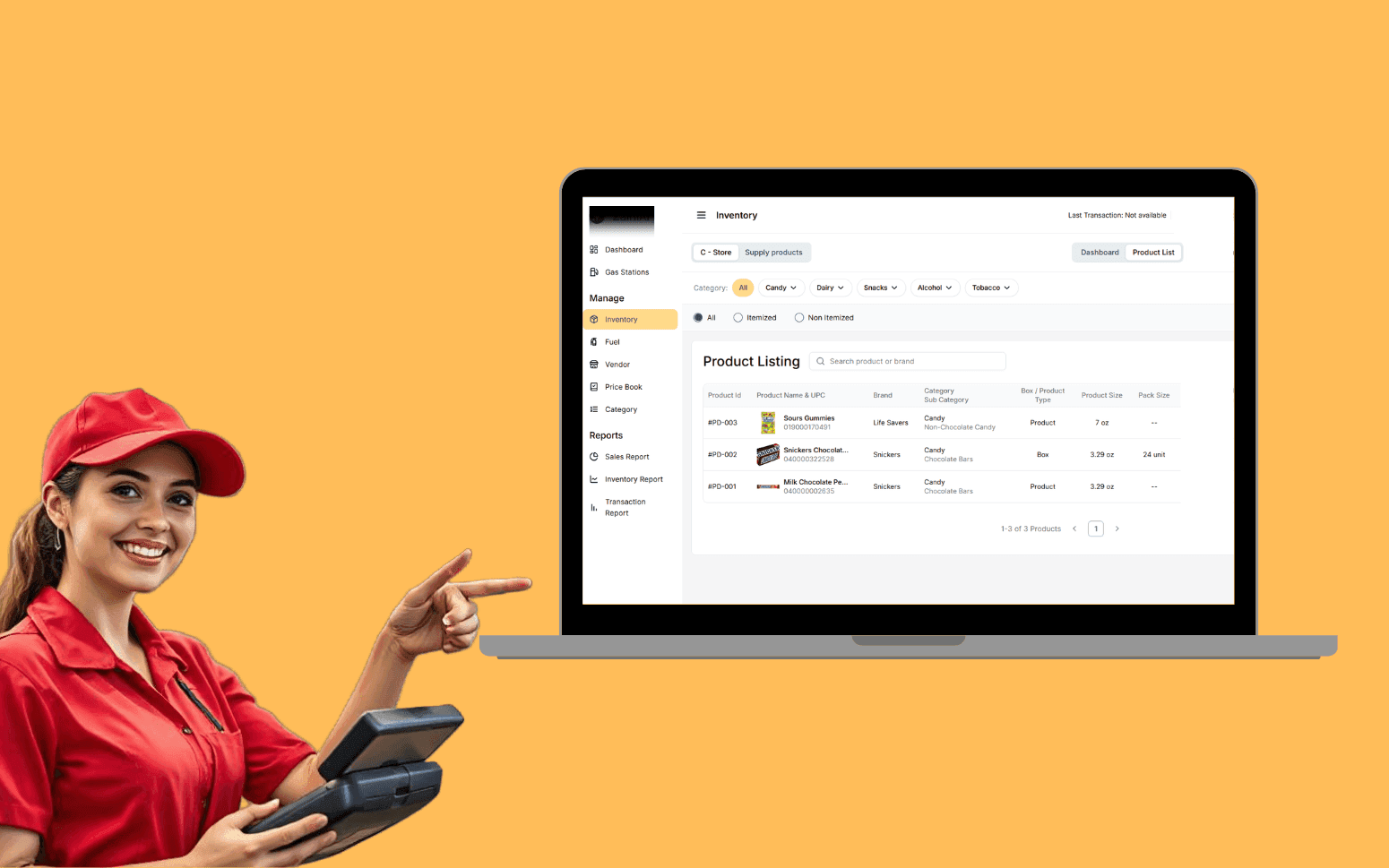
AI OCR Software Scales Gas Station Operations With 20K+ Transactions
- 20K+
- 40+
- 70%
Policyholders now expect to manage their insurance the way they manage their bank account: self-service, 24/7, without calling an agent. The insurer whose only policyholder touchpoint is an annual renewal letter and a claims phone number is fighting a retention battle on the worst possible ground.
Insurers whose policyholders can log in, download their certificate, check their claim status, and renew online are not losing policyholders to competitors who offer a better app. They are winning on convenience before the price comparison even starts.
Policy document and certificate self-service
Claims submission and real-time status tracking
Online renewal and payment
Endorsement and coverage change requests
Recognition
Policyholders calling the service centre to request a copy of their certificate of insurance because there's no way to download it themselves, tying up staff on requests that could be fully automated?
Renewal reminders sent by post or generic email with no personalisation, so policyholders who don't read them lapse not because they wanted to leave but because nobody made renewal frictionless?
In short
An insurance customer portal gives policyholders self-service access to policy documents and certificates, claims submission and real-time status tracking, online renewal and payment, endorsement requests, and digital ID cards. RaftLabs builds custom portals for insurers and MGAs, integrated with existing policy administration systems, delivered in 12-14 weeks at a fixed cost. Portals that surface the right information at each policy stage reduce inbound service calls and improve renewal conversion.
Companies we've built for





Policyholders who can access their policy documents, track an open claim, and complete their renewal online without speaking to anyone are less likely to shop around at renewal. Not because they are locked in, but because friction at the moment of renewal is the single most common reason a policyholder goes to a comparison site. Remove the friction and you remove the shopping trigger.
The difference between a portal that gets used and one that becomes an abandoned feature is whether it solves the actual reasons policyholders call. If your service team fields the same ten questions every week, certificate requests, claims status enquiries, payment confirmations, renewal queries, those ten questions are your portal specification. A portal that answers those questions completely, immediately, and without requiring a call is one that policyholders return to.
Policyholder login with two-factor authentication via TOTP (time-based one-time password authenticator apps such as Google Authenticator or Microsoft Authenticator) or SMS OTP, configurable per insurer based on the policyholder demographic and security policy. The authentication layer integrates with an existing identity provider (Auth0, Okta, or Azure AD B2C) where the insurer already has one, rather than building a parallel credential store.
Policy documents are retrieved dynamically via API from the insurer's policy administration system, whether Guidewire PolicyCenter, Duck Creek Policy, or a legacy system with a REST or SOAP API layer, so the policyholder always downloads the current policy schedule rather than a cached copy that may be out of date after a mid-term endorsement. ACORD form retrieval (ACORD 27 Evidence of Property Insurance, ACORD 28 Evidence of Commercial Property Insurance, and the standard ACORD 25 Certificate of Insurance for general liability) is supported for commercial lines where certificate of insurance generation is a high-volume service call driver. Certificate generation via the portal produces the ACORD form with current policy data populated automatically, without a service agent having to pull the policy record and complete the form manually.
Policy history with previous terms accessible from a single account view allows long-term policyholders to retrieve documentation from prior policy years for tax, claims, or compliance purposes. Document sharing via a time-limited secure link allows the policyholder to send a certificate to a lender, landlord, or employer without requiring that third party to log in to the portal. The link expires after a configurable period, typically 7 to 30 days.
FNOL (First Notice of Loss) digital submission through the portal with structured intake: incident date, incident description, location, supporting photos and documents uploaded directly from the policyholder's device, and claimant contact details. Dynamic form logic means a motor claim asks different questions than a property claim or a liability claim. The policyholder is guided through only the fields relevant to their specific claim type, with conditional branching reducing form abandonment on long generic intake forms.
Photo and document upload supports JPEG, PNG, and PDF formats with server-side size validation and virus scanning before the files are stored. Documents attached at FNOL are transmitted directly to the insurer's claims management system (Guidewire ClaimCenter or a comparable system) via API, creating the claim record and populating the file with the submitted documentation without any manual re-keying by claims staff. The FNOL data submitted through the portal matches the data fields required to open a claim file in ClaimCenter so the integration does not require a manual mapping step.
Claim status tracking shows the policyholder where their claim is in the process, from submitted and under review through to decision communicated and payment issued, with real-time updates from ClaimCenter. The status view eliminates the most common reason policyholders call the service centre during an open claim. Claims history showing all current and previous claims in a single account view allows policyholders to track multiple open claims without separate reference number lookups. E-signature integration via the DocuSign API handles policyholder sign-off on settlement agreements, proofs of loss, and endorsements required during the claims process. The policyholder signs digitally in the portal without printing and returning a paper document.
Renewal offer presented in the portal with a side-by-side coverage comparison between the expiring policy and the renewal terms, including premium change, any coverage modifications, and updated endorsements. The coverage comparison tool makes the renewal decision transparent. Policyholders who understand what they're renewing into are less likely to lapse out of confusion or shop around because they received a generic renewal letter with no explanation of the premium change.
Online payment via card or direct debit is processed through Stripe or Adyen, the payment processor configured during implementation. Payment tokenisation stores the policyholder's payment method for autopay setup so the renewal processes automatically without requiring the policyholder to re-enter card details each year. Autopay opt-in and opt-out management is handled through the portal with a clear confirmation of what will be charged and when. Renewal confirmation with updated policy documents is generated at the moment of payment and made available for immediate download. The policyholder has their new certificate within seconds of completing payment, not after a processing delay.
Automated renewal reminder sequence at 60, 30, and 7 days before expiry includes a direct link to the renewal offer in the portal. Payment history and premium billing summary are accessible in the account view so policyholders can review their payment record and download receipts without a service call. Mid-term cancellation with return premium calculation is presented clearly before the policyholder confirms. The estimated refund amount is displayed, the cancellation is processed, and the return premium is initiated through the payment system automatically.
Policyholder-initiated endorsement requests cover the changes policyholders most commonly call about: add a driver, update a vehicle registration or vehicle details, change an insured address, add a named insured, increase or decrease a coverage limit, or add a scheduled item to a contents policy. Each request type captures the relevant data through a structured form rather than a free-text email. A driver addition form collects driving licence number, date of birth, and claims history; a vehicle change form collects the new vehicle's registration, make, model, and year.
E-signature via the DocuSign API handles endorsement agreements and amended declarations pages where the policyholder's signature is required to confirm the coverage change. The signed document is stored in the portal and transmitted to the policy administration system simultaneously. The insurer's record and the policyholder's record are updated together without a separate document filing step.
Endorsement requests are routed to the policy administration system, Guidewire PolicyCenter or Duck Creek Policy, for underwriter review where the coverage change has a rating impact that requires manual review, or processed straight-through for low-complexity changes that fall within pre-approved parameters (for example, an address change for a property within the same rating territory). Straight-through endorsements generate revised documentation immediately. The policyholder has their updated certificate within minutes of submitting the request. The agent and broker messaging channel in the portal allows the policyholder to share documents and discuss endorsement options with their assigned broker without leaving the portal interface, keeping the communication record on-system rather than in email.
Digital insurance ID card in Apple Wallet (using the Apple Wallet Pass API) and Google Wallet (using the Google Wallet API) for motor policyholders, available immediately on purchase and updated automatically when the policy is renewed or endorsed. Wallet pass updates are pushed to the policyholder's device without requiring the policyholder to re-download the card, so an auto-renewing policy produces an updated ID card in the wallet at the moment of renewal without any manual action.
QR code on the digital card links to a real-time verification page so a law enforcement officer, rental car agent, or other third party can confirm coverage status, policy number, and effective dates without the policyholder needing to log in to the portal or present a paper document. The verification page is a public URL with no login required for the verifier. The policyholder controls access by sharing or not sharing the QR code.
ID card generation for commercial auto and fleet policies handles multiple vehicles under a single policy with individual ID cards per vehicle. The portal generates and organises vehicle-specific cards so fleet managers can distribute the correct card to each driver. Printable proof of insurance is available as a PDF for contexts where a digital card isn't accepted; courts, certain states, and some border crossings still require a printed document. GDPR and CCPA consent management for policyholder data is built into the portal's data handling layer. Consent records are captured at account creation and updated when data processing purposes change, with the full consent history stored against the account.
Policyholder-controlled notification preferences allow each policyholder to choose how they receive each communication type, including renewal reminders, payment confirmations, claims status updates, and policy change confirmations delivered by email, SMS, or push notification (APNs for iOS and FCM for Android where a mobile app is part of the portal). The preference model distinguishes between transactional communications (payment received, claim status changed, policy endorsed) and marketing communications (product cross-sell, coverage upgrade offers) so policyholders can opt out of marketing without suppressing transactional notifications they need.
Communication history log in the portal shows the policyholder every message sent to them and when it was sent. A policyholder who claims not to have received a renewal reminder can verify the send record without a service call, and the insurer has a documented communication history for compliance purposes. This record also supports CCPA and GDPR data subject access requests by providing a complete communication history as part of the data export.
GDPR and CCPA consent management for the portal's data processing activities is built into the consent architecture from the start rather than added as a compliance afterthought. Consent for each processing purpose (service communications, marketing, data analytics, third-party data sharing) is captured separately, stored with a timestamp and the consent version, and can be withdrawn by the policyholder through the portal preferences screen. In-portal announcements deliver product change notifications, coverage update alerts, or regulatory notices that require the policyholder's attention, displayed as a banner or modal on the next portal login with an acknowledgement requirement where the insurer needs to document that the policyholder was informed.
The portal connects to your policy administration system via API to read policy data and write policyholder-initiated changes. For Guidewire PolicyCenter, the integration uses the Guidewire REST API (available from PolicyCenter 10 onward) or the earlier SOAP-based PC API for older versions. Duck Creek Policy exposes a REST API that covers policy retrieval, endorsement submission, and document generation. For legacy policy administration systems that do not have a standard API layer, we build a middleware integration using file-based data exchange or a direct database read layer where that is permitted by the system vendor and your internal IT governance.
The integration architecture is scoped in detail during discovery. The key questions are: what data the policy system can expose (policy schedule, coverage details, billing history, claims status), whether the system supports write-back for endorsement requests and renewal confirmations, and whether document generation (PDF certificates, ID cards) happens in the policy system or in the portal. The goal is that the portal always reflects the current policy record rather than a cached copy that can drift out of sync after a mid-term endorsement or a claims payment update. Where real-time API access is not feasible, we implement a webhook or polling pattern with a short refresh interval to minimise the lag between the authoritative system and the portal view.
The baseline authentication method is email and password with two-factor authentication (2FA) via TOTP (time-based one-time password, compatible with Google Authenticator, Microsoft Authenticator, and Authy) or SMS OTP. TOTP is more secure than SMS and is the preferred 2FA method where the policyholder demographic supports it. SMS OTP is the more common choice for personal lines portals where simplicity of access matters more than maximum authentication security.
Social login via Google or Apple ID is available where the policyholder demographic (typically younger personal lines customers) makes it appropriate. Social login removes the password management burden for the policyholder and reduces login friction at renewal time. For insurers with an existing identity provider (Auth0, Okta, or Azure AD B2C), we integrate the portal's authentication with the existing IdP via OAuth 2.0 and OpenID Connect rather than building a separate credential store. Policyholders who already have an account with the insurer's identity provider can use their existing credentials without a separate portal registration.
For commercial policyholders with multiple authorised users on a single policy (a business with a risk manager, an accounts payable contact, and individual site managers), we support account-level access with role-based permissions. A broker or company administrator can view the full policy and submit endorsement requests while individual site users access only the documents and certificates relevant to their site. The permission model is configured during implementation based on the commercial lines product structure and the insurer's service model.
Policyholders can submit claims directly through the portal with structured intake capturing all the data your claims team needs to open a claim file. The submitted claim data is sent directly to your claims management system via API, creating the claim record without any manual re-keying. If your process requires a triage step before a claim is formally opened, we build that as a review queue in the claims system rather than routing the policyholder to a phone call. The portal submission replaces the call centre intake step for standard claims. Complex or high-value claims can be flagged at the triage stage for direct adjuster contact.
A focused insurance customer portal covering policy document access, claims submission and tracking, online renewal, and payment typically delivers in 12-14 weeks at a fixed cost. Adding digital ID cards, endorsement workflows, direct messaging with adjusters, and a multi-factor authentication integration with an existing identity provider typically moves the timeline to 14-18 weeks. Projects requiring complex policy administration system integrations or multi-product portals covering personal and commercial lines may run longer. We scope every project before pricing it. You receive a fixed cost and delivery schedule covering an agreed scope before development begins.
What clients say
Three-year average engagement. Founders and operators describing the work in their own words. No marketing varnish.

 USA
USAAll of the sprints were completed on schedule and on budget. We highly recommend RaftLabs!
01 / 02
Tell us your product lines, what policyholders currently call about most, and what your existing policy administration system is. We will scope a portal that reduces your service cost and improves renewal rates.