
HR Software Development
Off-the-shelf HR platforms are built for a statistically average workforce. When your org structure, employment types, compliance requirements, or integration needs diverge from that average, you spend more time working around the software than using it.
Custom ATS with pipeline management, structured interviews, and offer workflows built for your hiring volume and team structure
HRMS covering employee records, org charts, leave management, and compliance, without modules you don't use
Payroll software built for your employment types, pay structures, and jurisdiction requirements, not a generic payroll engine
Performance management, onboarding, and workforce analytics in one connected system rather than three separate subscriptions
The problem
Sound familiar?
Running hiring, employee records, payroll, and performance reviews across four separate HR tools that don't share data?
HR platform that handles head office workflows but breaks down for shift workers, contractors, or your international entities?
Short answer
RaftLabs is an HR software development company that builds custom applicant tracking, HRMS, payroll, and performance systems for businesses whose workforce has outgrown Workday, BambooHR, or Rippling. We ship a production-ready v1 module in about 12 to 20 weeks at a fixed, agreed cost, then iterate toward the full platform.
01 Diagnosis
Problems we solve in HR
- 01Problem
Hiring, employee records, payroll, and performance reviews running in disconnected systems with no shared data
SolutionEvery HR function runs in its own tool. A new hire moves from the ATS to the HRMS by way of a manual data entry step. Payroll pulls from a different record than HR. Performance scores live in a spreadsheet no one can query. The cost isn't just inefficiency. It's data quality problems that surface at the worst moments: a payroll run or an audit. According to SHRM's Talent Acquisition Benchmarking Report, the average cost per hire in the United States is $4,700 and the average time to fill an open position is 42 days (SHRM, 2023). Every broken handoff between systems is a direct drag on hiring speed and cost.
- 02Problem
Standard HR platform data model that doesn't match your workforce structure
SolutionThe platform was built for a business with one employment type, one pay group, and one jurisdiction. When your workforce includes full-time employees, part-time staff, contractors, shift workers, and employees in multiple countries, every edge case needs a workaround. The workarounds accumulate until the HR team spends more time managing the system than using it to manage people.
- 03Problem
Payroll errors and delays caused by manual data re-entry between HR and payroll systems
SolutionSalary changes, new hires, and leavers have to be entered separately in the HRMS and the payroll system. The manual step introduces errors. Errors in payroll create employee relations problems. The fix is usually a reconciliation step that takes payroll staff hours to complete each cycle. A direct integration eliminates that overhead entirely.
- 04Problem
New hire onboarding dependent on HR manually chasing managers and IT for each step
SolutionThe onboarding checklist exists, but completing it depends on HR emailing the right people at the right time and following up when tasks aren't done. IT access is delayed because the request didn't arrive before the start date. The new hire spends their first week waiting rather than working. Each failure is individually small, but collectively they create a poor first impression that hurts early retention.
02 What we ship
HR software we ship
Applicant tracking systems
We build ATS platforms configured around your hiring process: job requisition workflow, interview stages, scorecard structure, and offer approval chain. The pipeline view, candidate communication tools, and reporting match how your recruiting team actually works. Job boards, background check providers, and your HRMS are all connected, so confirmed hires move from offer-accepted to employee record without manual re-entry. Reporting covers time-to-hire, source-of-hire, and pipeline conversion at the role, team, and hiring manager level.
HR management systems
Core HRMS covering the employee lifecycle from offer acceptance to offboarding: employee records with custom fields, org chart management, position management, and role history. Leave and absence management is built around your specific leave types, accrual rules, and jurisdiction requirements, not a generic calendar that needs workarounds for your employment contracts. The self-service portal lets employees update personal information, view payslips, request leave, and access HR documents without raising a ticket. HR reporting and headcount analytics come from live data, not a monthly export into a spreadsheet.
Payroll software
Payroll processing built around your employment types, pay elements, and jurisdiction requirements. We build payroll engines for organisations with complex pay structures: multiple pay groups, variable pay elements, shift differentials, commission calculations, and benefit deductions that a standard payroll platform handles through expensive configuration or manual adjustment. Multi-jurisdiction payroll covers businesses with employees in more than one country or tax jurisdiction, with the payroll rules for each jurisdiction maintained in the engine. Employee data changes, new hires, leavers, salary changes, and role changes flow to payroll without manual re-entry.
Performance management software
Performance management tools built around your performance framework, review cycle, rating scales, competency model, and how you distinguish between performance and potential. Goal-setting with OKR or KPI structures, progress tracking, and manager check-in workflows match how your organisation manages objectives throughout the year. The calibration workflow lets HR and management teams align ratings across departments before communicating them to employees. Performance improvement plan management includes structured milestones, review cadence, and documentation for HR compliance.
Employee onboarding software
Digital onboarding platforms that remove the administrative burden of bringing new employees in: contract signing, right-to-work verification, policy acknowledgements, and IT provisioning requests. HR can focus on the human side of the first week. The pre-boarding portal lets new hires complete paperwork and meet their team before their start date. Onboarding task checklists cover the new hire, their manager, HR, IT, and facilities. Each party sees their own tasks and the system tracks completion so nothing falls through the gaps. Completion reporting confirms that each new hire has finished mandatory training and document signing before their probation period ends.
Workforce analytics
People analytics tools that give HR and leadership visibility into workforce patterns invisible when data lives in disconnected systems. Headcount reporting with breakdowns by department, location, employment type, and seniority comes from live HRMS data, not a monthly export. Turnover and retention analysis at the team, manager, and tenure-band level helps HR identify which parts of the organisation are losing people faster than average. Compensation analysis with pay equity reporting by gender, ethnicity, and tenure surfaces gaps before they become a legal or reputational risk. Workforce planning tools model headcount against business growth scenarios and flag gaps versus the current hiring plan.
03 Buy, build, or wait
The HR software question is really about whether your workforce is standard enough for a platform or complex enough to need its own system.
Buy or rent
Workday or BambooHR, for standard workforces
Buying wins when your employment types, pay structures, and jurisdictions fit the platform's data model.
Wait, while the workforce is still simple
Waiting wins when the team is small and standard, so the platform cost does not yet outweigh a build.
Build custom
When edge cases pile up
Your employment types, pay structures, or compliance rules need workarounds in every platform you evaluate.
When licensing outruns a build
Per-head licence renewals plus years of consultant fees exceed what a one-time build would cost.
When you need one data model
Hiring, records, payroll, and performance need to share one system instead of four integrations.
Bottom line
Stay on the platform while the workforce is standard and the configuration cost stays low. Build when the data model does not fit and the workarounds are becoming the job.
04 How we work
How we build HR software
- 01
Discovery
We start by mapping your workforce structure, your current HR tools, and the specific problems causing the most operational pain. We review your employment types, pay structures, compliance requirements, and integration dependencies before designing anything. Scoping accuracy at this stage determines whether the project delivers on time and on budget. - 02
Architecture
We design the data model around your actual workforce: your org structure, leave types, payroll rules, and the integration points with your finance system, payroll provider, or existing HR tools. Integration specifications are documented and agreed before development begins, so there are no surprises mid-build. - 03
Build
Development runs in 2-week sprints. HR teams and managers see working software throughout the build. The core module, whether that's the employee record, the ATS pipeline, or the payroll engine, ships first. Integrations, self-service features, and reporting layers follow in subsequent sprints. - 04
Launch and support
We deploy in parallel with your existing process, run validation checks across a full payroll cycle or review period, then cut over. HR team training is built into the project. Post-launch support covers bug fixes, edge cases that emerge from live use, and feature additions as your workforce or compliance requirements evolve.
Trusted by





























05 Track record
The RaftLabs track record
- Shipping production software
- Since 2015
- Average rating on Clutch
- 4.9/5
- Cost agreed before we start
- Fixed
- To a validated v1 module
- 12-20 wks
06 Case studies
Case studies

07 Client voices
What our HR tech clients say
Three-year average engagement. Founders and operators describing the work in their own words. No marketing varnish.
Testimonial 1 of 1: Mohit S.
"Thanks to the RaftLabs team for experimenting with an innovative remote work application for employee engagement and enterprise productivity."
Mohit S.
Founder, WorxRemotely
08 Why us
Why choose us?
- 01
We've seen your problem before
Across dozens of industries, we recognise your situation fast, then frame the fix around your margin and your operations, not a generic template. - 02
We own the number, not the ticket
We measure success the way you do: hours saved, revenue earned, margin recovered. We stay through launch and growth, so the result is ours to own. - 03
Serious businesses trust us
Vodafone, T-Mobile, Cisco, Energia, Aldi, Nike. Building since 2015. Serious businesses keep coming back because we stay accountable long after launch.
09 Questions
Common questions
The decision usually comes down to three factors: complexity, cost, and how standard your workforce is. Workday and BambooHR handle common HR scenarios well but struggle with edge cases that need expensive configuration. Unusual employment types, non-standard pay structures, multi-jurisdiction compliance requirements, or org structures the platform's data model doesn't support are where they fall short. For mid-size businesses, the licensing and implementation cost of a tier-one HRIS often exceeds a custom build when you factor in the years of consultant fees after go-live. Custom HR software is built once for your workforce, owned outright, and doesn't require annual licence renewals that rise with headcount.
Yes, and this is often the right approach. Many businesses need one part of their HR stack replaced or extended. It might be an ATS that integrates with their existing HRIS, a payroll engine that connects to their finance system, or an onboarding platform that replaces a manual process without replacing the entire HR system. We build integration layers using REST APIs, file-based exchange, or database-level connectors where APIs aren't available. The integration specification is documented before development starts so you know exactly what data moves where and when.
We build the jurisdiction-specific rules into the payroll engine during the design phase: the tax tables, the national insurance or social security calculations, the statutory leave entitlements, and the reporting requirements for each jurisdiction in scope. We work with your employment law and payroll advisors to confirm the rules before they're implemented, not after. When legislation changes, we update the engine as part of the ongoing support arrangement. We don't replace the specialist advice of an employment lawyer or payroll advisor, but we build systems that apply their guidance consistently and automatically rather than relying on a payroll team member to remember the rules for each jurisdiction.
HR systems hold some of the most sensitive data an organisation keeps: salaries, health and disability records, right-to-work documents, and performance history. We treat that data as regulated from day one. For GDPR, we build in a lawful basis for each processing purpose, role-based access, data-minimisation defaults, audit logging, and subject-access and erasure workflows so an employee request does not become a manual scramble. Special-category data such as health information is segregated and access-controlled separately. Where you need to evidence SOC 2 controls to an enterprise buyer or your own security team, we design with the Trust Services Criteria in mind: encryption in transit and at rest, least-privilege access, change management, and monitoring. We work with your data protection officer and security team to confirm the controls, and we do not replace a formal audit.
A focused first module, for example an applicant tracking system or an employee onboarding flow for a single business unit, is the typical starting point. Most teams begin with one module, prove it in production, then expand into a full HRMS covering employee records, leave management, payroll, and performance management. We ship the first version in about 12 to 20 weeks, then keep adding. We scope every project before pricing it so you know what you're getting before you commit. We don't do hourly billing: fixed project costs only, with milestones tied to working software deliveries rather than time spent.
When HR platforms stop fitting your workforce
Most businesses get good value from BambooHR, Workday, or Rippling in their early stages. The problems appear when the workforce grows complex: multiple employment types, multi-jurisdiction payroll, unusual org structures, or compliance requirements the platform doesn't model. Customising a standard HR platform to handle these cases costs time, consultant fees, and ongoing workarounds that accumulate into a hidden operational burden. Custom HR software is the right choice when the platform's data model fundamentally doesn't fit your workforce.
We build custom HR software for organisations that need systems designed around how their people actually work, not adapted from a template built for a different kind of business. We build integration layers for platforms like SAP SuccessFactors, Workday, and ADP, alongside payroll engines and benefits providers. We know what these platforms handle well and where they fall short. When a full replacement isn't right, we extend what you have. When replacement is the right call, we scope it in phases so you go live on what matters most first.
HR software and related services
- 01
HR management system development
Employee records, leave management, self-service portal
- 02
Workforce analytics software development
Headcount reporting, turnover analysis, pay equity
- 03
Digital employee experience software
Employee-facing workflows, endpoint insights, and support experiences
- 04
Credentialing and certification management
Qualifications, renewals, approvals, and audit-ready workforce records
- 05
Compensation management software
Pay bands, salary reviews, benchmarking, and pay-equity analysis
- 06
Custom software development
Custom HRMS, ATS, performance management, and payroll tools built for your workforce structure and compliance obligations
- 07
Workflow automation
Automate onboarding checklists, leave approval workflows, payroll triggers, and compliance reporting
- 08
AI agent development
Agents for candidate screening, performance review summarisation, and HR policy Q&A
- 09
Predictive analytics
Attrition risk, skills gap forecasting, and workforce planning models
Get a build-vs-buy plan for your HR team.
Tell us your workforce structure, the platform you've outgrown, and the HR problem you need to solve. We'll tell you what we'd build and how.
- Scope and cost agreed before work starts. No surprises. No obligation.
- Working prototype within 3 weeks of kickoff.
- Pay by milestone. You see progress before each invoice.
- 60-day post-launch warranty. Bug fixes, UI tweaks, and deployment support. No retainer.
- All conversations are NDA-protected.
Useful next steps
More on HR & recruiting
Service
Service
Employee Scheduling Software Development
See the serviceService
Service
Home Healthcare Software Development Company
See the serviceService
Service
Employee Engagement Software Development
See the serviceService
Service
Global Payroll Software Development
See the serviceTry it yourself
Try it yourself
Build vs Buy Calculator
The real cost of building in-house (most teams miss 40%).
Open the free tool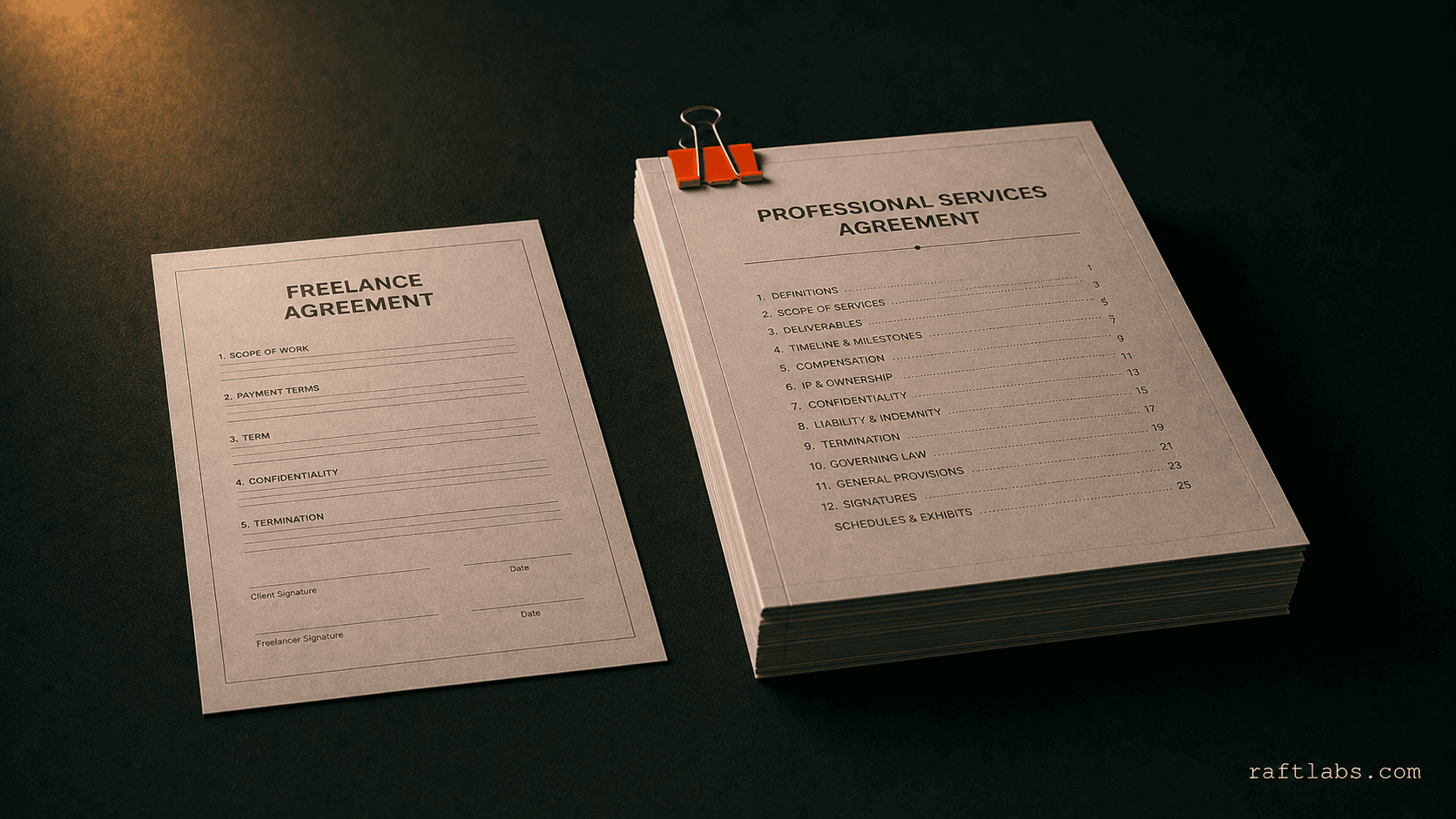
Article
AI development company vs. freelancer: Which should you hire?
A freelancer at $100/hour for three months looks cheaper than a $60K studio engagement - until you add the hidden costs of managing, reviewing, and replacing them.
Read more