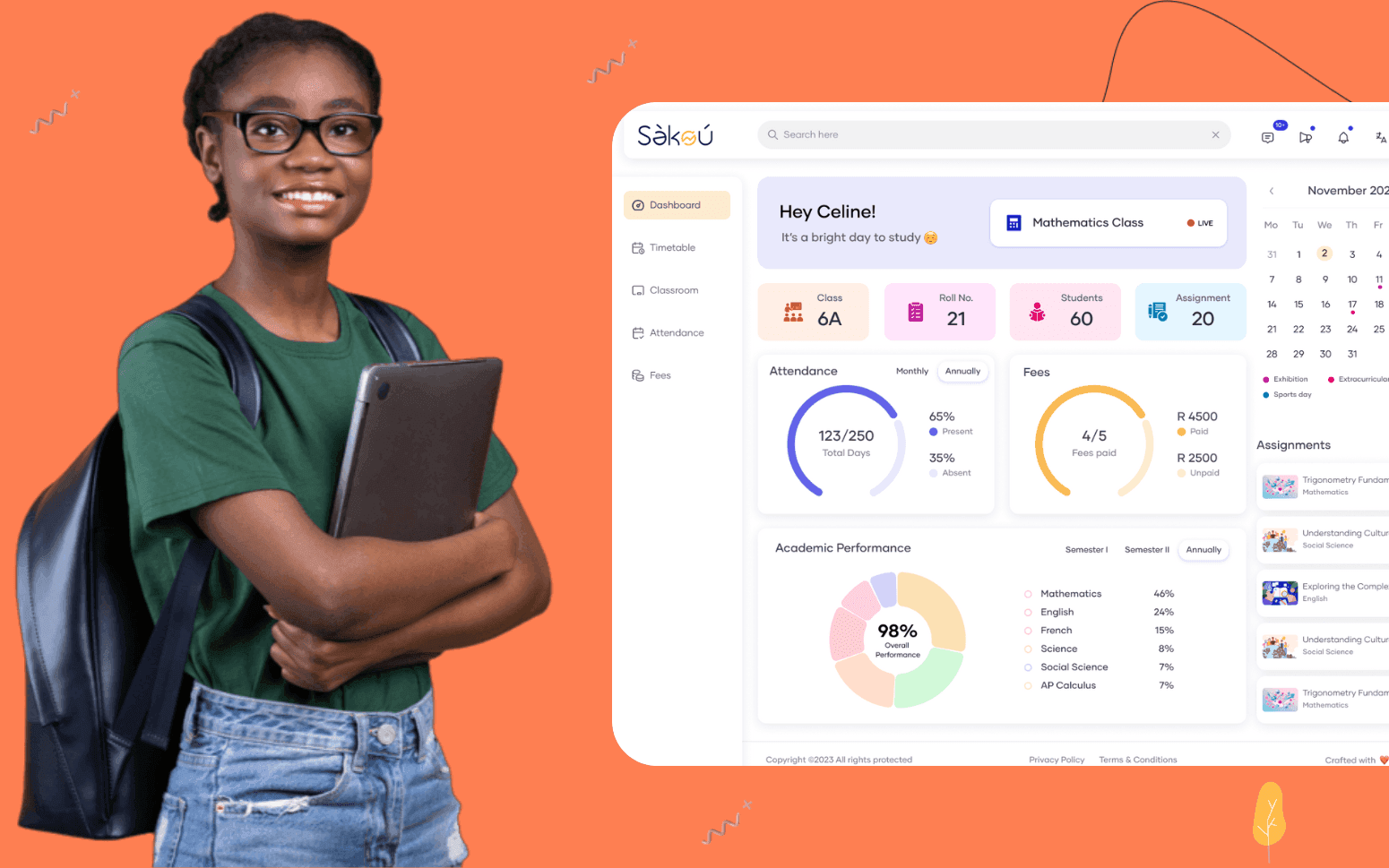
Purpose Built EdTech LMS SaaS Platform Disrupting African K-12 Schools
- 4000+
- 25%
- 16 weeks
Custom language learning apps for ed-startups, language schools, and publishers, built with spaced repetition, speech recognition, AI conversation practice, and gamification that keeps learners coming back every day.
100+ products shipped since 2019. We've built audio-driven learning products for music education, and we apply the same approach to language apps, audio feedback, visual scoring, and structured lesson delivery.
Spaced repetition vocabulary system and speech recognition with pronunciation scoring
AI conversation practice powered by LLMs with grammar correction and vocabulary suggestion
Gamification, streaks, XP, leaderboards, and badges, built to drive daily practice
Live tutor booking, video sessions, and progress analytics by skill and CEFR level
Recognition
Building a language learning app where learners need speaking practice but human tutors at scale are too expensive and basic chatbots don't correct pronunciation?
Your language course content is ready but the off-the-shelf platforms take a large revenue cut and don't give you control over the learning path or learner data?
In short
RaftLabs builds custom language learning apps for ed-startups, language schools, and publishers. Language learning app development covers spaced repetition vocabulary systems, speech recognition and pronunciation scoring, AI conversation practice, structured lesson delivery by CEFR level, gamification mechanics, live tutor booking and video sessions, and progress analytics. Custom builds are appropriate when off-the-shelf platforms take a large revenue cut, restrict your learning path design, or don't give you access to learner data. Most language learning app projects deliver in 12-16 weeks at a fixed cost with full source code ownership.
Companies we've built for



Duolingo spent years and hundreds of millions of dollars building their learning engine. A language school, a publisher, or an ed-startup can't replicate that by buying a white-label SaaS platform that takes 30% of your revenue and locks your learner data behind their dashboard. The platforms that exist are opinionated about lesson structure, exercise types, and monetisation in ways that may not match your content or your audience.
Custom language learning app development builds the product around your curriculum, your target languages, and your learner journey, whether that's structured CEFR-aligned lessons, free-form AI conversation practice, a live tutor marketplace, or a combination of all three.
Vocabulary and phrase scheduling using the SM-2 algorithm, which calculates the optimal inter-repetition interval for each card based on the learner's historical performance. Items answered correctly with high confidence are pushed further into the future. Items answered with difficulty come back sooner. This compounding effect means each learner's review queue is shaped by what they specifically struggle with, not a generic curriculum schedule.
Content is stored as JSON card objects with a target word or phrase, native-language translation, example sentence in context, audio pronunciation file recorded by a native speaker, and an optional image for visual association. Exercise types cycle through cloze deletion (fill the gap), multiple-choice translation, and active recall translation prompts within a single session to vary cognitive demand. Decks are organised by topic domain (travel, business, daily life, academic) and CEFR level (A1 through C2) so learners have a clear sense of where they are in the language and what vocabulary they're expected to know at each level. A placement test at onboarding assigns the initial CEFR level and sets the starting deck, so a learner with B1 Spanish doesn't repeat vocabulary they already know. Performance data from every session feeds back into the scheduling algorithm, tightening or loosening review intervals in real time as accuracy improves or declines. Learning records are persisted to an xAPI-compatible LRS so the data is yours to analyse and report on regardless of the front-end platform.
Speech recognition integration using Azure Cognitive Services Speech SDK or Google Cloud Speech-to-Text API, both of which support phoneme-level output rather than just word-level transcription. The API returns a phoneme alignment map for the learner's utterance, which the backend compares against the reference phoneme sequence for the target phrase. The resulting per-phoneme accuracy score (typically expressed as a 0-100 confidence value per sound) drives the visual feedback, a phoneme grid or waveform overlay that highlights exactly which sounds the learner mispronounced, rather than a binary pass or fail.
Record and playback comparison plays the learner's recording alongside a native speaker reference audio file so they can hear the difference directly. This side-by-side comparison is more effective for self-correction than a score alone. Progressive pronunciation exercises start with isolated phonemes and vowel sounds, then move to syllables, words, and full sentences as the learner's accuracy improves, matching the graduated structure used in formal pronunciation coaching. For languages where Azure Cognitive Services provides stronger phoneme coverage (Mandarin, Arabic, Japanese), we use Azure. For languages where Google Cloud Speech-to-Text gives better results, we use that. Azure's pronunciation assessment API covers word error rate, fluency score, completeness score, and pronunciation score as separate metrics, giving the frontend enough signal to offer specific coaching rather than a single composite number. All audio data for EU learners is handled in accordance with GDPR, with explicit consent collected before recording starts.
LLM-based conversation partner built on GPT-4o via the OpenAI API, with a system prompt persona that sets the AI's language level, topic domain, response length, and correction style. A tutor persona for beginners uses simple vocabulary and short sentences. A discussion partner persona for advanced learners engages naturally and only corrects when errors are frequent or communicatively significant. The system prompt is configurable per scenario so your content team can define as many conversation contexts as your curriculum requires, without additional engineering for each one.
Grammar correction is contextual: the AI identifies the error, explains what rule was broken in plain language, and shows the corrected version in sentence context, not just underlined red with no explanation. Vocabulary suggestion appears when the learner uses a circumlocution or an approximate word, offering the more precise target-language term with a brief meaning note. Topic-based conversation scenarios, airport check-in, job interview, hotel complaint, dinner reservation, medical appointment, are pre-loaded with scenario context so the AI knows the register and domain vocabulary to model. Difficulty and response speed are adjustable by the learner: beginners get shorter sentences and a brief wait for the AI response to simulate a patient interlocutor; advanced learners get native-speed natural responses that require active comprehension. Session transcripts are saved to the learner profile and optionally fed back into the spaced repetition deck as new vocabulary items encountered in context. All conversation data for EU-based learners is stored and processed in GDPR-compliant infrastructure with appropriate data retention controls.
Lesson content structured according to CEFR level bands (A1, A2, B1, B2, C1, C2) with a placement test at onboarding that assigns the learner to the correct entry point. Grammar concepts are sequenced so each lesson builds on material from the previous one, present tense before past tense, simple vocabulary before idiomatic expressions, and a prerequisite check blocks learners from accessing lessons that depend on foundations they haven't yet completed.
Each lesson combines all four language skills within a single session: reading comprehension, listening exercises, writing prompts, and speaking tasks. Audio lesson content is playable at variable speed (0.75x, 1x, 1.25x, 1.5x) so learners adjust to natural speech gradually rather than being thrown in at full speed. Audio and video content is delivered with full transcripts for listening comprehension exercises, allowing learners to check meaning and replay specific segments. Lesson content is structured as SCORM 2004-compliant packages or custom JSON objects depending on your distribution requirements, SCORM for integration with third-party LMS platforms, custom JSON for maximum flexibility in the native app. Grammar explanations use worked examples drawn from the lesson's topic context rather than abstract rule statements. Offline lesson download allows learners to download a lesson module to their device for practice on planes, commutes, or anywhere without reliable data. Downloaded content is protected with application-level DRM to prevent redistribution. Learning events (lesson start, lesson complete, exercise answer, score) are logged to an xAPI-compatible LRS (Learning Record Store), giving you a complete learner activity trail for analysis, certification, and compliance reporting.
Daily streak tracking counts consecutive days on which the learner completes a qualifying practice session, a minimum activity threshold rather than simply opening the app. Streak freeze mechanics allow learners to protect an active streak for a defined number of missed days, configurable per subscription tier so premium learners get more protection. One missed day without a freeze ends the streak; the streak count resets to zero, which is a powerful psychological motivator but also a churn driver if not managed with a recovery mechanic.
XP points are awarded on lesson completion, exercise accuracy, and daily goal achievement. Level progression unlocks new content tiers and cosmetic rewards (avatar items, profile badges). XP weighting is calibrated so harder exercises and higher-difficulty lessons award more points, grinding easy A1 reviews doesn't substitute for real forward progress. Leaderboards are scoped to friend groups (invite-based) and a weekly global league so new learners aren't permanently outranked by early users; weekly resets create regular competition cycles and re-engagement moments for lapsed learners who rejoin. Achievement badges for milestone moments: first 100 words learned, 7-day streak, 30-day streak, first AI conversation completed, first tutor session booked, first CEFR level completed. Push notification reminders sent via APNs and FCM at the learner's preferred daily practice time, with smart cadence that reduces frequency for learners who consistently practice without prompting and increases frequency for learners whose engagement is dropping. Streak recovery offers (a one-time streak restore at the moment of loss) reduce churn from the most common reason learners disengage, a single missed day breaking a long-running habit.
Tutor marketplace with profiles showing the languages taught, teaching specialisms (business, exam prep, conversation, pronunciation), price per session, learner level range, and verified reviews. Filtering by language, specialism, CEFR level, and availability so learners find the right tutor without scrolling a generic list. Calendar-based booking with full timezone detection and display, learner and tutor see their own local time throughout the booking and reminder flow so a Tokyo learner booking a Madrid tutor at 9am Madrid time sees 5pm Tokyo time in every confirmation and reminder they receive.
Video session delivery via WebRTC in a custom session interface, or via a third-party provider such as Daily.co or Whereby for managed video infrastructure. Session tools include shared whiteboard, vocabulary card display, and document upload so the session has a structured workspace rather than a bare video call. Session notes written by the tutor are saved to the learner's profile after the session ends. New vocabulary items introduced during the session are added to the learner's spaced repetition deck by the tutor or automatically extracted from the session transcript, so live tutor input feeds directly into the self-study workflow. Rating and review submission after each session, with verified-learner reviews only so ratings reflect genuine session experience. Payout to tutors handled via Stripe Connect with configurable platform commission. Community peer matching for language exchange, learners at the same level in opposite directions (A2 French speaker, B2 English speaker) can be connected for free conversation swap sessions, reducing the cost of speaking practice without replacing paid tutoring.
We integrate with Azure Cognitive Services Speech SDK or Google Cloud Speech-to-Text API for the speech-to-text layer, selecting the service based on which gives better phoneme-level accuracy for the target language. Azure's pronunciation assessment API is particularly strong for Mandarin, Japanese, and Arabic. Google Cloud Speech-to-Text is often the better choice for European languages and widely-spoken languages with large training datasets.
The API returns a phoneme alignment result: a map of each phoneme in the target phrase against the learner's actual output, with a per-phoneme accuracy score. We compare the learner's phoneme sequence against the reference phoneme sequence for the target phrase, compute per-phoneme scores, and return the result to the front end. The front end renders that score visually, a phoneme grid, waveform overlay, or colour-coded word highlight depending on your UI design, and plays back the learner's recording alongside a native speaker reference audio file. Feedback appears within 1-2 seconds of the learner finishing a recording. The pipeline runs entirely via API call so there's no on-device model size to manage. Audio data for EU-based learners is handled under GDPR, with explicit consent recorded before microphone access is requested and a clear data retention policy applied to stored recordings.
The core architecture, spaced repetition with the SM-2 algorithm, CEFR-structured lesson sequencing, gamification mechanics, and xAPI learning record persistence, is language-agnostic. The speech recognition and pronunciation scoring depend on the coverage of the underlying speech API. Azure Cognitive Services covers over 100 languages and dialects. Google Cloud Speech-to-Text covers over 125. Both services update their language model coverage regularly, so we confirm specific language support during scoping.
Native speaker audio for vocabulary items must be recorded or licensed for each target language you support. We work with your team to define the recording specification (sampling rate, microphone standard, pronunciation variant, e.g. Mexican Spanish vs. Castilian Spanish) and can introduce voice talent studios we've worked with previously. Script rendering for right-to-left languages (Arabic, Hebrew, Urdu) and logographic scripts (Simplified Chinese, Traditional Chinese, Japanese with mixed scripts, Korean) requires specific front-end handling, text direction, input method editor (IME) support, and font selection, which we build in from the start if your target language list includes them, rather than retrofitting later. GDPR-compliant data handling is built in for EU-based learners regardless of the target language, covering consent collection, data residency, and retention configuration.
Gamification in language apps only works if the mechanics are tied to real learning actions rather than arbitrary point accumulation. We design streak tracking around daily practice sessions with a minimum completion threshold, the learner must finish a lesson module or complete a defined number of spaced repetition reviews, not just open the app. Streak freezes are configurable per subscription tier and rationed so they protect streaks without replacing actual practice. A user who relies entirely on freezes isn't progressing and will eventually disengage regardless.
XP is weighted by exercise difficulty and accuracy, not just volume, so grinding A1 easy reviews doesn't substitute for real forward progress. Level progression thresholds are calibrated so learners feel consistent forward momentum in the first 30 days, the period where most language app churn occurs. Leaderboards reset weekly so new learners can compete without being permanently buried by day-one power users. Weekly resets also create regular re-engagement moments for learners who have lapsed. Push notifications via APNs and FCM are sent at the learner's preferred practice time, identified during onboarding, with a fallback to evening if no preference is set. Notification frequency adapts based on engagement: learners who practice consistently without prompting receive fewer notifications. Learners showing early signs of disengagement receive targeted recovery sequences with a streak-restore offer at the moment of loss.
A focused language learning app, spaced repetition vocabulary, structured lessons, basic gamification (streaks, XP, badges), and a progress dashboard, typically runs $30,000--$70,000. Adding speech recognition and pronunciation scoring, an AI conversation practice module, or a live tutor marketplace each adds meaningful scope and cost. A full-featured product with all of these capabilities, multi-language support, and subscription billing typically runs $80,000--$180,000. Cost depends on the number of target languages, speech API integration complexity, tutor marketplace scope, and mobile platform requirements (iOS, Android, or both). We scope every project before pricing it.
What clients say
Three-year average engagement. Founders and operators describing the work in their own words. No marketing varnish.

 Ivory Coast
RaftLabs has been an exceptional partner. From the start, they became more than just a service provider, they embraced our vision with their expertise and dedication.
01 / 02
Tell us your target languages, your content, your learner audience, and what the existing platforms can't give you. We'll scope the right product and give you a fixed cost.