Your curriculum team spent years building a teaching approach that works. Off-the-shelf LMS platforms were designed for someone else's. When they don't match, instructors work around the software instead of teaching through it.
We've shipped a multilingual SaaS LMS for K-12 schools across Africa, a music learning app for Irish musicians, and corporate training tools for regulated industries. Every institution that came to us had already tried Moodle, Canvas, or a similar platform. We build what they couldn't configure.
LMS platforms built around your curriculum structure, not a generic course-unit-lesson hierarchy
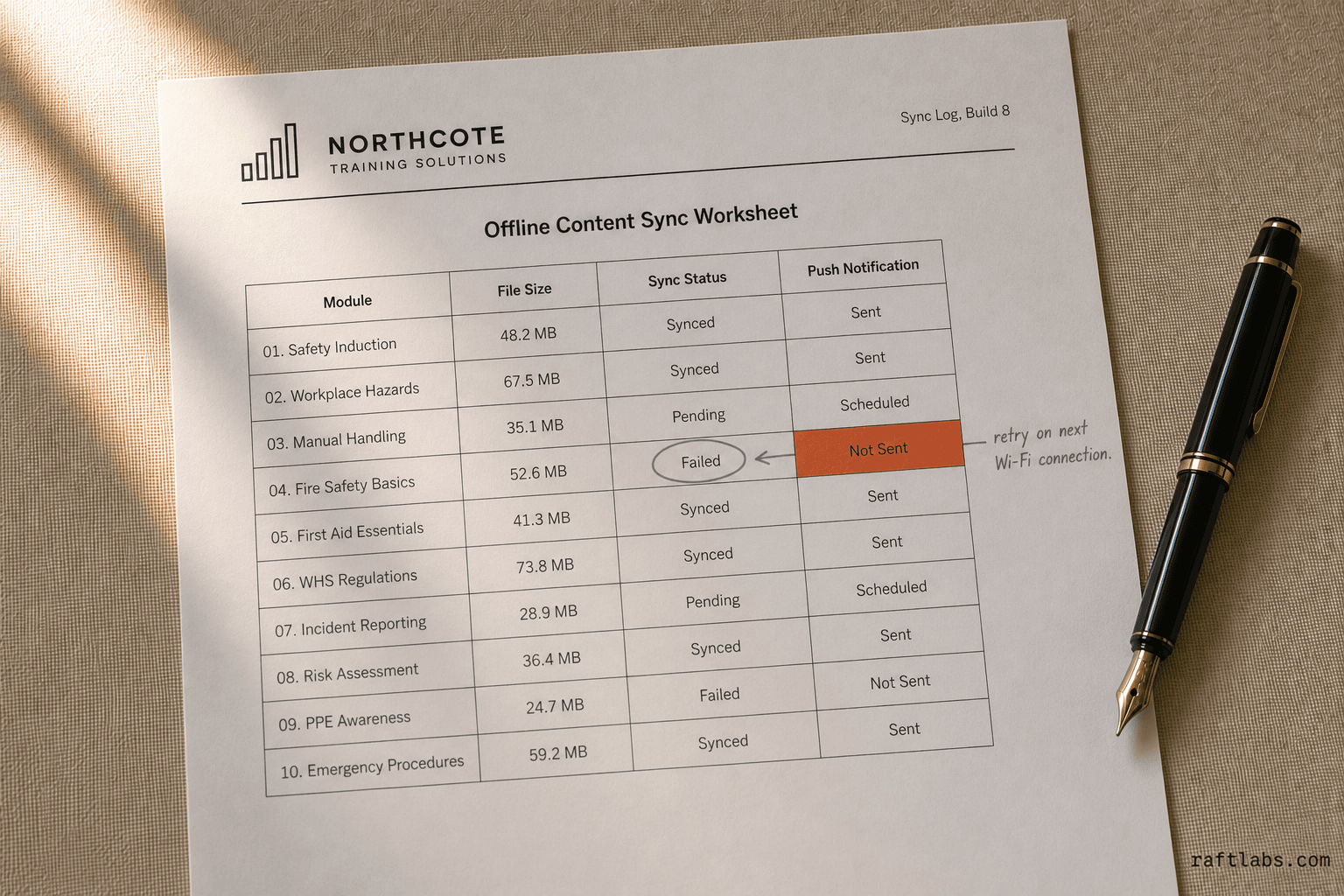
Mobile learning apps for iOS and Android with offline content, progress tracking, and learner engagement mechanics
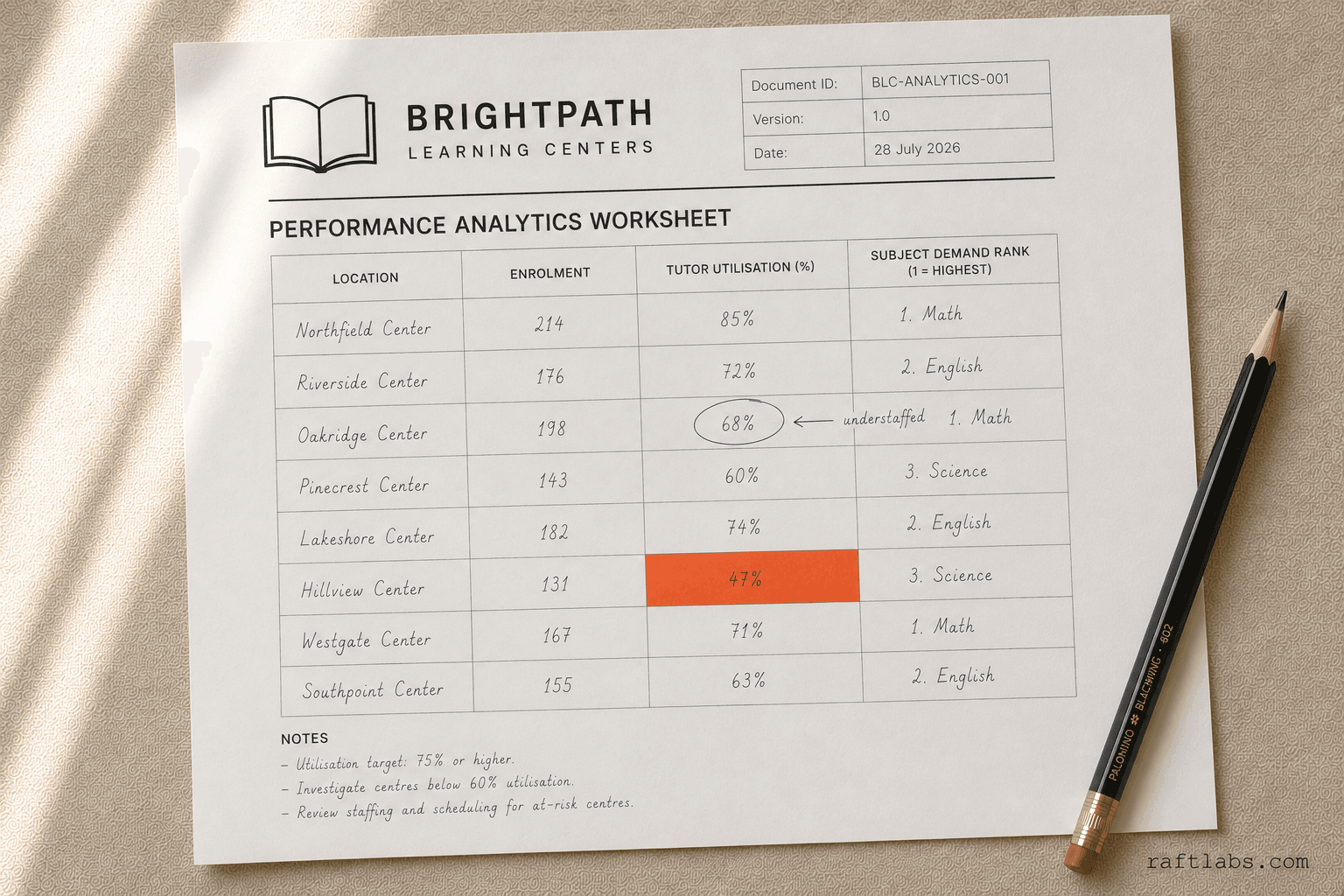
Tutoring tools and personalised learning paths that adapt to each student's pace
Production EdTech shipped since 2015: SaaS LMS platforms, music learning apps, and corporate training tools
The problem
Sound familiar?
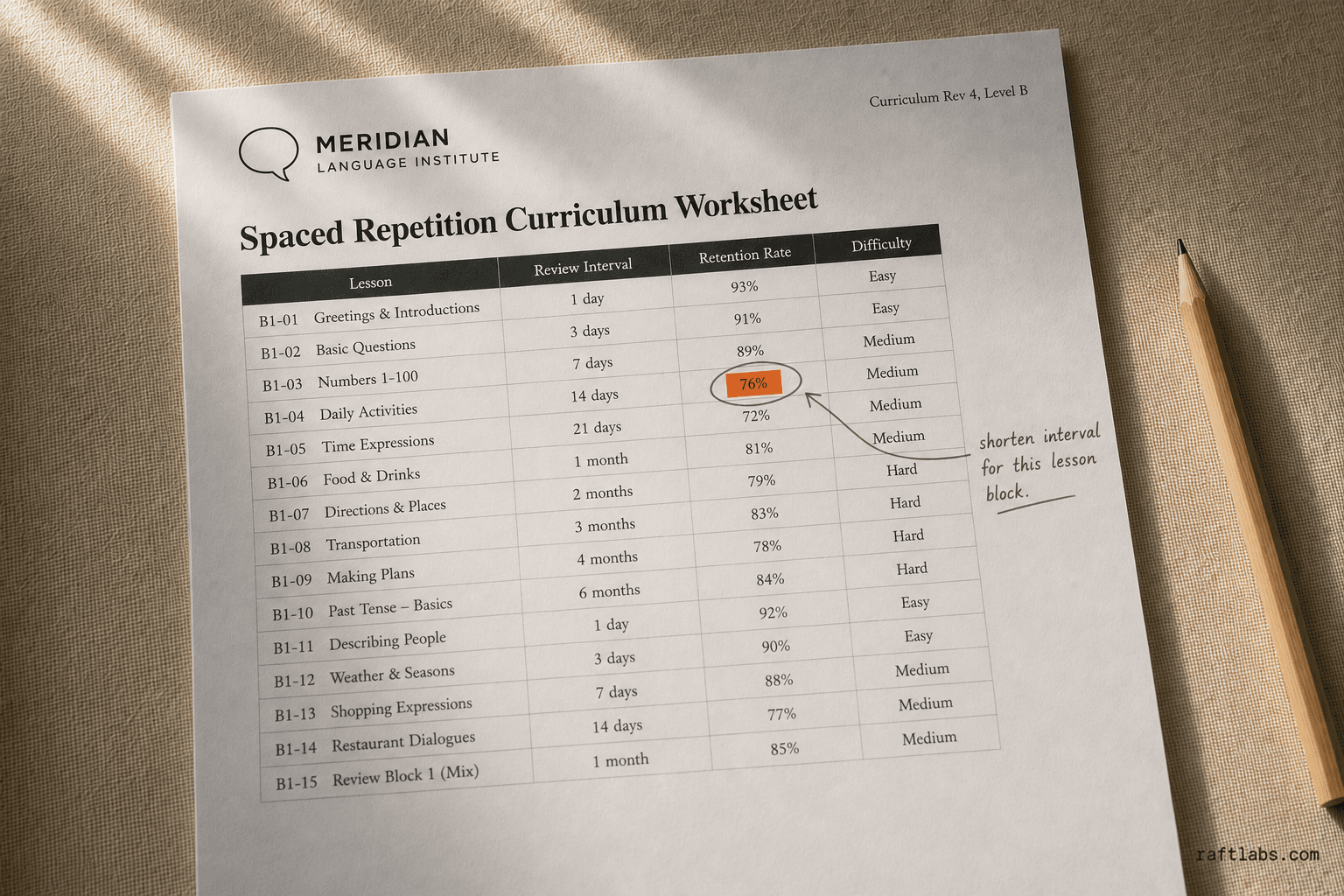
Off-the-shelf LMS forcing your curriculum team to redesign how they teach just to fit the platform's content model?
Instructors spending hours on attendance tracking, grade reporting, and parent communication because your LMS doesn't connect to your admin systems?
Short answer
RaftLabs builds custom EdTech software when Moodle, Canvas, or off-the-shelf LMS platforms can't match your curriculum, assessment model, or multilingual needs. We shipped a multilingual K-12 LMS for schools across Africa in 16 weeks and a music learning app for Irish learners. Most teams launch a validated v1 in 10 to 14 weeks, then grow it.
Learning platforms that fit how you actually teach
Most institutions don't have generic students. They have ESL learners, gifted programmes, vocational tracks, and cohorts with inconsistent attendance who still need to reach national standards. Off-the-shelf LMS platforms weren't designed for this specificity. They were designed for the median case.
We build EdTech software starting with your pedagogy. The content model, the assessment logic, the learner journey: all designed around how your institution actually teaches, not a template borrowed from a vendor whose other clients teach differently. The platform follows the curriculum. Not the other way around.
01 Diagnosis
Where EdTech software usually breaks
01
Problem
The LMS manages content; it doesn't produce learning
Solution
Today's learning management systems are largely content management systems with grading. They record whether a learner finished a module. They don't capture whether the learner understood it, retained it, or can apply it. Completion rates look good in a dashboard while actual skill development goes unmeasured. That gap costs institutions accreditation risk and costs corporate L&D teams the ROI they promised leadership. We build progress tracking tied to demonstrated competency, not just clicks. The outcome is learning you can prove, not completion you can report.
02
Problem
Teachers always struggle with the software
Solution
The people who buy education software aren't the people who use it, and buying decisions get made on criteria that have nothing to do with usability. Instructors and administrators spend hours each week on tasks the platform should handle: grading written responses, chasing attendance records, compiling progress reports. That time comes out of teaching. We build automated grading workflows, rubric-based feedback tools, and reporting that pulls from a single learner record, all designed for the least technical instructor on the team. The outcome is software teachers open instead of work around.
03
Problem
Content creation is a bottleneck
Solution
Your subject matter experts know what to teach. Your platform makes it hard to produce and update course content quickly. Uploading videos, structuring modules, and formatting assessments takes days of work that doesn't scale. We build authoring tools designed for non-technical curriculum teams, so content gets published in hours, not weeks, and can be updated without raising a support ticket. The outcome is a curriculum that keeps pace with the classroom.
04
Problem
The platform is a roach motel: you can check in, but you can never check out
Solution
LMS lock-in makes migration near-impossible. Course content, learner progress, and enrollment data live in the vendor's system, and switching means learners make new accounts, lose their progress, and lose their records. Institutions should worry about the exit strategy before signing. We build with documented exports from day one: your content, your learner data, your records, in formats you can take with you. The outcome is a platform you chose, not a platform you're stuck with.
02 What we ship
EdTech software we build
01
Learning management systems
Custom LMS platforms built for your curriculum structure, not a vendor's data model. Multi-tenant, multilingual, and built to grow from a single school to a national deployment. Live and asynchronous learning: scheduled cohort sessions where students move together, and self-paced pathways learners work through on their own time. The content model, user roles, assessment types, and reporting are all designed around how your institution delivers learning. The outcome is instructors teaching through the platform instead of around it.
02
Mobile learning apps
iOS and Android learning apps with offline content delivery, progress tracking, push notifications, and in-app assessments. Native interactions, media playback, and content that works without a reliable internet connection, not a web LMS wrapped in a WebView. The outcome is learning that survives a bad connection.
03
AI tutoring and personalised learning
Adaptive tutoring that adjusts to each learner's pace and performance, identifying gaps, changing difficulty, and surfacing the next best piece of content. Conversational tutors for subject-specific Q&A, automated feedback on written responses, and learning path logic that doesn't force every student through the same sequence. Built on your content, trained on your curriculum, not a generic chatbot with an education label. The outcome is personalisation that follows your pedagogy, not someone else's.
04
Corporate training platforms
L&D platforms for employee onboarding, compliance training, and skills development. Custom course authoring tools, manager dashboards, completion tracking, and certification workflows. Integration with your HRIS so training records follow the employee lifecycle. Reporting that satisfies compliance requirements and dashboards that give L&D teams the data they need to prove ROI. The outcome is training ROI you can show leadership.
05
School and campus management software
Administrative software for schools, colleges, and training providers: student records, timetabling, attendance tracking, fee management, and parent communication portals. The operational layer that runs alongside your LMS, built for the admin team and the finance team, not just the teachers. Integration with government reporting systems and existing student information systems where required. The outcome is one operational record instead of three.
06
E-learning content platforms
Content delivery platforms for organisations publishing e-learning at scale: course marketplaces, subscription learning platforms, and gated content portals. Video hosting, SCORM-compliant content rendering, learner progress APIs, and instructor dashboards. Built to handle the content model and the commerce model your e-learning business requires, not a one-size-fits-all course platform. The outcome is a platform that sells the way you teach.
03 Buy, build, or wait
Most institutions don't need to decide between Moodle and custom. They need to decide whether the platform fits their pedagogy or forces workarounds every day.
Stay on the platform
Moodle, Canvas, Teachable
When the content model fits your curriculum and the workarounds are rare.
The heavily customized Moodle
When the customization still works. But a 20-year-old codebase gets cumbersome to modify, and the technical debt compounds.
Build custom
When pedagogy doesn't fit
Your curriculum structure, assessment model, or multilingual needs can't be configured into the platform.
When teachers work around it
Instructors teaching around the software instead of through it is the signal the platform lost.
When the exit matters
Documented exports from day one. Your content and learner data, in formats you can take with you.
Bottom line
Stay on the platform while it fits. Build when the workarounds cost more than the build.
04 How we work
How we build EdTech software
01
Discovery with the people who teach
We spend the first two weeks mapping your pedagogy, your learner journey, and the gaps in your current platform. We interview curriculum designers, instructors, and learners where possible. The output is a product specification that reflects how you actually teach, not a restatement of what a generic LMS already does. The risk this retires: building the average institution's LMS instead of yours.
02
Architecture around the content model
We design the content model, assessment architecture, and integration points before writing code. For an LMS, this means deciding how courses, modules, lessons, and assessments relate to each other and to the learner record. For a mobile learning app, this means designing the offline sync and content delivery architecture. Getting architecture right upfront prevents rework at the worst time. The risk this retires: the data model that can't express your curriculum.
03
Build with teachers testing
Development happens in two-week sprints with a working build available at the end of each sprint. You test real functionality against real content, not mockups. Instructors and learners interact with the platform as it's being built, which surfaces usability problems early when they're cheap to fix. The risk this retires: the usability failure discovered after launch.
04
Launch with migration and training
We deploy with a go-live plan that covers data migration, staff training, and a support period after launch. The first 30 days after launch are when real-world usage reveals edge cases. We stay available during that period to resolve issues quickly so learners don't experience disruption. The risk this retires: the migration where learners lose their progress.
Trusted by
05 Track record
What we've shipped in EdTech
01
Students supported per school on our K-12 LMS
4,000+
02
Weeks from concept to launch for a multilingual SaaS LMS
16
03
Practice sessions in the first 60 days of the music learning app
Across dozens of industries, we recognise your situation fast, then frame the fix around your margin and your operations, not a generic template.
02
We own the number, not the ticket
We measure success the way you do: hours saved, revenue earned, margin recovered. We stay through launch and growth, so the result is ours to own.
03
Serious businesses trust us
Vodafone, T-Mobile, Cisco, Energia, Aldi, Nike. Building since 2015. Serious businesses keep coming back because we stay accountable long after launch.
09 Questions
Common questions
EdTech software development is building custom technology products for education: learning management systems, mobile learning apps, assessment platforms, school management tools, and AI tutoring systems. Off-the-shelf platforms like Moodle, Canvas, or Teachable handle common use cases well. Custom development is what you need when your curriculum structure, assessment model, multilingual requirements, or integration needs don't fit what a packaged platform can offer. RaftLabs has built EdTech products for K-12 schools, ed-startups, music education, and corporate training, each with a different content model and a different set of user requirements. We scope the build around what you're teaching and who you're teaching it to.
Multilingual EdTech is more than translating strings. It involves content management workflows for multiple languages, right-to-left text support, locale-specific assessment types, and curriculum mapping that varies by country or region. We've built a multilingual SaaS LMS for K-12 schools across Africa where curriculum standards differ by country and content needs to be delivered in multiple local languages. The approach depends on your requirements: whether content is translated by your team or crowdsourced, whether the UI itself needs full localisation, and whether reporting needs to roll up across languages to a single dashboard. We design the content architecture for multilingual delivery before writing a line of code.
Yes. SCORM compliance is a common requirement for platforms that need to ingest content packaged by authoring tools like Articulate Storyline or Adobe Captivate. LTI (Learning Tools Interoperability) is the standard for embedding third-party tools into an LMS, for example, adding a virtual lab, a video platform, or an AI tutor as a tool launch within a course. We build platforms that consume SCORM 1.2 and SCORM 2004 packages, track completion and score data, and surface that data in your reporting layer. LTI 1.3 support is included where your platform needs to act as a tool consumer or tool provider. When you need activity tracking beyond a single course, such as offline learning or simulation results, we add xAPI (Tin Can) with a Learning Record Store. If your content stack requires these standards, we design the platform around them from the start.
A focused LMS, for example a single-tenant platform with course delivery, assessments, and progress reporting, launches a validated v1 in 10 to 14 weeks, then grows from there. A multi-tenant SaaS LMS with multilingual support, custom integrations, and a learner marketplace runs longer, typically 16 to 24 weeks depending on scope. Our multilingual K-12 LMS for schools across Africa went from concept to launch in 16 weeks. We scope every project before pricing it. You know what's included, what the delivery milestones are, and what the fixed cost is before development starts. The difference is always scope clarity at the start, not engineering speed at the end.
A custom LMS or learning app v1 launches in 10 to 14 weeks. That first version is built to validate the product with real learners, then you grow it. AI tutoring systems and school management platforms with complex integrations are scoped separately. We scope every project before pricing. Fixed cost, agreed before work starts.
This is the question that kills most EdTech projects, and it's the right one to ask first. The people who buy education software are rarely the people who use it, and teachers always struggle with software that wasn't designed for them. We design for the least technical instructor on your team: authoring tools for non-technical curriculum staff, grading workflows that follow how teachers already grade, and interfaces tested with real teachers during the build. The system ships when your teachers can run a full class on it without help.