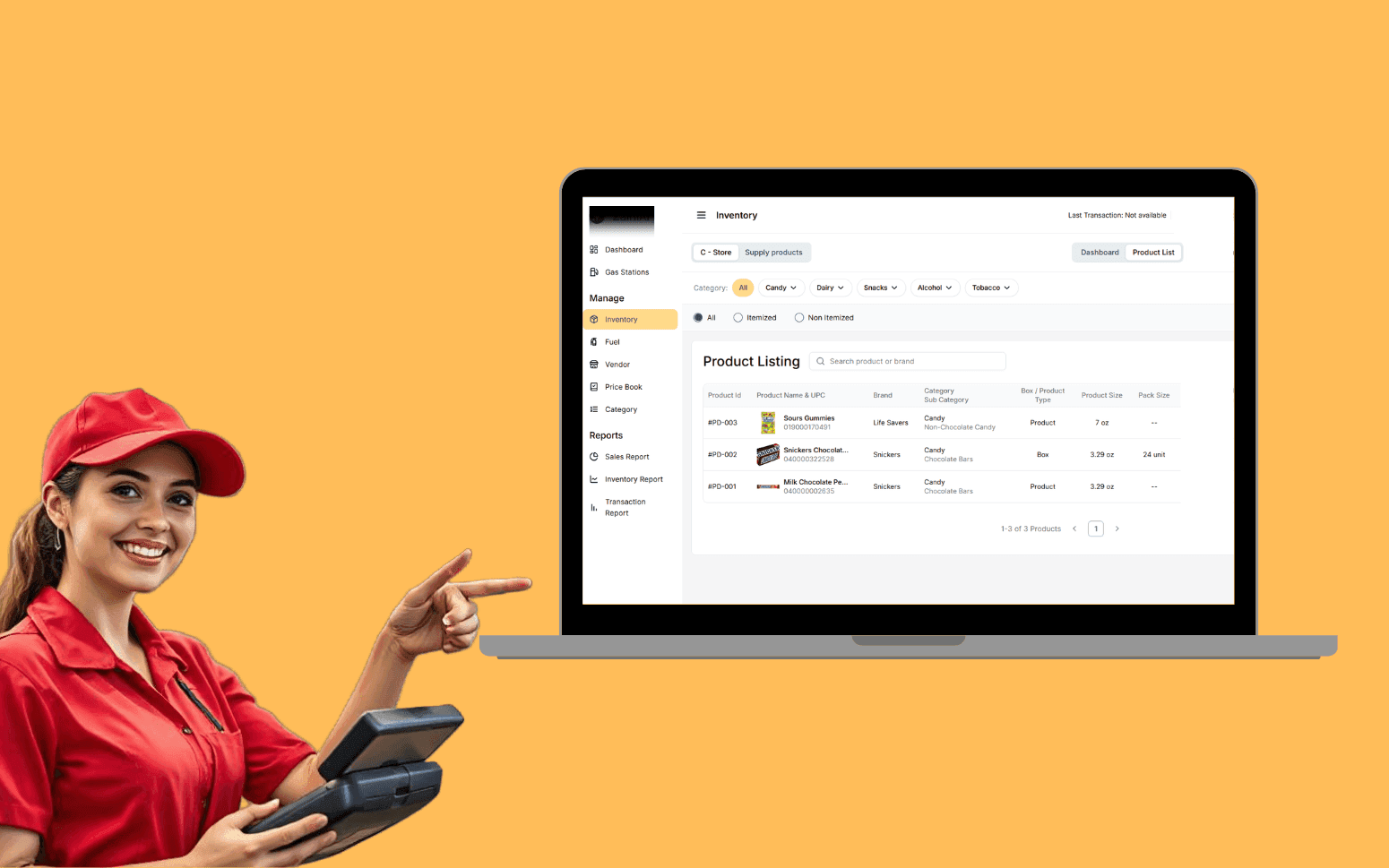
AI OCR Software Scales Gas Station Operations With 20K+ Transactions
- 20K+
- 40+
- 70%
Defence contracts carry compliance obligations that span quality standards, security requirements, environmental regulations, export controls, and the specific contractual obligations negotiated with the programme office. Managing those obligations through spreadsheets, shared drives, and email threads means nobody has a complete picture of what's required, what's been evidenced, and what is outstanding before the audit team arrives.
We build compliance management software for defence contractors and government organisations that need a structured, auditable record of their compliance obligations: what is required, who is responsible, what the evidence is, and what findings or risks are open at any point in time.
Compliance obligation register mapping every contractual, regulatory, and quality obligation to the responsible owner, the evidence required, and the current compliance status
Audit preparation workflow assembling the evidence package for each obligation automatically from the records held in the system
Finding management with structured corrective action plans, due dates, responsible owners, and closure verification
Risk documentation capturing compliance risks with likelihood, impact, and mitigation actions linked to the obligation register
Recognition
Compliance teams spending weeks before a programme audit manually assembling evidence packages from shared drives, email trails, and spreadsheets because there is no system that holds the obligation, the evidence, and the responsible owner in one place?
Audit findings managed in a spreadsheet with no systematic tracking of corrective action progress, so the next audit discovers the same finding because the previous corrective action was never verified as closed?
In short
RaftLabs builds custom defence compliance management software for defence contractors and government organisations that need obligation registers, audit preparation workflows, finding management with corrective action tracking, risk documentation, and quality record management in one connected system. Most projects deliver in 14 to 22 weeks at a fixed, agreed cost with full source code ownership.
Companies we've built for







Defence compliance management isn't a single standard. A prime contractor on a complex defence programme may simultaneously need to demonstrate compliance with AS9100 for quality management, Def Stan 05-138 for cyber security, ITAR and EAR for export control, ISO 14001 for environmental management, and a set of custom contractual obligations defined in the prime contract. Each of those obligations has different evidence requirements, different review cycles, and a different authority that will inspect compliance.
Custom compliance management software is structured around the obligation landscape of your specific programme: the standards, the contractual clauses, the regulations, and the internal policies that together define what compliance means for your organisation. The obligation register is the single source of truth that a compliance audit, however framed and whatever standard it applies, can be answered from.
Obligation register capturing every compliance requirement from every applicable source, defence standards, regulatory frameworks, prime contract clauses, and internal policy requirements, in a single searchable register. Each obligation record captures the requirement source and clause reference, the specific obligation in plain language, the responsible owner, the evidence type required to demonstrate compliance, the review frequency, and the current compliance status. Obligation hierarchy management grouping obligations by source standard, by programme, by business unit, and by responsible function so the compliance manager can view the obligation landscape from multiple dimensions without maintaining separate registers. Obligation change management tracks when an obligation changes, because a contract is amended, a standard is revised, or a regulation is updated, with the change recorded, the previous obligation retained, and the responsible owner notified to review whether the existing evidence still meets the revised requirement. Compliance status dashboard shows the overall compliance position across all obligations, the number assessed compliant, the number with open findings, the number overdue for review, as a single management view without requiring the compliance manager to aggregate status from multiple sources.
Audit preparation workflow triggered when an audit is scheduled: the audit type, scope, and scheduled date are recorded, and the relevant obligations are automatically identified from the obligation register based on the audit standard and scope. Evidence package assembly drawing together the records, documents, and quality data linked to each in-scope obligation from within the system, presented as a structured evidence package organised by obligation clause. Gap identification flags obligations within the audit scope that have no current evidence record, are outside their review cycle, or have an open finding, so the gaps are visible to the compliance team before the audit rather than surfaced by the auditor on the day. Audit access management provides the audit team with read-only access to the relevant portions of the evidence package through a secure portal, reducing the volume of document extraction requests during the audit. Pre-audit checklist for the compliance team covers the preparation steps required for each obligation within the scope: who needs to be available, what documentation needs to be printed or prepared in physical form, and what access arrangements need to be made.
Finding register capturing every finding raised by an external auditor or an internal review: the finding description, the audit or review in which it was raised, the obligation or clause to which it relates, the finding category, and the initial assessment of severity. Corrective action plan management for each finding covers the root cause analysis, the corrective actions required, the responsible owner for each action, the target completion date, and the evidence that will demonstrate closure. Progress tracking for each corrective action with interim status updates recorded by the responsible owner and visible to the compliance manager without requiring a status meeting. Closure verification workflow requires the compliance manager to review the evidence of correction before marking a finding as closed, preventing findings from being closed administratively without the corrective action having been completed and verified. Finding recurrence tracking identifying where the same or substantially similar findings recur across audit cycles, flagging systemic issues that have not been genuinely addressed by previous corrective actions.
Compliance risk register linked to the obligation register: each risk record captures the obligation or group of obligations affected, the risk description, the likelihood, the potential consequence, and the current risk score. Risk owner assignment with periodic review cycles configured for each risk prompts the risk owner to review and update the risk at the required interval, with overdue reviews flagged to the compliance manager. Mitigation action tracking for each risk covers the planned mitigations, the responsible owner, the target completion date, and the current status, so the risk register reflects the actual risk position including credit for mitigations in progress. Risk trend reporting shows whether the compliance risk profile is improving or deteriorating over time, broken down by the number of risks at each severity level by review period. Programme risk reporting aggregates the compliance risk position for a specific programme or contract for reporting to the programme manager or the customer as required by the contract.
Quality record register linking every quality record, inspection reports, test certificates, calibration records, training records, supplier qualification documents, to the obligation it evidences. Record retention management enforces the retention period required for each record type, defined by the contract, the standard, or the regulation, with records approaching the end of their retention period flagged for disposition decision rather than automatically deleted. Controlled access to quality records uses role-based permissions to determine which individuals can view, upload, or supersede records for each obligation and programme. Record request management for customer and third-party requests logs the request, retrieves the records from the system, records the disclosure, and notifies the requestor when the records are available. Document revision management for quality records that are periodically updated keeps the current version accessible to authorised users, the previous versions retained in archive, and the revision history visible to the compliance manager.
Regulatory submission register tracks each submission required under the applicable regulations, export licence applications, environmental incident reports, security incident notifications, safety case submissions, with the submission type, the responsible owner, the submission deadline, and the current status. Submission preparation workflow assembling the data and documentation required for each submission type from the records held in the system, with a checklist of additional information required from outside the system. Submission tracking from preparation through internal review and approval to submission to the regulatory authority and receipt of the authority's response. Response management for regulatory authority decisions, approvals, rejections, requests for further information, is recorded against the submission with any required follow-up actions assigned and tracked. Submission history for each regulatory authority and submission type, providing the compliance manager with a complete record of all submissions, their outcomes, and the timelines involved for reporting and programme planning purposes.
The obligation register supports multiple programmes and contracts simultaneously, each with their own set of obligations from their applicable standards and contractual requirements. Obligations are tagged to the programme and standard they belong to, so an audit scoped to a specific contract and standard shows only the obligations relevant to that audit. Where obligations are shared across programmes, an AS9100 clause that applies organisation-wide for example, the evidence is recorded once and linked to all the programmes that require it. The compliance manager can see the full obligation picture for a single programme or across all programmes from the same interface.
Yes. Common integration points include pulling document records and approval status from an existing document control system, importing calibration records from a calibration management platform, and synchronising non-conformance and CAPA data from a QMS. The integration approach depends on the API capability of your existing systems, and we assess the integration landscape during scoping. Where existing systems have limited interfaces, the compliance system can operate as the record of compliance evidence with links to documents held in the existing system rather than full data synchronisation.
Compliance records for programmes involving classified information are managed with access controls and hosting arrangements that match the classification requirements. We design the data architecture to your security officer's specifications, including data segregation by classification level, access logging, and approved hosting environment. For programmes requiring UK OFFICIAL-SENSITIVE or equivalent handling, the system is deployed in a hosting environment that meets the relevant accreditation requirements. The security architecture is agreed before development starts.
A focused build covering obligation register, finding management, and corrective action tracking typically runs $60,000 to $120,000 depending on scope and the number of standards and programmes to be managed. Adding audit preparation workflow, risk documentation, and regulatory submission support brings the total to $120,000 to $250,000. Fixed cost agreed before development starts, no hourly billing.
The obligation register is standard-agnostic: it structures requirements from any source. We've scoped systems covering AS9100, DEF STAN 05-138, ISO 14001, ITAR, EAR, and custom contractual obligations from prime contracts. During scoping we map your specific standards and contract obligations to the obligation register structure.
What clients say
Three-year average engagement. Founders and operators describing the work in their own words. No marketing varnish.

 USA
USAAll of the sprints were completed on schedule and on budget. We highly recommend RaftLabs!
01 / 02
Tell us about your compliance landscape: the standards and contracts you operate under, the audit cycles you face, and where your current compliance process creates gaps before an audit. We'll scope a system built around your obligation structure and your audit obligations.