Updated June 2026
PSi: The Audio-based App For Collective Decision Making
Inspired by Galton's 'Wisdom of the Crowds,' PSi changes how teams reach collective decisions by processing the insights of large groups in minutes.

In this article
Short answer
PSi is an audio-based collective decision-making app built by RaftLabs. It collects spoken responses from up to 2,000 participants, processes them with NLP, and surfaces a consensus view in under an hour. Traditional focus groups cost $4,000-$12,000 per session and capture 8-12 voices. PSi replaces that process with same-day analytics at a fraction of the cost.
Key takeaways
- PSi is grounded in Francis Galton's wisdom-of-crowds principle: the average of a large group's input is more accurate than any single expert's judgment.
- The app collects spoken audio responses, processes them with NLP, and surfaces a consensus view in minutes. No in-person meetings. No manual transcript analysis.
- PSi scales consistently from 20 to 2,000 participants without losing reliability, which traditional focus groups and workshops cannot match.
- It secured funding from MediaFutures EU and IDEO CoLab, and was recognized by Imperial College London for civic participation applications.
- RaftLabs built PSi from a clear founder brief, focusing on collective intelligence, inclusive participation, and real-time analytics for decision-makers.
An interesting starting point
In 1906, Francis Galton visited a village fair where an ox was on display. The challenge: guess the animal's weight and win a prize. Farmers and villagers offered wildly varying estimates, and none came close individually.
Galton calculated the average of all guesses. It matched the exact weight of the animal.
The experiment confirmed that the collective estimate of a crowd is more accurate than any single person's knowledge. Galton called it the wisdom of crowds, and its implications for group decision-making have been validated repeatedly since.
According to research published in Science, the wisdom-of-crowds effect is reliable when group members have independent knowledge and diverse backgrounds. When those two conditions are met, aggregated group judgments outperform expert solo estimates in roughly 80% of studies reviewed.
"Large groups of non-experts can make better predictions than small groups of experts, but only if you can aggregate their views independently and without social influence."
James Surowiecki, author of The Wisdom of Crowds (Random House, 2004)
What is PSi?
PSi (People Supported Intelligence) is a web application that uses natural language processing to collect and analyze conversational qualitative data from large groups.
Like Galton's experiment, PSi treats group input as a primary research tool. It gathers insights from large numbers of participants, surfaces patterns, and produces a consensus view in minutes.
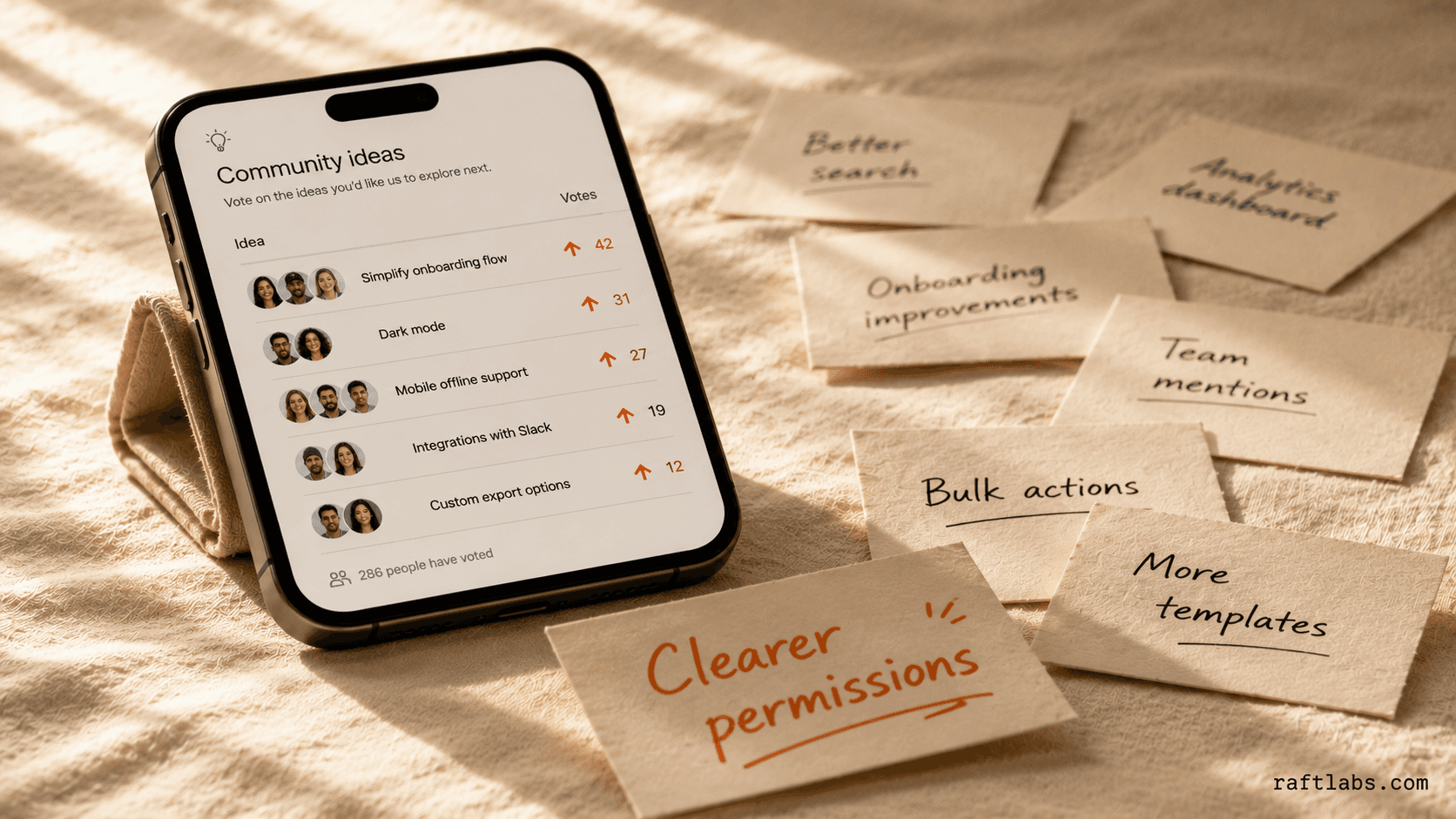
The app was built to create a decentralized, intuitive conversation platform for primary research that supports group decision-making.
Its core goal is to make primary research data collection and analysis practical for organizations that do not have the time or budget for traditional focus groups.
What inspired the creation of PSi?
Co-founders Georgie Denis and Niccolo Pescetelli started PSi from direct experience with group decision problems. As a Project Manager, Georgie had run decision-making processes for diverse groups in the health sector, including patients, carers, legal teams, and engineers.
Niccolo, with a Ph.D. from Oxford and research experience at MIT, had spent years studying group decision-making and collective intelligence.
Together, they wanted to build a tool that gives decision-makers reliable insight from the people most affected by a decision, without the delays and costs of in-person research.
They brought RaftLabs in to build it. When they first approached us, Georgie and Niccolo shared a clear vision: an app that businesses could use to conduct primary research and support participatory group decisions among their communities and the general public.
Georgie put it directly: "One day I hope PSi can support businesses to engage their customers, employees, and the general public in the same kind of participatory decision making." RaftLabs built that app alongside them, focused on collective intelligence and inclusive participation.
Why PSi matters for remote group decisions
PSi secured funding from MediaFutures EU, IDEO CoLab, and others to develop its decision-making and audio features. That funding reflects a real need.
McKinsey research found that organizations making good decisions faster than competitors generate returns 6 percentage points higher than peers. The bottleneck in most cases is not strategy. It's the inability to aggregate group knowledge at scale without expensive, slow in-person processes.
Traditional focus groups cost $4,000-$12,000 per session and take two to four weeks to schedule. They capture 8-12 voices. PSi replaces that process with asynchronous audio and delivers structured analytics the same day.
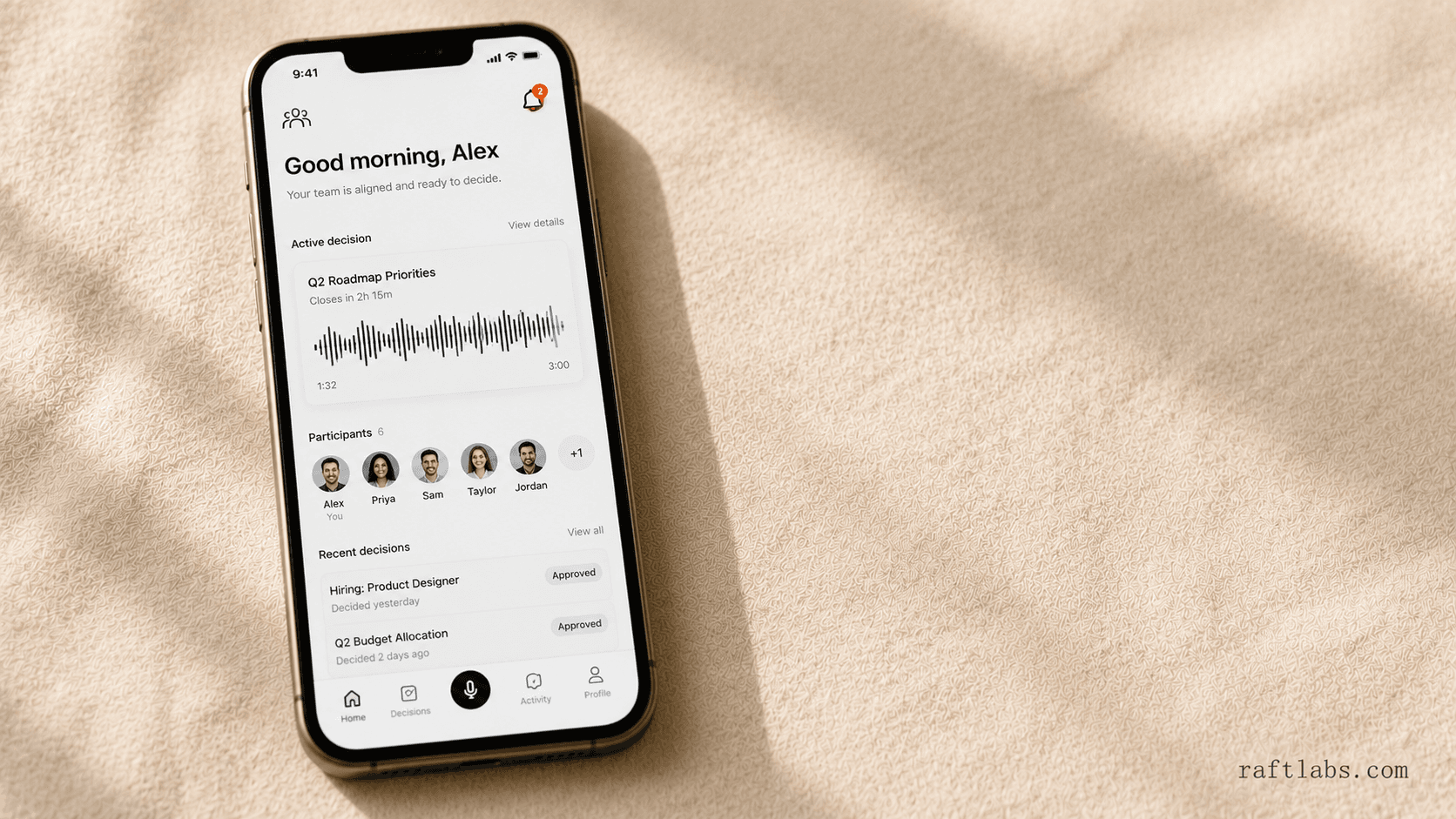
Here is what PSi addresses specifically:
Decision-makers can gather and analyze qualitative and quantitative data from large groups in real time, without in-person meetings.
Organizations can engage their communities more inclusively, capturing a wider range of perspectives.
The app reaches consensus faster than traditional surveys or focus groups, saving time and coordination effort.
Machine learning and natural language processing handle the analysis, so teams get clear insights rather than raw transcript data.
The interface is simple enough for anyone to record a response, vote on ideas, or join a live anonymous conversation.
How the PSi app works
Step 1: Plan the discussion
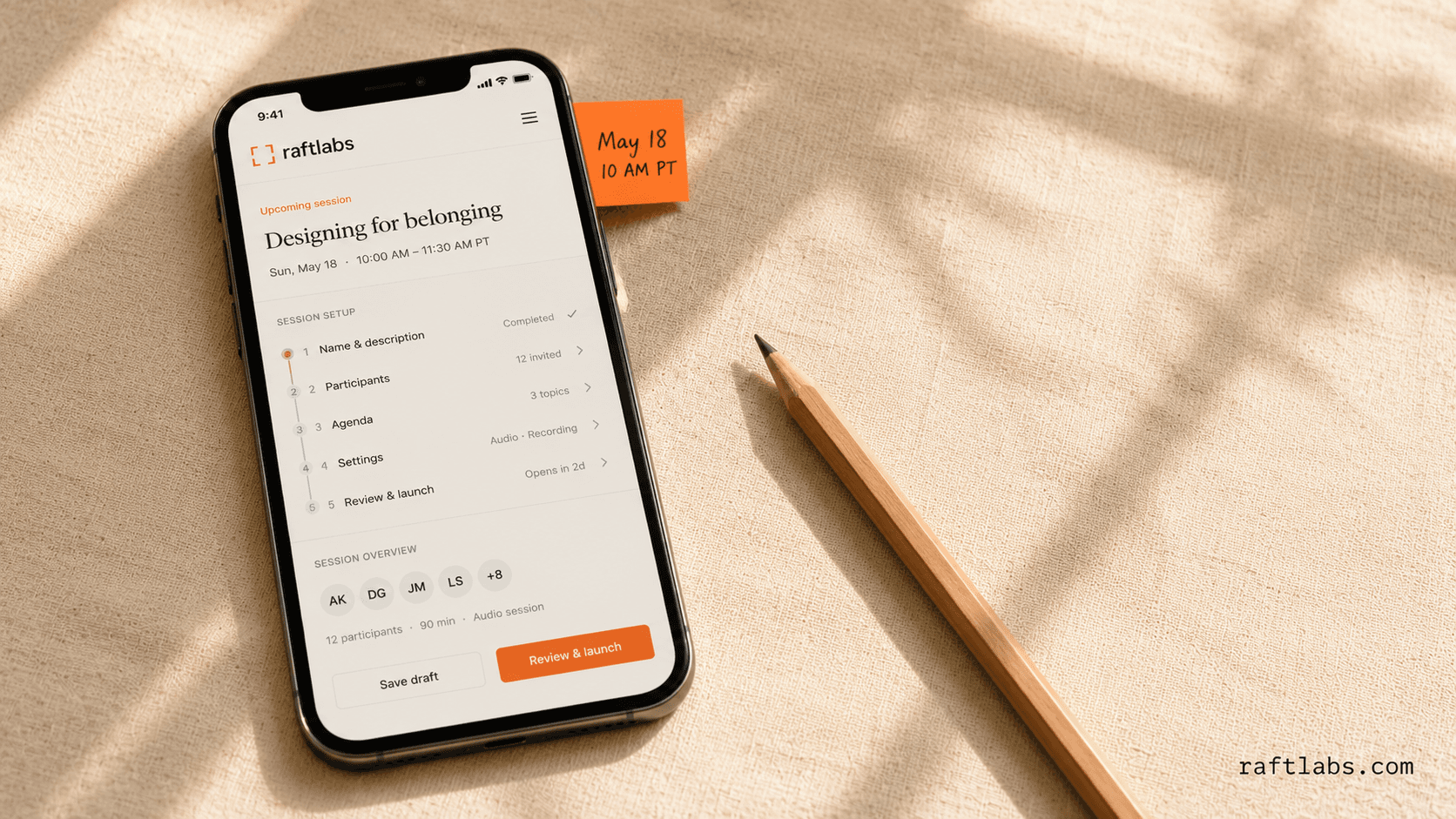
Planning a discussion through the PSi app
- You can work with the PSi platform's team to design a discussion that matches your specific goals.
- The platform helps you define the right question and identify the right participants, drawing on qualitative research best practices.
Step 2: Hold the discussion
Holding a discussion through the PSi app
- The app makes it easy for your community to participate with minimal friction.
- Built-in guidance ensures everyone understands how to use the platform.
- The discussion captures collective input and surfaces the highest-impact ideas.
Step 3: Analytics and decisions
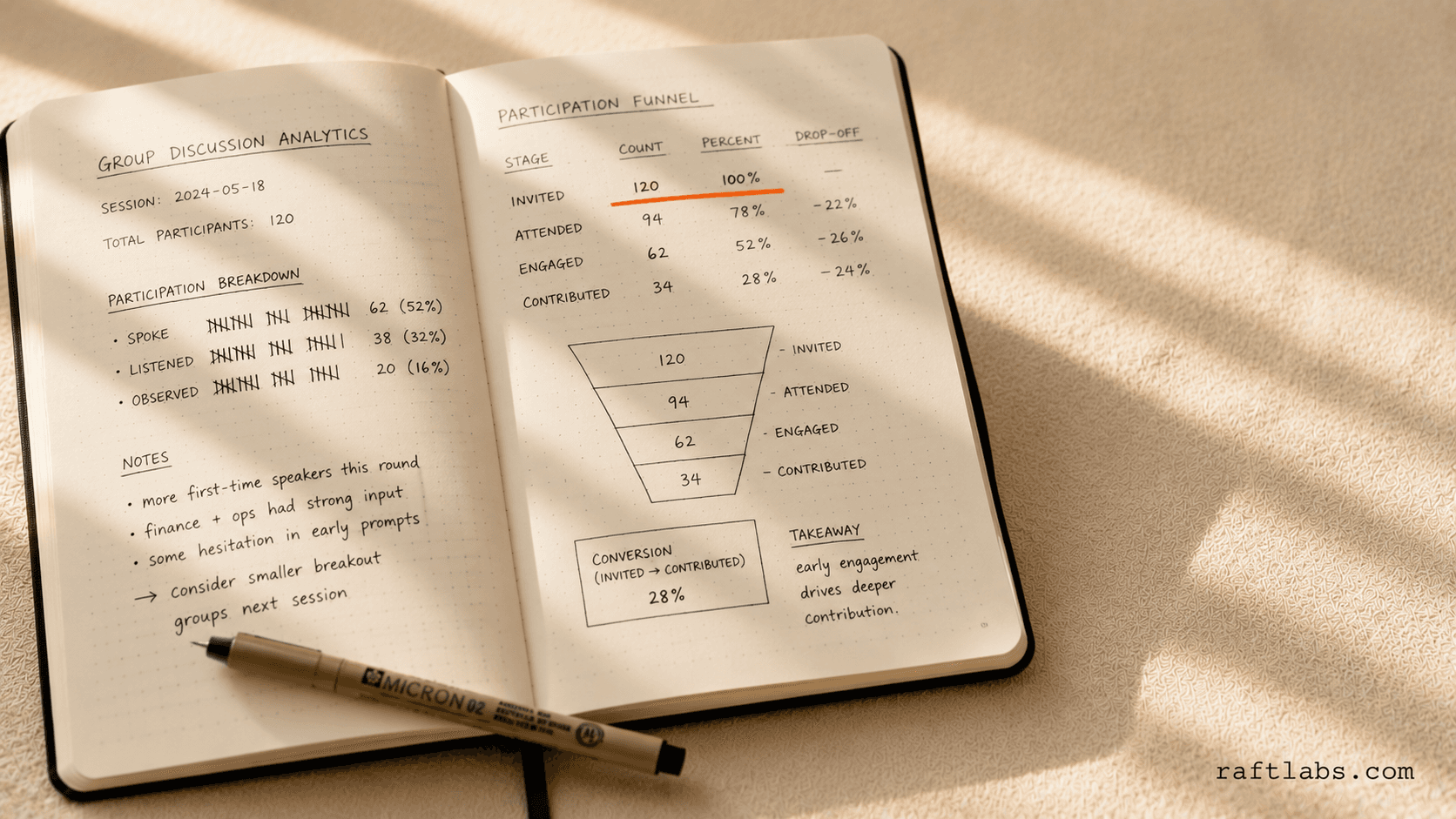
PSi app provides powerful analytics
- The platform analyzes conversation data and extracts key insights automatically.
- You gain a clear view of your community's priorities and can act on findings the same day.
- AI-driven analytics deliver speed and accuracy that manual analysis cannot match.
Key advantages of PSi
PSi provides deeper insight into participants' thoughts than standard surveys. Surveys give you ratings. PSi gives you reasoning - the spoken logic behind each view, not just a number from 1 to 5.
Most teams building collective-decision tools get this wrong: they optimize for data volume rather than data quality. When you ask 500 people a yes/no question, you get a ratio, not insight. PSi records why people answered as they did, then uses NLP to cluster reasons and surface the most common underlying concerns.
That matters most in three situations:
- When the room is politically charged. Spoken audio in a structured, anonymous format gets more honest answers than group discussion where louder voices dominate.
- When the decision affects people outside the room. PSi extends participation to stakeholders who can't attend in person, including frontline staff, customers, or community members.
- When speed matters. You can run a PSi session and have analytics in two to four hours. A traditional stakeholder consultation takes weeks.
PSi's scalability means results stay consistent from 20 participants to 2,000. Traditional focus groups lose statistical reliability above 12 participants and require multiple sessions. PSi does not.
According to Deloitte, companies with structured decision-making processes that include diverse input are 2.6 times more likely to reach decisions rated "good" by independent evaluators. PSi is built directly around that finding.
Explore the principles behind collective intelligence in business with the ebook "Using Collective Intelligence For Strategic Decision Making". It covers what collective intelligence means in practice and how to use it for competitive advantage. For the full build story, see our case study: voice-chat web app for scalable decision-making.
How PSi serves different sectors
The non-obvious failure mode with collective intelligence tools is that organizations try to use them as surveys. They send a binary question, expect a binary answer, and miss the entire point. PSi works because it captures reasoning, not just votes.
A government agency using PSi for a public consultation on urban development policy ran 400 residents through the platform in a single session. Traditional public hearings in the same city had averaged 12 attendees. The session produced 23 distinct clusters of concern that the planning team had not identified in prior surveys. Three of those clusters led directly to changes in the proposed plan.
Corporate
Engage employees to brainstorm ideas and gather insights across global teams. Run team building discussions. Provide interactive training sessions and collect feedback in structured formats.
Public sector
Run public consultations with larger groups than in-person meetings allow. Gather citizen feedback to support collective decisions. Give communities a direct voice in local governance through decentralized input channels.
Academic
Give debate clubs a platform to hold structured discussions and gather responses from all participants. Engage students on complex topics. Collect structured data and insights from research participants at scale.
Brands and clubs
Get insights from consumers by running discussions around product or experience questions. Encourage fan engagement through group discussions. Collect market research data through conversations rather than static surveys.
Non-profits and NGOs
Non-profit organizations and NGOs can use PSi to engage with volunteers, donors, and beneficiaries. They can gather feedback, surface ideas, and make informed decisions that reflect their mission. Involving the broader community in the decision-making process increases commitment and improves transparency.
Recognition for PSi
The PSi app was recognized for its potential to help civic organizations, including local councils, tap into the knowledge of people who best understand community needs.
If you want to build an app for collective decision-making, RaftLabs has the technical background and the process experience to do it well. Whether the goal is decision-making tools, productivity apps, or other custom applications, reach out to get started.
References
https://www.imperial.ac.uk/news/225134/civic-participation-platform-wins-imperials-prize/
https://mediafutures.eu/a-startup-journey-in-the-media-futures-eu-accelerator-program/
Ask an AI
Get an instant summary of this post from your preferred AI assistant.
Common questions
- Business decision-making is choosing the best course of action from available alternatives. It requires analyzing data, assessing risk, and accounting for the perspectives of people affected by the outcome. Collective approaches typically produce more accurate results than decisions made by a single person.
- Strategy, resource allocation, product direction, hiring, and risk management are the decisions with the highest impact. Each one benefits from structured input gathering, especially when multiple teams or external groups have a stake in the outcome.
- Define the question precisely, gather input from people closest to the problem, surface the reasoning behind each view, and look for patterns across responses. Apps like PSi automate the analysis step so teams spend time deciding rather than sorting through raw feedback.
- Groups catch blind spots that individuals miss. When you aggregate perspectives from people with different roles and knowledge, the average tends to be more accurate than any single expert estimate. Francis Galton demonstrated this in 1906, and the principle holds in modern organizational settings.
- Yes. PSi is a web application RaftLabs built specifically for collective decision-making. Participants record short audio responses, the app processes them with natural language processing, and it surfaces a consensus view within minutes, without requiring in-person meetings.