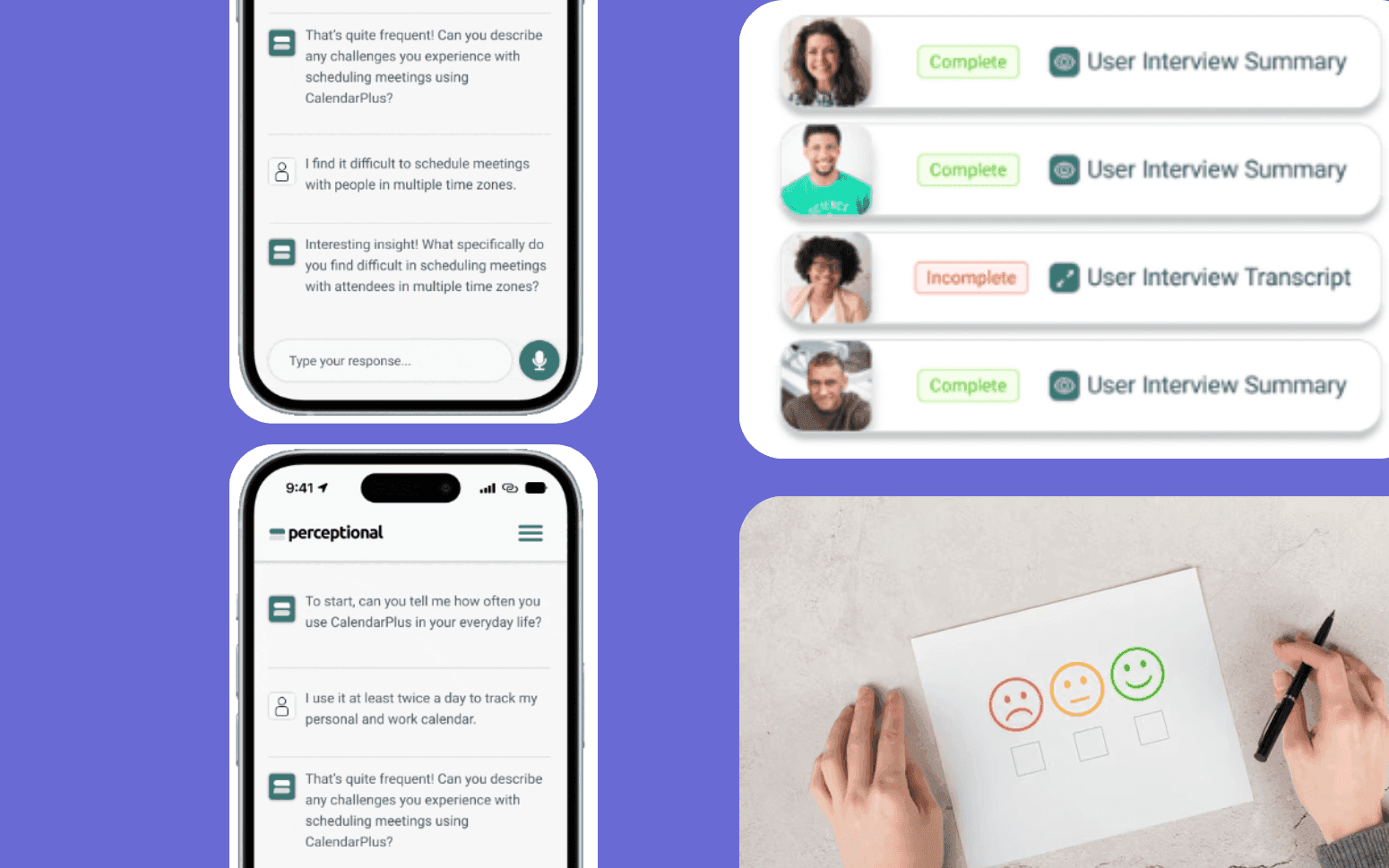
Pause, a mindful screen-time app for iOS and Android
- 15+
- countries with active users in the first 60 days
React Native App Development Company
Cross-platform iOS and Android apps from a shared codebase using React Native, the right choice when you need both platforms without the cost of two separate native builds, and when the feature set doesn't require platform-specific capabilities that the framework can't reach.
We handle the full React Native build: architecture, UI, native module integration where needed, backend API, App Store and Google Play submission. You own the code.
One codebase for iOS and Android, roughly half the native development cost
Native modules for platform-specific capabilities when the JavaScript layer isn't enough
App Store and Google Play submission included
Fixed cost agreed before development starts
The problem
Need both iOS and Android but don't have the budget for two separate native builds and two separate maintenance streams?
Evaluating React Native vs Flutter vs native and need an honest assessment of the trade-offs for your specific use case?
Short answer
RaftLabs builds cross-platform iOS and Android apps from one React Native codebase, so you cover both platforms without funding two native builds. A focused v1 starts at $20,000 to $50,000 and launches in 10 to 14 weeks, then grows to $50,000 to $130,000 as user roles, real-time features, and native modules are added. Fixed cost agreed before we start.
Key takeaways
Trusted by












One React Native team ships to both iOS and Android from a shared JavaScript codebase. That covers most products that need mobile reach: consumer apps, internal tools for field teams, and B2B apps where the value is in the workflow, not in heavy custom graphics.
The real question is not whether React Native matches native. It is whether the trade-offs matter for what you are building. For most apps they do not, and reaching both stores on one timeline is the better commercial call. When native is genuinely the right answer, we tell you.
React Native and Flutter sit at the top of the cross-platform field, and that breadth is a hiring and maintenance advantage: a wider pool of engineers, libraries that stay actively maintained, and framework bugs that get fixed fast.
The platform is also moving. React Native 0.76 turned on the New Architecture by default. The old asynchronous bridge gives way to JSI, the Fabric renderer, and TurboModules, which cut the serialization overhead that used to slow list scrolling and native calls. We build on it now, so your app is not sitting on a foundation the framework is retiring a year after launch.
Capabilities
End-user apps shipped to the App Store and Google Play from a single React Native codebase: marketplaces, content platforms, loyalty apps, and booking tools that need iOS and Android coverage from day one. Push notifications with deep link routing, in-app purchases with backend receipt validation, and biometric login where it fits, with both store submissions handled end to end.
Internal enterprise apps for field workers, sales teams, and operational staff on a mix of iOS and Android devices. Offline data capture syncs when connectivity returns with conflict rules documented before we build, barcode scanning and signature capture cover common field workflows, and we integrate with your ERP and support MDM distribution when apps stay off the public stores.
Migration of separate iOS and Android native apps into one shared React Native codebase, cutting maintenance from two engineering streams to one. We replace screens incrementally, never in a big-bang rewrite, and wrap existing native code as modules rather than rebuilding it. Before the old codebases retire, we benchmark startup time, scroll performance, and memory use, and the new app has to match or beat them.
React Native apps built with Expo for faster development cycles, over-the-air updates, and simpler build management, a strong fit for MVPs and content-driven apps. Over-the-air updates push JavaScript and UI fixes to production in minutes, cloud builds produce iOS and Android binaries without a local Mac, and your team reviews working screens on their own devices during the build.
React Native apps need a backend for authentication, data, business logic, and push notifications. Where you have an API, we integrate against it and flag gaps like missing endpoints or N+1 queries before the build starts. Where you need a new backend, we build it in the same engagement. Auth follows the secure mobile pattern: refresh tokens in the iOS Keychain or Android Keystore, never AsyncStorage.
When you already run a React web app, the domain logic, validation rules, and API layer move into a shared TypeScript package both apps import. React Native Web can render selected screens on the web from the same components too. You maintain one set of business rules, not three, and a fix lands everywhere at once.
Ongoing React Native development after launch: new features, version upgrades, OS compatibility updates, and the bug fixes that emerge from production usage. We keep upgrades on a regular cadence and test against iOS and Android beta releases each summer, with crash monitoring holding production crash rate below 0.1%.
Mobile App Development, full mobile development capability overview
iOS App Development, native iOS apps in Swift and SwiftUI
Android App Development, native Android apps in Kotlin and Jetpack Compose
Flutter Development, Flutter apps for iOS and Android
What clients say
Three-year average engagement. Founders and operators describing the work in their own words. No marketing varnish.

 USA
USAAll of the sprints were completed on schedule and on budget. We highly recommend RaftLabs!
01 / 02
Proof
Stay on topic

Article
How to Build a Food Delivery App Like Grubhub: A Guide for Restaurant Operators
Restaurant groups and regional operators paying 25-30% Grubhub commissions have a clear break-even case for a custom platform. This guide covers the real cost, timeline, what white-label alternatives actually fail at, and when building your own delivery app makes financial sense.
Read more
Article
How to Build a Photo Sharing App Like Snapchat: Cost, AR, and Build Decisions
For brands, event platforms, and sports apps that need ephemeral photo sharing and AR overlays built into their own product. Covers cost ($95K-$420K), AR vendor choices, and when to build custom vs. use off-the-shelf SDKs.
Read more
Article
How to Build a Community Chat App Like Discord: Real Costs and What to Build First
Gaming companies, creator platforms, and professional communities spend $40K-$120K building owned voice and text chat. Here is what the build actually costs, when to skip the alternatives, and where these projects go wrong.
Read moreReact Native is the right choice when you need both iOS and Android, your feature set doesn't require deep platform-specific integrations that React Native's bridge can't reach, and budget or timeline make two separate native builds impractical. It works well for apps with standard UI patterns, standard device capability requirements (camera, GPS, push notifications, maps), and teams with existing JavaScript expertise. Native development makes more sense when you need the latest platform APIs immediately on release, when the app requires heavy use of platform-specific frameworks (ARKit, Core ML, Bluetooth LE at scale), or when you're building exclusively for one platform and cross-platform adds complexity without benefit.
React Native and Flutter are both cross-platform frameworks with strong ecosystems, but they differ in architecture and trade-offs. React Native renders using native platform UI components, iOS buttons look like iOS buttons, Android switches look like Android switches, which gives a platform-native feel but introduces some inconsistency across platforms. Flutter renders its own UI using Skia, which means pixel-perfect consistency across platforms but UI that doesn't automatically follow platform UI conventions. React Native has a larger library ecosystem and a lower barrier for web developers to contribute. Flutter performs better in complex animation and custom graphics scenarios. The right choice depends on your use case, team background, and how important platform-native UI feel is to your users.
React Native provides JavaScript APIs for the most common device capabilities, camera, GPS, push notifications, biometrics, network state, and storage. For capabilities not covered by the core framework or the React Native community library ecosystem, we write native modules: Swift/Objective-C for iOS and Kotlin/Java for Android, exposed to the JavaScript layer via the React Native bridge. This approach covers the vast majority of hardware integration requirements without abandoning the cross-platform codebase. We identify native module requirements during scoping so there are no surprises mid-build.
A focused v1, a single use case, clean UI, and standard integrations, starts at $20,000 to $50,000 and launches in 10 to 14 weeks. As you add multiple user roles, real-time features, custom native modules, and deeper backend work, the platform grows to $50,000 to $130,000 over later phases. Cross-platform costs less than two separate native builds and more than a single native app. Fixed cost agreed before we start. We scope every project before pricing it.
Work with us
Tell us what the app needs to do, which platforms you're targeting, and what existing systems it needs to connect to. We'll scope it and give you a fixed cost.