







Solar Project Management Software for EPCs

Generic PM tools were not built for solar project complexity

Basecamp, Asana, and Monday work for projects with a stable team, a simple task list, and no financial tracking requirements. Solar EPC projects involve permitting timelines that depend on councils, subcontractors who need access to drawings but not commercial data, milestone payments that trigger when specific tasks are signed off, and investors who need monthly progress reports in a format that matches the financing agreement. Custom solar project management software is scoped to those requirements: the milestone structure reflects your contract stages, financial tracking captures the cost categories that matter, and subcontractor access is scoped so each trade sees only what's relevant to them.

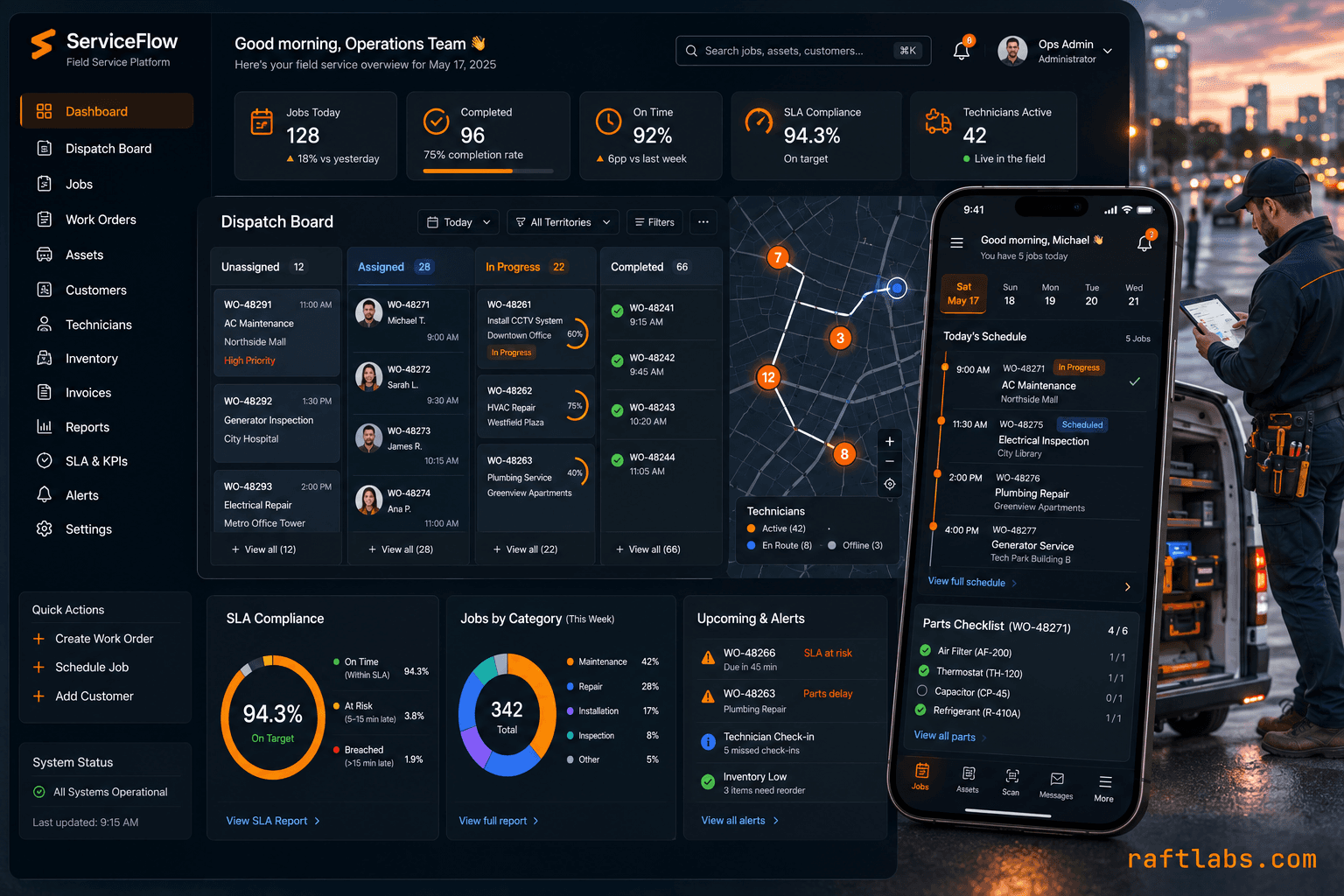
  • Multi-project dashboard with milestone and risk status

  • Financial tracking with actual-vs-budget at project and portfolio level

  • Subcontractor task assignment and progress tracking

  • Document control and investor reporting

Recent outcomes

Voice AI · Research

6× deeper insights

Text-based interviews converted to automated phone calls

AI Automation · Ops

20k+ txns day one

Manual invoice OCR across 40+ gas stations

Loyalty · Retail

1,062 users in 4 weeks

SuperValu & Centra loyalty platform with receipt validation

SaaS · Logistics

2,000+ shipments yr 1

Multi-carrier shipping hub for Indonesian eCommerce

4.9
on Clutch
See our work

The problem

Sound familiar?

  • Solar EPC managing 20 or more projects simultaneously with no single view of which ones are behind schedule and why?

  • Financial tracking split between the PM tool and a spreadsheet, so actual-vs-budget comparisons are always a week behind?

Short answer

Solar project management software gives EPCs, developers, and O&M providers a single platform to track milestones, costs, subcontractors, and documents across every active project. It replaces the combination of generic PM tools and spreadsheets that breaks down when managing more than five or ten projects at once. RaftLabs builds custom solar project management systems tailored to your contract types, reporting requirements, and project workflows.

Key takeaways

  • Commissioning milestones can't close without a PVsyst predicted-vs-actual performance comparison, the deliverable most utility-scale financing agreements require before final loan draw.
  • Committed cost (signed POs and subcontracts not yet invoiced) drives forecast-to-complete, not just invoiced actuals, so financial exposure is visible before invoices arrive.
  • Subcontractor portal access is scoped strictly to assigned tasks and relevant drawings, with no visibility into contract values or other subcontractors' work.
  • A focused platform with dashboards, milestones, financials, and document control runs $30,000-$80,000; a full system with subcontractor portals and investor reporting runs $60,000-$150,000.

Trusted by

Vodafone logo
Aldi logo
Nike logo
Microsoft logo
Heineken logo
Cisco logo
Calorgas logo
Energia Rewards logo

Solar project management delivery, by the numbers

software products shipped
100+
cost delivery
Fixed
week delivery cycles
10-14
industries served
24+

Generic PM tools were not built for solar project complexity

Custom solar project management software is scoped to your contract stages, cost categories, and reporting requirements: the milestone structure, financial tracking, and subcontractor access all reflect how a solar EPC actually runs a project.

Capabilities

What we build

  • 01
    Multi-project dashboard and portfolio view

    RAG-status portfolio cards across the full EPC lifecycle, with PTO tracking visible at portfolio level.

  • 02
    Milestone and task management

    Pre-configured milestone gates enforcing sign-off requirements, with design-tool integration pulling yield data automatically.

    Built with
    HelioScope · PVsyst
  • 03
    Financial tracking and budget management

    BOM-linked purchase orders with committed-cost tracking, so forecast-to-complete reflects real exposure, not just invoices.

  • 04
    Subcontractor management

    Trade-scoped portal access with performance tracking on completion rate, on-time delivery, and defect rate.

  • 05
    Document control and version management

    Version-controlled drawing transmittals with acknowledgement tracking, and automated permit-expiry alerts.

  • 06
    Investor and asset owner reporting

    Lender-format monthly progress reports with PVsyst predicted-vs-actual comparison and read-only investor portal access.

How we work

From scope to live project management platform

  1. Week 1
    01

    Project types and reporting scoping

    We map your project types, team size, and what your current tools are missing. You leave week 1 with a written scope document and a fixed-price quote.

  2. Weeks 2-4
    02

    Milestone and financial model design

    Milestone structure, cost categories, and lender reporting formats designed against your actual contract types.

  3. Weeks 5-11
    03

    Build and integrate

    Dashboards, milestone tracking, and financial tracking built in parallel, tested against real project data.

  4. Final 2-3 weeks
    04

    Launch and team rollout

    Project managers and subcontractors onboarded to the new platform before full rollout.

Why us

Why solar EPCs and developers choose RaftLabs

  • 01
    Senior engineers build what they scope

    The engineers who assess your project types also build the solution. No bait-and-switch, no offshore handoff after the contract is signed.

  • 02
    Fixed price before development starts

    We scope the work, calculate the cost, and lock it in writing before any development starts.

  • 03
    9 years and 100+ products shipped

    Clients include Vodafone, T-Mobile, Aldi, Nike, Cisco, and Lockheed Martin. Track record building solar and energy platforms.

  • 04
    Built for lender and investor reporting requirements

    PVsyst predicted-vs-actual and other financing-agreement deliverables are core, not custom exports.

  • 05
    Committed cost, not just invoiced actuals

    Financial exposure is visible the moment a PO or subcontract is signed.

Have a solar project management project?

Tell us your project types, team size, and what your current tools are missing. We'll design the system and give you a fixed cost.

Solar Project Management Software Development, scoped in one call.

Tell us what's broken. Within one business day you get a straight take on cost, timeline, and the right first step. No deck, no pressure.

Stay on topic

More on manufacturing & energy

Frequently asked questions

Generic tools have no concept of committed costs, BOM-to-purchase-order automation, or milestone billing tied to stage completion. Document control with drawing transmittals, subcontractor access scoped away from commercial data, and PVsyst predicted-vs-actual reporting for lenders are not features these tools provide.

Project-level tracking captures actual and committed costs against budget by category. Portfolio-level tracking aggregates contracted revenue, budget, actual, committed, and forecast-to-complete across all active projects, built from the same underlying data so there's no reconciliation step between the PM's numbers and finance's numbers.

Subcontractors see their assigned tasks, relevant drawings, and their work package's communication thread. They cannot see contract values, other subcontractors' tasks, or client data. Access is granted per project through a browser portal and expires when their scope is complete.

A focused platform covering multi-project dashboards, milestone tracking, financial tracking, and document control typically costs $30,000 to $80,000. A full EPC system with subcontractor portals, investor reporting, and accounting integration runs $60,000 to $150,000.

Work with us

Tell us what you need. We'll tell you what it would take.

We scope Solar Project Management Software Development in 30 minutes. You walk away with a clear cost, timeline, and approach. No commitment required.

  • Scope and cost agreed before work starts. No surprises. No obligation.
  • Working prototype within 3 weeks of kickoff.
  • Pay by milestone. You see progress before each invoice.
  • 60-day post-launch warranty. Bug fixes, UI tweaks, and deployment support. No retainer.
  • All conversations are NDA-protected.