AI OCR for gas station operations
- 20K+
- transactions processed in a single day
RPA in Manufacturing | Process Automation
Manufacturing operations generate high volumes of structured, repetitive administrative work, purchase orders raised from MRP outputs, production reports compiled from shop floor data, quality documentation assembled per batch, supplier invoices matched against delivery notes, and compliance records maintained across systems.
We build robotic process automation systems that handle these manufacturing back-office workflows automatically, procurement automation, production reporting, quality document management, and ERP data entry, so your operations team focuses on production, not paperwork.
Purchase order and procurement automation triggered by MRP and inventory signals
Production reporting automation from shop floor systems to ERP and management dashboards
Quality and compliance document management automated end to end
Supplier invoice matching and AP processing without manual data entry
Recent outcomes
Voice AI · Research
6× deeper insights
Text-based interviews converted to automated phone calls
AI Automation · Ops
20k+ txns day one
Manual invoice OCR across 40+ gas stations
Loyalty · Retail
1,062 users in 4 weeks
SuperValu & Centra loyalty platform with receipt validation
SaaS · Logistics
2,000+ shipments yr 1
Multi-carrier shipping hub for Indonesian eCommerce
The problem
Operations team raising purchase orders manually from MRP reports that could trigger them automatically?
Quality documentation compiled by hand each batch when the data already exists in your systems?
Short answer
RaftLabs builds robotic process automation for manufacturing back offices: purchase order creation from MRP signals, production reporting from shop floor to ERP, quality and compliance document generation, and three-way supplier invoice matching. A first automation goes live in 8-12 weeks. Scope grows from one process (around $20,000-$50,000) to a multi-process programme over time.
Key takeaways
Trusted by









Every hour your operations team spends raising purchase orders manually is an hour they're not on the floor. Every batch record compiled by hand is a compliance risk and a delay. Every supplier invoice matched manually has a cost per transaction that compounds across the volume.
Manufacturing RPA doesn't change what your systems produce, it automates the work of moving that data between them, so your team focuses on production, quality, and continuous improvement rather than data entry.
In Deloitte's Global RPA Survey, 53% of organizations had already started deploying RPA, a share Deloitte projected would move toward near-universal adoption within a few years. Manufacturing back offices are a natural fit. The work is high volume, rule based, and already sitting in ERP and MES systems. For most operations teams the entry point is procurement and production reporting, where the manual effort of moving that data is both visible and measurable.
Proof
Capabilities
Automated PO creation triggered by MRP demand signals, reorder points, and blanket order releases. The bot validates each order against supplier master data, routes it for approval with SLA-based escalation, and posts goods receipts on delivery, targeting 80-90% straight-through processing on clean demand signals.
Automated assembly of production reports, daily summaries, OEE, yield, first-pass quality, and shift handover, replacing the daily task of pulling data from 3 to 5 systems by hand. Confirmations post back to the ERP without manual entry, and reports land by 6 AM for overnight production.
Automated generation of batch records, certificates of analysis, inspection reports, and non-conformance records, populated from your source systems without manual transcription. Built for ISO 9001, IATF 16949, GMP, and 21 CFR Part 11, with electronic signature and audit trail controls.
Automated three-way matching of supplier invoices against purchase orders and goods receipts, replacing manual keying for hundreds of invoices per month. Exact matches post directly to the ERP, price and quantity exceptions route to the right team with the discrepancy highlighted, and straight-through processing targets 75-85%.
Automated inventory monitoring, reorder triggering, and stock record maintenance across your ERP and warehouse systems, raising replenishment requests without a planner checking each item. Cycle count reconciliation posts acceptable variances and flags the rest, alongside weekly slow-moving, excess, and shelf-life reporting and a supplier scorecard.
Automated assembly of regulatory submissions, traceability records, and audit-ready documentation from your production and quality systems. Given a lot number, the bot builds a full forward and backward traceability pack in under 10 minutes instead of 2 to 3 days, and prepares PPAP packs, Certificates of Conformance, and ISO 9001 or IATF 16949 audits ahead of time.
Not every manufacturing document is structured. A goods receipt posted against a known PO is deterministic: fixed fields, fixed rules, one correct outcome. A supplier invoice, an inbound certificate of analysis, or a handwritten shop-floor note is not. The layout changes by vendor, fields move, and a rules-only bot breaks the moment the format shifts.
We scope each workflow to the cheaper mechanism that will hold. Deterministic bots run the structured, high-volume core. Intelligent document processing (IDP) reads the variable documents, extracts the fields, and hands a confidence-scored result to the same downstream rules. Low-confidence extractions route to a person instead of posting a wrong number.
| Deterministic bot | Intelligent document processing | |
|---|---|---|
| Input | Structured, fixed-layout data (MRP output, PO fields, ERP screens) | Variable documents (supplier invoices, CoAs, delivery notes, scanned forms) |
| How it reads | Fixed field maps and business rules | Model-based extraction with a confidence score per field |
| Failure mode | Breaks when the layout changes | Flags low-confidence fields for review rather than posting a wrong value |
| Best for | Goods receipts, production order updates, reorder triggers | AP invoice capture, incoming quality documents, non-standard supplier paperwork |
Where manufacturing automation is heading: the brittle screen-scraping bots of the last decade are giving way to model-assisted pipelines that read documents, reconcile exceptions, and escalate with context. We build for that path now, keeping the deterministic core auditable while IDP absorbs the variability that used to force manual keying.
We scope every project before pricing it. These are the factors that move a manufacturing automation build up or down the range.
What clients say
Three-year average engagement. Founders and operators describing the work in their own words. No marketing varnish.

 USA
USAAll of the sprints were completed on schedule and on budget. We highly recommend RaftLabs!
The closest proof we can show is adjacent, not manufacturing: high-volume document extraction, validation, and system sync built for operators with the same back-office pattern.
Process, current systems, and volume. We'll design the automation and give you a fixed cost.
Stay on topic
Article
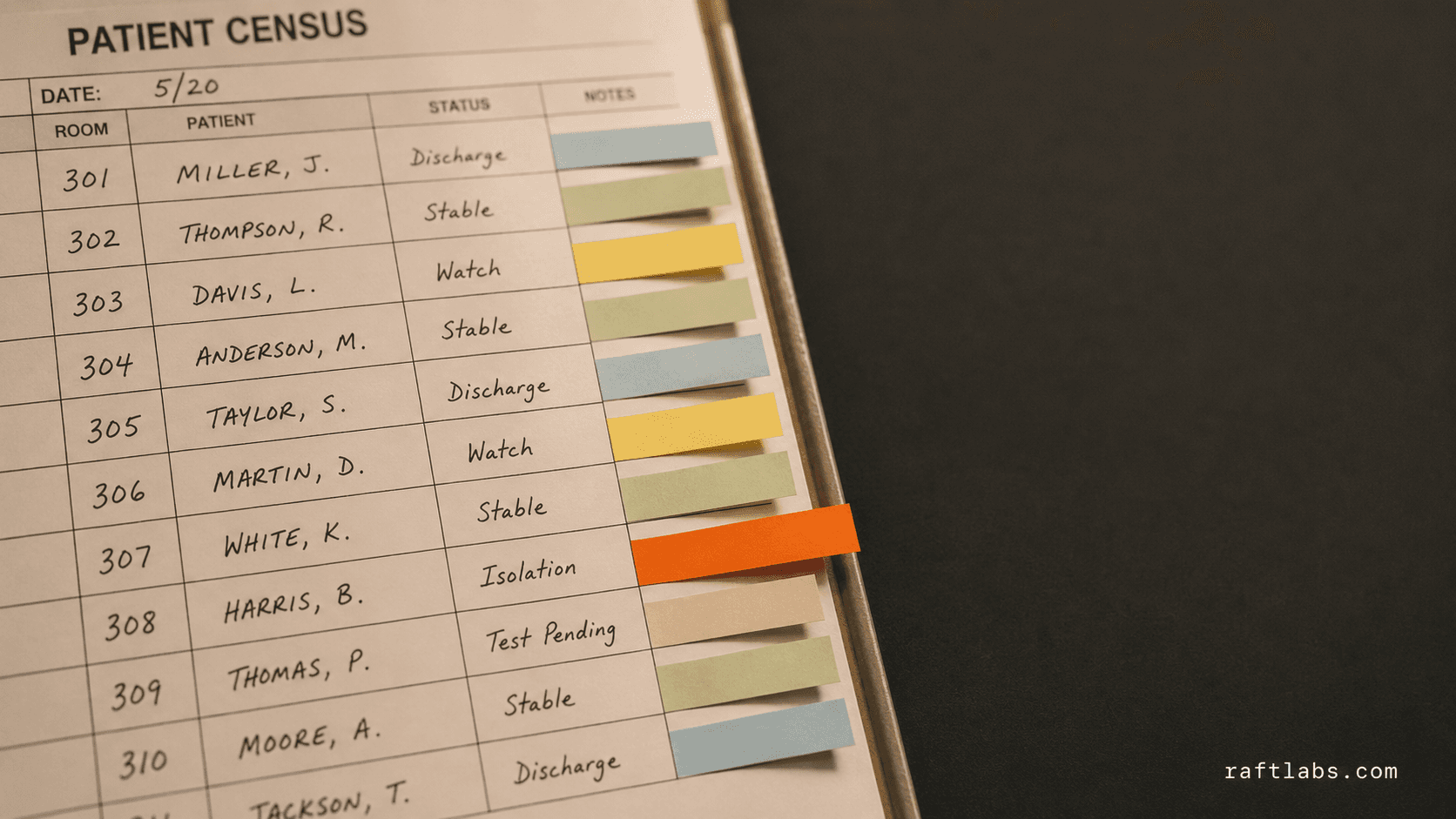
AI for hospital administration: Where the 40% cost problem actually gets solved
Doctors don't want AI making clinical calls. That's fine - the real savings are in admin. Prior auth, billing, scheduling: three workflows where AI cuts costs 30-60% right now.
Read more
Article
Cost to Build an App Like Instantly: Cold Email Infrastructure, Deliverability, and What Custom Builds Require
Cold email software development runs $30,000 to $150,000. This guide covers who should build a custom app like Instantly or Smartlead, phased features from sending to inbox rotation and warmup, why most teams should not build one, and how RaftLabs builds sending infrastructure and AI outreach agents.
Read more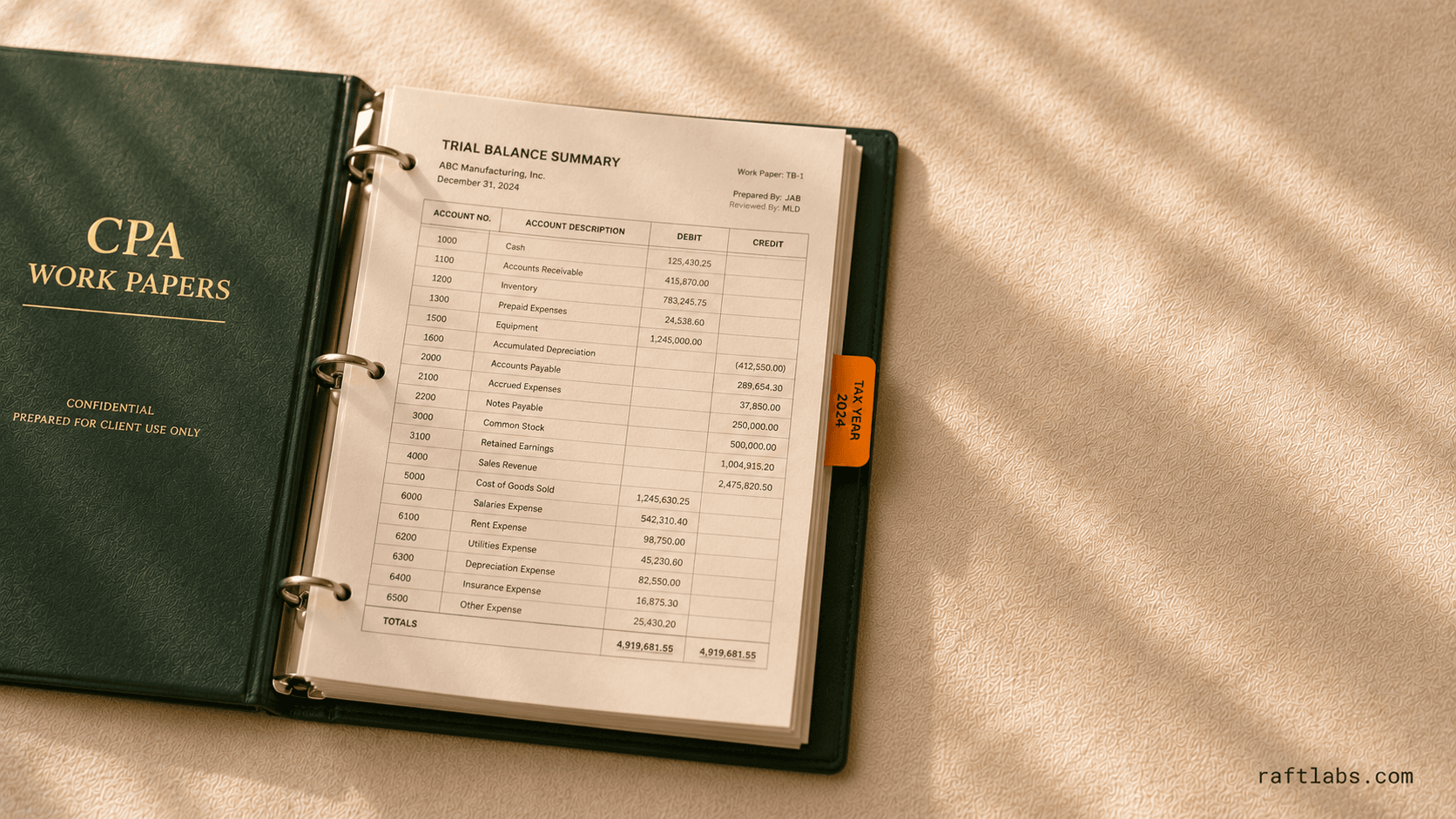
Article
Accounting Firm Management Software: Build vs. Buy for CPA Practices
When TaxDome, Karbon, and Financial Cents stop fitting your workflow, here is what custom accounting firm management software costs, what it includes, and when it is worth the investment.
Read moreThe best manufacturing automation targets are high volume, rule-based, and involve moving data between systems, typically between shop floor systems, ERP, and back-office tools. Top processes: purchase order creation from MRP demand signals (bot reads the MRP output and raises POs in the ERP), goods receipt processing (bot matches delivery notes to POs and posts goods receipts), production order updates (bot reads shift reports and updates production order completions), quality record creation (bot generates batch records and certificates from production data), supplier invoice matching (bot extracts invoice data and matches against POs and goods receipts), and production management reporting (bot assembles daily/weekly reports from multiple systems).
We integrate with ERP systems via API where available or UI automation where not. Common manufacturing ERP integrations: SAP S/4HANA and SAP ECC (PP, MM, QM modules), Oracle Manufacturing Cloud, Microsoft Dynamics 365 Supply Chain Management, Infor, Epicor, and SYSPRO. For MES and shop floor systems, we integrate via database, API, or file-based interfaces depending on what the system exposes. The integration approach is determined during scoping based on your specific ERP version, module configuration, and available interfaces.
RPA handles the rule-based, structured portion of manufacturing workflows. The automation handles the straight-through cases, the POs that match the MRP signal exactly, the invoices that have a matching PO and goods receipt, the production orders that complete on time with expected yield. Exceptions are flagged and routed to the relevant team member with the context needed to resolve them. A well-designed manufacturing RPA system aims for 70-85% straight-through processing with exceptions handled by the appropriate function, purchasing, operations, or finance, not by whoever notices the issue first.
Quality management in manufacturing requires complete, traceable documentation, batch records, certificates of analysis, non-conformance records, and CAPA documentation. RPA automates the creation and population of these documents from production data, ensuring every batch has complete documentation without relying on manual compilation. The audit trail from the automation process is itself a compliance asset, every document creation event is logged with timestamp and source data. For ISO 9001, IATF 16949, GMP, and similar standards, automated documentation reduces the risk of missing or incomplete records.
A focused manufacturing automation system, one process automated (e.g., purchase order creation from MRP output), including bot development, testing in your environment, and deployment, typically runs $20,000-$50,000. Multi-process programmes covering procurement, production reporting, and AP processing run $50,000-$130,000. Cost depends on the number of processes, ERP and MES integration complexity, and quality compliance requirements. We scope every project before pricing it.
Work with us
We scope RPA in Manufacturing in 30 minutes. You walk away with a clear cost, timeline, and approach. No commitment required.