
Charles E.
Entrepreneur at Aggie Technologies
 USA
USA
All of the sprints were completed on schedule and on budget. We highly recommend RaftLabs!
AI for Real Estate
Leads that go cold because the follow-up was too slow, valuations that take days because someone is pulling comps manually, and leases that sit in a shared drive without being extracted into usable data: these are the operational problems AI solves in real estate.
We build AI systems for residential, commercial, and property management businesses: automated valuation models, lead scoring and conversion prediction, AI property matching, document extraction from leases and contracts, market trend forecasting, rental price optimization, tenant churn prediction, and AI chatbots for property inquiries. Each system is scoped against your data and a specific operational or revenue target.
Automated property valuations generated in seconds from comparable sales and property attribute data
Lead scores that tell your agents which inquiries to call first, based on conversion likelihood
Lease and contract data extracted automatically so it is searchable and reportable
Rental prices optimized against market demand signals, not last year's asking rate
Bring the problem, the current workflow, or the existing code. We reply with a practical next step within one business day.
Trusted by































The brief
Good software decisions begin with the constraint, not a list of features or a preferred technology.
Are your agents spending call time on leads that were never going to convert while high-intent inquiries wait?
Are the key terms in your lease portfolio sitting in PDF files that nobody can query without reading each one?
Plain answer
RaftLabs builds AI for real estate across the US, UK, Europe, Canada, GCC, South Africa, and Southeast Asia: automated valuation models, lead scoring, lease extraction, and rental price optimization. Fixed price, 12-week delivery. Engagements start with a discovery phase before development begins.
What to remember
An inquiry lands at 9pm. Your agent sees it the next afternoon, calls back, and the buyer has already booked a viewing with a competing agency. Down the hall, 200 commercial leases sit in a shared drive, and nobody can tell you which ones have a break clause in the next 18 months without opening each file.
The data to prevent both was already there. Transaction records, inquiry logs, and lease PDFs, all sitting in formats nobody can act on fast enough.
That is the gap AI closes. Not more data. Faster decisions from the data you already hold.
The information gap in real estate is not a shortage of data. Transaction records, property attributes, inquiry logs, lease documents, and market signals exist. The problem is that most of this data sits in formats that require manual work to use: PDF leases, spreadsheet valuations, and CRM notes that nobody searches systematically. AI converts these data assets into operational decisions.
According to McKinsey, AI can generate between $110 billion and $180 billion in value for the global real estate sector, with property valuation, operational management, marketing, and demand forecasting identified as the highest-impact areas. For real estate operators, that value is unlocked when AI is applied to the specific workflows that currently consume the most manual time.
RaftLabs delivers on a fixed-price, 12-week delivery model, rated 4.9 out of 5 by clients on Clutch. RaftLabs has shipped production software since 2015 for clients across the US, UK, Europe, Canada, and the UAE. GDPR and data protection requirements for transaction data are scoped in week 1, not retrofitted before launch. The team that scopes your project is the team that ships it: no handoff after the contract is signed.
Everything on the left should already be true for your operation. Even one thing on the right, and an off-the-shelf tool is the smarter first step.
You already hold historical data: transaction records, inquiry logs with known outcomes, or a lease portfolio to work from.
A specific workflow is consuming manual time: valuations, lead follow-up, lease data extraction, or rental pricing.
Budget for a build starting around $25,000, scoped and price-locked before development starts.
No historical data yet: fewer than 6-12 months of inquiries with known outcomes to train on.
You want an off-the-shelf tool you configure yourself, not a system built on your own data.
The decision depends on judgment or a relationship the model was never given context for.
What we build
Valuations, lead follow-up, lease data extraction, or rental pricing: tell us the workflow and we will tell you where AI reduces it.
How it works
Every project follows the same four phases. Scope is locked and price is fixed before development starts.
We map your data assets, the specific workflow generating the problem, and the operational or revenue target. You leave week 1 with a written scope document and a fixed-price quote. No development starts without your sign-off.
We assess your transaction history, document formats, and CRM data quality before writing a line of model code. Data gaps identified here cost ten times less to fix than the same gaps discovered mid-build.
Model training, API integration with your property management system or CRM, and validation against a holdout set of recent data. Accuracy metrics are reported per property type and geography so you know where the model is reliable before it goes live.
Production deployment with monitoring on launch day. 8 weeks of post-launch support included in every project.
What clients say
Three-year average engagement. Founders and operators describing the work in their own words. No marketing varnish.
Charles E.
Entrepreneur at Aggie Technologies
USA
All of the sprints were completed on schedule and on budget. We highly recommend RaftLabs!
01 / 02
Proof

GE replaced passive corporate training with a gamified mobile trivia platform. 5,000 daily active users, 85% quiz completion rate, and 200+ content modules covering product knowledge, company history, and culture.
Cost depends on scope, not negotiation. We scope every project in week 1 and lock the price before development starts, so there are no surprises on the final invoice.
What it costs
A focused model or extraction pipeline, or a full valuation model with CRM integration. Scoped and price-locked in week 1.
We price the first model in week 1. Most clients start there, then extend into full valuation and CRM integration once it's producing results.
Starting investment
Starts at $25,000
12-week delivery for the first model, scoped and priced in week 1. Full valuation and CRM integration get added once the first build is live and earning its keep.
No hourly billing
We scope the work, calculate the cost, and lock it in writing before any development starts. No hourly billing. A scope change is a priced change request, agreed before work begins.
Post-launch support
Every project ships with monitoring on launch day and 8 weeks of post-launch support included, no separate contract to negotiate.
Useful next steps
Work with us
Custom Serviced Apartment Software Development Services
See the service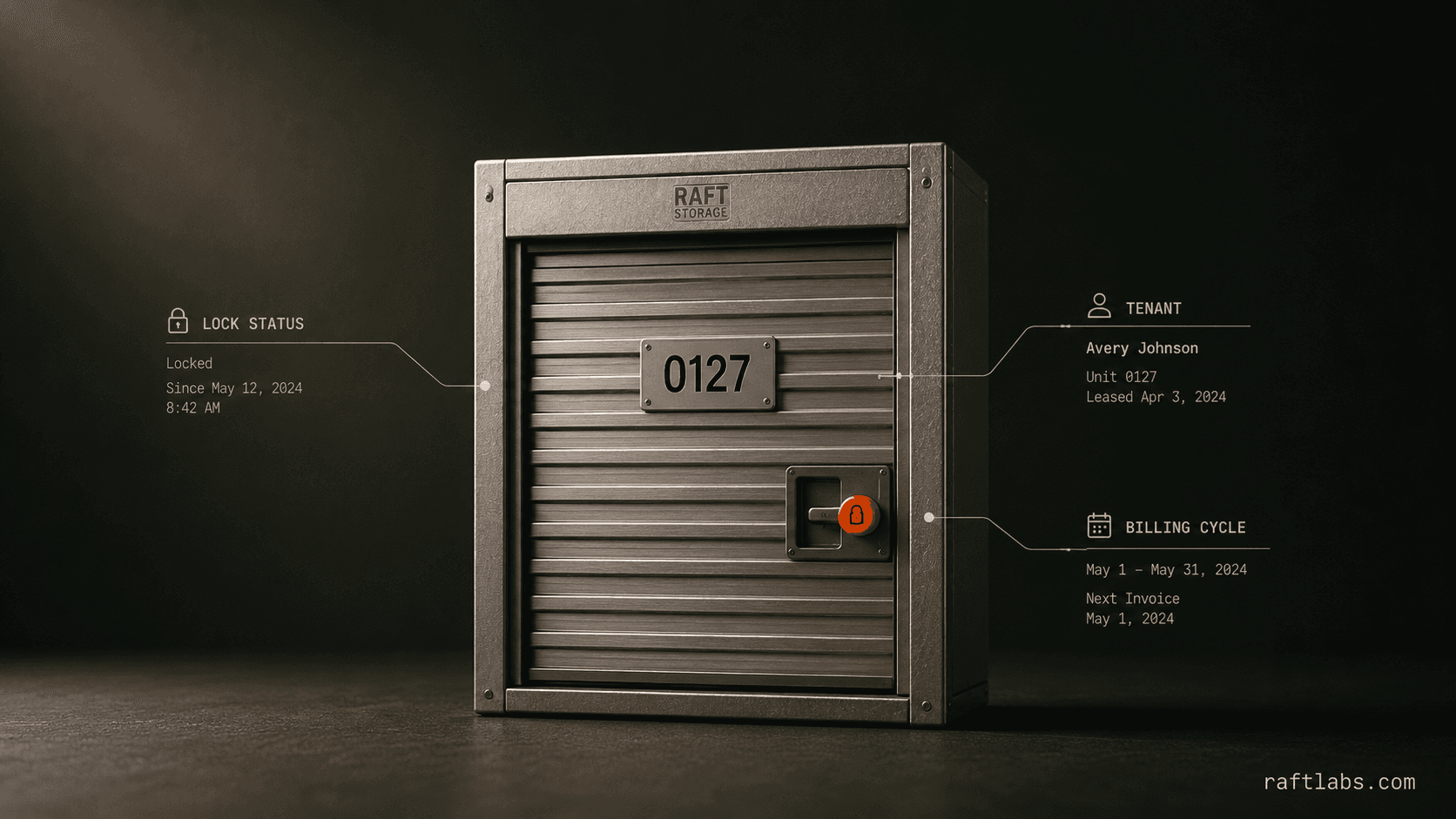
Article
Self Storage Software: Build vs. Buy for Multi-Facility Operators
Storable and SiteLink charge $100-$300 per facility per month. At 10 locations that is $36K per year for software you cannot modify. Here is what custom self storage management software costs, who it makes sense for, and where operators get it wrong.
Read more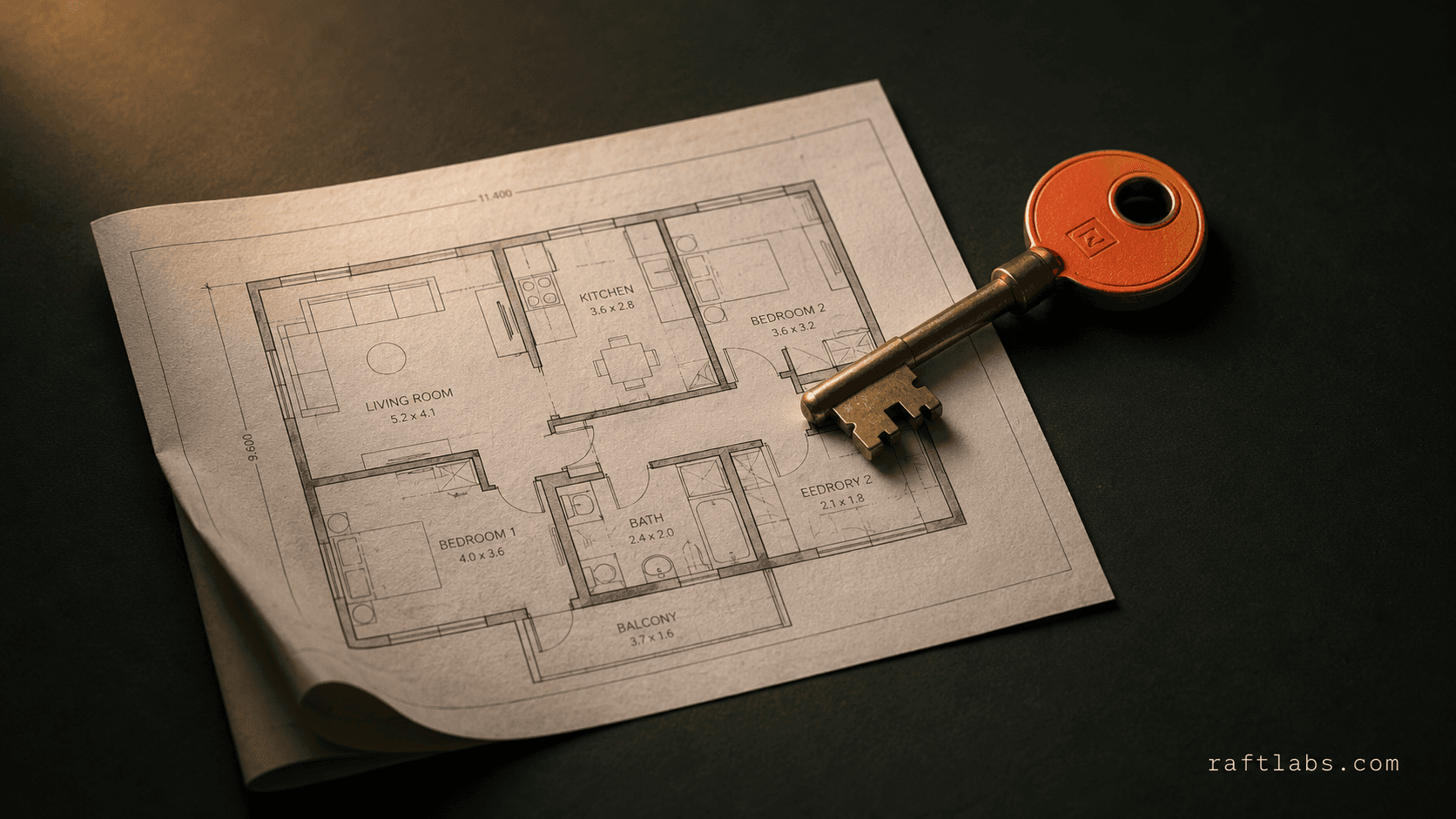
Article
Real estate app development: costs, data, and what actually ships in 2026
Proptech founders and real estate brokerages evaluating custom software face one hard question: when does building beat buying Zillow API access or a Buildium seat? Here is the honest breakdown by scenario.
Read more
Article
Auto Repair Shop Software: When to Build Custom vs. Buy Shop-Ware, Mitchell1, or AllData
Off-the-shelf auto repair shop software costs $150-$300 per location per month and still cannot enforce your inspection sequence, run fleet billing, or match your brand standards across 10+ shops. Here is what a custom build costs, what it includes, and when the math actually flips.
Read more
Article
AI in construction - what actually works and what it costs
Construction has a 98% project overrun rate. AI is changing that - but not through futuristic robots. Here are the 5 workflows that pay for themselves in 90 days.
Read more
Article
Vacation Rental Management Software: Custom Build vs. Guesty, Hostaway, and Lodgify
Property management companies with 50+ vacation rental units hit a hard ceiling with off-the-shelf tools. This guide shows when custom vacation rental software pays off, what it costs, and what breaks when you try to grow past it.
Read moreAn automated valuation model estimates property value using a regression or gradient boosting model trained on comparable sales data. The model learns the relationship between property attributes and sale price from historical transactions: location, property type, square footage, bedroom and bathroom count, age, condition signals, and proximity to amenity and transport points. At inference, you pass in the property attributes and the model produces a value estimate with a confidence interval. The confidence interval is important: an AVM with a narrow confidence interval for a high-volume, homogeneous property type like urban apartments may be reliable enough to use for initial valuation or portfolio tracking. For heterogeneous properties in markets with thin transaction volumes, the confidence interval widens and the AVM is better used as a starting point for human review rather than a standalone decision. We train AVMs on your local market transaction data combined with public data sources. Accuracy is validated against a holdout set of recent sales before deployment. Most AVMs we build achieve median absolute percentage error of 3-8% for the property types and geographies with sufficient training data.
AI lead scoring in real estate builds a classification model trained on your historical inquiry data: leads that converted to viewings, and viewings that converted to offers or lettings, versus leads that went cold. The model learns which combinations of signals correlate with conversion: inquiry source, property type and price range relative to stated budget, engagement behavior on your listings (time on page, number of properties viewed, saved searches), time from first inquiry to response, and prior interaction history. Each new inquiry is scored at intake. High-score leads surface to your agents immediately. Low-score leads enter a nurture sequence rather than consuming agent call time. The result is your agents spend their time on the leads most likely to convert, and response time for high-intent inquiries drops because the model identifies them ahead of the queue. For lead scoring to work well, you need enough historical conversion data: typically 6-12 months of inquiries with known outcomes. We assess data availability in discovery.
AI document extraction for real estate leases and contracts extracts the key structured data fields from unstructured document text: tenant name, landlord name, property address, lease start and end date, break clauses and notice periods, rent amount and review schedule, rent review mechanism and CPI cap, permitted use, service charge cap, dilapidations provisions, assignment and subletting rights, and any special conditions. Once extracted, this data is searchable, reportable, and exportable: you can query which leases expire in the next 6 months, which have uncapped rent reviews, which have break clauses approaching. For property managers and commercial landlords managing large lease portfolios, this replaces the process of reading each document manually every time a data point is needed. We build extraction pipelines against your specific lease types and document formats. Accuracy is validated before deployment across the document variation in your portfolio.
Rental price optimization models recommend asking prices that balance time-to-let against rental income. The model is trained on market data: what similar properties in comparable locations listed at, how long they took to let, and at what rent they ultimately transacted. It incorporates current demand signals: inquiry volume for similar properties, current vacancy rates in the area, and seasonal patterns. At listing, the model recommends a price range: a higher end that maximizes income if demand supports it and a lower end that minimizes vacancy if the market is softer. The model also recommends when to adjust price if a property is not generating inquiries after a set period. This is different from a static comparable analysis because it responds to current market conditions rather than historical asking prices. For landlords and agents managing large portfolios, price optimization reduces average days-to-let while maintaining or improving total rental income. We train these models on local market data combined with your historical listing and transaction data.
Cost depends on the scope: a focused lead scoring model or lease extraction pipeline typically runs between $25,000 and $60,000. A full automated valuation model with explainability output and CRM integration sits in the $60,000 to $120,000 range. We scope every project in week 1 and lock the price before development starts, so there are no surprises on the final invoice. Request a 30-minute call and we will give you a ballpark figure based on your specific workflow.
Research from Harvard Business Review shows leads contacted within 5 minutes of inquiry are roughly 100 times more likely to connect than leads contacted after 30 minutes, and real estate inquiries are typically answered the next business day, 14 to 18 hours later. A voice AI agent calls a new lead within 60 to 90 seconds of submission regardless of time of day, asks qualification questions, and books a showing directly against your calendar, so leads no longer have time to book with a competing agency before first contact.
Yes. We sign mutual NDAs before any discovery conversation where you share internal data, transaction history, or proprietary processes. Our standard NDA covers confidentiality of all project materials, data, and deliverables. We work with residential agencies, commercial landlords, and property management platforms across the US, UK, Europe, Canada, GCC, South Africa, and Southeast Asia where data privacy obligations are strict.
Work with us
Bring the rough workflow, half-built product, or messy brief. We will map the smallest useful first move, then send scope, timeline, and price in plain English.