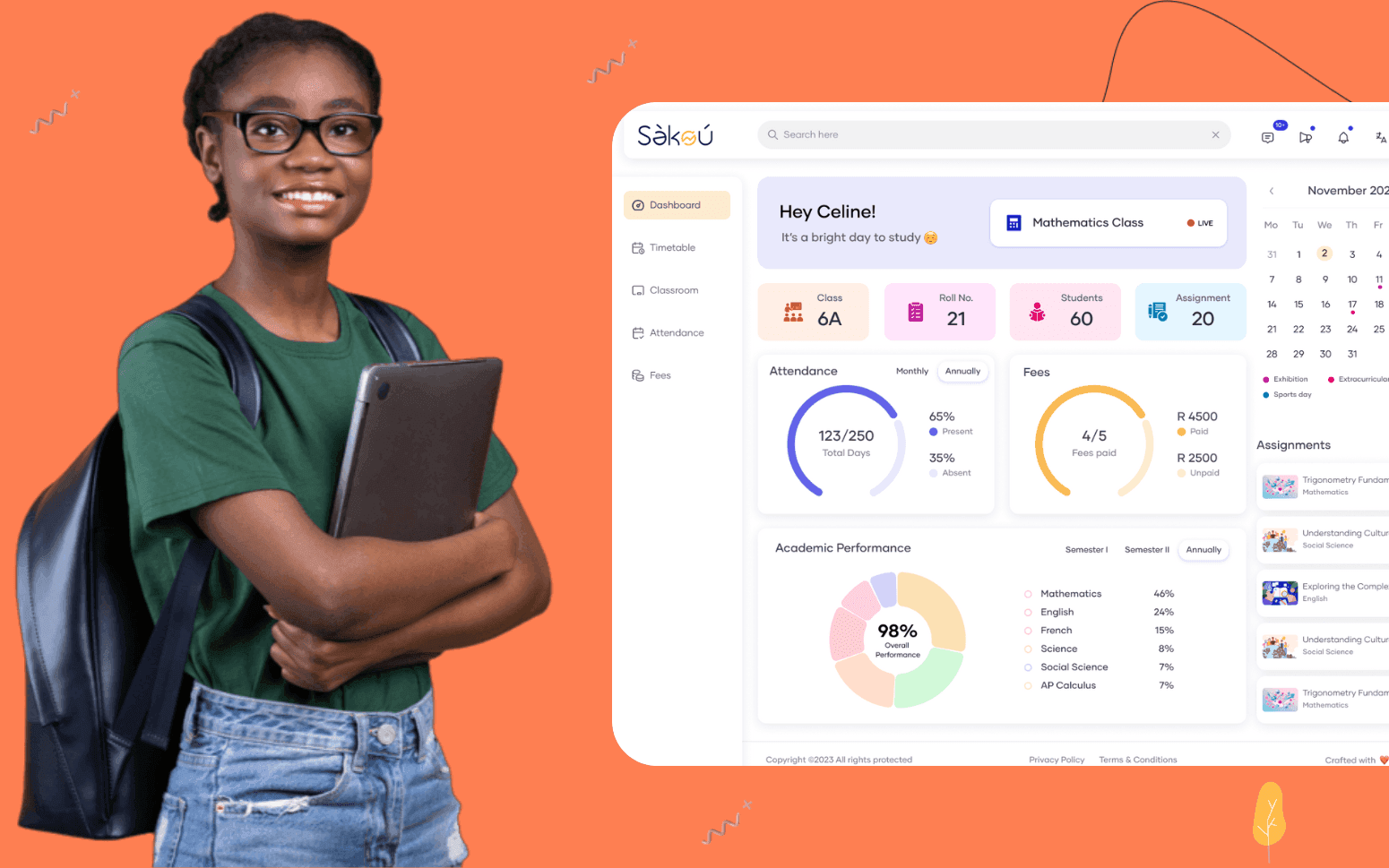
Purpose Built EdTech LMS SaaS Platform Disrupting African K-12 Schools
- 4000+
- 25%
- 16 weeks
Custom donor management software for established nonprofits, universities, and foundations who need a donor CRM built around the full relationship, giving history, major gift pipeline, communication log, and programme engagement, not just transaction records.
Bloomerang, DonorPerfect, and Raiser's Edge handle the annual fund well. They struggle when a donor is simultaneously a major gift prospect, a board member, a volunteer, and a corporate match programme participant, and you need all of that reflected in a single coherent relationship view.
Individual and household donor records with complete giving history, communication log, and relationship mapping
Major gift pipeline management with cultivation stage tracking, next action scheduling, and proposal history
Prospect research integration and wealth screening for major gift identification
Donor segmentation, LYBUNT and SYBUNT reporting, and re-engagement campaign tools
Recognition
Major gift officers working from spreadsheets and personal notes because the CRM can't model a multi-year cultivation relationship with a complex donor who gives through a family foundation, a corporate programme, and direct gifts?
Retention reporting that tells you last year's LYBUNT rate but can't segment lapsed donors by programme affinity, gift size, or event attendance to inform a targeted re-engagement campaign?
In short
RaftLabs builds custom donor management software for established nonprofits and foundations. The platform covers individual and household donor records with full giving history, communication logs, major gift pipeline management, prospect research integration, donor segmentation for annual fund strategy, and LYBUNT and SYBUNT retention reporting. Most donor management projects deliver in 12 to 16 weeks at a fixed cost.
Companies we've built for


Donor management at a large nonprofit involves relationships that go well beyond giving history. A major gift prospect may have been cultivated over three years through event invitations, board introductions, and programme site visits before making their first significant gift. A corporate donor may give through four channels at once, a direct corporate gift, employee payroll giving, a matching programme, and a volunteer day, and the relationship manager needs to see all of that in one view when preparing for a meeting. The CRM that records a transaction and sends an acknowledgement letter isn't the same tool as the one that manages a major gift programme or a principal gift cultivation.
We build donor management software for organisations where the relationship complexity requires more than a standard nonprofit CRM can model. We've built CRM and relationship management platforms for complex multi-stakeholder environments. We understand the vocabulary of major gift fundraising, planned giving, and annual fund management, and we build the system that supports all of them.
Individual and household donor records with complete giving history across all gift types: direct gifts, corporate matches, pledges, planned gifts, and gifts-in-kind. Relationship mapping handles donors with complex giving patterns. A donor who gives through a family foundation, a donor advised fund, and direct gifts has one record with all three giving channels linked and visible to the relationship manager. The communication log records every touchpoint, phone calls, emails, event attendance, meetings, and correspondence, so any team member can see the full relationship history before engaging with the donor. Soft credit recording handles donors who direct gifts through donor advised funds or whose employer matches their giving. Household giving is combined for retention analysis and cultivation decisions while individual records are maintained for acknowledgement and tax receipt accuracy.
Major gift pipeline with prospect assignment to gift officers, cultivation stage tracking, ask amount and ask date projections, and proposal history. Moves management workflow defines cultivation stages, identification, qualification, cultivation, solicitation, and stewardship, with the next action and owner for each prospect visible on the gift officer's dashboard. Proposal tracking records ask amount, ask date, decision date, and outcome for every solicitation. Portfolio reporting for major gift directors shows the full caseload for each gift officer: number of prospects, stage distribution, projected ask total, and proposals pending decision. Stewardship schedules for donors who've made a significant gift manage the required touchpoints during the stewardship period as a workflow rather than leaving them to the relationship manager's memory. Planned giving pipeline for bequest expectancies records donor intent documentation, estimated estate value, and relationship management notes.
Wealth screening integration with major prospect research providers, DonorSearch, iWave, or Wealth-X, with screening results stored against the donor record and used to populate the estimated capacity rating. Prospect research notes from internal and external research are stored against the record and accessible to the gift officer alongside the screening data. Capacity and inclination ratings document the basis for each rating so ratings are defensible and reviewable rather than subjective numbers without context. Prospect identification from existing constituents uses wealth screening results and engagement data to surface donors in the mid-level or annual fund who may be ready for a major gift conversation. New prospect identification from event attendees, volunteer lists, and peer referrals includes record creation and an initial qualification workflow.
Donor segmentation by any combination of giving history attributes: gift size, recency, frequency, programme fund, event attendance, volunteer activity, communication preference. LYBUNT (gave Last Year But Unfortunately Not This year) and SYBUNT (gave Some Year But Unfortunately Not This year) reporting drills down to individual donor lists for each segment. RFM analysis (recency, frequency, monetary value) informs annual fund prioritisation and upgrade strategy. Segment-based solicitation history tracks which segments received which appeals, response rates by segment, and revenue attribution by appeal type. Mid-level donor tracking covers the giving range between annual fund and major gifts, often the most undermanaged segment in larger organisations. Monthly giving programme management tracks donor acquisition, retention, and upgrade separately from lump-sum annual giving data.
Acknowledgement letter generation from gift records with configurable templates by fund, gift type, and donor segment. Major gift acknowledgements are personalised differently from annual fund receipts. Tax receipt generation complies with IRS requirements for US organisations (substantiation language for quid pro quo gifts, non-cash gift acknowledgements) or equivalent requirements for other jurisdictions. Pledge reminder workflows for multi-year pledges send automatic reminder letters or emails at each scheduled payment date. Stewardship report generation for restricted gifts produces the annual or semi-annual report to major donors showing how their gift was used, drawn from programme data rather than assembled manually. Named fund management handles organisations with endowed or named funds requiring donor-specific annual reporting.
Deduplication tools identify and merge duplicate donor records, a persistent problem in organisations that've migrated data from legacy systems or merged with other organisations. Address validation and National Change of Address (NCOA) processing serves organisations with large direct mail programmes. Deceased donor management includes a notification workflow for sensitive record updates. Retention rate and attrition analysis provides year-on-year comparison of first-year donor retention, multi-year donor retention, and segment-level attrition rates. Fundraising performance dashboard with total revenue, donor count, average gift, new donor acquisition rate, and lapsed donor re-engagement rate serves the board and senior leadership. Custom report builder gives development staff the ability to produce reports not covered by standard dashboards without requiring IT involvement.
Yes. Data migration from existing nonprofit CRMs is part of every implementation. We map the data structure of your current system to the new system during discovery, identify data quality issues that need to be resolved before migration, and run the migration with validation checks to confirm completeness and accuracy. Raiser's Edge, Blackbaud CRM, Bloomerang, DonorPerfect, and Salesforce Nonprofit are the systems we most commonly migrate from. The migration plan is agreed and tested with sample data before the full migration runs. We retain the legacy system in read-only access for a defined period after go-live so staff can reference historical data during the transition.
Donor advised fund and family foundation gifts are handled through soft credit and relationship linking. The gift is recorded against the DAF or foundation as the legal donor for receipt and acknowledgement purposes. A soft credit is recorded against the individual donor who directed the gift, so their giving history and cultivation record reflect the full relationship rather than only the direct gifts. Relationship linking connects the individual donor record to the DAF or foundation record so the relationship manager sees both views from either record. For donors who give exclusively through a DAF or family foundation, the prospect research and cultivation records are maintained on the individual record while the gift and tax receipt history sits on the legal entity record.
Yes. Gift officer mobile access for meetings, events, and prospect visits is a standard requirement. The mobile interface gives gift officers access to the donor record, the giving history, the cultivation notes, and the next action for any donor they're meeting, without requiring access to the full administrative system. After a meeting, the gift officer logs the contact report and updates the next action directly from their phone, with the record updated in the central system immediately. For events where multiple staff are meeting donors, the event attendance and contact recording features work on mobile without requiring a laptop at the event.
A donor management platform covering individual and household records, giving history, communication log, major gift pipeline management, standard acknowledgement workflows, and a reporting dashboard typically runs $40,000 to $70,000. Adding prospect research integration, wealth screening, advanced segmentation, and custom report building typically brings the total to $60,000 to $100,000. Integration with an online fundraising platform, a finance system, or an existing event management tool adds scope scoped during discovery. We price every project at a fixed cost agreed before development starts.
What clients say
Three-year average engagement. Founders and operators describing the work in their own words. No marketing varnish.

 Ivory Coast
RaftLabs has been an exceptional partner. From the start, they became more than just a service provider, they embraced our vision with their expertise and dedication.
01 / 02
Tell us your organisation type, current CRM, major gift programme scale, and the relationship complexity your current system can't handle.