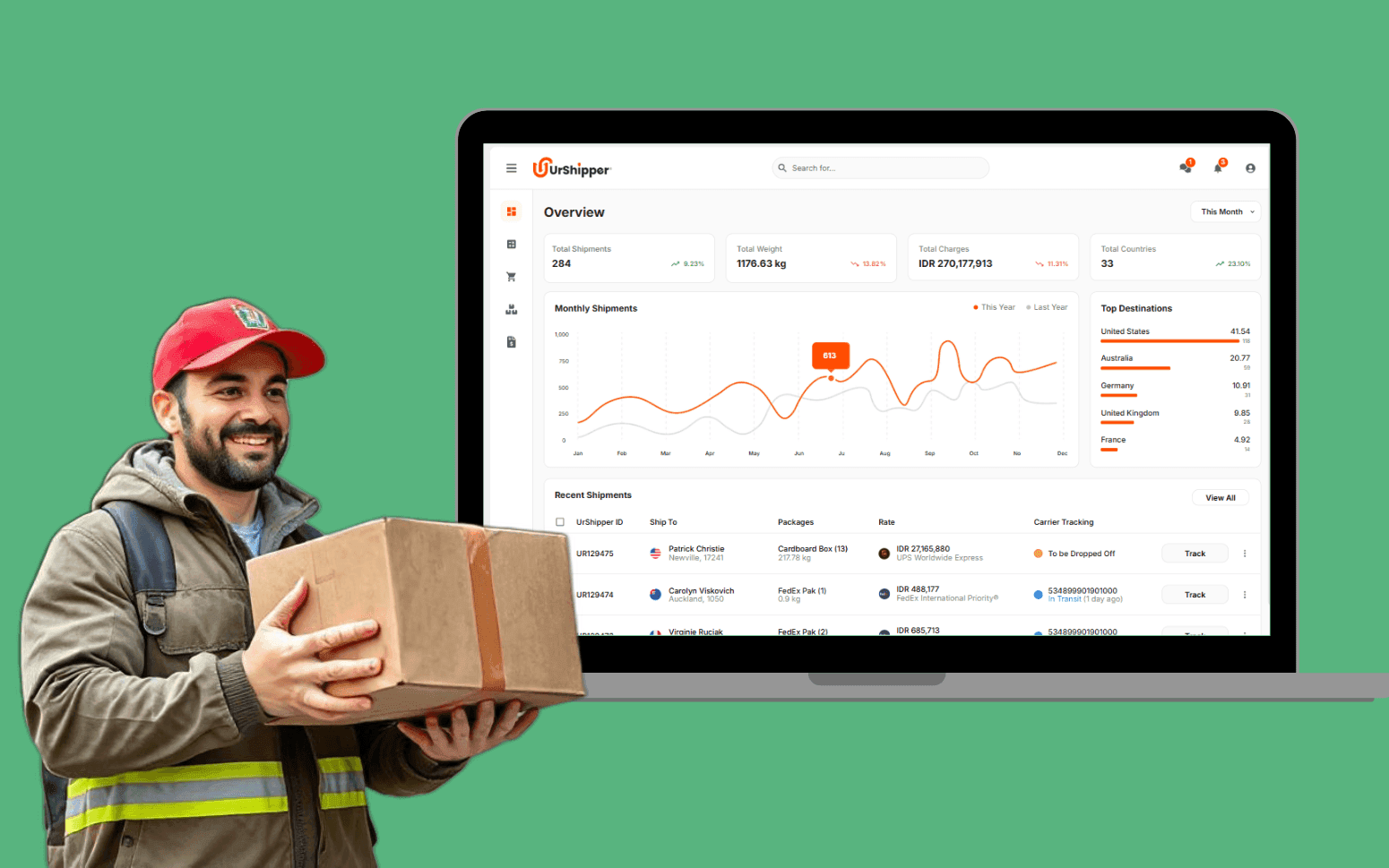
Multi-Carrier Shipping Software for a Global Logistics Platform
- 2K+
- 92
Custom TMS for freight brokers, logistics companies, and shippers with own transport who need load planning, carrier rate management, shipment tracking, and freight invoice auditing in one system, not a patchwork of carrier emails and spreadsheets.
Built for operations where freight booking by phone and email is costing money on every load and freight invoice errors are discovered manually when someone finds time to reconcile.
Load planning and carrier tendering with rate comparison across your carrier network
Carrier rate management with contract rates, lane rates, and accessorial charges
Shipment tracking and visibility from booking to proof of delivery
Automated freight invoice auditing that flags overbilling before you pay it
Recognition
Booking freight by email and phone with no systematic carrier rate comparison, leaving cost savings on every load?
Freight invoice errors discovered manually when reconciling against agreed rates, weeks after the shipment delivered?
In short
RaftLabs builds custom transport management systems covering load planning and tendering, carrier management and rate management, shipment tracking and visibility, freight invoice auditing, customs and documentation management, performance analytics by carrier and lane, and ERP and WMS integration. Most TMS projects ship in 10-14 weeks at a fixed cost.
Companies we've built for








Most freight operations graduate to a TMS after the same inflection point. The volume of loads has grown past the point where booking by phone and email is manageable without errors. Carrier rate comparison happens informally. The broker knows roughly what each carrier charges and picks based on experience. Invoice reconciliation is done by a logistics administrator at month end, comparing invoices against rate sheets line by line and catching the errors that are large enough to notice.
The cost of that approach isn't just the hours spent booking and reconciling. It's the rate savings missed because the comparison wasn't systematic. It's the overbilling that wasn't caught because the invoice looked right and nobody had time to check the accessorial charges. It's the carrier performance problem that isn't visible until you look at on-time data across six months of shipments.
A custom TMS puts a system around those decisions: rate comparison at booking time, carrier selection based on data rather than habit, automated invoice matching against agreed rates, and performance reporting by carrier and lane.
Load planning tools that group shipments into loads by destination, pickup point, delivery date, and vehicle type. The load optimisation engine applies 3D bin packing algorithms to maximise trailer utilisation by calculating how shipment units, with their length, width, height, and weight, can be combined into a single load without exceeding axle weight limits or vehicle capacity constraints. The result is fewer partial loads and lower cost per shipment compared to booking each order as a separate load.
Carrier tendering workflow sends load details to your carrier network and collects quotes against your rate agreements with a response deadline. EasyPost and Freightquote APIs provide carrier rate shopping across parcel and LTL carriers for shipments within those networks. DAT load board integration surfaces spot market capacity for loads that fall outside contract lanes or where contracted carriers are unavailable, pulling live rate data from DAT's load board without requiring a broker to work the phones. EDI 204 (Motor Carrier Load Tender) and EDI 214 (Transportation Carrier Shipment Status) transaction processing handles load tendering and status updates with EDI-capable carriers, the standard used by national carriers and 3PLs who prefer EDI over API integration. Load tender acceptance and booking confirmation are recorded in the system with a full audit trail. FMCSA carrier vetting against the SaferSys API verifies a carrier's operating authority, safety rating, and insurance before they are approved to haul loads, replacing manual verification against the FMCSA SAFER website.
Carrier database with contract details, service areas, equipment types, insurance and compliance document expiry tracking, and carrier performance history. The carrier profile stores the MC number, DOT number, operating authority type, insurance certificate with policy number and expiry, and the carrier agreement with its effective date, the same fields used by most enterprise TMS platforms to maintain carrier compliance. FMCSA carrier status is re-checked via the SaferSys API on a scheduled basis so a carrier whose authority is revoked after onboarding is flagged before they are tendered a load rather than discovered after a pickup failure.
Rate management covers contract lane rates (origin-destination pair at a flat rate or per-mile), zone rates (origin zone to destination zone), weight break tables (rate per hundredweight at defined weight brackets), fuel surcharge tables (percentage applied to linehaul based on the weekly DOE diesel index), and accessorial charge schedules (detention, liftgate, residential delivery, hazmat, and other surcharges per carrier). Rate effective dates keep historical shipments rated against the rates that applied at booking time, which is critical for accurate freight audit. EDI 210 (Motor Carrier Freight Details and Invoice) transaction processing handles carrier invoice receipt from EDI-capable carriers, mapping invoice data directly into the freight audit workflow. New rate negotiations captured and applied from the agreed effective date with full rate history retained. The carrier record that tells you what you have agreed, whether the carrier is compliant, and how they are performing across the lanes they haul for you.
Shipment tracking from booking to proof of delivery. Carrier check-call schedules with automated reminders for carriers to provide status updates at configured milestones: pickup confirmed, in transit, out for delivery, delivered. EDI 214 (Transportation Carrier Shipment Status Message) ingestion handles status updates from EDI-capable carriers automatically, without check calls, by processing the carrier's outbound status EDI transaction and mapping it to the shipment record in real time. Carrier API integrations for carriers who provide REST or webhook tracking feeds replace the check-call workflow entirely for those carriers.
Exception alerts for late pickups, transit delays, and missed delivery appointments are triggered when a shipment passes its expected event time without a status update. The exception is assigned to an operations team member with the shipment details, contracted carrier contact, and consignee delivery window visible in one screen. OTIF (On-Time In-Full) reporting by customer, carrier, and lane is calculated from the delivery event data. On-time performance is measured against the committed delivery date rather than the carrier's estimated transit time, which is the metric the customer cares about. Customer portal and shipper portal give consignees and customers real-time shipment status without requiring a call to your operations team. Proof of delivery image storage against the shipment record retains the signed delivery receipt with timestamp and driver ID for dispute resolution and billing confirmation.
Automated freight invoice matching against the contracted rate card recorded at shipment time. Invoice line items matched against contract lane rates, fuel surcharge at the DOE diesel index applicable on the shipment date, and the accessorial charge schedule agreed with the carrier. Detention, liftgate, residential, and hazmat charges are each compared against the contracted amount rather than the carrier's billed amount. Overbilling is identified and flagged before the invoice is approved for payment. Industry research consistently finds that 5-10% of freight invoices contain billing errors when audited against contracted rates; the automated audit catches these before payment rather than after.
The dispute workflow generates an overbilling summary with the contracted rate, the invoiced amount, the discrepancy, and the contractual basis for the dispute, formatted to send directly to the carrier's billing team. Dispute resolution is tracked with status and carrier response recorded against the invoice. Accessorial charge automation handles detention billing: when a carrier submits a detention charge, the system compares the recorded pickup or delivery time against the contracted free time per the carrier agreement and calculates whether the detention is billable at all before the invoice is approved. The freight audit with contracted rate card comparison is the workflow that MercuryGate and Oracle TMS provide in their freight settlement modules; a custom TMS replicates this for operations with carrier agreements those platforms can't model accurately. Invoice approval workflow for loads where the audit finds no discrepancies passes the invoice to payment processing automatically. Cost-per-load and cost-per-unit reporting by carrier, lane, and freight type provides the lane-level data that procurement teams need for carrier rate negotiations.
Customs and shipping documentation management for cross-border shipments, with data entered once at booking and used to generate all required documents. Bill of lading generated from the shipment record with shipper, consignee, carrier, commodity, weight, value, and special instructions populated without re-entry. Commercial invoice and packing list generated from the same shipment data for export and import customs filings. Customs declaration data capture for export filings (EEI via AES Direct or a licensed filing service) and import entry data structured for customs broker submission.
Customs broker integration passes the declaration data and supporting documents to the nominated broker via API or structured file, eliminating the manual email exchange of shipment documents that delays entry filing and can result in customs holds. HTS code management stores the harmonised tariff schedule codes for each commodity your operation ships, giving you consistent classification across shipments and auditable records for customs compliance. Document storage against the shipment record retains the signed bill of lading, proof of export, and customs entry confirmation for the statutory retention period: 5 years for US customs records. Automated document distribution sends the bill of lading to the carrier at booking, the commercial invoice and packing list to the customs broker at shipment departure, and the proof of delivery to the shipper on confirmed receipt. The document workflow that replaces manually preparing customs paperwork for each international shipment and chasing brokers for entry status.
Carrier performance reporting across your shipment history built on a carrier scorecard model: on-time pickup rate (percentage of pickups within the contracted pickup window), on-time delivery rate (percentage of deliveries on or before the committed delivery date), transit time variance against quoted transit (average hours early or late vs. the carrier's published transit time), claims rate (freight claims as a percentage of shipments), and invoice accuracy rate (percentage of invoices that passed the freight audit without discrepancy). These five metrics form the carrier scorecard that procurement teams use for annual rate negotiations and quarterly business reviews: a carrier with a 94% on-time delivery rate and a 1.2% claims ratio has more pricing power than one with an 82% on-time rate regardless of their quoted rate.
OTIF (On-Time In-Full) reporting by customer calculates the percentage of shipments that delivered on time and at full quantity, the metric retailers and e-commerce platforms use for supplier performance programmes. Failing OTIF thresholds can trigger chargebacks from customers with vendor compliance programmes, so the reporting layer surfaces OTIF by customer and by carrier to identify whether a performance problem is carrier-driven or demand-planning-driven. Lane analysis showing cost per unit and service performance by origin-destination lane. Carrier ranking by lane so your procurement team can identify which carriers should receive more volume and which have performance problems that need addressing. Trend reporting by period so changes in carrier performance are visible before they become problems your clients are complaining about, rather than discovered in a carrier review meeting where you're relying on manually compiled data.
A TMS is the system that manages the planning, execution, and financial settlement of freight movements. It covers load planning and tendering, carrier selection and booking, shipment tracking and visibility, freight invoice auditing against contracted rate cards, and performance reporting by carrier and lane. The functional areas map directly to the TMS module structure used by platforms like MercuryGate, TMC (C.H. Robinson's platform), and Oracle TMS. Off-the-shelf TMS platforms handle standard freight operations well and are the right choice for most operations whose carrier mix, rating model, and integration requirements fit within the platform's standard configuration. A custom TMS makes sense when your operation has requirements those platforms can't handle: proprietary rating logic that can't be modelled in standard rate tables, carrier agreements with unusual accessorial structures, specific customer portal requirements that the platform's standard portal doesn't support, EDI requirements for carrier types the platform doesn't natively support, or deep integration with a custom ERP or WMS where standard connectors produce data quality problems. Freight brokers with commission models tied to margin per load rather than flat fees, and 3PLs with complex multi-client carrier arrangements, are the most common candidates for custom development.
Freight invoice auditing works by matching each line item on a carrier invoice against the contracted rate card recorded in the TMS at booking time. When a carrier invoices a load, whether by EDI 210 transaction, API, or PDF upload with OCR extraction, the system retrieves the original rate for that lane, the fuel surcharge table row applicable on the shipment date based on the DOE diesel index, and the accessorial charge schedule agreed with that carrier. Each invoice line is compared against those records. Where the invoiced amount matches the agreed rate within a tolerance threshold, the line is approved and the invoice moves to payment processing. Where there's a discrepancy, a higher base rate, an accessorial charge not in the carrier agreement, or a fuel surcharge calculated on the wrong base or index date, the line is flagged as disputed. The dispute generates a line-item overbilling summary that the operations team can send directly to the carrier's billing department. Detention and accessorial charge automation adds an additional layer: when a carrier submits a detention charge, the system calculates the actual loading or unloading time from the check-in and departure timestamps recorded at the facility, compares it to the contracted free time, and approves or disputes the detention amount based on that calculation rather than the carrier's claim. The audit runs automatically on invoice receipt, not when someone finds time to check.
Yes. TMS integration typically covers two directions: receiving order and shipment data from your ERP or WMS, and writing freight cost and carrier data back for financial settlement and inventory updates. Common ERP integrations include SAP, Oracle, Microsoft Dynamics, and industry-specific ERPs. WMS integration covers outbound shipment creation, load confirmation, and inbound receipt confirmation for inbound freight. The integration complexity depends on what APIs or EDI capabilities your existing systems expose. We scope integrations specifically during discovery. We confirm what data flows in each direction, what the authoritative source is for each data element, and what the error handling should be when the integration fails.
A focused TMS covering load planning, carrier rate management, shipment tracking, and basic invoice auditing typically runs $45,000-$100,000. A full TMS with spot market tendering, EDI carrier integration, customs documentation, client portal, and full analytics typically runs $100,000-$220,000. Cost depends on the number of carrier integrations, the complexity of the rating model, EDI requirements, and the scope of the customer portal and reporting. We scope every project before pricing it and give you a fixed cost before development starts.
What clients say
Three-year average engagement. Founders and operators describing the work in their own words. No marketing varnish.

 Indonesia
I definitely recommend RaftLabs, especially to founders building complex platforms. They were transparent throughout the whole project.
01 / 02
Tell us your carrier mix, your current booking process, and where the cost and visibility gaps are. We'll scope the right platform and give you a fixed cost.