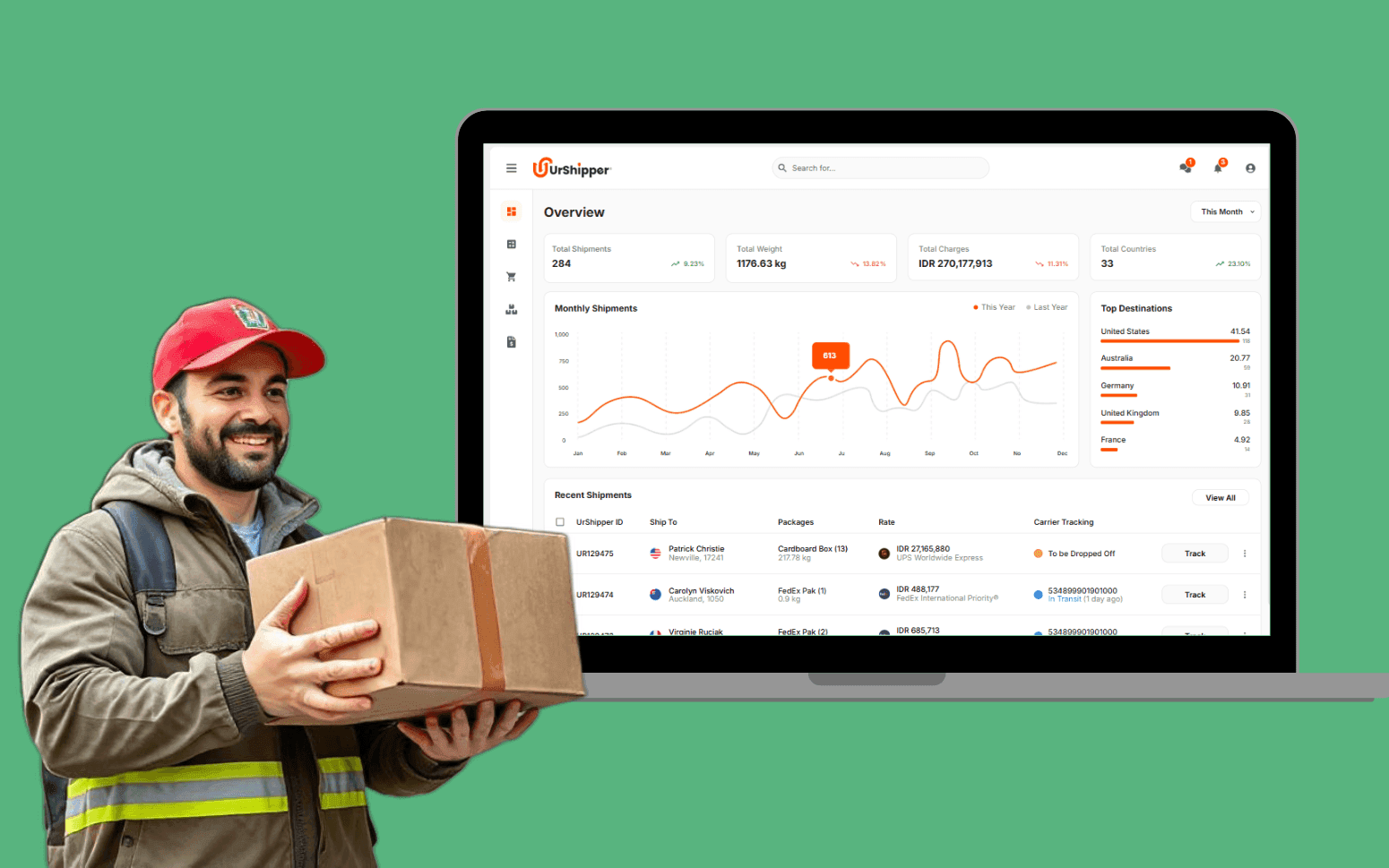
Scalable Multi-Carrier Shipping Software for a Global Logistics Platform
- 2K+
- 92
Fleet software built for logistics operators and delivery companies: real-time GPS tracking, driver dispatch, route optimisation, driver mobile app, maintenance scheduling, and fleet analytics in one platform.
Built for businesses managing vehicle fleets that need live visibility, automated dispatch, and compliance reporting that off-the-shelf platforms like Samsara or Verizon Connect don't provide at the right level of customisation.
Live vehicle locations on a dispatcher map updated every 15-30 seconds
Driver dispatch and job assignment with mobile app for drivers
Multi-stop route optimisation with time window and capacity constraints
Vehicle maintenance scheduling, service history, and compliance documentation
Recognition
Dispatching drivers by phone and tracking their location by calling them because your current system doesn't give you live visibility across the fleet?
Your fleet management platform giving you GPS tracks but no useful data on fuel costs, driver behaviour, or vehicle utilisation that your operations team can actually act on?
In short
Fleet management software gives logistics operators and delivery companies real-time GPS tracking on a dispatcher map, driver dispatch and job assignment via a mobile app, multi-stop route planning, vehicle maintenance scheduling, driver behaviour monitoring, and compliance reporting for ELD mandates and DVSA regulations. RaftLabs builds custom fleet management software for businesses managing 10 or more vehicles that need live visibility and automated dispatch beyond what Samsara or Verizon Connect offer. Most fleet management software projects deliver in 10 to 14 weeks at a fixed cost.
Companies we've built for




When your dispatcher has to phone each driver for a status update, you're not running a fleet. You're reacting to one. Manual dispatch boards, spreadsheet-based job assignment, and paper maintenance records aren't just slow. They're sources of error that cost you on fuel, customer SLAs, and vehicle downtime.
Custom fleet management software puts live vehicle data, driver communication, job status, and maintenance records in one platform. Your dispatchers see every vehicle on a map. Drivers get jobs pushed to their phone. Maintenance gets scheduled before a vehicle breaks down. And operations management gets cost-per-mile and utilisation data without pulling it from three different systems.
Live vehicle locations on the dispatcher map with position updates every 15-30 seconds via telematics OBD-II device or driver mobile app. We integrate with established telematics providers via their published APIs: Samsara Fleet API, KeepTruckin (Motive) REST API, and Geotab MyGeotab SDK. That pulls vehicle position, ignition state, engine hours, speed, and OBD-II fault code data into the unified dispatcher view. For fleets not yet using a telematics provider, we specify compatible OBD-II hardware during scoping and integrate directly with the device's data feed. Historical route replay covers any vehicle on any date with a full GPS breadcrumb trail, speed timeline, and stop events on the map, which is useful for customer dispute resolution and driver coaching. Geofencing alerts fire when vehicles enter or exit configured zones: customer delivery sites, depots, restricted areas, or out-of-route deviations beyond a configurable distance threshold. Unauthorised route deviation alerts compare the live vehicle position against the assigned route corridor in real time, so the dispatcher gets notified the moment a driver departs from the planned route rather than discovering it in a post-day review. All tracking data is retained in the time-series store for at least 90 days for compliance and dispute resolution.
Job creation and assignment to a specific driver or vehicle directly from the dispatcher interface. The driver mobile app receives the job via push notification (APNs/FCM), lets the driver accept or flag an issue with a reason code, and sends job status updates back to dispatch in real time: en route, arrived, in progress, completed. That gives the dispatcher live visibility without phoning drivers. Multi-stop job sequencing orders deliveries before the driver leaves the depot using the configured optimisation sequence, so drivers don't need to make routing decisions on the road. Priority job insertion slots urgent jobs into an existing active route without rebuilding the full sequence: the optimisation engine identifies the lowest-cost insertion point for the new stop given the driver's current position and remaining stops, then pushes the updated sequence to the driver's app. DVIR (Driver Vehicle Inspection Report) is integrated into the dispatch workflow. Drivers complete a pre-trip and post-trip inspection via the mobile app with a structured checklist before and after each shift, and defects are flagged immediately to the maintenance team rather than captured on paper and discovered later. The dispatcher sees every active job, driver location, and driver availability status on one screen, with job ETAs calculated from current position and remaining route.
Multi-stop route optimisation using Google OR-Tools Vehicle Routing Problem (VRP) solver for fleets with complex multi-stop delivery schedules. The VRP solver handles time window constraints (each stop must be reached within a specified delivery window), vehicle load capacity limits per vehicle type, driver shift end times, and multiple depot locations simultaneously, producing a feasible route plan across the full fleet rather than optimising one vehicle at a time. Traffic-aware routing integrates with Google Maps Platform or HERE Routing API so the planned sequence accounts for real-time and historical traffic conditions and doesn't route drivers into predictable delays. Route sequence optimisation minimises total vehicle-kilometres and total delivery time across the fleet, reducing fuel cost and enabling more stops per driver per shift on the same route geography. Daily route plan export provides structured job lists for driver briefing and customer ETA communication. ETAs are calculated from the optimised sequence and sent to customers automatically. IFTA (International Fuel Tax Agreement) fuel tax reporting runs automatically by cross-referencing GPS mileage data with state and jurisdiction boundaries, producing the quarterly IFTA report from actual GPS-tracked miles driven per jurisdiction rather than requiring manual mileage log reconciliation. Planned vs. actual route comparison for post-day operations review highlights where routes deviated, which stops ran long, and which time windows were missed.
iOS and Android app for job list and turn-by-turn navigation so drivers don't need a separate dedicated device. The navigation integration uses the Google Maps or HERE SDK to provide in-app turn-by-turn routing to each delivery stop in sequence, with automatic progression to the next stop on job completion. Proof of delivery capture at each stop supports photo upload, customer e-signature on screen, or barcode/QR scan, with the captured evidence linked to the specific stop and job record in the dispatcher interface. Hours of service logging is built into the app in compliance with FMCSA Hours of Service (HOS) rules for US fleets: drivers log on-duty, driving, sleeper berth, and off-duty time from the app, and the ELD (Electronic Logging Device) module produces the electronic Record of Duty Status (RODS) required under the FMCSA ELD mandate. DVIR (Driver Vehicle Inspection Report) checklists are completed in the app before and after each shift. Defects are recorded with photo evidence and routed to the maintenance team immediately. Fuel card entry records fuel purchases per fill against the vehicle for cost tracking. We integrate with WEX and Comdata fuel card APIs where available so purchases are pulled automatically from the fuel card transaction feed rather than requiring manual driver entry. Two-way messaging with dispatch for questions and exceptions runs through the app without phone calls, with message history retained on the job record.
Service interval tracking by odometer mileage and calendar time for every vehicle in the fleet, with maintenance alerts configured per vehicle type and manufacturer service schedule. The system generates predictive maintenance triggers from OBD-II fault code data pulled via the telematics integration: when a vehicle reports a Diagnostic Trouble Code (DTC) or a J1939 fault from a commercial vehicle CAN bus, the maintenance module creates an alert with the fault code, plain-language description, and a recommended action, so the workshop gets structured defect information rather than a driver's verbal report. OBD-II PID (Parameter ID) data, covering engine coolant temperature, fuel system status, RPM, and engine load, is logged continuously and used to identify vehicles operating outside normal parameters before a fault code is thrown. Maintenance job scheduling sends automatic workshop notification when a vehicle's next service date or mileage threshold is within the configured lead time. Full service history per vehicle is retained for the vehicle's lifetime for resale documentation, insurance, and compliance audit. MOT, roadworthiness inspection, and regulatory certificate due date alerts fire at configurable intervals so nothing expires unnoticed. DVSA compliance documentation is maintained for UK HGV operators. ELD mandate compliance under FMCSA regulations is handled by the driver app's HOS logging module, with the RODS record available for roadside inspection via the app's transfer function.
Cost-per-mile and cost-per-job reporting calculated from GPS-tracked mileage, fuel card transaction data (WEX/Comdata integration), and maintenance cost records, so operations management can see which vehicles, routes, and drivers are profitable versus which are running above cost benchmarks. Fuel consumption per vehicle and per driver is tracked against fleet average so efficiency outliers are visible: a driver consistently running 15% higher fuel consumption than peers is identified from the data rather than from subjective observation. Driver safety scoring aggregates events pulled from telematics OBD-II data: harsh braking incidents (deceleration above threshold G-force), harsh acceleration, harsh cornering, speeding events (vs. posted limit from HERE or Google Maps road data), and excessive idle time. Each score has event-level detail behind it so coaching conversations are grounded in specific incidents with timestamps, location, and severity rather than a single composite number. IFTA fuel tax reporting calculates miles driven per jurisdiction from GPS track data and cross-references with fuel card purchase records per vehicle to produce the quarterly IFTA filing data automatically, cutting the manual mileage log reconciliation that most fleets still do on spreadsheets. Vehicle utilisation rates show which assets are underused. Vehicles averaging below a configurable utilisation threshold are flagged so management can make informed decisions about fleet size. The fleet KPI dashboard is built for operations management review in the format your team needs, not the default export from the telematics vendor.
GPS tracking uses one of two data sources: a telematics device fitted to the vehicle (a hardware unit wired to the OBD-II port or the J1939 CAN bus for commercial vehicles), or the driver's mobile app using the phone's GPS. Hardware devices give better accuracy and operate without driver action. They report position, ignition state, engine fault codes, and OBD-II PID data continuously, even when the driver isn't using the app. Most established telematics providers expose their data via REST APIs: Samsara Fleet API, KeepTruckin (Motive) REST API, and Geotab MyGeotab SDK are the most commonly integrated in our experience. We pull position, trip events, driver assignments, and fault code data from those APIs into the custom platform. Mobile-only GPS tracking is lower cost and sufficient for smaller fleets where OBD-II hardware isn't justified, using the driver app's background location permission to report position at configurable intervals. Most mid-to-large fleet platforms use hardware for vehicle-level precision and the mobile app for proof of delivery, DVIR, and HOS logging. We help you choose the right approach for your fleet size during scoping, and we confirm API feasibility for your specific hardware before the project starts.
Off-the-shelf fleet platforms like Samsara, Verizon Connect, and Geotab are well-suited for fleets that need standard GPS tracking, basic dispatching, and driver behaviour monitoring within those platforms' standard feature sets. Custom fleet software makes sense when your operations have requirements those platforms don't cover: tight integration with your existing TMS, WMS, or ERP system where the SaaS platforms have no native connector; custom dispatch logic specific to your delivery model (dynamic priority insertion, multi-depot VRP with OR-Tools, or customer-specific SLA rules); customer-facing delivery portals or branded tracking pages that present your data under your brand rather than the telematics vendor's; compliance workflows specific to your regulatory environment (FMCSA ELD with custom HOS rules, DVSA tachograph integration, or IFTA automation); or OBD-II and J1939 predictive maintenance logic that the vendor platform surfaces as raw fault codes without actioning them into maintenance schedules. It also makes sense when per-vehicle SaaS fees at your fleet size exceed the amortised cost of owning your own system over three to five years. We scope both options honestly during discovery and tell you which is right for your situation.
Yes, if the hardware vendor provides an API. Most established telematics providers, including Samsara, Geotab, Ctrack, MiX Telematics, and Webfleet, expose REST APIs for vehicle position, trip history, and driver events. We integrate with those APIs to pull tracking data into your custom platform. For hardware without an API, some vendors provide raw data export via FTP or email, which we can also consume. We confirm integration feasibility for your specific hardware during scoping. If you haven't chosen hardware yet, we can recommend telematics devices with strong API support.
A fleet management platform with real-time GPS tracking, driver dispatch, job management, a driver mobile app, and a basic maintenance module typically runs $35,000-$75,000. A full platform with multi-stop route optimisation, driver behaviour monitoring, ELD or DVSA compliance reporting, customer-facing delivery notifications, and fleet analytics typically runs $75,000-$150,000. Cost depends on mobile app complexity, telematics hardware integrations, and compliance reporting requirements. We scope every project before pricing it.
What clients say
Three-year average engagement. Founders and operators describing the work in their own words. No marketing varnish.

 Indonesia
I definitely recommend RaftLabs, especially to founders building complex platforms. They were transparent throughout the whole project.
01 / 02
Tell us your fleet size, the dispatch and compliance problems you're trying to solve, and what your current process requires manually. We'll scope the right platform and give you a fixed cost.