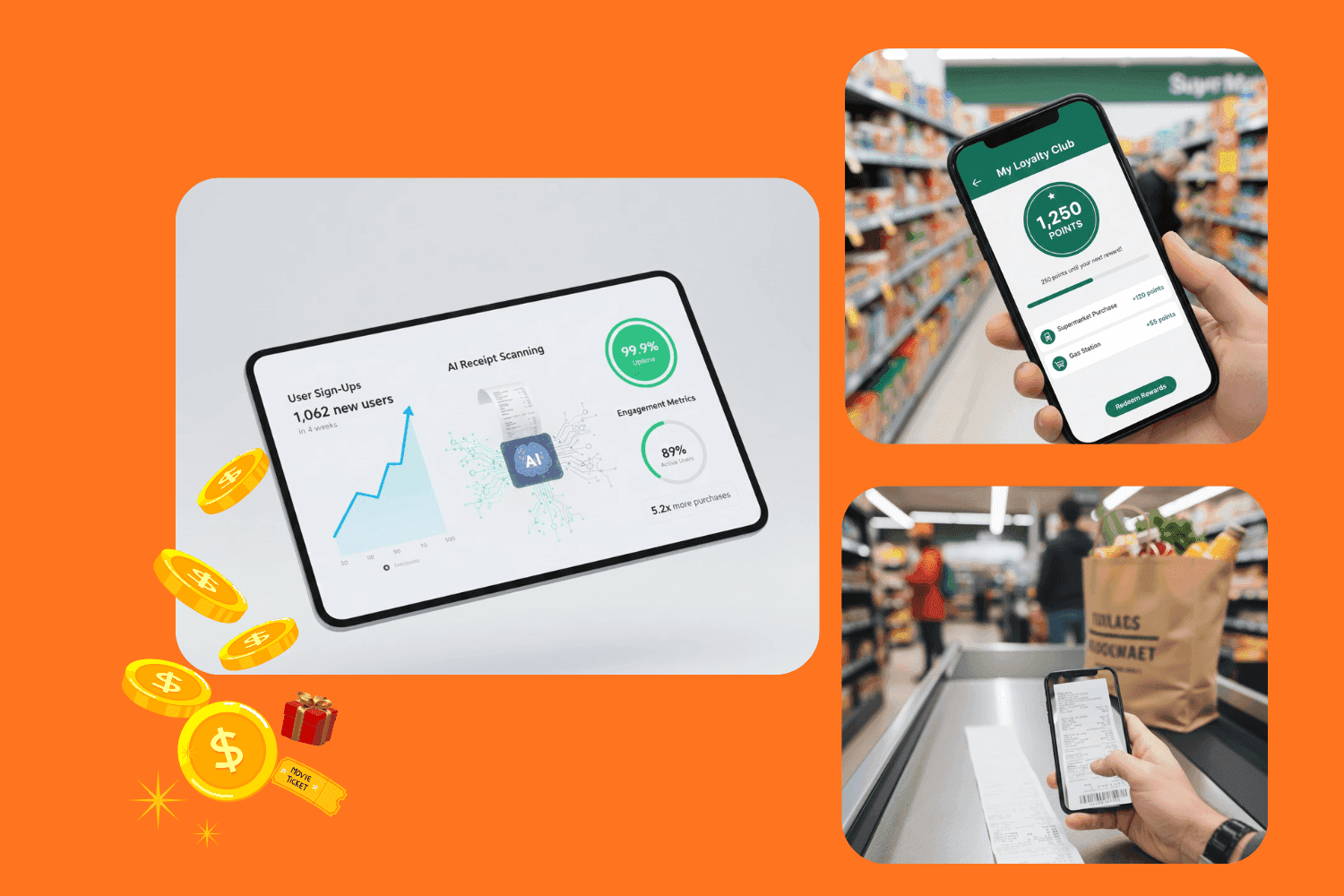
AI Loyalty Platform for a Supermarket Chain
- 2000+
- 2x
Autonomous AI agents that handle specific hospitality workflows end-to-end, pre-arrival communication, reservation changes, review responses, upsell offers, and more.
Built for hotels, hotel groups, and hospitality operators who need agents taking actions across the guest journey, not just answering questions at the front desk.
Pre-arrival agents that personalize communication using existing guest profile and booking data
Reservation agents that handle date changes, room upgrades, and special requests within defined policy rules
Review monitoring agents that surface new reviews, draft responses, and route escalations for manager approval
Upsell agents that identify upgrade and add-on opportunities from booking data and send targeted offers
The problem
Your team spending hours personalizing pre-arrival messages for each guest when the information is already in the PMS?
Staff handling reservation amendments, date changes, room upgrades, special request updates, that guests could self-serve if the agent knew the booking rules?
Post-stay review monitoring and response eating front desk time that should be going to guests who are actually in the property?
The short answer
RaftLabs builds autonomous AI agents for hospitality workflows, pre-arrival guest communication, reservation amendments for simple changes, post-stay review monitoring and response, upsell and upgrade offers, housekeeping coordination, and loyalty program interactions. Unlike chatbots that only answer questions, these agents take actions end-to-end within defined guardrails, integrating with property management systems and booking platforms. Most hospitality AI agent projects deliver in 10-14 weeks at a fixed cost.
Companies we've built for




A chatbot answers a guest's question about check-in time. An AI agent reads the booking record, checks whether early check-in is available that day, confirms the guest's room preference from their profile, sends a personalized arrival message with directions and the pre-check-in link, and updates the PMS with the confirmed preferences, before the guest arrives, without a staff member involved. The difference matters in hospitality, where the cost of manual personalization at scale is staff time that could be spent on the guests who are standing in front of them.
We build hospitality AI agents with defined scope, explicit escalation logic, and integration with your PMS and booking channels. Each agent handles one part of the guest journey well rather than many parts poorly. PMS integration and channel connectivity scope is confirmed during discovery because that is where most hospitality projects encounter unexpected complexity.
The agent handles the pre-arrival communication sequence for confirmed bookings. At a defined interval before arrival (typically 48 hours and 24 hours), it retrieves the booking record from the PMS or channel manager, reads the guest profile for preferences already on file (pillow type, floor preference, dietary requirements, loyalty tier, previous stays), and generates a personalized pre-arrival message that reflects the actual booking content and the guest's known preferences rather than a generic template.
The message is composed using the guest's name, the specific room type booked, the confirmed arrival date and check-in time, any special requests already captured on the booking, and personalization drawn from the guest profile. For returning guests, the message can reference their previous stay and any preferences logged from that visit. For first-time guests, the message sets arrival expectations, links to pre-check-in, and invites them to share preferences before they arrive.
The agent sends the message via the configured channel (email, SMS, WhatsApp, or your guest messaging platform API), logs the send event to the PMS or CRM, and tracks whether the guest responds. Responses that indicate a preference update or a question the agent can answer within its scope are handled directly. Responses that require staff action, a special request outside standard inventory, a complaint, or a request the agent cannot resolve from booking data, are escalated to the front desk with the full conversation context. Every send and every response is logged, giving the team a complete pre-arrival communication record for each arrival.
The agent handles reservation amendment requests that fall within the property's booking policy without requiring staff involvement. Covered amendments are defined during setup and typically include: date changes within the rate's amendment terms, room type upgrades where inventory is available at the approved rate differential, special request additions (early check-in request, late check-out request, room preference), and cancellations within the policy's free-cancellation window.
When a guest submits an amendment request (via a self-service link, messaging channel, or the hotel's app), the agent retrieves the booking record, checks the rate's amendment terms, checks real-time availability for the requested change, and either confirms the amendment or explains why it cannot be completed within policy. If the amendment is within policy and inventory supports it, the agent applies the change to the PMS, sends the guest an updated booking confirmation, and logs the amendment action with a timestamp and the specific change made.
Requests outside the agent's defined scope, amendments that would breach the rate terms, requests that require a rate override, or requests involving a dispute, are routed to the reservations team with the guest's request and the booking context pre-loaded. The team handles the exception without needing to gather the background information the agent has already assembled. Every amendment handled and every escalation triggered is logged, giving the reservations team a complete change history for each booking.
The agent monitors new guest reviews published across the configured review platforms (Google, TripAdvisor, Booking.com, and others via their review notification APIs or aggregator integrations) and drafts a response for each review within a defined turnaround time. Review monitoring runs on a scheduled check, typically every 30 to 60 minutes during business hours, so new reviews surface quickly rather than waiting for a team member to log in and check each platform manually.
For each new review, the agent reads the review content, the reviewer's rating, and any specific feedback points mentioned, and drafts a response that acknowledges the specific feedback (positive or negative) rather than using a generic acknowledgement template. Positive reviews receive a response that thanks the guest for the specific things they mentioned and invites a return visit. Negative reviews receive a response that acknowledges the issue raised, avoids defensive framing, and offers a direct contact path for resolution, following the response framework defined during setup.
All drafted responses are routed to a manager approval queue before publication. The agent does not publish responses autonomously. The approval queue shows the original review, the drafted response, and the platform it will post to, so the manager can approve as-is, edit, or reject. Once approved, the agent posts the response via the platform's management API. Negative reviews that mention a serious incident (a safety concern, a significant service failure, or a legal claim) are flagged for immediate manager attention rather than queued for standard review, with a clear escalation label so they are not missed.
The agent identifies upsell and upgrade opportunities from confirmed bookings and sends targeted offers at the right point in the pre-arrival window, typically 7 to 10 days before arrival, when guests are planning their stay and upgrade offers have the highest conversion rate. Opportunity identification uses booking data from the PMS: the room type booked, the rate paid, availability of higher room categories, and the guest profile's loyalty tier and prior spend history.
For each booking where an upgrade or add-on offer is appropriate, the agent generates a personalized offer message that presents the specific upgrade available (for example, the specific suite or ocean-view room that is available and the rate difference), the specific add-on packages applicable to the booking (breakfast, spa access, airport transfer), and the guest's loyalty tier if the upgrade is offered at a tier benefit rate. The offer is sent via the configured channel at the scheduled pre-arrival interval.
Guest responses are handled by the agent: a positive response triggers the upgrade or add-on confirmation in the PMS, sends an updated confirmation to the guest, and logs the upsell revenue to the reporting system. A decline is logged and no further upsell outreach is sent for that booking. Responses that raise a question the agent cannot resolve from the offer data are escalated to the reservations team. Every offer sent, every response, and every conversion is logged, giving the revenue management team data on which offer types and lead times produce the best conversion rates.
The agent automates the daily communication between the front desk and housekeeping that typically runs through phone calls, paper lists, and manual updates to the housekeeping board. It reads the day's departure and arrival schedule from the PMS, builds the housekeeping priority list based on confirmed check-out times, incoming arrival times, and any stay-over service requests logged, and distributes the prioritized room list to housekeeping supervisors or the housekeeping management app at the start of the shift.
As room status updates are logged, whether by housekeeping staff via the housekeeping app, by maintenance completing a work order, or by front desk via the PMS, the agent tracks the real-time room status picture and flags situations that need attention: rooms that were expected to be ready by a specific time but are still in progress, rooms where a maintenance issue was logged that blocks the room from being assigned, and arrivals who have checked in early and need their room prioritized. These flags are surfaced to the housekeeping supervisor or front desk manager, not buried in a status board that requires someone to actively monitor it.
For stay-over service requests submitted by guests via the guest app or messaging channel (extra towels, toiletries, a specific service time), the agent logs the request to the housekeeping task list and confirms receipt to the guest. Requests that are unusual or require supervisor approval are flagged rather than auto-added to the task list. Every task assigned, every status update, and every escalation is logged, giving the operations team a complete picture of housekeeping activity for the day and a searchable record for incident follow-up.
The agent handles routine loyalty program interactions that currently reach the front desk or reservations team by phone or email: points balance inquiries, redemption requests for standard rewards, tier status questions, missing points claims for completed stays, and updates to communication preferences. These queries follow defined rules and do not require judgement calls, they require looking up an account, applying a rule, and confirming an outcome.
For points balance and tier status queries, the agent retrieves the member's account from the loyalty platform API, formats the relevant account summary (current balance, tier, tier qualification progress, upcoming expiry), and responds directly via the member's preferred channel. For redemption requests for standard rewards (a free night, a dining credit, a spa voucher), the agent checks the member's balance, confirms the reward is available and redeemable, processes the redemption via the loyalty platform API, and sends the redemption confirmation.
Missing points claims are handled by the agent where the stay record can be located and the points can be calculated and posted automatically. Where the claim requires manual review, a stay outside the standard claim window, a stay at a non-participating property, or a discrepancy that cannot be resolved from the available data, the claim is routed to the loyalty team with the member's account details, the claim information, and the specific reason it needs manual review. Every interaction is logged to the member's account, giving the loyalty team a complete interaction history for dispute resolution or member service review.
A chatbot answers a guest's question. An AI agent completes a workflow. When a guest asks a chatbot about upgrading their room, the chatbot explains the upgrade process. When an AI agent handles an upgrade request, it retrieves the booking record, checks real-time availability for the requested room type, confirms whether the rate difference is within the agent's authority to apply, updates the PMS, sends the guest an updated confirmation, and logs the change, all without a staff member involved.
The architectural difference is that agents operate as stateful, multi-step processes that call external systems and take actions. A chatbot is a conversational interface. An agent built on a framework like LangGraph models the workflow as a directed graph with explicit state (what has been done), tools (the external systems it can call), and decision branches (what to do when a step falls outside policy). It can pause and wait for human approval, resume after confirmation, and maintain the full context of the workflow across all of these steps.
In hospitality, this distinction matters because workflows like pre-arrival personalization, reservation amendments, and upsell offers span multiple systems (PMS, channel manager, loyalty platform, review platforms), have policy rules that must be applied consistently, and should produce a complete log of what was done and why. A chatbot can explain what is possible. An agent can execute within defined guardrails, with a complete action history.
We integrate with PMS platforms that expose an API for booking data retrieval and updates. Common integrations include Opera (Oracle Hospitality) via the Opera Cloud REST API, Mews via the Mews API, Cloudbeds via the Cloudbeds API, Apaleo via the Apaleo Open Platform, and RoomKey via their API. For properties using channel managers (SiteMinder, D-EDGE, Staah), we can integrate at the channel manager level where the PMS API coverage is limited.
Review platform integrations use the management APIs provided by Google Business Profile (review management), TripAdvisor Management Center, and Booking.com's Property API for review access. Where a platform does not offer a direct review API, we integrate via a review aggregator (such as ReviewPro or TrustYou) that normalizes reviews from multiple sources into a single feed.
PMS integration is the highest-risk component of any hospitality agent build. API access, data model differences between platforms, and the specific PMS configuration at each property can vary significantly. We confirm integration scope and API access requirements explicitly during discovery. We do not estimate PMS integration generically because the variance between what different platforms expose, and what specific configurations enable, is large enough to change the project scope materially.
Guest data handling follows the same principles as any system processing personal data: minimum necessary access, encrypted storage and transit, access controls scoped to the specific workflow, and a clear data retention policy. The agent retrieves only the guest data the specific workflow requires, a pre-arrival communication agent does not retrieve payment card data; a review response agent does not retrieve stay preferences from the guest profile.
For properties operating in the UK and Ireland, guest data processing is subject to UK GDPR and Irish GDPR (both derived from EU GDPR). We document the data flows for each agent, identify the lawful basis for processing (typically legitimate interests for operational communications or consent for marketing-adjacent messaging), and provide the data processing record required for GDPR accountability compliance. For properties with US guests, we note any applicable state privacy law requirements (CCPA for California residents) in the data flow documentation.
LLM API providers used in the agent architecture process the data passed in prompts. For hospitality agents, the LLM typically processes booking metadata (room type, dates, preferences) and review content rather than sensitive personal data. We design prompts to include only the data the specific LLM task requires, and we confirm that the LLM provider's data processing terms cover the data types being processed before any guest data flows to an LLM in the architecture.
A focused hospitality AI agent, one workflow (for example, a pre-arrival communication agent for a single property, or a review monitoring and response agent across three review platforms), one PMS integration, defined escalation logic, and a manager approval queue for any actions requiring human sign-off, typically runs $25,000--$55,000 and delivers in 10-14 weeks. This includes the LangGraph workflow implementation, PMS and platform API integrations, the escalation and approval UI, and a runbook for your operations team.
A multi-agent system covering pre-arrival communication, reservation amendments, review monitoring, and upsell offers with integrations into your PMS, channel manager, review platforms, and guest messaging app typically runs $55,000--$130,000. The higher end applies when the PMS integration is complex (older systems with limited API coverage, multi-property configurations) or when the upsell agent requires integration with both the PMS and a revenue management system to validate pricing.
Cost is driven by the number of systems integrated, the complexity of the policy rules the agent must apply, and the number of workflows in scope. We scope and price every project before starting. The scoping document defines the workflow logic, the integration points, the escalation conditions, and the acceptance criteria so both sides know exactly what is being built.
What clients say
Three-year average engagement. Founders and operators describing the work in their own words. No marketing varnish.

 USA
USAAll of the sprints were completed on schedule and on budget. We highly recommend RaftLabs!
01 / 02
Proof
Custom Software Development
Custom hospitality platforms, booking systems, and guest experience tools built to your operational requirements.
Business Process Automation
Automate pre-arrival communication, housekeeping coordination, review management, and loyalty program workflows.
AI Agent Development
AI agents for guest personalization, reservation management, and operational coordination across the property.
Tell us the workflow you want to automate, your PMS, and the guest touchpoints involved. We will scope what an agent can handle and give you a fixed cost.